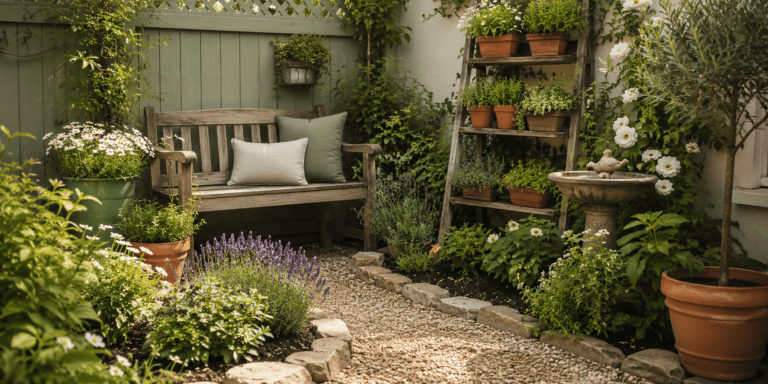
Small-Space Gardening for Beginners: Plan a Beautiful, Productive Garden

Small-space gardening for beginners is not about squeezing the greatest possible number of plants into the smallest possible area. It is about matching a few well-chosen plants to the sunlight, water, containers, and care your space can realistically provide.
A balcony, patio, courtyard, side yard, or compact backyard can hold an attractive and useful garden. The most successful plan often combines edible plants with a few flowers, uses vertical supports where they genuinely save room, and leaves enough open space for watering, harvesting, and simply enjoying the garden.
In Short
To plan a productive small garden, measure the usable area, observe direct sunlight, confirm water and drainage, and protect doors and walking routes. Then choose one main growing system, start with a short list of compact crops you use, place tall plants carefully, and leave every container or bed easy to reach. A smaller plan that you can maintain usually produces more than an overcrowded one.
Key Takeaways
- Measure sunlight, access, water, drainage, wind, and weight limitations before buying plants.
- Containers work well on hard surfaces; compact beds make sense where the site and budget allow a more permanent garden.
- Bush, dwarf, patio, and compact cultivars use limited space more efficiently than full-size sprawling plants.
- Trellises can free floor area, but they must be stable and positioned so they do not shade sun-loving crops.
- Start small enough to water, inspect, harvest, and replant consistently.
Why a Small Garden Needs a Real Plan

Limited area makes each decision more important. A large pumpkin vine can cover a path, an oversized pot can block a door, and one tall crop can shade several shorter plants. A plan helps you notice those conflicts before they become expensive or frustrating.
Planning also improves the appearance of the space. Repeating two or three container materials, limiting the color palette, and leaving a visible path can make a productive garden feel intentional instead of crowded. The goal is not perfect symmetry. It is a clear structure that allows plants to grow without taking over every surface.
If the visual side is your main concern, these small garden design tips explain how scale, focal points, repetition, and boundaries can make a compact yard feel more organized.
Step 1: Measure Before You Plan
Measure the usable length and width of the space rather than relying on memory. Mark immovable features such as doors, steps, railings, utilities, drains, air-conditioning equipment, and property boundaries. Keep doors fully operable and preserve safe routes to exits and equipment.
Sketch the area on graph paper or in a simple weather-resistant garden notebook. Add the mature width of containers and beds, not their empty size in a store. Also leave room to kneel, turn, carry a watering can, and reach plants without leaning over fragile stems.
Map direct sunlight
Observe the site several times during a clear day and record when direct sun reaches each area. Repeat in another season if possible because nearby buildings and trees change the pattern. University of Maryland Extension notes that many warm-season container vegetables—including tomatoes, peppers, eggplants, and squash—need about six to eight hours of direct sun, while some cool-season leafy crops can grow with roughly three to five hours.
Do not label a whole yard “sunny” based on one bright hour. Use the brightest location for fruiting crops. Reserve less sunny areas for leafy vegetables, selected herbs, or ornamentals suited to those conditions.
Check water, drainage, wind, and weight
Place the garden close enough to water that irrigation will not become a daily obstacle. Confirm where excess water can drain and whether it could stain a deck, run toward a doorway, or fall onto a neighbor’s balcony. Elevated sites can also expose plants and trellises to stronger wind than gardens at ground level.
Wet soil and large containers are heavy. Maryland Extension gives the cautionary example that a filled 20-inch container can weigh about 100 pounds. If you garden on a balcony, rooftop, deck, rented property, or shared structure, follow the applicable building rules and obtain permission rather than guessing at structural capacity.
Step 2: Decide What You Want the Garden to Do
Choose one main purpose before choosing plants. Your garden might supply salad ingredients, cooking herbs, a modest amount of fresh produce, flowers for pollinators, or a calm outdoor sitting area with some edible plants. It can serve more than one purpose, but trying to maximize every goal usually creates clutter.
Write a short priority list. For example: fresh herbs near the kitchen, leafy greens in spring and fall, one favorite tomato, and enough flowers to soften the edges. That is more useful than a long catalogue wish list because it connects every plant to a reason for growing it.
Plan for the time you have as well. Containers can need frequent checks in hot, dry weather. A dozen small pots may demand more watering than a few larger containers with compatible plants. Beginning with three to six containers or one compact bed provides enough variety to learn without turning the garden into a daily burden.
Step 3: Choose the Right Growing System

| System | Best fit | Main advantage | Main limitation |
|---|---|---|---|
| Containers | Balconies, patios, paved yards, rentals | Flexible placement and controlled growing mix | Can dry quickly and become very heavy |
| Raised bed | Small yards with a suitable permanent location | Defined shape, accessible soil, tidy appearance | Costs more and still needs regular watering |
| In-ground bed | Usable soil with permission to dig | Low material cost and access to deeper soil moisture | Existing soil may need testing or improvement |
| Vertical system | Any sunny space with a secure support | Moves compatible vines off the ground | Creates shade and catches wind |
Containers
Containers are usually the most adaptable choice when you cannot dig. Use food-safe containers with drainage holes for edible crops and match the volume and depth to the mature root system. A large plant in a tiny pot dries quickly, becomes unstable, and cannot perform normally.
Fill containers with a quality soilless potting mix designed for container growing rather than dense garden soil. Group plants with similar moisture and sunlight needs. Place the largest containers before filling them, because moving wet growing mix and mature plants can be difficult.
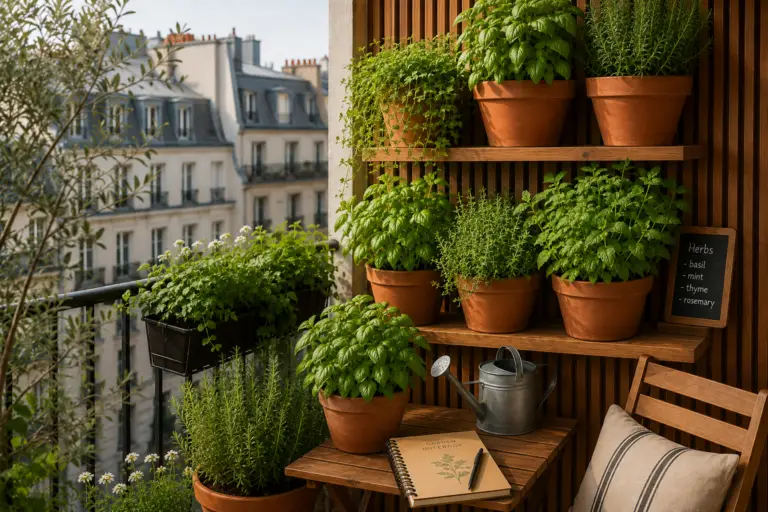
A sunny railing or windowsill can also support a focused herb garden. Use the balcony herb garden guide to match common herbs to containers and practical balcony conditions.
Raised or in-ground beds
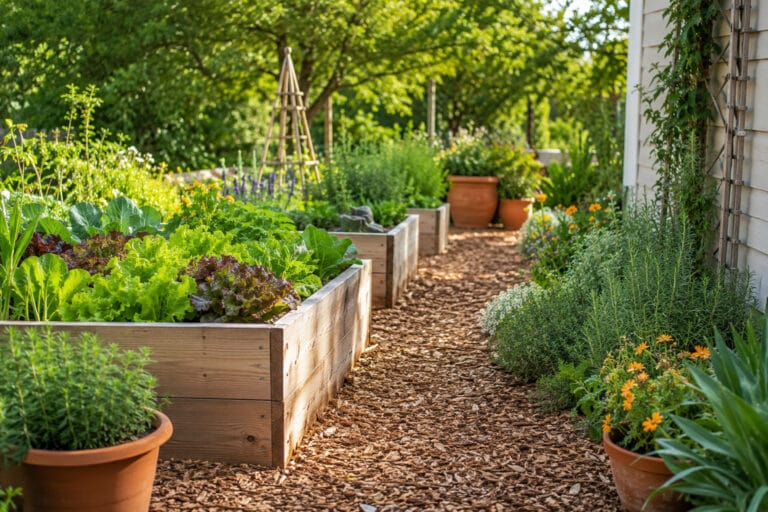
A narrow bed can hold more connected root space than separate pots and may simplify irrigation. Keep it narrow enough to reach the center without stepping into the soil. Maryland Extension describes raised beds as commonly two to four feet across; a narrower dimension may be more practical when access is available from only one side.
Raised beds drain well but can dry faster than the surrounding ground. They also add material cost and permanence. Before committing, review this raised-bed gardening guide for bed placement, soil, depth, access, and ongoing care.
Step 4: Select Plants for Limited Space
Choose plants according to mature size, growing season, root space, and how often you will use the harvest. Seedling size is misleading: one compact tomato may ultimately require more room than several lettuces or radishes.
Look for cultivar descriptions such as bush, dwarf, patio, compact, baby, or determinate, but still check the stated mature dimensions. These words are useful clues rather than standardized promises. A “compact” squash can remain much larger than a compact pepper.
| Small-space role | Practical choices | Planning note |
|---|---|---|
| Fast crops | Leaf lettuce, radish, baby greens | Useful for filling short seasonal windows |
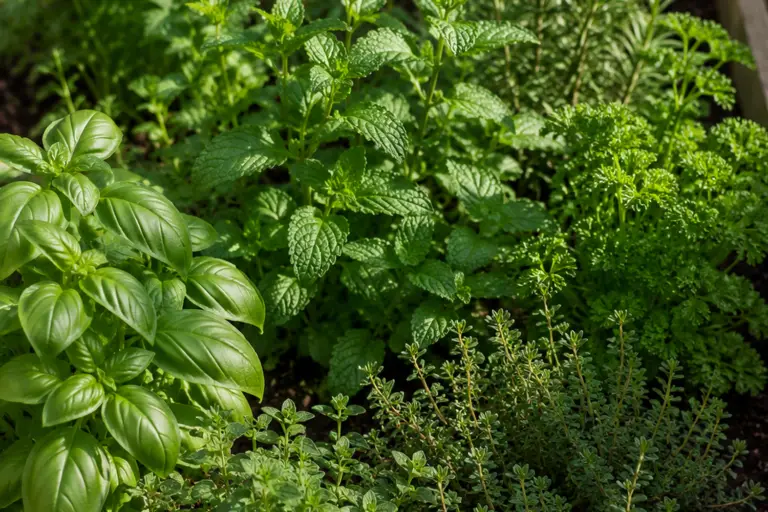
| Repeat harvest | Chard, kale, parsley, basil | Harvest outer leaves or tips without removing the whole plant |
| Compact fruiting crops | Dwarf tomato, pepper, patio eggplant | Need strong light and suitably large containers |
| Vertical crops | Pole beans, climbing peas, compact vining cucumber | Need stable support and thoughtful shade placement |
| Edible edging | Thyme, chives, strawberries, nasturtiums | Keep spreading habits and local climate in mind |
Grow what you actually enjoy eating. One frequently harvested herb can be more valuable than a large crop that no one uses. If you need a manageable first list, start with these easy vegetables for beginner gardeners, then narrow the choices to those suited to your climate and space.
A small label does not guarantee a small plant
Check the mature height and spread for the specific cultivar. Also include the room occupied by a cage, trellis, or vines. Avoid buying a full collection of seedlings before drawing where each mature plant will fit.
Step 5: Draw a Beautiful, Productive Layout
Begin with circulation. Draw the entrance, the main path, and the place where you will stand to care for each plant. Keep frequently harvested herbs and greens near the entrance. Put large permanent containers where they will not need to be moved.
Next, place the tallest plants and structures. In much of the Northern Hemisphere, positioning tall crops toward the north side of an open garden can reduce unwanted shade, but buildings, balconies, and local sun angles can change that rule. Use your observations rather than a compass direction alone.
Repeat materials and colors to create visual unity. Two container finishes and a restrained flower palette are often enough. Allow one focal point—a handsome trellis, specimen pot, small chair, or flowering container—rather than making every item compete for attention.
A simple 6 × 8-foot layout

In a hypothetical 6 × 8-ft ground-level space, protect a central path at least 24 inches wide and keep planting areas narrow enough to reach. Place a secured trellis along the least-shading sunny edge for pole beans or a compact cucumber. Use the brightest remaining corner for one dwarf tomato or pepper in a large container.
Plant chard and repeat-sown leafy greens in the accessible middle zone. Keep basil and parsley near the entrance for frequent harvest. Add a restrained band of locally appropriate flowers around one edge instead of scattering decorative pots through the path.
This is an example, not a universal planting diagram. Adjust crop timing to your climate, rotate the plan as sunlight requires, and reduce the number of plants if their labeled mature widths overlap.
Step 6: Use Vertical Space Without Creating New Problems

Vertical gardening moves compatible vines upward, frees paths, and can make harvesting easier. It does not reduce the plant’s need for root room, sunlight, water, or airflow. A vigorous vine in a small pot is still a vigorous plant.
Use a sturdy vegetable trellis appropriate for the mature crop and secure it before the plant becomes heavy. Consider wind exposure, attachment rules, and the weight of wet foliage and fruit. Do not attach supports to railings or shared structures without permission.
Train young vines gently and inspect ties as stems enlarge. Pole beans, peas, and many cucumbers naturally climb, although they use different methods to grip supports. Heavy fruits may need individual slings. The complete simple garden trellis project provides a fixed freestanding option for a suitable ground-level site.
Step 7: Plan Watering, Feeding, and Replanting
Water the root zone, not the calendar
Check moisture with your finger or another appropriate method and water according to plant size, container volume, growing medium, temperature, wind, and rainfall. Newly planted crops and small containers need closer observation. Hot pavement and reflective walls can intensify drying.
Water thoroughly enough to moisten the active root zone and allow excess water to drain. Empty standing water from saucers when it creates a root-health or mosquito problem. A compact drip-irrigation kit can reduce daily hand watering, but it still needs inspection for blocked emitters, leaks, and uneven coverage.
Feed according to the growing system
Container mixes hold a limited nutrient supply, and frequent watering can move nutrients through the pot. Follow crop and product directions rather than assuming more fertilizer will create more harvest. For in-ground or permanent raised beds, use a laboratory soil test where available before making major pH or fertility changes.
Use succession planting carefully
When a fast crop finishes, replace it with another crop suited to the next part of the season. For example, spring radishes may give way to bush beans, while summer beans may be followed by cool-season greens where the climate allows. Check local frost dates and the variety’s days to maturity before sowing.
Do not replant every opening immediately. A deliberate empty patch can improve airflow, provide access, or make room for a neighboring plant approaching mature size.

Common Small-Space Gardening Mistakes
Buying plants before assessing the site
A plant list cannot fix insufficient sunlight, poor drainage, or an inaccessible layout. Complete the site map first, then shop from a short list with mature dimensions.
Using containers that are too small or lack drainage
Undersized pots dry rapidly and restrict roots. Decorative cachepots can hide standing water. Match the container to the crop and ensure excess water has a safe route out.
Treating vertical gardening as unlimited space
Trellised crops still cast shade, catch wind, and need soil volume. Draw their mature height and width on the plan instead of counting only their footprint.
Ignoring daily access
If reaching one pot requires moving three others, routine inspection will be delayed. Keep harvesting, watering, and pest checks easy. When damage appears, identify the cause before treating it; this beginner garden pest-control guide explains a careful monitoring-first approach.
Planting every space at once
Seedlings make a garden look empty at first, but they expand. Overcrowding reduces access and airflow and increases competition for water and nutrients. Use the mature spacing on the seed packet or plant label and accept some visible soil early in the season.
Myth
A productive small garden must use every inch
Reality
Productivity depends on healthy plants and consistent care, not complete surface coverage. Paths, airflow, access, and correctly sized root zones are working parts of the garden. Leaving them out can reduce plant health and make harvesting harder.
Frequently Asked Questions
How small can a productive garden be?
A few suitable containers on a sunny balcony or patio can produce herbs, leafy greens, peppers, compact tomatoes, or other selected crops. Productivity depends more on conditions, crop choice, root space, and care than on a minimum square footage.
What should a beginner grow in a small garden?
Start with crops you use and that suit your light and climate. Herbs, leaf lettuce, radishes, chard, bush beans, peppers, and compact tomato or cucumber cultivars can be practical choices when each receives appropriate space and care.
Are containers or raised beds better for small-space gardening?
Containers are more flexible on balconies, patios, and rental properties. Raised beds offer connected soil volume and a defined layout but cost more and are relatively permanent. The better choice is the one that matches your surface, access, budget, structural limits, and watering routine.
Can vegetables grow with only four hours of sun?
Some leafy vegetables may produce with three to five hours of direct sun, although growth can be slower. Fruiting warm-season crops generally need more direct light. Observe the actual site and choose crops for its conditions rather than expecting shade-tolerant crops to perform like full-sun plants.
How do you keep a small garden from looking cluttered?
Limit container finishes and colors, repeat a few plant forms, maintain a visible path, group small pots, and choose one focal point. Most importantly, plan for mature plant sizes and remove unused equipment from the growing area.
Start With a Garden You Can Maintain
A beautiful, productive small garden begins with restraint. Measure first, protect access, choose one main growing system, and select a short list of compact plants that match the available sun. Add vertical supports only where they are stable and useful.
Build the first season around what you can water and inspect consistently. Record where shade falls, how quickly containers dry, which harvests you use, and which plants outgrow their assigned space. Those observations will make the second season’s plan more accurate than any generic layout.
Your garden does not need to look full on planting day. Give it enough structure to feel intentional and enough open room to grow. That balance is what allows a small space to remain calm, accessible, and genuinely productive.
Sources and Further Reading
- University of Maryland Extension: Growing Vegetables in Containers — crop choices, sunlight, water access, microclimates, and container-weight cautions.
- University of Maryland Extension: Growing Vegetables in Raised Beds — bed dimensions, drainage, soil, access, and raised-bed tradeoffs.
- University of Minnesota Extension: Planting the Vegetable Garden — crop timing, site conditions, and beginner planting considerations.
- University of Minnesota Extension: Trellises and Cages to Support Garden Vegetables — support options and crop-training principles.
- University of Maryland Extension: Soil Testing and Soil Testing Labs — laboratory testing and interpreting soil needs before amendments.