17 Smart Narrow Backyard Garden Ideas for Long, Small Spaces

Narrow backyard garden ideas work best when they address the shape of the space instead of disguising it with random features. A long, small yard needs a dependable route from the house to the far end, planting areas that remain reachable, and enough visual variety to stop the garden from feeling like a corridor.
The 17 ideas below combine garden-design principles with practical growing space. You can use them for an ornamental retreat, an edible garden, or a balanced mix of seating, vegetables, herbs, and flowers. Each idea includes its best use and its main limitation so you can adapt it to your yard rather than copy it blindly.
In Short
To improve a long, narrow backyard, preserve one continuous path, divide the length into two or three purposeful zones, and use a focal point to give the view a destination. Keep planting borders slim enough to reach, repeat a limited palette of plants and materials, and place tall or vertical elements where they will not create unwanted shade. Measure doors, gates, utilities, drainage, and mature plant spread before installing anything permanent.
Key Takeaways
- A clear route is essential; a design that blocks everyday circulation will not remain functional.
- Breaking the length into a few connected zones makes the garden feel more intentional.
- Offset paths and controlled sightlines can reduce the tunnel effect without making movement awkward.
- Vertical growing saves ground space only when supports are stable and their shade is planned.
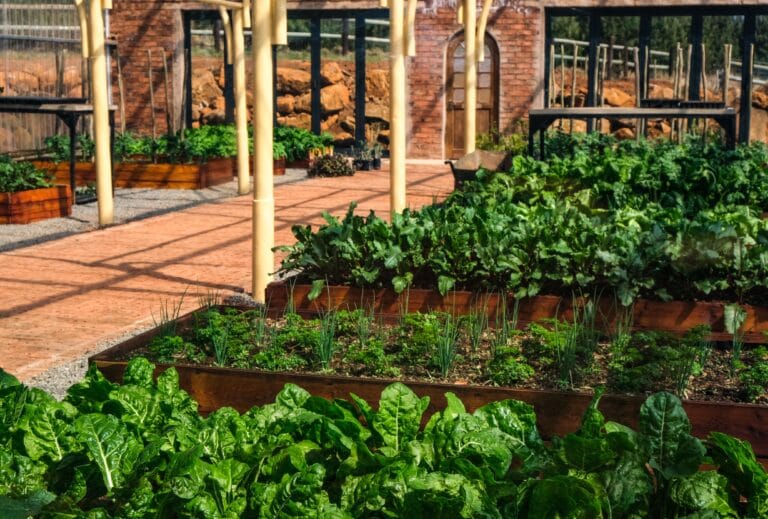
- Repeating materials and plants creates unity; too many unrelated features make a narrow yard feel smaller.
Plan the Long, Narrow Shape Before You Plant
Begin with measurements, not shopping. Mark the house, doors, gate, steps, sheds, utility covers, drains, hose connection, existing trees, and any route that must stay open. A long garden measuring tape and a simple scale sketch are sufficient. Draw permanent objects first, then test alternative paths and zones around them.
Observe direct sunlight at several times of day. A long yard may contain full sun near one end, reflected heat beside a wall, and persistent shade near the house or fence. For many fruiting vegetables, a location receiving roughly six to eight hours of direct sun is preferable, while some leafy crops tolerate less. Plant choice should follow the measured site rather than a generic layout.
Protect the working route
Decide how the path must function. A rarely used stepping route has different requirements from a walkway used for bins, a wheelbarrow, bicycles, or accessible entry. Keep doors, gates, and service points clear. If the path is also part of the design, the guide to simple garden pathway ideas can help you compare practical surfaces.
Draw plants at mature size
Nursery pots create a misleading sense of empty space. Sketch the expected mature width of shrubs, perennials, vegetables, and container plants. Leave room to prune, harvest, water, and pass without brushing against thorny or wet foliage. This step is particularly important in a narrow yard, where a plant extending 12 inches farther than expected can noticeably reduce circulation.
Before digging, check for underground utilities and confirm local requirements. Keep permanent beds, posts, walls, and large containers away from utility access, drainage routes, gates, and required exits. Do not attach heavy trellises or planters to a fence or building unless the structure and fasteners are suitable.
17 Narrow Backyard Garden Ideas for Long, Small Spaces
1. Build a Straight Central Path With Slim Borders

Best for: A yard that serves as the main route between the house and a rear gate, shed, or service area.
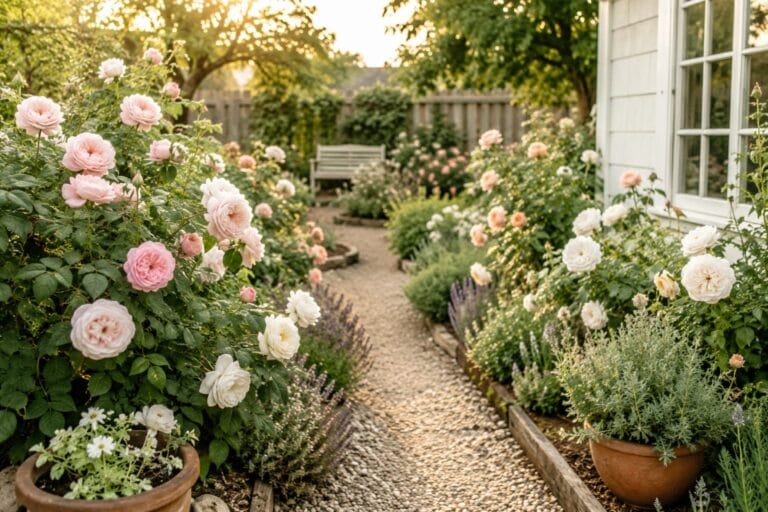
Run a direct path through the middle and place narrow beds along both boundaries. Repeating the same edging and a limited plant palette produces a clean, orderly view. Keep the borders within comfortable reach and use the brightest side for sun-loving vegetables or flowers. The straight sightline can emphasize length, so add changes in planting height or a focal point to prevent a tunnel-like result.
2. Use an Offset Stepping Path

Best for: A relaxed garden where the route is used mainly on foot.
Shift the path gently from one side to the other instead of forcing an exaggerated curve into a small space. Planting pockets can alternate beside the route, creating a slower visual rhythm and partially screening the far end. Keep the path legible and stable; excessive bends become frustrating when carrying tools, watering cans, or harvested produce.
3. Divide the Length Into Three Garden Rooms

Best for: A backyard expected to support several activities.
Create a near-house zone for daily use, a central planting zone, and a quiet destination at the far end. Change the ground material, planting character, or orientation slightly between them while repeating colors and materials throughout. Low screens, an open trellis, or offset planting can suggest separation without closing the space. Three clear zones are usually more coherent than many tiny themed areas.
4. Make the Far End Feel Wider

Best for: A backyard that feels pinched or visually distant.
Keep the entrance relatively simple, then widen the path, planting pocket, or seating area toward the rear. A broader destination interrupts the impression of one endless strip. Use a lighter surface or lower planting at the destination to open the view. This approach needs accurate planning because an oversized rear feature can consume the only useful sunny growing area.
5. Add One Focal Point at the Far End

Best for: A garden viewed frequently from a window or back door.
Give the long sightline a clear destination with one specimen plant, painted gate, large container, birdbath, or compact seat. Keep the scale proportionate and repeat its color elsewhere in smaller accents. A weather-resistant garden bench can work when the rear area is level and usable. Avoid combining several competing ornaments; one strong endpoint is usually more effective.
6. Plant the Perimeter and Keep the Center Open

Best for: Families, pets, flexible entertaining, or anyone who needs an adaptable center.
Concentrate planting along the boundaries and preserve a simple central surface. The open area may be lawn, permeable paving, gravel, or another site-appropriate finish. Vary border depth modestly rather than creating two rigid parallel lines. This layout feels calm and flexible, but the perimeter must not become so deep that the back of each bed is unreachable.
7. Create One Productive Border

Best for: A sunny boundary where you want edible plants without converting the entire yard.
Use one long, reachable border for compact vegetables, herbs, and a restrained selection of flowers. Repeat a few crops instead of planting one of everything. Put frequently harvested herbs near the house and taller plants where their shade causes the least conflict. If you need more inspiration before choosing the balance of beauty and production, explore these small backyard garden ideas.
8. Alternate Planting Pockets Along the Path

Best for: A narrow yard that needs movement without losing a continuous route.
Place a wider planting pocket on the left, then another farther ahead on the right. The alternating shapes interrupt the corridor effect and create natural positions for a shrub, vegetable grouping, or seasonal display. Connect the pockets with repeated edging or plant colors. Do not narrow the route unpredictably; test the plan with the widest object that regularly moves through the yard.
9. Put a Small Patio Near the House

Best for: Outdoor meals, morning coffee, or easy access from the kitchen.
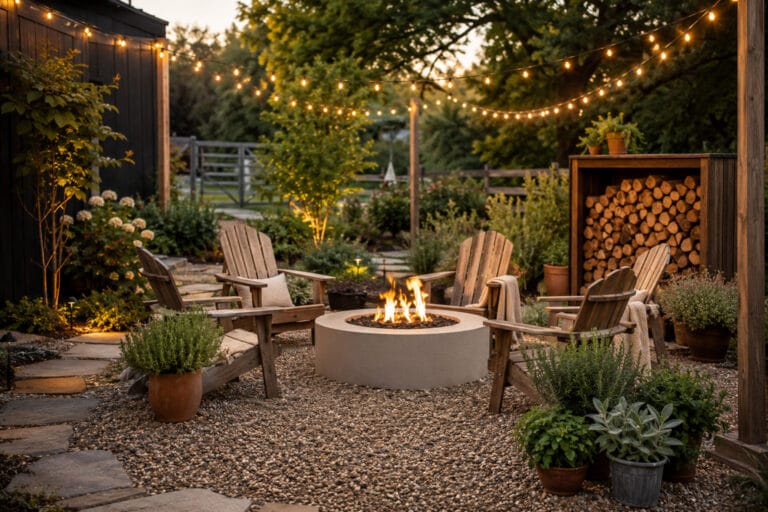
Use the widest area beside the house for a compact patio, then lead into a greener, more productive section. Choose furniture that fits with chairs pulled out, not merely tucked under the table. Keep the doorway, drainage, and path unobstructed. Repeating one patio material as path edging or stepping stones helps connect this hard-surface zone to the garden beyond.
10. Line One Edge With Slim Raised Beds

Best for: Organized vegetable growing where the native soil is difficult or access matters.
Place a sequence of narrow beds along one sunny edge instead of installing one bed that is too wide to reach. Small gaps can provide access to the boundary and create separate crop sections. A slim modular raised-bed kit may simplify the layout, but confirm outside dimensions before buying. Use the raised-bed gardening guide to plan bed width, soil depth, and placement.
11. Build a Freestanding Trellis Corridor

Best for: A sunny productive yard where climbing crops can replace some ground-level sprawl.
Install a stable trellis along one boundary or at the transition between two zones. Grow suitable climbing beans, cucumbers, or ornamental vines upward while keeping the opposite edge lower and open. A freestanding garden trellis avoids relying on a questionable fence. Check sun direction and wind exposure first, then follow the measurements and safety guidance in the simple trellis tutorial.
12. Train Fruit Along a Sunny Boundary

Best for: A gardener prepared to prune and train site-appropriate fruit over time.
Espaliered or otherwise trained fruit trees can use a vertical plane while leaving more ground area open. Success depends on choosing a fruit and rootstock suited to the local climate, soil, chill requirements, disease pressure, and available sun. Provide a properly designed support and ongoing pruning. This is not a maintenance-free shortcut, and boundary ownership must be confirmed before attaching anything.
13. Repeat Container Groups Down One Side

Best for: Renters, paved yards, or gardeners who need a reversible layout.
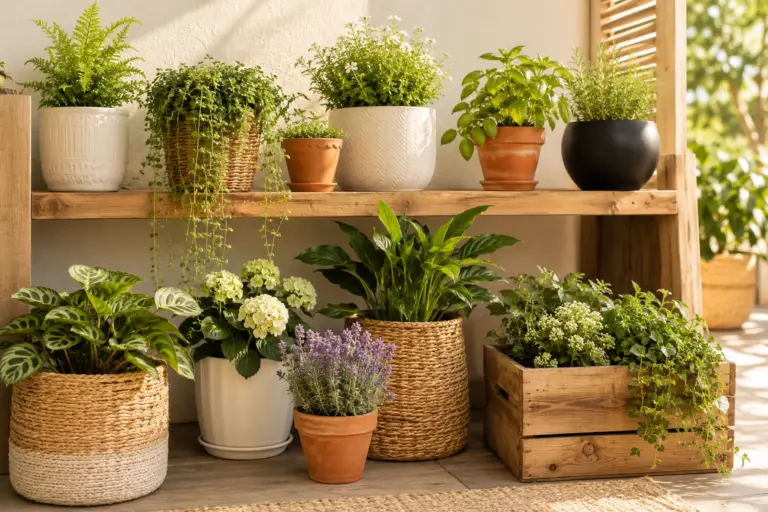
Arrange containers in two or three repeated groups rather than scattering individual pots along the whole path. Vary height within each group, but repeat container colors or materials for unity. Match pot volume to mature root and top growth; large plants in undersized pots dry quickly and may become unstable. Group plants with similar light and watering needs while keeping drains and doors clear.
14. Make a Kitchen-Door Herb and Salad Zone

Best for: Frequent harvesting from a small sunny area near the house.
Place culinary herbs, cut-and-come-again greens, radishes, or other compact crops near the door in containers or a narrow bed. Easy access makes checking moisture and harvesting more convenient. Select crops for the actual light and season, and avoid blocking the threshold. If you are choosing your first crops, this guide to easy vegetables for beginners provides a practical starting point.
15. Use a Suitable Low Point as a Rain Garden

Best for: A site with a verified drainage opportunity and enough separation from structures and utilities.
A shallow planted depression at the lower end may temporarily receive runoff and add a distinct destination to the yard. This option requires more assessment than a decorative bed: observe where water comes from, how quickly soil drains, and where overflow would travel. Follow local rain-garden guidance, use plants suited to alternating wet and dry conditions, and never direct water toward foundations, neighboring property, septic systems, or utilities.
16. Combine a Pollinator Ribbon With Edible Pockets

Best for: A sunny border where seasonal interest and food production should look cohesive.
Repeat locally appropriate flowering plants along the border and interrupt the ribbon with defined pockets of chard, parsley, basil, compact peppers, or other suitable crops. Choose flowers with varied bloom periods and forms, and confirm edibility before harvesting any flower. Avoid pesticide practices that conflict with pollinators or food crops. Repetition is more effective than filling the narrow strip with unrelated plants.
17. Keep a Flexible Open Spine

Best for: A very small yard that must change between gardening, play, storage, and entertaining.
Reserve a durable open strip through the center and place most growing features at the edges. Use folding furniture, movable pots, and one compact storage point rather than permanent objects throughout the route. A compact drip-irrigation kit can reduce hose clutter when it is correctly planned for the chosen containers or beds. The strength of this layout is flexibility, so avoid gradually filling the open spine with decorative objects.
How to Make a Narrow Backyard Feel Wider
Width is not only a measurement; it is also a visual impression. Avoid running identical tall walls of planting down both sides. Use lower plants near key viewing points, allow some boundaries to remain visible, and vary bed depth gently. Wider paving lines or planting bands that cross the yard can visually interrupt its length.
Repeat a limited set of materials, colors, and plant forms from front to back. This creates unity without monotony. Contrast should be purposeful: a terracotta container repeated in three zones is more coherent than a collection of unrelated decorative objects. The principles in these small garden design tips can help refine scale, repetition, and focal points.
[ds_tip]
Stand at the main window or doorway and photograph the empty space before finalizing the plan. Mark the dominant sightline on your sketch. A focal point placed where you naturally look will usually have more impact than an ornament positioned only to fill an unused corner.
[/ds_tip]
Common Narrow Garden Design Mistakes
Making every feature long and straight
A straight route may be necessary, but matching it with uninterrupted borders, identical fences, and a distant empty endpoint exaggerates the corridor effect. Add controlled changes in width, height, texture, or use while keeping circulation simple.
Using tall screening on both boundaries
Privacy planting can reduce usable width, light, and airflow as it matures. Screen the specific view that needs blocking rather than building two continuous walls of foliage. Confirm mature height and spread, and consider whether an open trellis or strategically placed shrub can solve the problem with less bulk.
Treating paths as wasted space
A path makes the rest of the garden usable. When access is removed to gain a few more plants, soil becomes compacted, harvesting is inconvenient, and maintenance is postponed. Design the route first, then use the remaining footprint efficiently.
Buying before measuring
Furniture, raised beds, and containers may fit technically while leaving too little room to walk or open a gate. Add the space required to use each object, including chair movement, door swings, plant spread, and access for maintenance.
Ignoring water and drainage
A hose dragged through a narrow planting scheme can damage plants and create clutter. Plan irrigation routes early and keep emitters appropriate to the plants and soil. Preserve drainage paths and correct persistent water problems before installing valuable plants or structures.
Myth
A winding path always makes a narrow garden look wider
Reality
A gentle offset can interrupt a long sightline, but forced curves may waste space and make movement inconvenient. The best path follows how the yard must function. Zoning, focal points, planting height, and changes in surface can add visual interest even when the practical route needs to remain straight.
Frequently Asked Questions
How do you break up a long, narrow backyard?
Divide it into two or three connected zones with different functions, such as a near-house patio, central planting area, and far-end seating or focal point. Suggest separation with changes in surface, planting, or an open screen while preserving one continuous route.
Should a narrow garden path be straight or curved?
Choose according to function. A straight path is efficient for regular access, bins, bicycles, or a wheelbarrow. A gentle offset can slow the view in a relaxed garden. Avoid exaggerated curves that reduce planting space or create awkward movement.
What can you grow in a narrow backyard?
The answer depends on sunlight, climate, soil, water, and available width. Compact vegetables, culinary herbs, leafy greens, trained fruit, narrow shrubs, perennials, and climbing plants can all work when their mature dimensions and support needs fit the site.
How can you add privacy without making a narrow yard feel smaller?
Screen the specific unwanted view instead of planting tall material along every boundary. Use one well-placed shrub, an open trellis with a suitable vine, or layered planting with lower foliage nearby. Check mature size so the screen does not consume the path.
Are raised beds suitable for a long, narrow garden?
Yes, when the beds remain reachable and leave a continuous path. A line of slim beds along one edge is often more functional than a wide central bed. Confirm the full outside dimensions, access gaps, sun, drainage, and irrigation before installation.
How do you plan lighting in a narrow backyard?
Light the route, steps, level changes, and entrances first. Use fixtures rated for the location and follow local electrical requirements. Keep the scheme restrained to avoid glare into windows or neighboring properties, and do not run unsafe temporary cords through wet planting areas.
Choose One Strong Layout and Build It Gradually
The most successful narrow backyard garden ideas do not try to hide every inch of the original shape. They use that length deliberately—with a dependable route, a few clear zones, repeated materials, and one visual destination.
Begin with the non-negotiables: access, sunlight, drainage, water, utilities, and mature plant size. Then select one organizing idea, such as an offset path, three garden rooms, a productive border, slim raised beds, or a flexible open spine. Add permanent features only after testing their dimensions on the ground.
If budget is the next constraint, continue with these budget-friendly garden landscaping ideas and phase the design without losing its overall structure.
Sources and Further Reading
- University of Maryland Extension: Planning a Vegetable Garden — choosing among in-ground beds, raised beds, containers, vertical systems, and other garden formats.
- University of Maryland Extension: Growing Vegetables in Containers and Salad Tables — container volume, stability, mature plant size, potting mix, and water-management considerations.
- University of Minnesota Extension: Raised Bed Gardens — sunlight, site selection, bed planning, and crop considerations.
- Penn State Extension: Principles of Garden Design — scale, unity, focal points, and purposeful garden planning.
- University of Illinois Extension: Engage Your Senses With a Vibrant Sensory Garden — planning paths, seating, focal points, mature plant dimensions, color, form, and texture.
- University of Maryland Extension: Pollinator Gardens — providing varied flowers, shelter, water, and seasonal resources for pollinators.