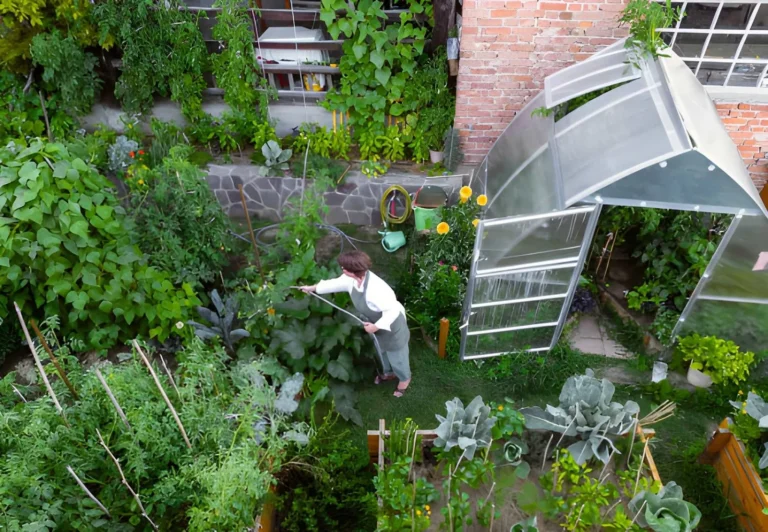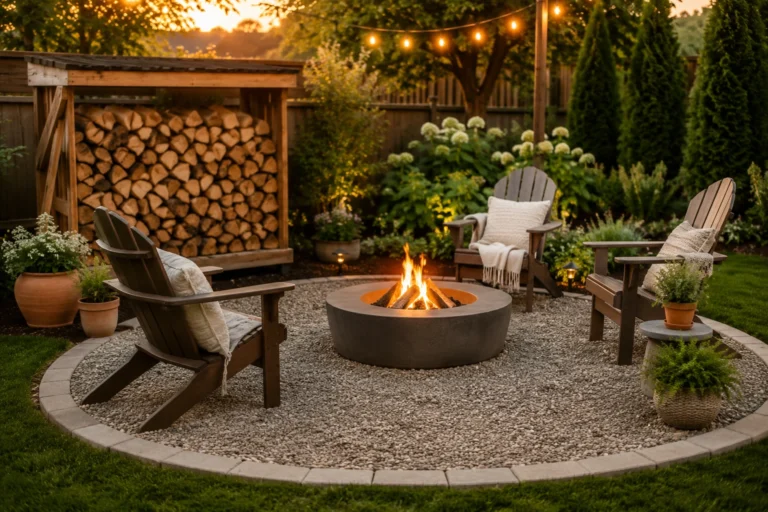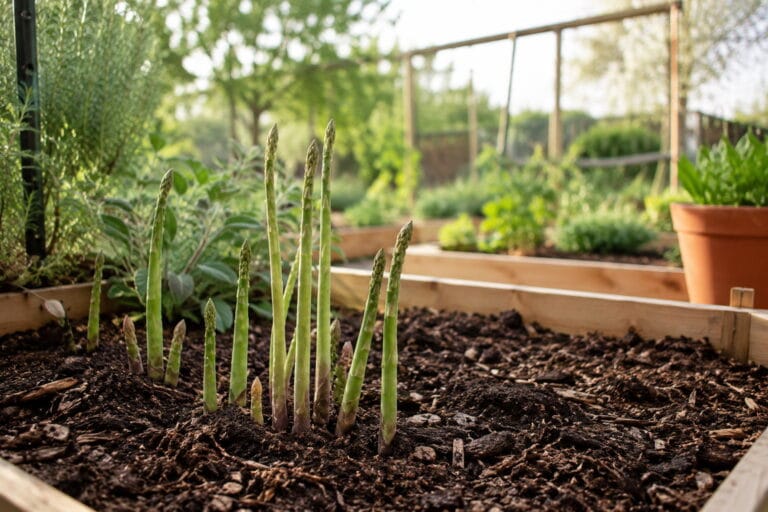
Small Garden Design Tips: 15 Clever Ways to Make a Tiny Garden Feel Beautiful
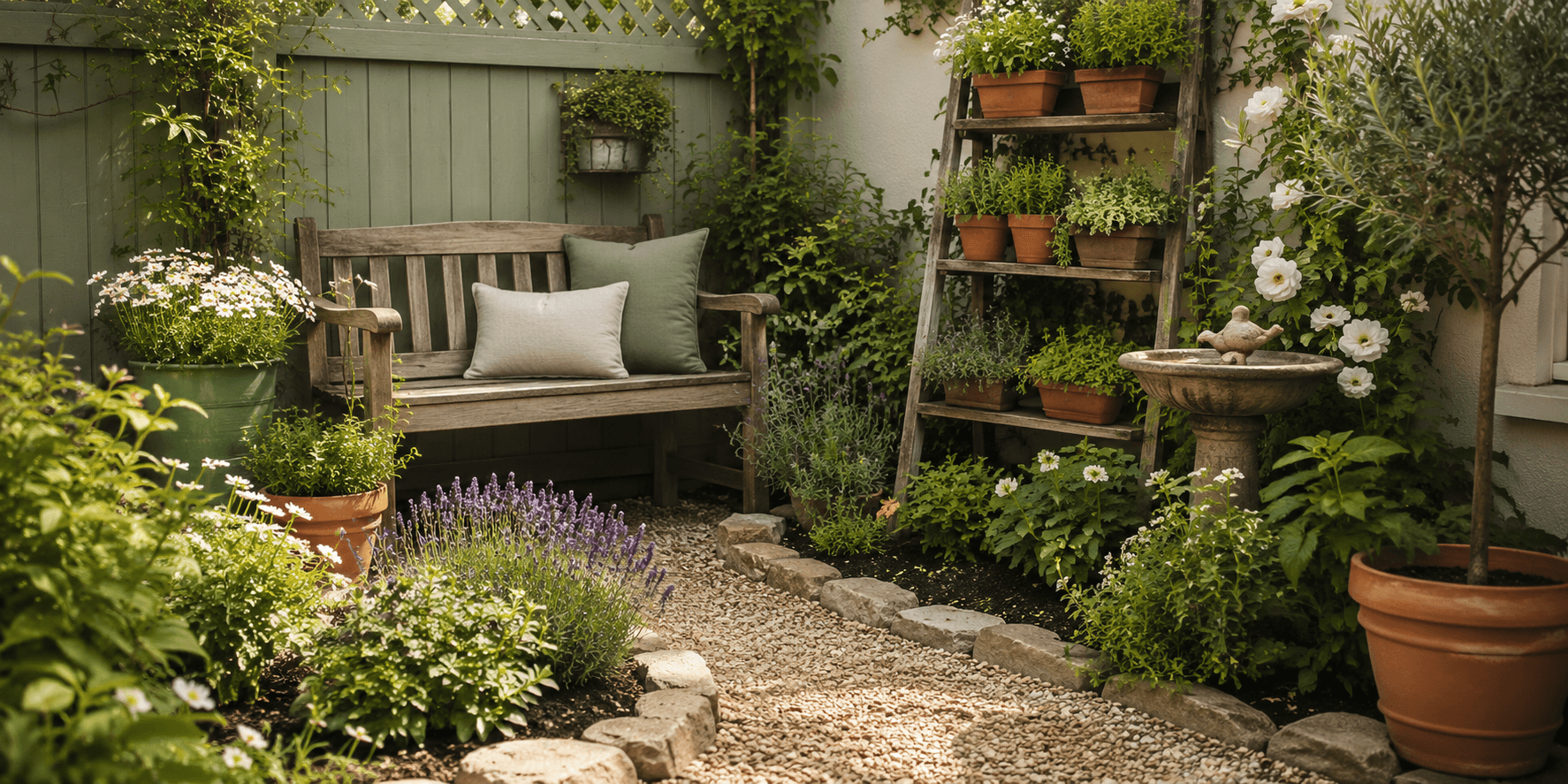
Small garden design tips can make a tiny outdoor area feel calmer, more attractive, and more useful without physically increasing its size. The most effective designs do not squeeze a miniature version of every backyard feature into the space. They establish a clear purpose, preserve comfortable movement, and use proportion, repetition, vertical surfaces, and carefully framed views to create a sense of order.
You can apply these principles to a narrow backyard, compact courtyard, patio garden, side yard, or small enclosed plot. Begin with the existing conditions rather than a shopping list. Once you understand the dimensions, sunlight, drainage, and way you want to use the garden, the following 15 ideas will help you create a space that feels intentional instead of crowded.
In Short
To make a tiny garden feel beautiful, give it one main purpose, maintain a clear route through the space, and choose features that fit its proportions. Repeat a limited palette of plants and materials, use vertical surfaces, layer plants by height, place one focal point carefully, and leave some open space so every part of the garden can be seen and used comfortably.
Key Takeaways
- Measure the garden and map fixed features before buying plants, furniture, or structures.
- A simple layout with one main route generally feels larger than several competing pathways.
- Vertical planting, narrow borders, and multipurpose furniture preserve valuable floor space.
- Repeating a limited group of plants, colors, and materials creates visual continuity.
- Plant suitability depends on mature size, sunlight, soil, water, climate, and local conditions—not appearance alone.
Start With the Function of Your Small Garden
A tiny garden works best when its design supports the way you will actually use it. Decide whether the main purpose is quiet seating, outdoor dining, growing herbs and vegetables, creating a colorful view from indoors, entertaining a few guests, or providing a safe family space.
You may be able to combine two compatible uses, such as a reading corner beside a container herb garden. Trying to create separate dining, lounging, play, storage, vegetable, wildlife, and fire-pit zones in a very small plot usually leaves each one undersized.
Measure the usable length and width. Record doors, windows, steps, gates, drains, utility equipment, outdoor faucets, existing trees, changes in level, and anything that must remain accessible. Observe where direct sun, shade, wind, and standing water occur. For broader inspiration before narrowing your choices, explore these small backyard garden ideas.
| Primary purpose | Features to prioritize | Features to limit |
|---|---|---|
| Quiet retreat | Comfortable chair, shade, privacy, calming focal point | Large dining furniture and excessive lighting |
| Outdoor dining | Stable surface, compact table, clear access, task lighting | Deep borders beside chair positions |
| Growing food | Sunlight, containers, raised bed, trellis, water access | Decorations that block productive space |
| Low maintenance | Site-suited plants, simple edges, mulch, accessible layout | Many tiny pots and high-care plant varieties |
15 Small Garden Design Tips That Make a Big Difference
1. Keep the Layout Simple
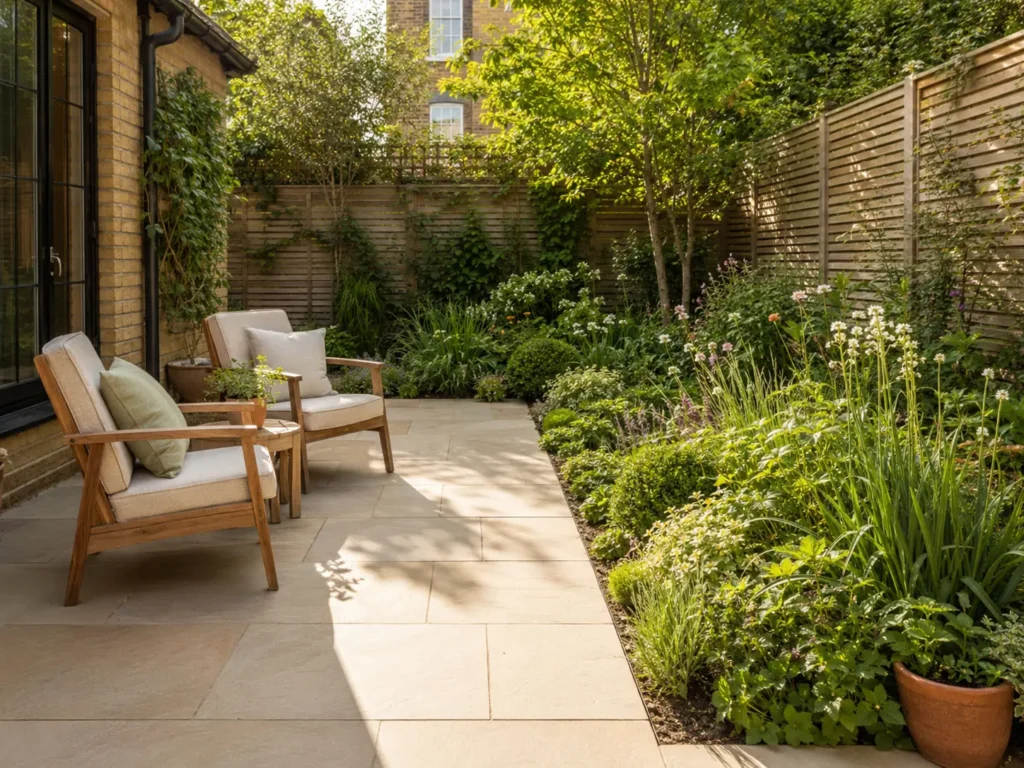
Begin with a few strong shapes rather than many small ones. A rectangular patio beside one continuous planting border will usually look calmer than several tiny beds, isolated pots, and broken strips of paving.
Simple does not mean empty or plain. It means every major area has a recognizable purpose. Establish the path, seating surface, and planting boundaries first. Add decorative details only after those larger shapes work together.
2. Preserve One Clear Route Through the Garden
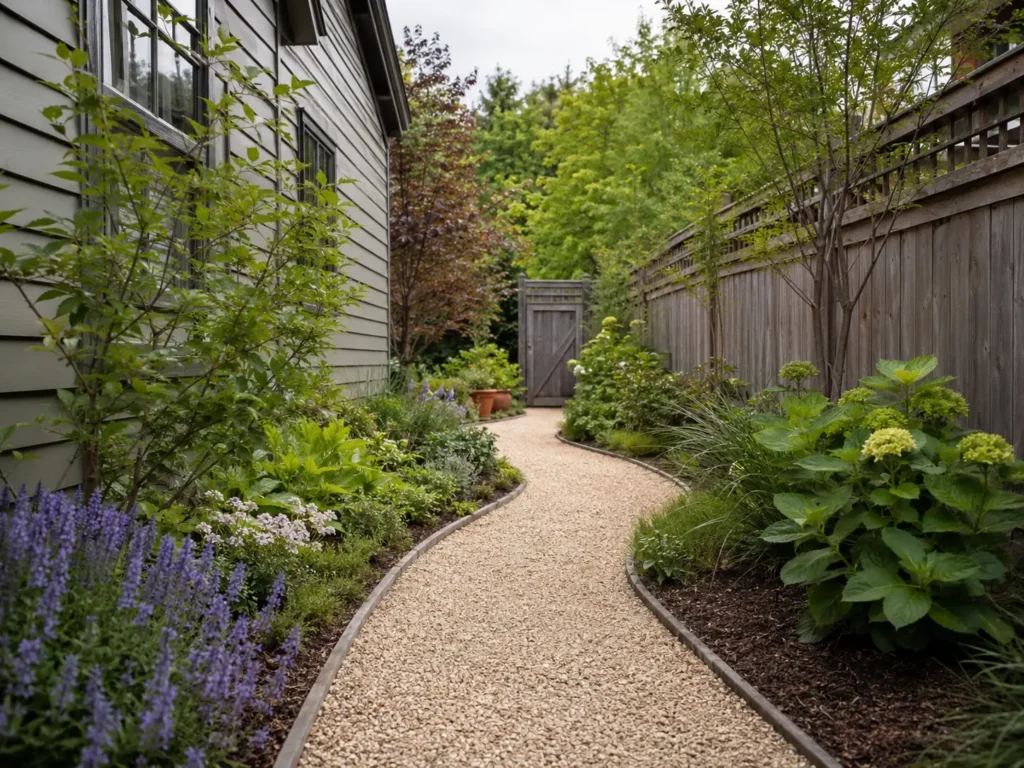
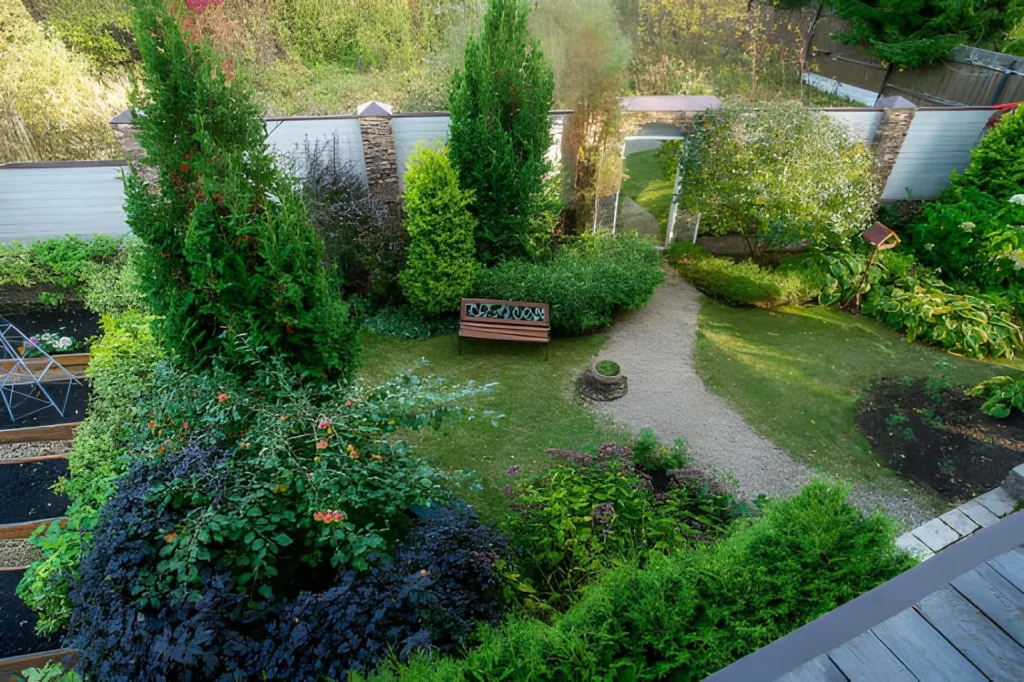
A continuous route makes the garden easier to enter, maintain, and enjoy. It should connect important destinations without forcing you around furniture, over hoses, or through planting beds.
A diagonal route can visually lengthen a square plot, while a gentle curve can make a narrow garden feel less rigid. The route should still appear purposeful and remain stable underfoot. These simple garden pathway ideas compare practical materials for different budgets and garden styles.
3. Use Larger Shapes Instead of Many Tiny Features
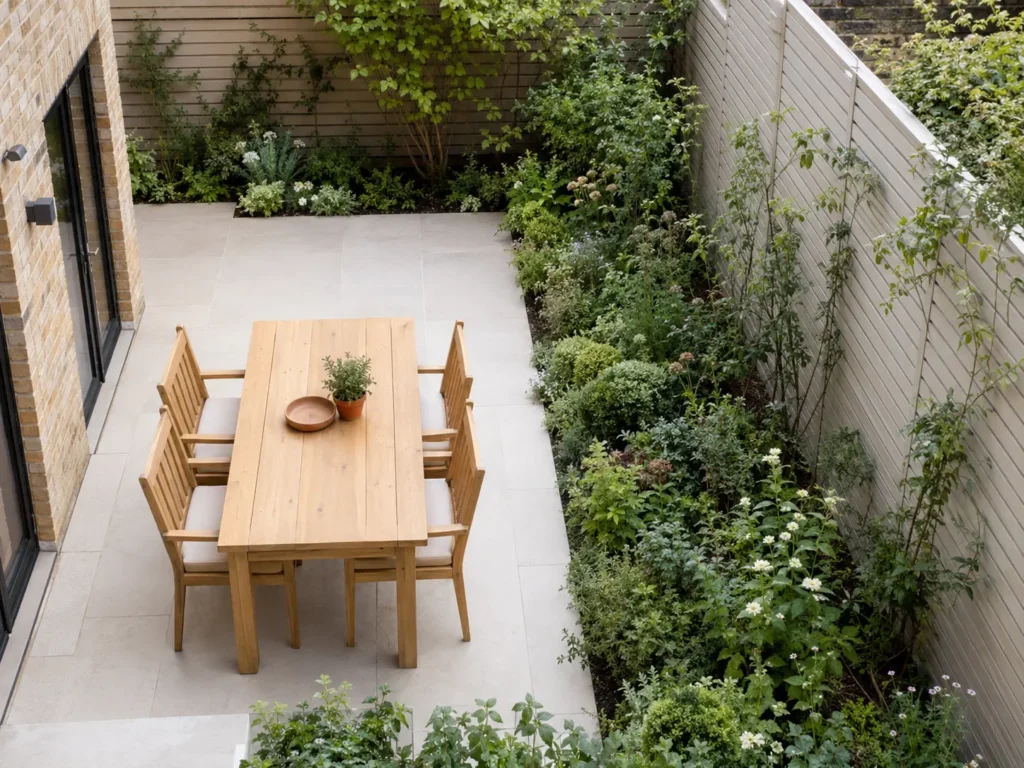
Tiny spaces do not require every object to be miniature. One appropriately scaled planting bed can feel more generous than five narrow fragments, and one useful patio can be more attractive than multiple surfaces divided by awkward gaps.
Choose fewer containers in sizes that support healthy roots and fit the available area. A group of three coordinated pots generally creates a stronger composition than a scattered collection of undersized containers.
4. Lead the Eye Toward the Far Boundary
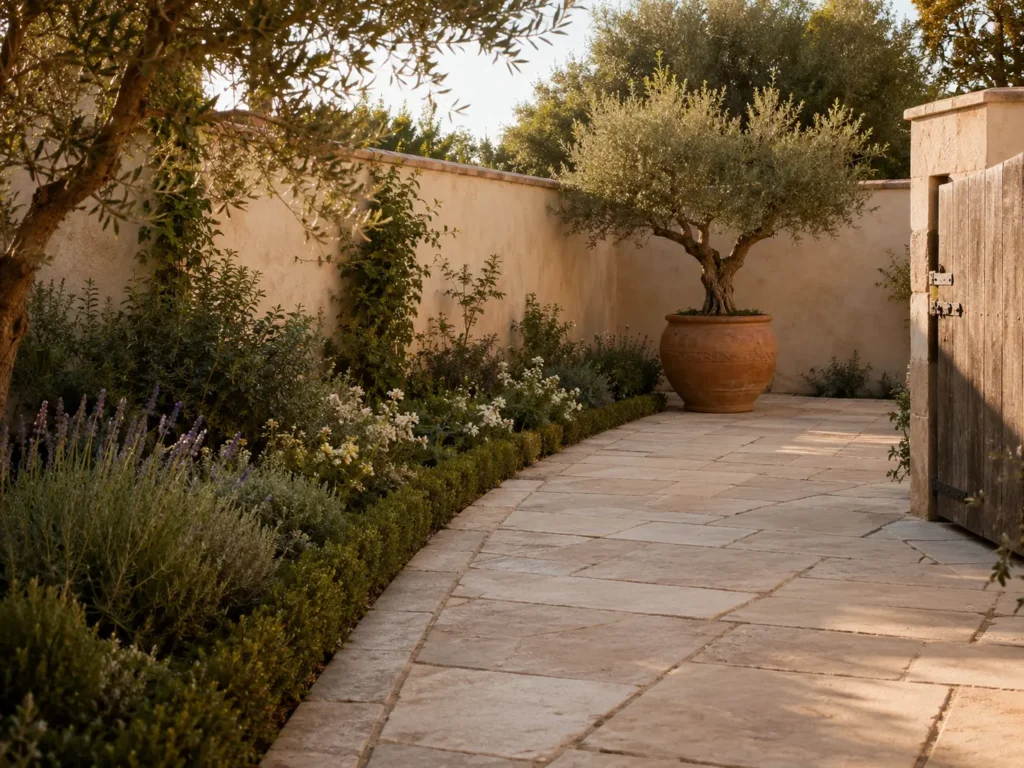
A clear visual destination encourages the eye to travel across the garden. Place a bench, specimen plant, large container, painted gate, sculpture, or modest water feature near the far end, provided it does not block access.
Use paving lines, border edges, repeated plants, or lighting to support that direction. Avoid placing several equally bold objects along the route because they interrupt the sense of depth.
5. Grow Vertically
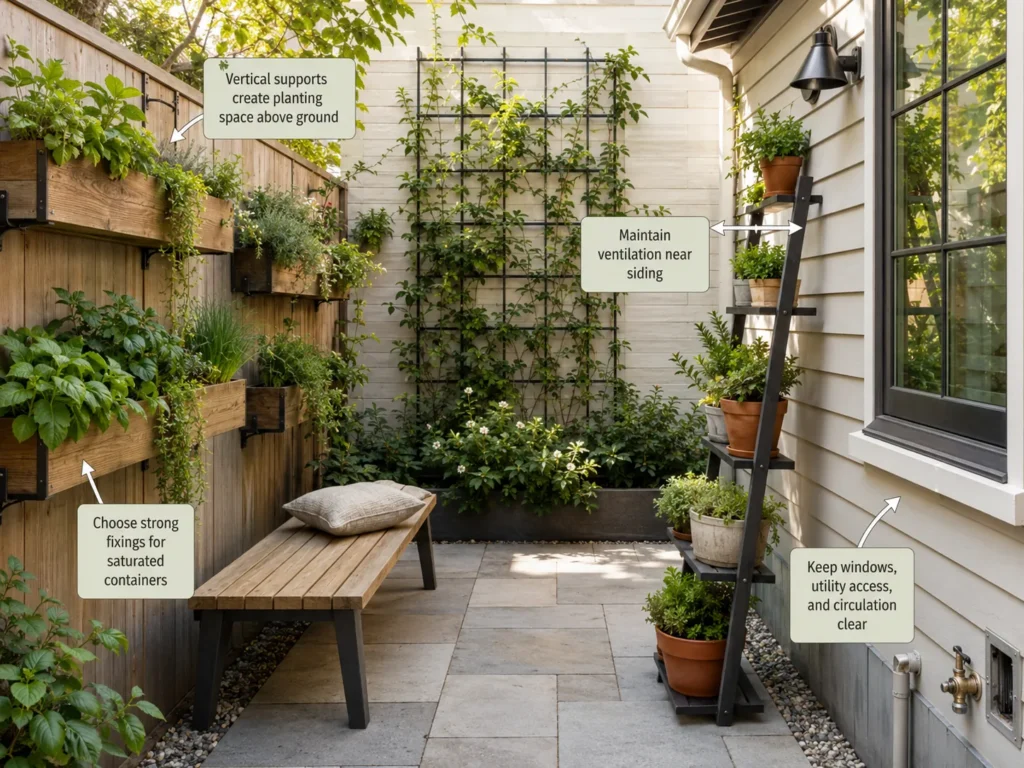
Walls, fences, trellises, arches, shelves, and freestanding supports can hold greenery above ground level. This provides planting space while preserving the garden floor for circulation or seating.
Match the support to the mature weight and growth habit of the plant. Maintain ventilation around siding, protect surfaces from trapped moisture, and keep access clear around utility meters, windows, gates, drains, and electrical equipment.
A strong weather-resistant garden trellis can support appropriate climbers, while secure wall planters can hold small herbs or seasonal plants. Confirm that every fixing and structure can carry the saturated weight of soil, plants, and containers.
6. Layer Plants From Low to Tall
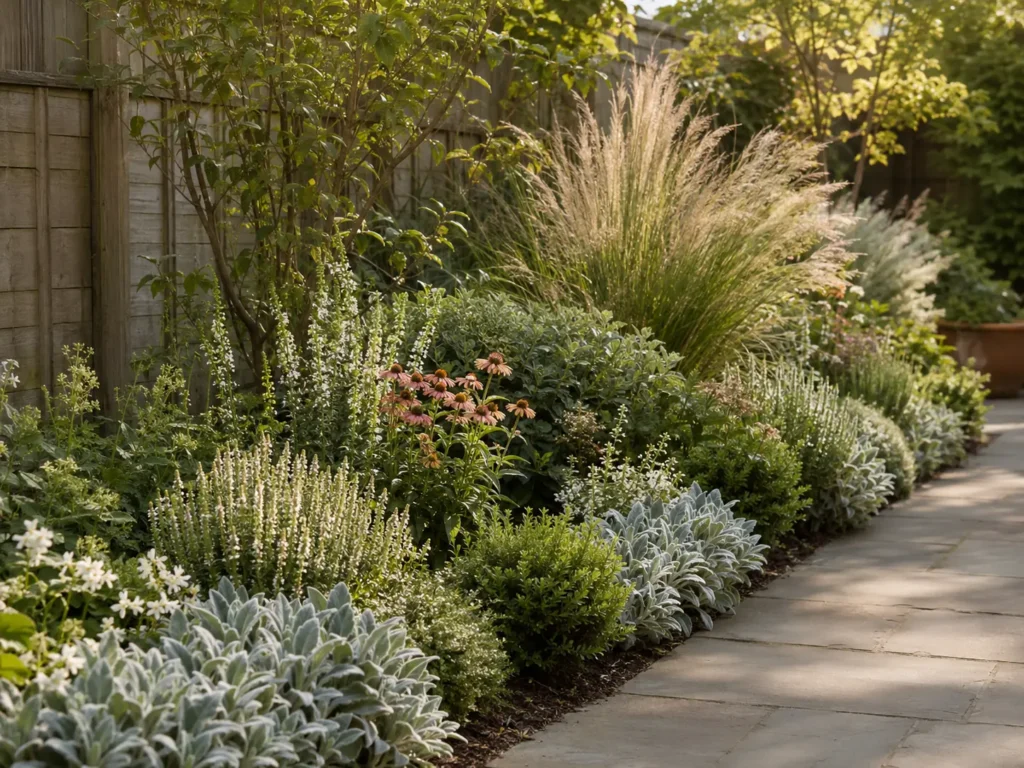
Layering creates depth within a narrow border. Place lower edging plants near the front, medium-height perennials or compact shrubs behind them, and taller plants toward the rear. In a bed viewed from all sides, place the tallest plants closer to the middle.
Check the mature height and width before planting. Young plants may look small at installation but can quickly block a path or overwhelm their neighbors. Allow enough space for air movement, access, and natural form.
7. Repeat Plants, Colors, and Materials
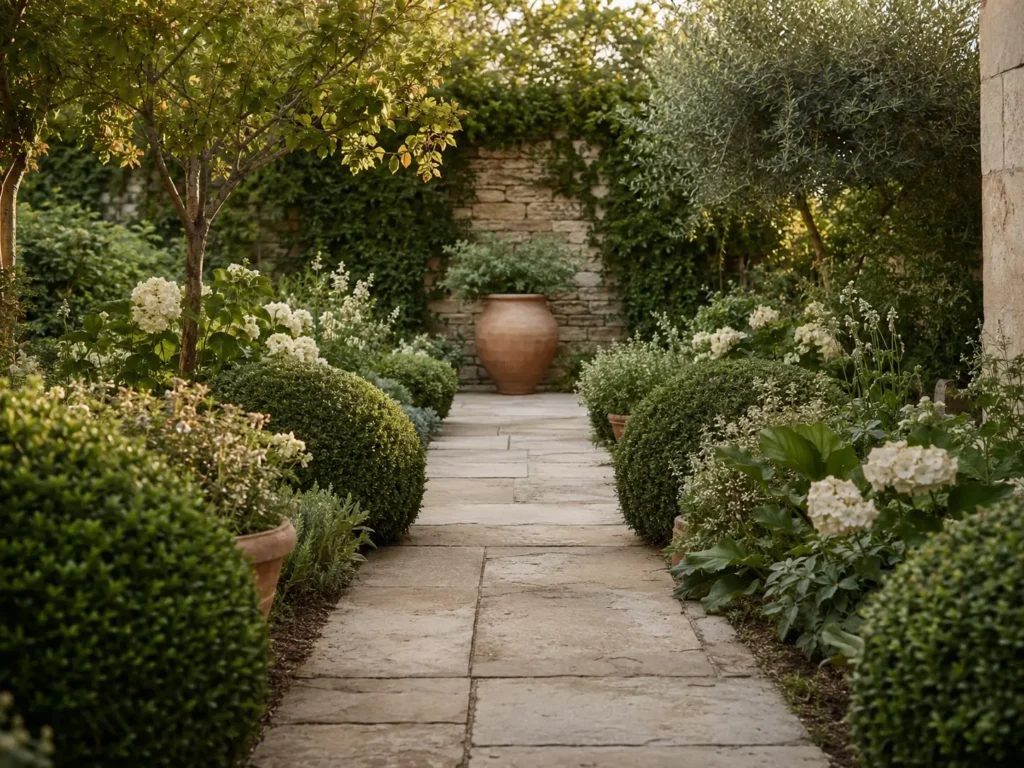
Repetition connects different parts of a tiny garden. Use the same foliage color in several locations, repeat one container material, or carry a paving color into a bench, edging, or focal feature.
A limited palette often makes the garden feel larger because the eye moves through it without repeatedly stopping at unrelated objects. You can still create variety through leaf shape, plant height, seasonal flowers, and texture.
8. Create a Coordinated Container Group
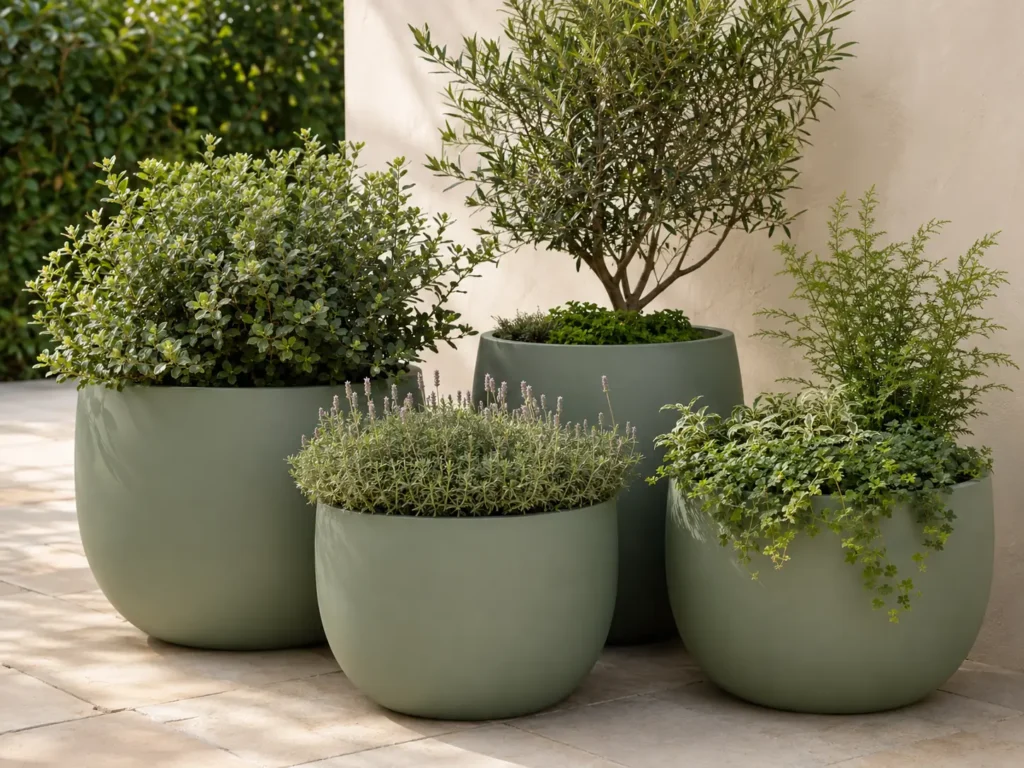
Containers are useful where soil is poor, digging is impossible, or the design needs seasonal flexibility. Arrange several pots as one composition rather than scattering them wherever space remains.
Vary the heights while repeating a color, finish, or shape. Each container needs suitable drainage, an appropriate growing medium, and enough volume for the mature plant. Large pots are heavy when wet, so place them on a stable surface before filling them. These aesthetic plant-pot ideas can help you build a more cohesive display.
9. Choose Furniture With Visual Breathing Room
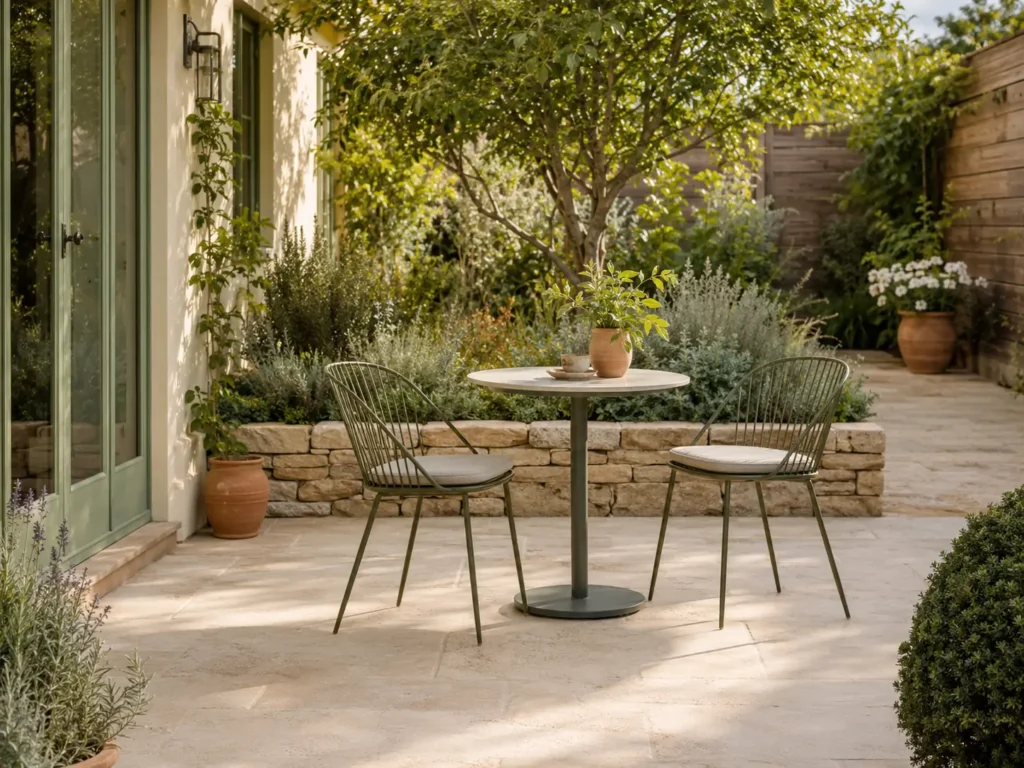
Furniture with slim legs, open backs, and modest proportions allows more of the garden to remain visible. A round table can improve movement in some layouts because it has no projecting corners, while a narrow rectangular table may fit better against a wall.
Measure the furniture in both its closed and occupied positions. Chairs need space to pull out, and reclining or folding pieces need additional clearance. A compact folding bistro set can provide flexible seating when it is stable, outdoor-rated, and stored safely during severe weather.
10. Use Multipurpose Features
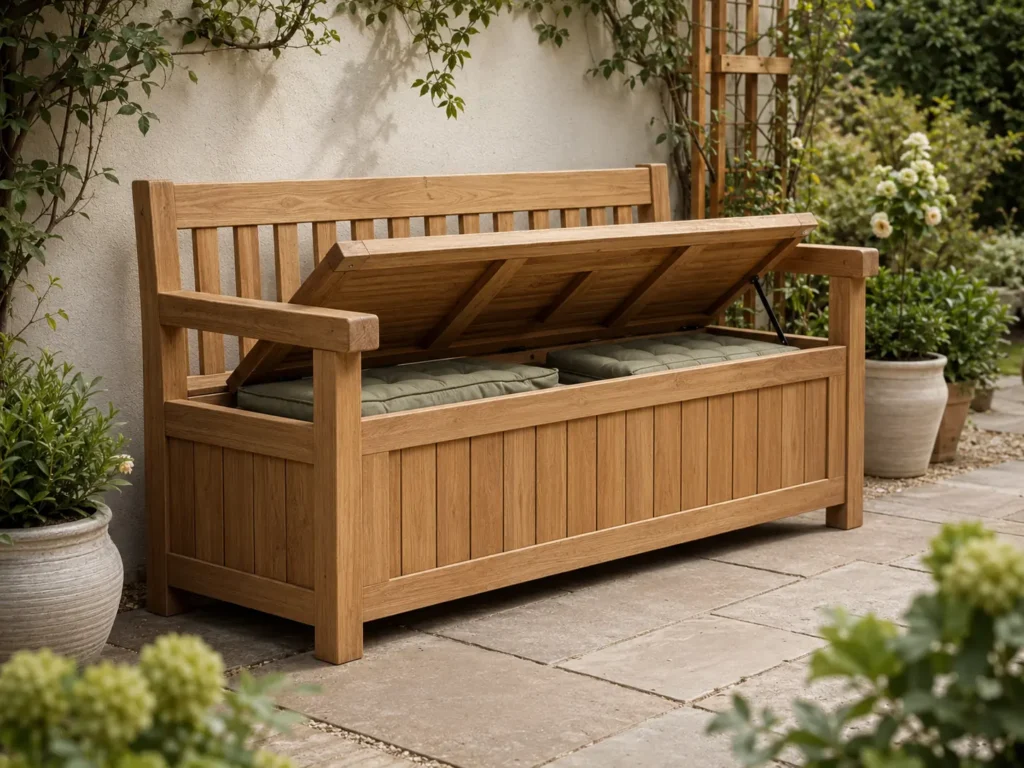
One feature can solve more than one design problem. A storage bench can provide seating and conceal cushions, while a raised bed edge may offer a resting place if it is engineered for that purpose. A trellis can support plants while partially screening a utility area.
Do not assume an object is safe for a second purpose merely because it looks suitable. Storage benches, walls, bed edges, and planter boxes should support seating only when their construction and rated capacity allow it. For project inspiration, browse these DIY garden bench ideas.
11. Create Privacy Without Building a Visual Wall
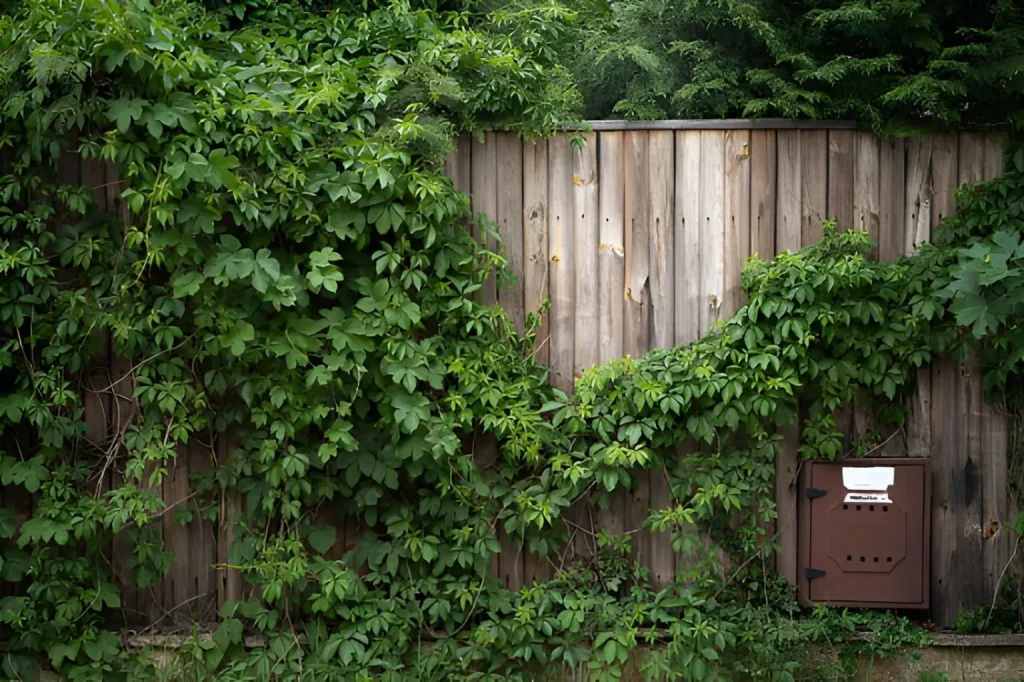
A solid screen may provide privacy, but it can also reduce light, airflow, and the apparent width of a small garden. Consider filtered planting, a narrow trellis with a suitable vine, tall containers, a partial screen, or a small tree positioned to interrupt a specific view.
Target the actual sightline instead of surrounding the whole garden. Check mature plant dimensions, root behavior, property boundaries, overhead lines, and local restrictions. Permanent screens and fences may require approval.
12. Add One Modest Water Feature
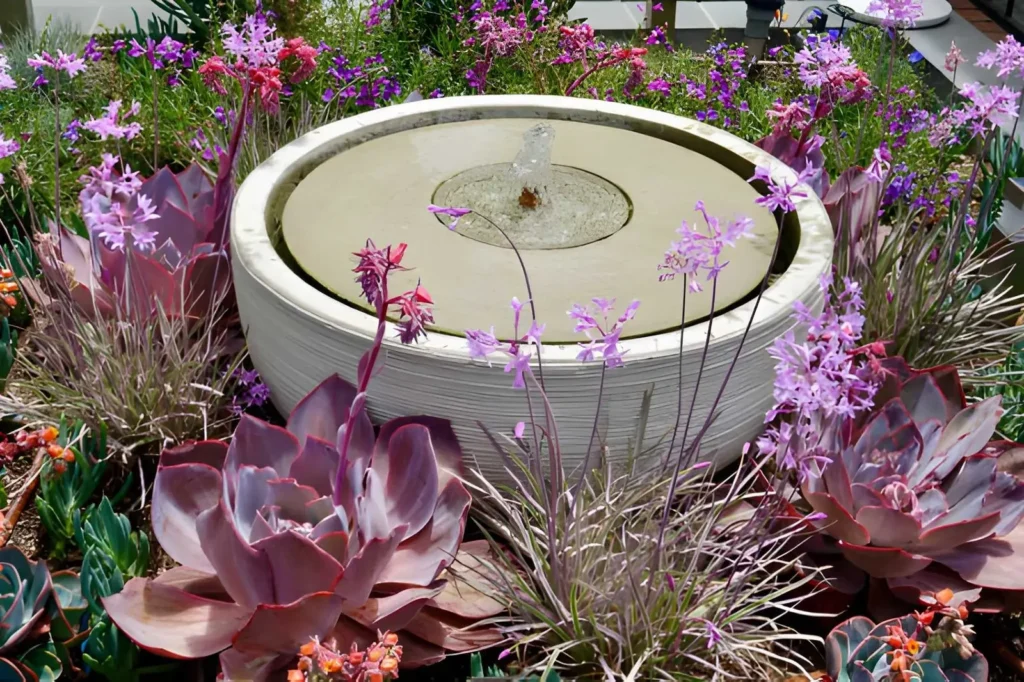
A compact recirculating fountain can add sound and movement while acting as a focal point. Keep its proportions modest and place it where splashing will not wet a primary walkway, damage a wall, or create an electrical hazard.
Use pumps, cables, and connections rated for their outdoor environment. Keep the water clean, address mosquito risks, and protect children and animals. A large pond is unnecessary when a small bubbling basin can serve the same visual purpose. This DIY small fountain guide offers an attainable project for a compact space.
13. Light Paths and Destinations, Not Every Surface
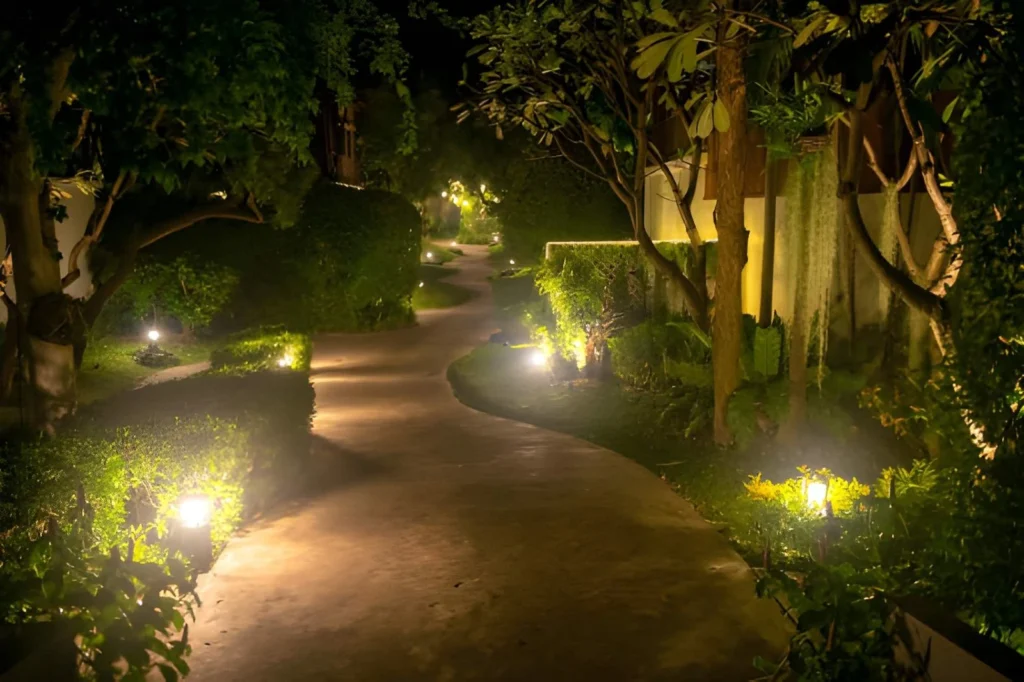
Garden lighting should help you see steps, entrances, changes in level, seating, and the main route. A few restrained pools of warm light usually create more depth than uniformly bright illumination.
Direct fixtures downward where practical and keep light out of neighboring windows and wildlife habitat. Use only equipment rated for outdoor conditions, and arrange cords so they do not cross paths or collect water. Permanent electrical work may require a qualified professional.
14. Use Mirrors and Reflections Carefully
An outdoor-rated mirror can reflect greenery and reduce the visual weight of a blank wall. Water can create another reflective surface when it remains clean and correctly positioned.
A mirror must be securely installed and placed where it will not produce intense glare, concentrate reflected sunlight, or confuse birds. Avoid positioning it opposite a neighboring window or a cluttered storage area. A framed, divided design may read more clearly as a decorative feature than one large uninterrupted panel.
15. Leave Some Space Unfilled
Open space allows individual plants and features to be appreciated. It may be a section of paving, a patch of functional lawn, visible mulch between young plants, or a simple wall left free of decoration.
Do not interpret every gap as a problem to solve. A garden often feels more generous when the main features have room around them. Before adding a new object, ask whether it improves function, strengthens the focal point, or supports the established palette.
How to Choose Plants for a Tiny Garden
Plant selection begins with site conditions, not flower color. Record the hours and timing of direct sun, soil drainage, wind exposure, reflected heat, winter cold, summer heat, humidity, and available irrigation. Conditions may change sharply over a short distance in an enclosed garden.
Choose plants that fit both the climate and the location. In the United States, the USDA Plant Hardiness Zone Map estimates whether perennial plants are likely to survive average annual extreme minimum winter temperatures. It does not account fully for heat, soil, moisture, wind, humidity, or every unusual cold event. Gardeners outside the United States should use authoritative regional climate and plant guidance.
Microclimates are especially important in small spaces. A south- or west-facing masonry wall may retain heat, a sheltered corner may remain warmer, and a low or enclosed area may stay wet or collect cold air. Observe the garden through different weather conditions before investing in permanent planting.
Prioritize Mature Size
Nursery plants are sold before reaching their full dimensions. Read the expected mature height and width, then allow access for pruning, cleaning, and neighboring plants. Compact does not necessarily mean slow-growing or maintenance-free.
Group Plants by Water Needs
The EPA recommends grouping plants with similar watering requirements into hydrozones. This allows each group to receive an appropriate amount without routinely overwatering one plant to satisfy another.
Microirrigation can apply water slowly near root zones and reduce runoff when it is correctly designed and maintained. A simple adjustable drip-irrigation kit may be useful for containers or narrow beds, but emitters must be checked for clogging, leaks, and changing seasonal needs.
Use Mulch Correctly
Mulch can connect small beds visually while reducing evaporation, suppressing weeds, moderating soil temperature, and limiting erosion. EPA guidance recommends approximately three to four inches for most plants. Excessive mulch can restrict water movement, and organic mulch should remain a few inches away from tree trunks and the bases of woody plants to reduce rot risk.
Rock mulch can absorb and radiate substantial heat in sunny locations, making it unsuitable around some non-arid plants. Match the material to the plants, climate, and maintenance needs instead of selecting it by color alone.
Budget-Friendly Ways to Improve a Small Garden
Begin by removing broken items, organizing storage, defining bed edges, cleaning sound paving, pruning appropriately, and rearranging usable containers or furniture. These low-cost changes reveal the garden’s actual structure.
Spend first on issues that affect function and plant health: stable paths, drainage, soil improvement based on actual need, sound containers, secure supports, and reliable watering. Decorative objects are easier to add later. The broader guide to budget-friendly garden landscaping can help you prioritize projects in phases.
- Complete one visible zone before buying materials for another.
- Divide appropriate established perennials rather than buying many mature plants.
- Repeat a small number of inexpensive plants for stronger visual impact.
- Refresh sound furniture with a finish intended for its material and exposure.
- Use existing materials only when they are structurally sound and suitable for the purpose.
- Reserve part of the budget for soil, drainage, anchors, fixings, and maintenance.
Benefits
- A focused plan can make a tiny garden highly functional.
- Vertical planting and narrow borders preserve ground space.
- Fewer repeated materials often reduce visual clutter and purchasing.
- Small zones can be improved gradually as time and budget allow.
Considerations
- Containers and vertical planters may need frequent watering.
- Small gardens reveal clutter and poor proportions quickly.
- Oversized plants can block paths, light, or neighboring property.
- Privacy structures, drainage work, and permanent lighting may require approval or professional installation.
Common Small Garden Design Mistakes
Myth
Every feature must be miniature in a small garden
Reality
Scale matters, but filling the space with many tiny objects can make it feel fragmented. One appropriately sized bed, container, or seating area often looks more generous and performs better than several undersized alternatives.
- Buying before measuring: furniture or planters may fit individually but leave too little circulation space.
- Using too many materials: unrelated pots, paving, edging, colors, and decorations create visual noise.
- Ignoring mature plant size: young plants may eventually obstruct paths, windows, and neighboring property.
- Blocking drainage: edging, paving, and raised planters can redirect water toward buildings or adjacent land.
- Prioritizing privacy over light: tall solid screens may make a tiny area feel darker and narrower.
- Installing too much lighting: glare reduces atmosphere and may disturb neighbors and wildlife.
- Forgetting maintenance access: utilities, drains, fences, containers, and plants must remain reachable.
- Filling every gap: excessive planting and decoration remove the open space that gives the design clarity.
Safety, Drainage, and Property Considerations
Contact the applicable utility-location service before digging and follow its requirements. Private irrigation, lighting, drainage, septic, or other lines may require separate locating. Never assume a small planting pocket is free of buried services.
Keep gates, utility equipment, drains, steps, and emergency exits accessible. Do not redirect water toward the house or neighboring property. Major grading, retaining walls, structural screens, decks, fences, plumbing, and electrical installations may require permits or qualified professionals.
Design must preserve safe access
Paths, seating, containers, cords, and plants should not obstruct entrances, gates, steps, utility equipment, or required access. Review slippery surfaces, sharp edging, water depth, toxic plants, climbing hazards, and electrical equipment when children, animals, or vulnerable adults use the garden.
Frequently Asked Questions
How can you make a tiny garden look bigger?
Use one clear route, repeat a limited palette, preserve some open space, layer plants, and place one focal point toward the far boundary. Diagonal lines, filtered views, and furniture with open frames can also create a greater sense of depth.
What should you put in a very small garden?
Include only the features that support its primary purpose. A useful combination might be compact seating, one narrow planted border, vertical greenery, practical lighting, and a single focal container or water feature.
Which colors make a small garden feel larger?
No color can physically enlarge a garden, but a restrained palette creates continuity. Cool flower colors may feel restful, while lighter surfaces can reflect more light. Plant suitability, proportion, and repetition matter more than following one required color scheme.
How do you create privacy in a narrow garden?
Interrupt the specific sightline with a narrow shrub, small tree, tall container, partial screen, or trellised plant. Avoid enclosing the entire garden unless necessary, and check mature plant size, boundaries, light, root behavior, and local fence rules.
Can you grow vegetables in a tiny decorative garden?
Yes. Suitable herbs, compact vegetables, edible flowers, and trellised crops can be integrated into containers or mixed beds when their sunlight, soil, water, spacing, and food-safety requirements are met. Keep edible plants away from contaminated soil and unsuitable runoff.
How do you make a small garden low maintenance?
Choose plants suited to the conditions, limit the number of varieties, allow mature spacing, group plants by water needs, use mulch appropriately, simplify bed edges, and keep every area accessible. Avoid features that require maintenance you cannot provide consistently.
Build a Beautiful Small Garden One Decision at a Time
A tiny garden becomes more beautiful when its layout is clear and every major feature earns its place. Begin with function and circulation, then establish the main planting shapes, seating, and focal point. Vertical greenery, repeated materials, and well-scaled containers can add richness without consuming the entire garden floor.
You do not need to apply all 15 tips at once. Choose the idea that solves the garden’s most noticeable problem, complete that improvement, and evaluate the space before adding more. A carefully edited garden will usually feel more comfortable and more complete than one filled with every available feature.
Sources and Further Reading
- U.S. Environmental Protection Agency WaterSense: Landscaping Tips — supports site-based plant selection, hydrozoning, soil considerations, appropriate mulch use, and water-conscious landscape planning.
- U.S. Environmental Protection Agency WaterSense: Watering Tips — supports seasonal irrigation adjustment, runoff prevention, system inspection, and root-zone watering.
- U.S. Environmental Protection Agency WaterSense: Microirrigation — explains how low-flow microirrigation applies water slowly near plant root zones.
- USDA Agricultural Research Service: How to Use the Plant Hardiness Zone Map — supports hardiness-zone interpretation, limitations, and microclimate considerations.