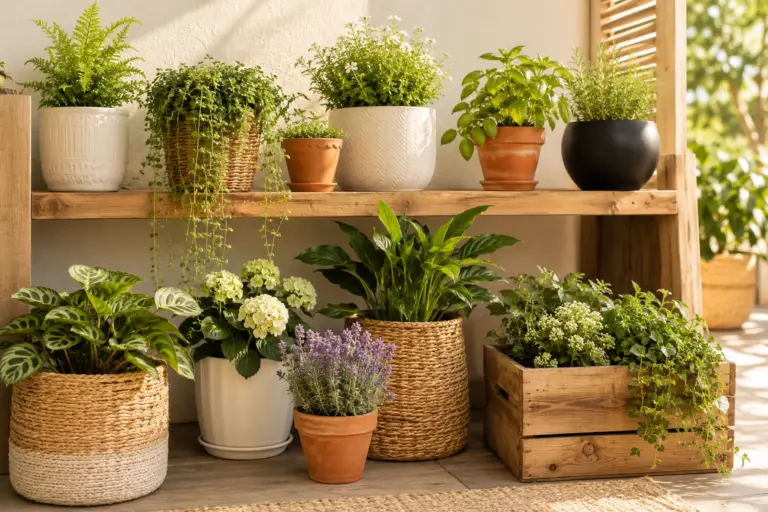
How to Make a Balcony Herb Garden for Fresh Herbs or Extra Income
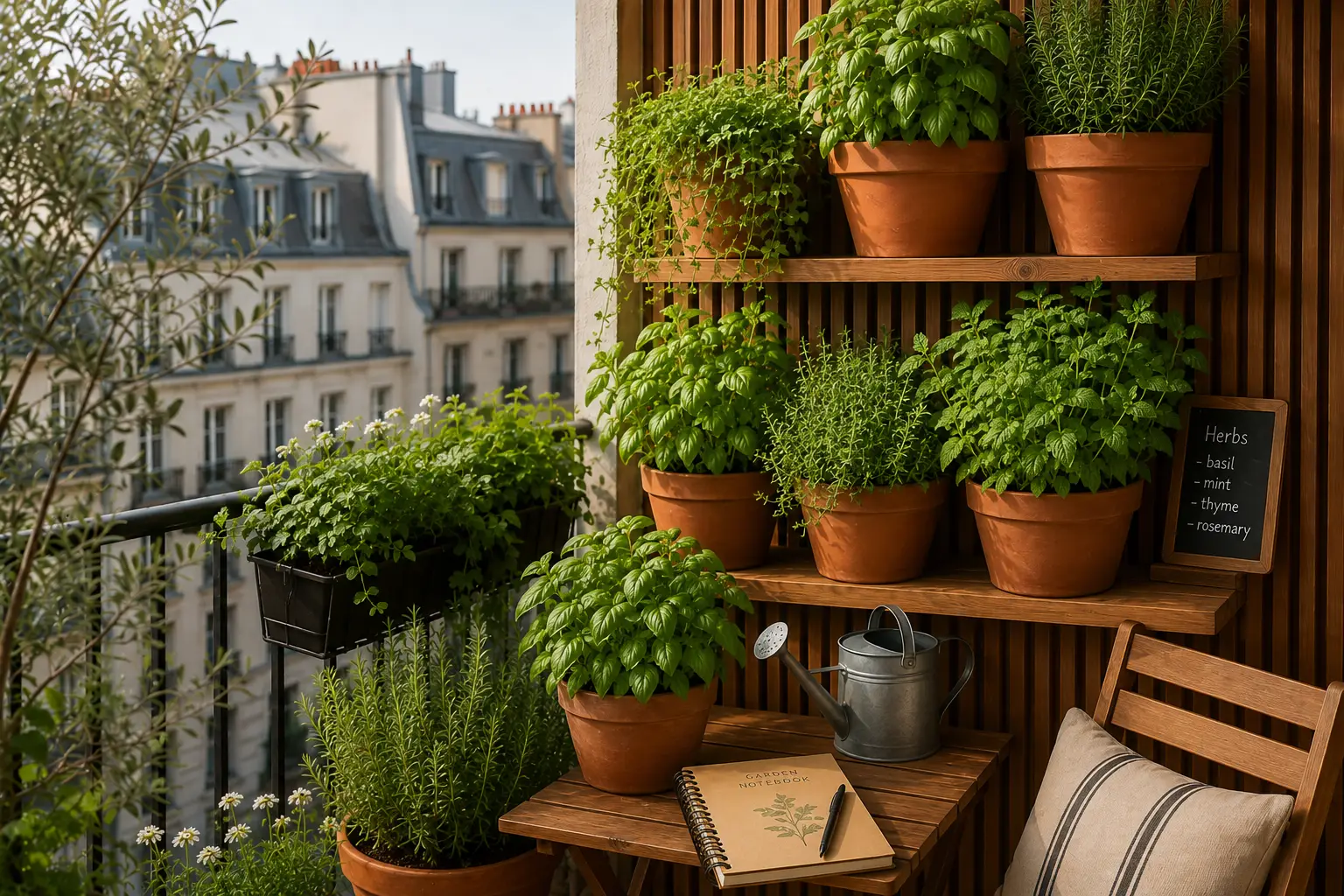
Balcony herb garden projects are one of the easiest ways to start growing your own food in a small space. You do not need a backyard, raised beds, or a large homestead to enjoy fresh herbs at home. A sunny balcony, a few pots, good soil, and the right herbs can give you fresh flavor for your kitchen and a simple way to practice self-sufficiency.
Herbs are perfect for beginners because they are useful, beautiful, and easy to grow in containers. You can use them for cooking, tea, homemade seasoning blends, drying, gifting, or even small side hustle ideas. A few healthy basil, mint, rosemary, thyme, parsley, or oregano plants can quickly make your balcony feel more productive and alive.
A balcony herb garden can also become more than a personal project. If your plants grow well, you may be able to sell fresh herb bundles, potted herb starts, dried herbs, simple seasoning mixes, or beginner herb garden kits. You can keep it small and simple, or slowly turn it into a practical side income.
This guide will show you how to start a balcony herb garden in a small space, choose the best herbs, set up your containers, care for your plants, and use your herbs for your kitchen or a beginner-friendly side hustle.
Disclosure: This post contains affiliate links. As an Amazon Associate, I earn from qualifying purchases. This means I may earn a small commission if you buy through my links, at no extra cost to you.
Why a Balcony Herb Garden Is Perfect for Small-Space Homesteading
A balcony herb garden is one of the best first projects for anyone interested in small-space homesteading. Herbs do not need as much room as vegetables, they grow well in pots, and they can be useful almost every day.
Even one small balcony shelf can hold several herbs. A few railing planters can grow enough basil, mint, thyme, parsley, and chives for regular kitchen use. A vertical shelf or wall-mounted planter can turn an empty wall into a productive growing space.
This makes herbs ideal for apartment dwellers, renters, beginners, and anyone who wants to start homesteading without land. If you are just beginning this lifestyle, growing herbs is one of the most easy homesteading skills for beginners because it teaches plant care, harvesting, watering, soil, sunlight, and food use without requiring a large investment.
A balcony herb garden can help you:
- Grow fresh ingredients at home
- Save money on store-bought herbs
- Make your balcony more beautiful
- Learn container gardening
- Practice small-space homesteading
- Dry herbs for later use
- Create simple homemade gifts
- Test a small side hustle idea
Another reason herbs are so useful is that they grow quickly compared to many other crops. You do not have to wait months before enjoying them. Once your plants are established, you can harvest small amounts regularly and use them in meals, teas, sauces, salads, and homemade blends.
If you are building a self-sufficient lifestyle from a small space, this project pairs naturally with how to start homesteading in an apartment because it proves that you can begin with what you already have.
Best Herbs to Grow on a Balcony
Choosing the right herbs is one of the most important steps when starting a herb garden. Some herbs thrive in heat and full sun, while others can handle partial shade. Some grow slowly and become woody over time, while others grow quickly and need regular trimming. For beginners, the best approach is to start with herbs you already use in your kitchen. A beginner-friendly seed kit like the HOME GROWN Herb Seeds for Planting 15-Pack can make this easier because it includes a wide variety of non-GMO heirloom culinary herbs for indoor, outdoor, and even hydroponic growing. This way, you can experiment with different herbs while focusing on the ones you actually enjoy cooking with.
Basil
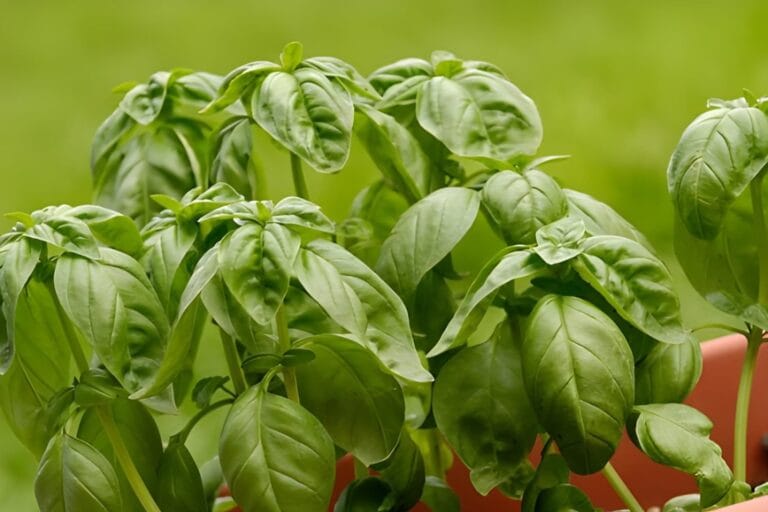
Basil is one of the best herbs for a balcony herb garden, especially if your balcony gets plenty of sun. It grows quickly, looks beautiful in pots, and is useful in many meals.
You can use basil for pasta, pesto, salads, sandwiches, soups, sauces, and fresh herb bundles. It is also one of the best herbs to sell as a small side hustle because people recognize it and know how to use it.
Basil likes warm weather, rich potting mix, regular watering, and frequent harvesting. Pinch off the top leaves often to encourage the plant to grow fuller instead of tall and weak.
Mint
Mint is one of the easiest herbs for beginners. It grows fast, smells wonderful, and works well for tea, drinks, desserts, salads, and homemade gifts.
However, mint can spread aggressively. On a balcony, this is actually easy to control because you can keep it in its own pot. Do not plant mint in the same container with slower herbs, or it may take over.
Mint can handle partial sun better than many herbs, which makes it a good choice for balconies that do not get full sunlight all day.
Rosemary
Rosemary is a hardy, fragrant herb that works well in containers. It is excellent for roasted vegetables, chicken, potatoes, bread, soups, and homemade seasoning blends.
Rosemary likes sun, good drainage, and slightly drier soil than herbs like basil or parsley. It does not enjoy sitting in soggy soil, so make sure the pot has drainage holes.
Rosemary is also useful if you want to sell herbs because it dries well and looks beautiful in bundles.
Thyme
Thyme is a small, low-growing herb that is perfect for balcony pots. It does not need much space and can handle drier conditions once established.
It is useful in soups, roasted vegetables, marinades, sauces, and seasoning blends. Because thyme has small leaves and a strong flavor, a little goes a long way.
Thyme is a good herb for beginners who want something low-maintenance and compact.
Parsley
Parsley is one of the most useful everyday kitchen herbs. It works in salads, soups, sauces, eggs, roasted vegetables, and fresh garnishes.
It grows well in containers and can handle partial sun. It usually needs more consistent moisture than rosemary or thyme, so check the soil often.
Parsley is a good choice if you want a practical herb that you will actually use often.
Oregano
Oregano is perfect for homemade pizza, pasta sauces, roasted vegetables, and dried seasoning blends. It grows well in pots and is especially useful if you want to dry herbs for later.
Like rosemary and thyme, oregano prefers good drainage and plenty of sun. It can become bushy if you harvest it regularly.
This is one of the best herbs for anyone interested in making simple homemade seasoning mixes.
Chives
Chives are easy to grow, compact, and useful for eggs, potatoes, soups, salads, and cream cheese spreads. They grow in clumps and do not take much space.
They are also very beginner-friendly because you can cut the green stems and let them regrow. Chives can handle cooler weather better than basil, making them useful for a longer season.
Cilantro
Cilantro is useful for salsa, tacos, soups, salads, and many fresh dishes. It grows quickly, but it can bolt fast in hot weather, meaning it sends up flowers and goes to seed.
If your balcony gets very hot, grow cilantro in cooler seasons or in a spot with morning sun and afternoon shade.
Cilantro is best treated as a quick-growing herb that you replant regularly.
What You Need to Start a Balcony Herb Garden
You do not need expensive supplies to start. A simple setup is often better for beginners because it is easier to manage.
Start with the basics:
- Pots or containers with drainage holes
- Railing planters
- A vertical shelf or plant stand
- Good potting mix
- Herb seeds or starter plants
- A watering can
- Plant labels
- Pruning scissors
- Trays or saucers under pots
- A small notebook for plant care notes
The most important items are containers with drainage and good potting mix. Herbs do not like sitting in water, and balcony plants need soil that drains well while still holding enough moisture.
Avoid using heavy garden soil in pots. It can become compacted and drain poorly. A quality potting mix is much better for container herbs.
Seeds or Starter Plants?
You can grow herbs from seeds or buy young starter plants.
Seeds are cheaper, but they take more time and patience. Starter plants cost more, but they give you a faster result. For beginners, buying a few starter plants is often easier, especially for rosemary, thyme, mint, and oregano.
Basil, cilantro, parsley, and chives are usually easier to start from seed than woody herbs like rosemary.
Budget Tip
Start with three to five herbs instead of buying every plant you see. A small, healthy herb garden is better than a crowded balcony full of plants you cannot manage.
A good beginner setup could be:
- One basil plant
- One mint plant
- One rosemary plant
- One parsley plant
- One thyme or oregano plant
This gives you variety without making the project overwhelming.
How to Set Up a Balcony Herb Garden Step by Step
A balcony herb garden works best when you plan the space before buying too many plants. Look at your sunlight, wind, available floor space, railing space, and wall space.
Step 1: Check Your Balcony Sunlight
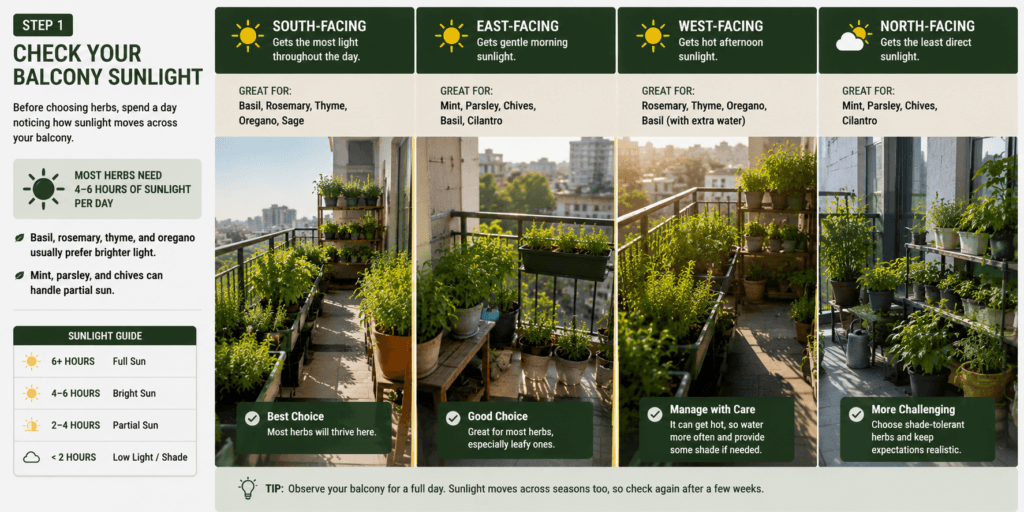
Before choosing herbs, spend a day noticing how sunlight moves across your balcony.
Most herbs need 4–6 hours of sunlight per day. Basil, rosemary, thyme, and oregano usually prefer brighter light. Mint, parsley, and chives can handle partial sun.
South-facing balconies usually get the most light. East-facing balconies often get gentle morning sun, which is good for many herbs. West-facing balconies can get hot afternoon sun, so you may need to water more often. North-facing balconies can be more challenging, but you can still try mint, parsley, and chives.
If your balcony is shady, do not force sun-loving herbs to struggle. Choose herbs that tolerate less light and keep expectations realistic.
Step 2: Choose the Right Containers
Balcony containers should fit your space and make watering easy.
Good options include:
- Terracotta pots
- Railing planters
- Vertical shelves
- Wall-mounted planters
- Hanging baskets
- Long rectangular planters
- Small wooden boxes
- Stackable plant stands
Terracotta pots look beautiful and natural, but they dry out faster. Plastic or metal containers may hold moisture longer. Wooden planters can look warm and cozy, but they should be protected from constant water damage.
Always make sure containers have drainage holes. If water cannot escape, roots may rot.
Step 3: Use Good Potting Mix
Use a light potting mix made for containers. Herbs need soil that drains well but does not dry out too quickly.
You can improve potting mix with compost if you have access to it, but do not overload the container. Too much heavy material can make the soil compact.
For Mediterranean herbs like rosemary, thyme, and oregano, good drainage is especially important.
Step 4: Arrange the Herbs by Size and Sun Needs
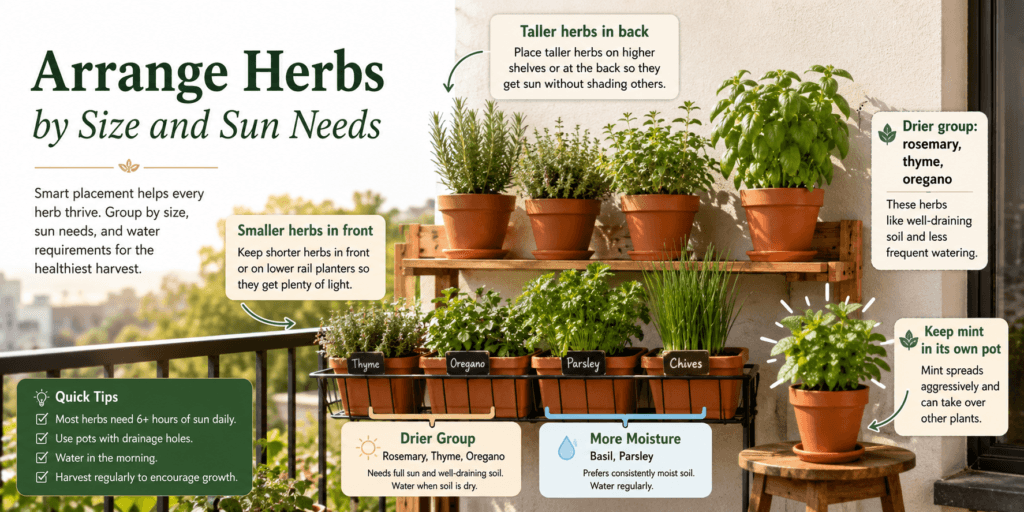
Place taller herbs like rosemary and basil toward the back or on higher shelves. Smaller herbs like thyme, oregano, parsley, and chives can go in front.
Keep mint in its own pot because it grows aggressively. If you put it with other herbs, it may crowd them out.
Group herbs with similar watering needs together. For example, rosemary, thyme, and oregano like slightly drier conditions. Basil and parsley usually need more regular moisture.
Step 5: Water Carefully
Balcony pots dry out faster than garden beds because they are exposed to sun, wind, and heat. But overwatering is still a common mistake.
Check the soil before watering. Put your finger about one inch into the soil. If it feels dry, water. If it still feels moist, wait.
Water deeply until water drains from the bottom of the pot. Then let the soil dry slightly before watering again.
In hot weather, small pots may need water every day. In cooler weather, they may need much less.
Step 6: Harvest Often
Harvesting is not only for using the herbs. It also helps many plants grow better.
Basil becomes bushier when you pinch it regularly. Mint grows fuller with frequent cutting. Chives regrow after trimming. Oregano and thyme can be lightly trimmed to keep them compact.
Avoid removing more than one-third of the plant at once, especially when it is young. Small, regular harvests are better than cutting too much.
Balcony Herb Garden Layout Ideas
A small balcony can still feel beautiful and productive if you use vertical space well. The goal is to keep the garden easy to water, easy to harvest, and pleasant to use.
Vertical Wooden Herb Shelf
A vertical wooden shelf is one of the best layouts for a balcony herb garden. It uses height instead of floor space and creates a beautiful garden wall.
Place sun-loving herbs on the upper shelves where they get more light. Put shade-tolerant herbs lower down if needed.
This layout is ideal for basil, rosemary, thyme, oregano, parsley, chives, and small pots of mint.
Railing Planter Herb Garden
Railing planters are perfect for narrow balconies. They keep plants off the floor and make use of space that would otherwise be empty.
Use railing planters for compact herbs like thyme, oregano, parsley, chives, and basil. Make sure they are securely attached, especially if your balcony gets wind.
Cozy Balcony Herb Corner
If you want the balcony to feel like a small outdoor room, create one cozy herb corner. Use a small table, a few floor pots, a vertical shelf, and a simple chair or stool.
This setup is beautiful and practical. You can sit outside with tea, water your plants easily, and harvest herbs right beside your kitchen door.
Side Hustle Herb Setup
If you want to turn your herbs into a side hustle, keep your layout organized. Use labels, group plants by type, and leave enough space to harvest without damaging leaves.
A side hustle setup should be practical, not just pretty. You need easy access, healthy plants, and a simple system for cutting, drying, bundling, or potting herbs.
How to Use Herbs for Personal Use
A balcony herb garden can quickly become part of your daily routine. Fresh herbs make simple meals taste better and help you rely less on store-bought packets.
You can use herbs for:
- Fresh cooking
- Herbal teas
- Homemade seasoning blends
- Herb butter
- Pesto
- Salad toppings
- Soups and sauces
- Infused oils
- Drying for winter
- Homemade gifts
Basil can become pesto or fresh pasta topping. Mint can become tea or a refreshing drink ingredient. Rosemary can flavor potatoes, bread, or roasted vegetables. Thyme and oregano can be dried for homemade seasoning. Parsley and chives can brighten eggs, soups, salads, and sauces.
Drying herbs is also a simple way to reduce waste. When your plants grow more than you can use fresh, harvest small bundles and dry them for later. This is one of the easiest food preservation methods for beginners because it does not require complicated equipment.
You can also make small gifts, such as dried herb jars, herb salt, herb butter, or kitchen herb bundles.
How to Turn a Balcony Herb Garden Into a Side Hustle
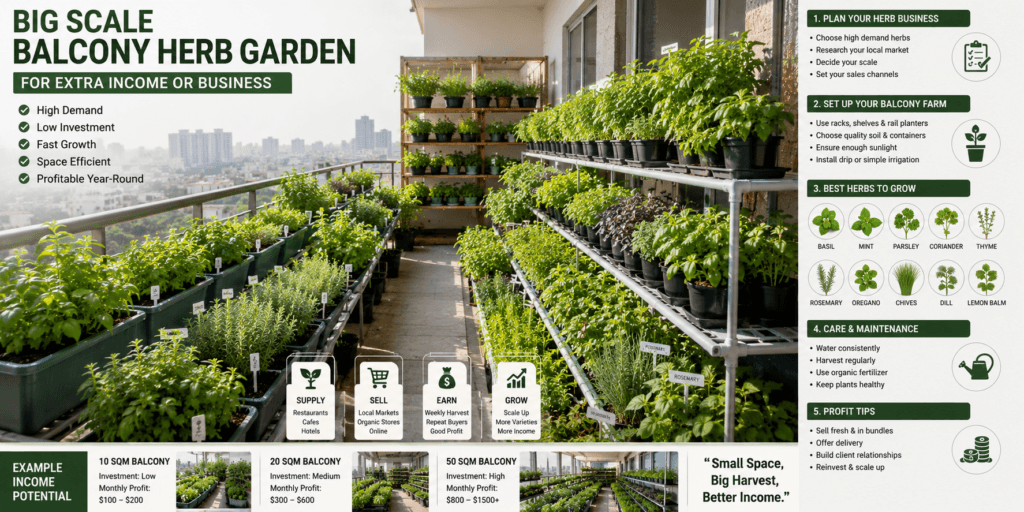
A balcony herb garden can become a small side hustle if you grow more than you need. The key is to start small and keep it simple.
You do not need to become a large herb farm. You can begin with one or two small offers and test whether people are interested.
Simple herb side hustle ideas include:
- Selling fresh herb bundles
- Selling potted herb plants
- Selling dried herbs
- Making seasoning blends
- Selling herb starter kits
- Teaching balcony herb garden setup
- Creating printable herb care guides
- Writing blog posts about herb gardening
- Creating Pinterest content around small-space gardening
Fresh herb bundles are easy to start with if your plants are producing well. You can bundle basil, mint, rosemary, thyme, or oregano and offer them locally.
Potted herbs can also be a good option. Many beginners would rather buy a healthy basil or mint plant than start from seed.
Herb starter kits are another simple idea. A small kit could include a pot, soil, seeds or a starter plant, a plant label, and basic care instructions.
If you enjoy teaching, you could offer a simple balcony herb garden setup service. This can be helpful for people who want to grow herbs but do not know what to buy or where to place them.
Selling extra herbs is one of the simplest homesteading jobs without land because it can begin from a balcony, patio, or windowsill. If you enjoy earning from simple living skills, you may also want to explore more homesteading jobs for beginners that fit small spaces.
Important Note About Selling
Before selling herbs, check your local rules. Fresh herbs, dried herbs, packaged blends, and food products may have different requirements depending on where you live.
Start with small, simple, low-risk offers and keep everything clean, labeled, and honest.
Best Herbs to Sell from a Balcony Garden
The best herbs to sell are the ones people already know, use, and understand.
Good herbs to sell include:
- Basil
- Mint
- Rosemary
- Thyme
- Oregano
- Parsley
- Chives
- Lavender, if your balcony gets enough sun
Basil is excellent because many people use it for pasta, pesto, and summer meals. Mint is popular for tea and drinks. Rosemary and thyme are good for cooking and drying. Oregano works well for seasoning blends. Parsley and chives are useful everyday kitchen herbs.
If you are selling potted herbs, choose plants that look healthy and full. If you are selling fresh bundles, harvest carefully and package them neatly.
Simple presentation matters. A clean bundle with a small label looks much better than loose herbs in a random bag.
Common Balcony Herb Garden Mistakes
Even though herbs are beginner-friendly, a few mistakes can make them struggle.
Choosing Too Many Herbs at Once
It is tempting to buy every herb at the garden center, but too many plants can become hard to manage. Start with a few herbs and learn their needs first.
Using Pots Without Drainage
Drainage is essential. Herbs can suffer if water collects at the bottom of the pot. Always use containers with drainage holes.
Overwatering
Many beginners water too often. Herbs need moisture, but they also need air around their roots. Check the soil before watering.
Not Enough Sunlight
If your balcony is very shady, sun-loving herbs may not grow well. Choose herbs that match your light conditions.
Planting Mint with Other Herbs
Mint grows fast and can crowd other plants. Keep it in its own pot.
Forgetting to Harvest
Many herbs grow better when trimmed. If you never harvest, plants can become leggy, woody, or go to flower too soon.
Buying Expensive Supplies Too Early
You do not need a perfect setup to begin. Start with a few pots, simple soil, and healthy herbs. Upgrade later if you enjoy the project.
Trying to Sell Before Testing
Before turning your balcony herb garden into a side hustle, make sure you can grow healthy herbs consistently. Then test demand with a small offer.
Beginner Balcony Herb Garden Plans
If you are not sure where to begin, choose one of these simple plans.
3-Herb Starter Garden
This is the easiest option for beginners.
Grow:
- Basil
- Mint
- Rosemary
This gives you one fast-growing cooking herb, one hardy tea and drink herb, and one fragrant woody herb for savory meals.
5-Herb Kitchen Garden
This is a practical setup for everyday cooking.
Grow:
- Basil
- Parsley
- Thyme
- Oregano
- Chives
This mix gives you herbs for pasta, soups, eggs, roasted vegetables, sauces, and homemade seasoning blends.
Side Hustle Herb Garden
This setup is good if you want to test selling herbs.
Grow:
- Basil
- Mint
- Rosemary
- Thyme
- Oregano
These herbs are familiar, useful, and easier to explain to buyers. You can sell them as fresh bundles, potted plants, dried herbs, or small starter kits.
Conclusion
A balcony herb garden is one of the simplest ways to begin growing food in a small space. You do not need land, a backyard, or a large garden to start. With a few pots, good sunlight, healthy soil, and beginner-friendly herbs, even a small balcony can become a productive little garden.
Start with herbs you already use in your kitchen. Basil, mint, rosemary, thyme, parsley, oregano, and chives are all useful choices. As you gain confidence, you can add more containers, try drying herbs, make seasoning blends, or grow extra plants for friends, neighbors, or local buyers.
The best part is that your herb garden can be as simple or as ambitious as you want. It can give you fresh flavor for meals, help you save money, make your balcony more beautiful, and teach you practical small-space homesteading skills.
Start small, care for your plants consistently, and let your balcony herb garden grow one pot at a time.
Want more small-space homesteading ideas, beginner gardening tips, and simple ways to grow food at home? Subscribe to the Dreamsteading newsletter and get practical guides sent straight to your inbox.