Composting for Beginners: How to Start Composting at Home
Composting for beginners does not have to be complicated, messy, or confusing. At its simplest, composting is a way to turn kitchen scraps, dry leaves, garden waste, and other natural materials into rich, dark compost that can help improve your garden soil.
If you are starting a garden, growing herbs, building raised beds, or trying to live a more self-sufficient lifestyle, composting is one of the most useful skills you can learn. It helps you reduce waste, reuse what you already have, and create something valuable for your plants.
Many beginners feel nervous about composting because they worry about smells, pests, or doing it wrong. The truth is that most composting problems come from a few simple mistakes, like adding too many food scraps, not enough dry materials, or letting the pile get too wet.
In this guide, you will learn how composting works, what to compost, what to avoid, how to start a simple compost bin, and how to fix common beginner problems so you can make compost with confidence.
What Is Composting?
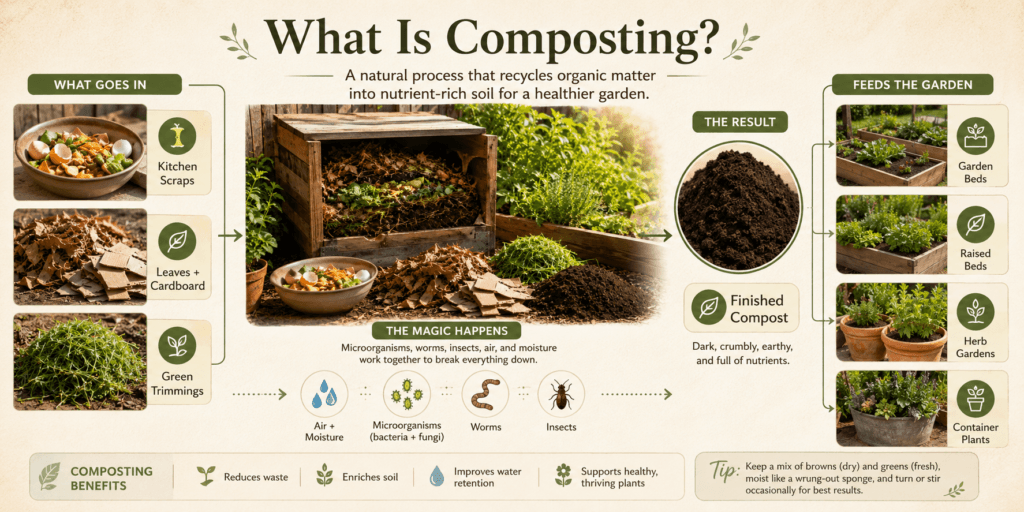
Composting is the natural process of turning organic materials into a dark, crumbly, soil-like material called compost. It happens when kitchen scraps, leaves, grass clippings, cardboard, plant trimmings, and other natural materials break down over time.
This process is helped by microorganisms, worms, insects, moisture, and air. These tiny workers slowly break down the materials and turn them into something your garden can use.
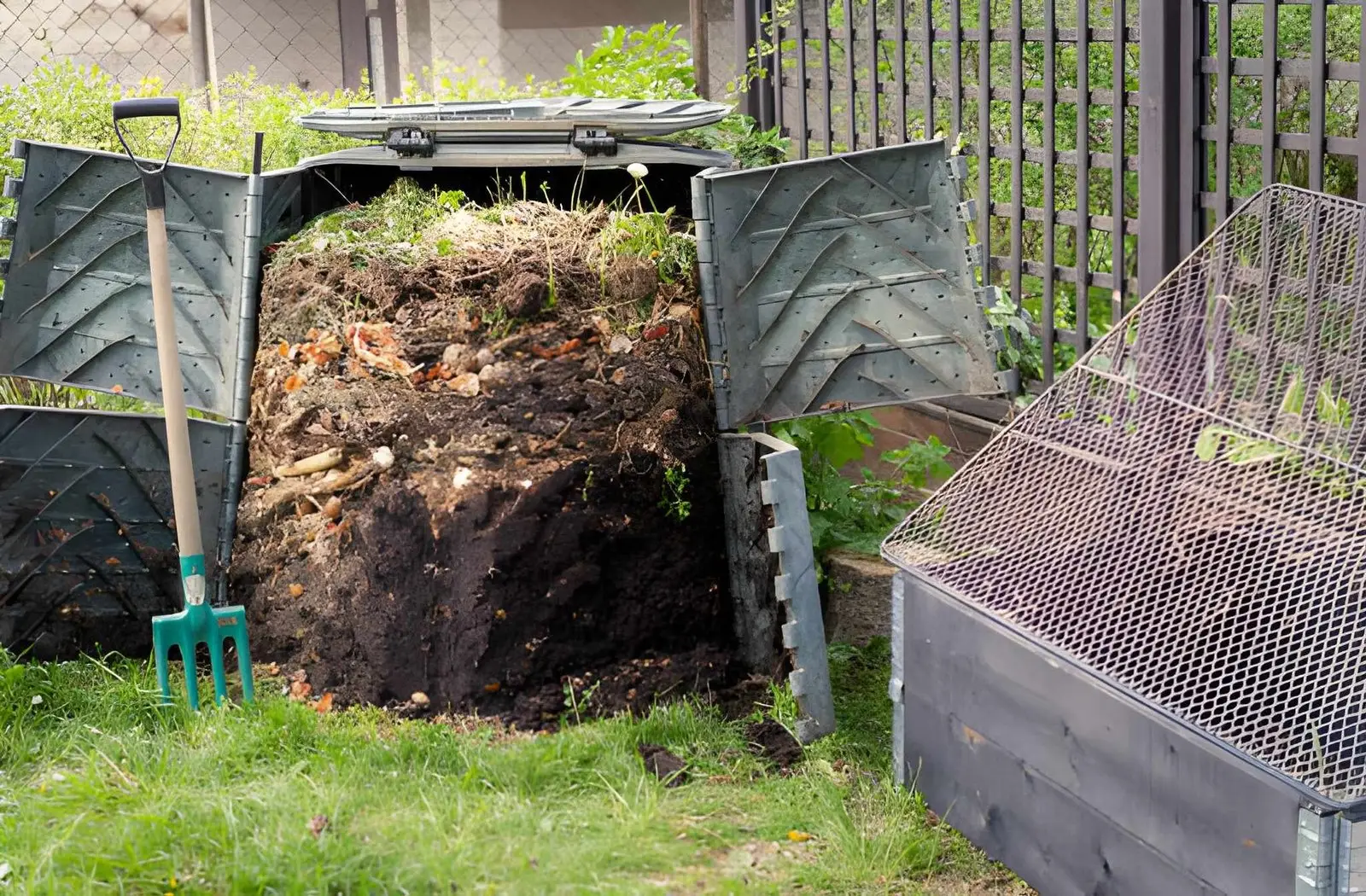
Finished compost looks dark and crumbly. It should smell earthy, not rotten. When compost is ready, you can add it to garden beds, raised beds, herb gardens, container plants, flower beds, or around vegetables to improve the soil.
Composting is not just about throwing scraps into a pile. A good compost pile needs balance. It needs the right mix of green materials, brown materials, moisture, and oxygen.
Once you understand those basics, composting becomes much easier.
Why Composting Is Worth Learning
Composting is one of the most practical skills for beginner gardeners and homesteaders. It turns waste into a useful garden resource.
Instead of throwing away vegetable peels, coffee grounds, dry leaves, and garden clippings, you can recycle them into compost. This helps reduce household waste and gives your plants better soil over time.
Compost can help improve soil structure, hold moisture, support healthy root growth, and feed soil life. It is especially useful if your garden soil is poor, sandy, compacted, or low in organic matter.
Composting can help you:
- Reduce kitchen waste
- Improve garden soil
- Save money on soil amendments
- Grow healthier plants
- Support herbs, vegetables, and flowers
- Fill raised beds more naturally
- Reuse leaves and garden trimmings
- Build a more self-sufficient lifestyle
Composting is one of the most easy homesteading skills for beginners because it teaches you how to use everyday waste in a practical way. You do not need expensive equipment to begin. You only need a simple system and a little patience.
How Composting Works
Composting works best when you understand four basic elements: greens, browns, air, and moisture.
Greens
Greens are nitrogen-rich materials. They are usually fresh, moist, and quick to break down.
Common greens include:
- Fruit scraps
- Vegetable scraps
- Coffee grounds
- Tea leaves
- Fresh grass clippings
- Fresh plant trimmings
- Old herbs
- Green garden waste
Greens help heat up the compost pile and feed the microorganisms that break everything down.
Browns
Browns are carbon-rich materials. They are usually dry and help create structure in the compost pile.
Common browns include:
- Dry leaves
- Shredded cardboard
- Plain paper
- Straw
- Wood chips
- Sawdust from untreated wood
- Dried plant stems
- Paper egg cartons
- Brown paper bags
Browns help prevent bad smells, absorb extra moisture, and keep the pile from becoming slimy.
Air
Compost needs oxygen. Without air, the pile can become compacted, wet, and smelly. Turning the compost helps bring oxygen into the pile and speeds up decomposition.
You do not need to turn compost every day. For beginners, turning it every week or two is usually enough.
Moisture
Compost should be damp, but not soggy. A good compost pile should feel like a wrung-out sponge.
If it is too dry, the materials break down very slowly. If it is too wet, it may smell bad and attract flies.
The easiest way to manage compost moisture is to add more dry browns when the pile is too wet and add a little water when it is too dry.
What You Can Compost
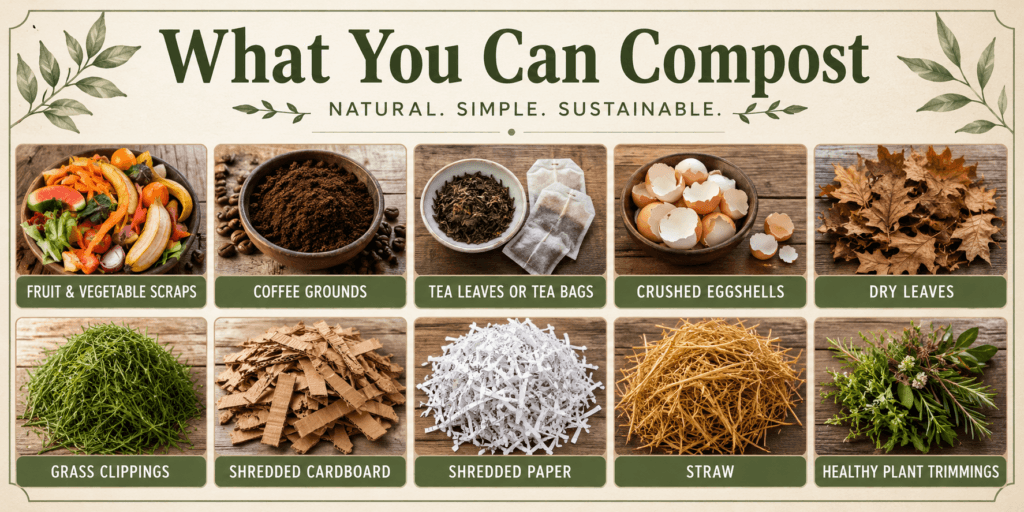
One of the biggest beginner questions is what can actually go into compost. The good news is that many common household and garden materials can be composted.
You can compost:
- Fruit peels and scraps
- Vegetable peels and scraps
- Coffee grounds
- Paper coffee filters
- Tea leaves
- Eggshells
- Dry leaves
- Fresh grass clippings
- Shredded cardboard
- Plain paper
- Paper towels without chemicals
- Straw
- Small plant trimmings
- Old herbs and plant leaves
- Dead flowers
- Small amounts of untreated sawdust
- Paper egg cartons
- Brown paper bags
It helps to chop larger scraps into smaller pieces. Smaller pieces break down faster and make the compost easier to manage.
For example, a whole cabbage leaf will break down slowly, but chopped vegetable scraps will compost faster. Cardboard also breaks down better when it is shredded or torn into smaller pieces.
What Not to Compost
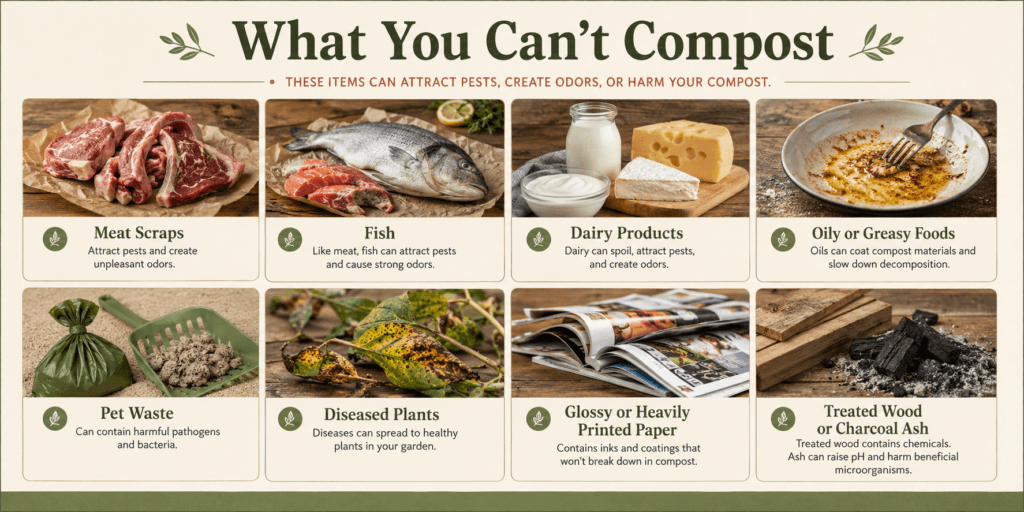
Knowing what not to compost is just as important as knowing what to add. Some materials can attract pests, create bad smells, spread disease, or take too long to break down.
Avoid composting:
- Meat
- Fish
- Dairy products
- Greasy foods
- Oily leftovers
- Pet waste
- Diseased plants
- Weeds with seeds
- Glossy paper
- Plastic
- Metal
- Glass
- Treated wood
- Large branches
- Invasive weeds
- Coal ash
- Synthetic materials
For beginner composting, it is best to keep things simple. Focus on fruit scraps, vegetable scraps, coffee grounds, dry leaves, and shredded cardboard.
Avoid adding anything that smells strong, attracts animals, or does not come from a natural plant-based source.
Best Composting Methods for Beginners
There are several ways to compost at home. The best method depends on your space, budget, and lifestyle.
Backyard Compost Bin
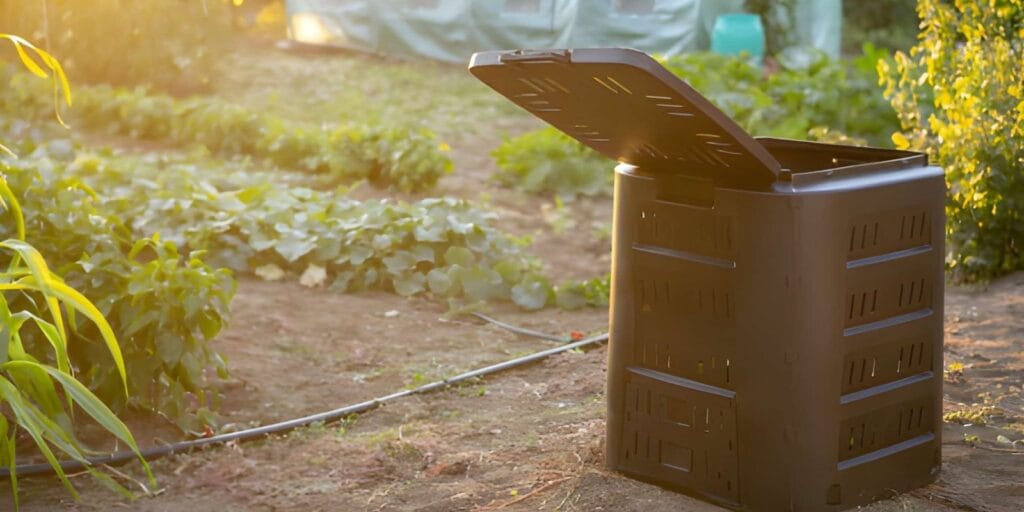
A backyard compost bin is one of the easiest options if you have outdoor space. You can buy a compost bin or make a simple one from wood, wire, or recycled materials.
A bin keeps the compost contained and makes the area look tidy. It is a good choice for beginners who want a simple, low-cost setup.
This method works well for garden waste, kitchen scraps, leaves, and grass clippings.
Compost Tumbler
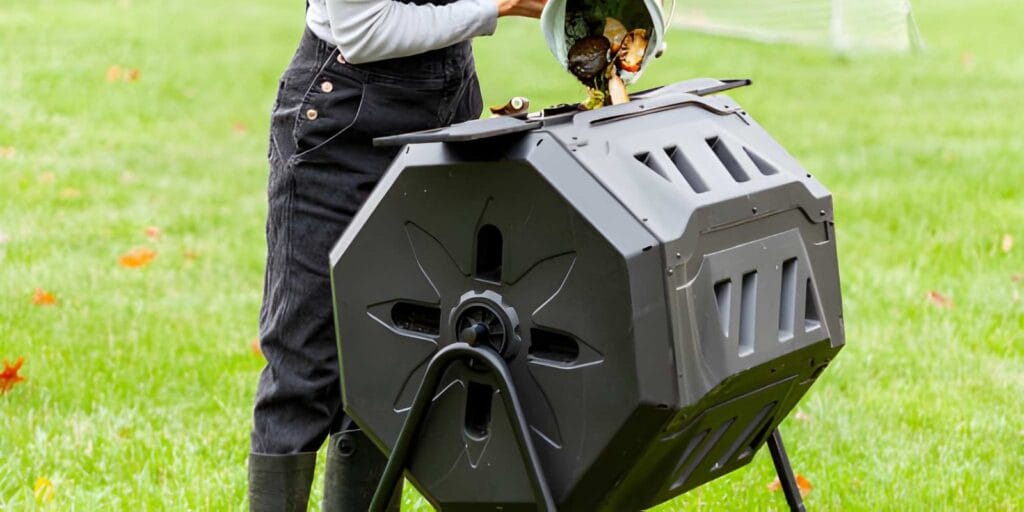
A compost tumbler is a closed container that you rotate to mix the compost. It is cleaner-looking than an open pile and can be easier to turn.
Tumblers are good for people who want a neat composting system with less mess. They can also help keep animals out.
The downside is that tumblers can be more expensive and may have limited space.
Simple Compost Pile
A simple compost pile is the most basic method. You choose a spot in the yard and pile up greens and browns.
This is low-cost and easy, but it may look less tidy than a bin. It works best if you have a larger garden or a hidden corner.
A compost pile still needs balance, moisture, and air. It should not simply become a dumping area for food scraps.
Worm Composting
Worm composting, also called vermicomposting, uses worms to break down food scraps. It can work indoors, in a garage, on a balcony, or in a small outdoor space.
This method is good for people who do not have a backyard. It creates rich worm castings that can be used carefully in gardens and containers.
Worm composting needs more attention than a simple outdoor bin because worms need the right moisture, temperature, and food balance.
Bokashi Composting
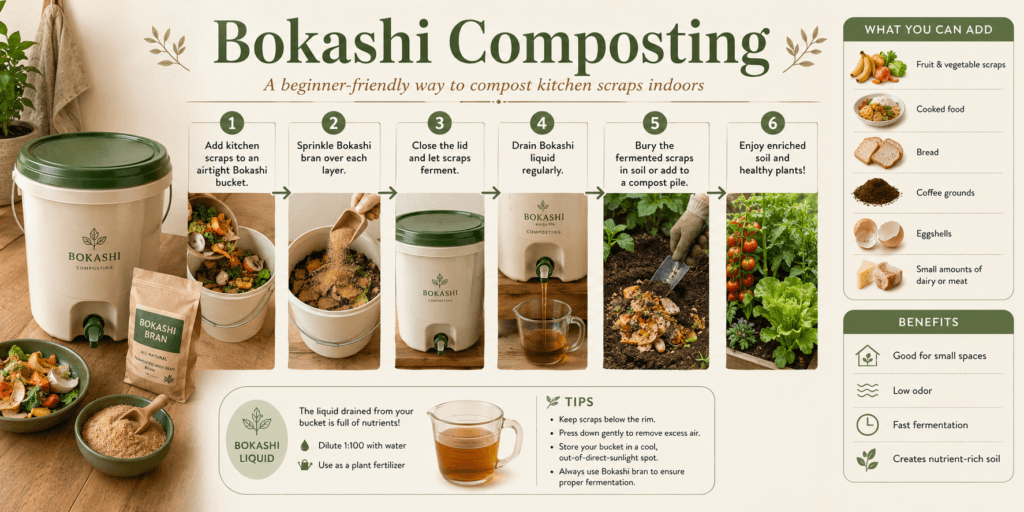
Bokashi is a small-space composting method that ferments food scraps in a sealed bucket. It is useful for kitchens, apartments, and small homes.
However, bokashi material usually needs a second step before it becomes usable compost. It often needs to be buried, added to an outdoor compost system, or processed further.
This can be useful, but beginners should understand that bokashi is not the same as finished compost right away.
How to Start Composting Step by Step
Starting compost is easier when you follow a simple process.
Step 1: Choose Your Composting Method
First, choose the method that fits your space.
If you have a backyard, start with a compost bin, tumbler, or simple pile. If you live in an apartment, consider worm composting, bokashi, a small balcony compost tumbler, or a community compost drop-off.
Learning how to compost kitchen scraps is a practical way to start homesteading in an apartment without needing land.
Step 2: Pick the Right Location
For outdoor composting, choose a spot that is easy to access but not in the middle of your main living area.
A good compost location should have:
- Good drainage
- Partial shade if possible
- Easy access from the kitchen or garden
- Enough space for turning or adding materials
Avoid placing compost directly against your house. Keep it in a practical garden corner where you can reach it easily.
Step 3: Add Browns First
Start your compost with a layer of brown materials. Dry leaves, shredded cardboard, straw, or small twigs can help create airflow at the bottom.
This first layer helps absorb moisture and keeps the pile from becoming too wet too quickly.
Step 4: Add Greens
Next, add green materials like fruit scraps, vegetable scraps, coffee grounds, and fresh plant trimmings.
Do not add huge amounts of food scraps in one thick layer. Spread them out and cover them with browns.
Step 5: Keep the Balance
A good beginner rule is to use more browns than greens. This helps prevent smells and keeps the compost healthier.
If the compost smells bad, it usually needs more browns. Add dry leaves, shredded cardboard, straw, or paper.
Step 6: Add Air
Turn the compost every week or two with a garden fork or shovel. This mixes the materials and adds oxygen.
If you use a tumbler, rotate it regularly according to the design.
Turning helps the compost break down faster and prevents compacted, smelly areas.
Step 7: Check Moisture
Compost should be damp like a wrung-out sponge.
If it is too dry, add water slowly and mix the pile. If it is too wet, add more dry browns and turn it.
Moisture balance is one of the most important composting skills.
Step 8: Wait for Finished Compost
Compost takes time. Depending on your method, materials, weather, and how often you turn it, compost can take a few months to a year.
Finished compost should look dark, crumbly, and earthy. You should not be able to recognize most of the original materials.
Common Composting Mistakes Beginners Make
Composting is simple, but beginners often make a few common mistakes.
Adding Too Many Greens
Too many food scraps, grass clippings, or fresh materials can make compost wet and smelly.
Fix it by adding more dry browns.
Not Adding Enough Browns
Browns are essential. Without them, compost can become slimy and attract flies.
Keep dry leaves, cardboard, or straw nearby so you can cover food scraps every time you add them.
Letting Compost Get Too Wet
Wet compost can smell rotten. This usually means there is too much moisture and not enough airflow.
Add dry materials and turn the pile.
Letting Compost Dry Out Completely
Dry compost breaks down very slowly. If your pile looks dry and dusty, add a little water and mix it.
Not Turning the Pile
Compost needs air. If it is never turned, it may take much longer to break down.
Turn it every week or two when possible.
Adding Meat or Dairy
Meat, dairy, and oily foods can attract pests and create strong smells. Keep them out of beginner compost systems.
Making Pieces Too Large
Large pieces take longer to break down. Chop scraps and shred cardboard when possible.
Expecting Compost Too Quickly
Compost is not instant. It may take months. Be patient and keep the pile balanced.
Ignoring Bad Smells
A healthy compost pile should smell earthy. If it smells rotten, something is wrong. Usually, it needs more browns and more air.
Not Covering Food Scraps
Exposed food scraps can attract flies and pests. Always cover them with dry leaves, cardboard, or soil-like compost.
How to Fix Compost Problems
Even if your compost starts badly, most problems are easy to fix.
Compost Smells Bad
Bad smells usually mean too many greens, too much moisture, or not enough air.
Fix it by adding dry leaves, shredded cardboard, or straw. Then turn the pile to mix in air.
Compost Is Too Wet
If the compost looks soggy or slimy, add more browns. Dry leaves, shredded cardboard, paper, or straw can absorb excess moisture.
Turn the pile after adding dry materials.
Compost Is Too Dry
If compost is dry and not breaking down, add water slowly. Mix the pile so moisture spreads evenly.
You can also add some fresh greens to help restart activity.
Compost Is Not Breaking Down
If nothing seems to be happening, the pile may be too dry, too cold, too large in pieces, or lacking balance.
Cut materials smaller, add moisture if needed, add greens if the pile is mostly browns, and turn it to add air.
Compost Attracts Flies
Flies usually appear when food scraps are exposed.
Bury food scraps inside the pile and cover them with browns. Avoid meat, dairy, oily foods, and large amounts of fruit scraps sitting uncovered.
Compost Attracts Animals
Animals are usually attracted to strong-smelling foods. Do not add meat, fish, dairy, grease, or cooked leftovers.
Use a closed bin or tumbler if animals are a problem in your area.
How Long Does Compost Take?
Compost can take anywhere from a few months to a year depending on the method and how actively you manage it.
Fast compost may be ready in 2 to 4 months if the pile has a good balance of greens and browns, enough moisture, regular turning, and smaller pieces.
Slow compost may take 6 to 12 months or more if it is not turned often or if the materials are large.
There is nothing wrong with slow composting. It still works. It simply takes more time.
If you want compost faster, chop materials smaller, keep the pile moist, add enough browns, and turn it regularly.
How to Know When Compost Is Ready
Finished compost should look very different from the materials you started with.
Ready compost is:
- Dark brown or black
- Crumbly
- Earthy smelling
- Soil-like
- Mostly free of recognizable scraps
- Not hot in the center
If you can still see large pieces of fruit, cardboard, leaves, or plant stems, the compost needs more time.
You can sift finished compost if you want a finer texture. Larger pieces can go back into the compost bin to continue breaking down.
How to Use Finished Compost
Finished compost is very useful in the garden. You can use it to improve soil, feed plants gently, and support healthy growth.
Use finished compost in:
- Raised garden beds
- Vegetable gardens
- Herb gardens
- Flower beds
- Around fruit trees
- Container plants
- Garden paths
- Soil improvement projects
Finished compost can improve the soil in many herb garden ideas, from containers to raised beds.
Compost is especially useful when you build raised garden beds because it helps improve soil structure and fertility.
For containers, mix compost carefully with potting mix. Do not use only compost as the full container soil because it may be too rich or dense depending on the compost.
For garden beds, spread compost over the soil and gently mix it into the top layer, or use it as a top dressing around plants.
Composting for Small Spaces
You do not need a large backyard to compost. Small-space composting is possible, but you need the right system.
If you live in an apartment, condo, or small home, consider:
- A small sealed kitchen compost collector
- A worm bin
- A bokashi bucket
- A small balcony compost tumbler
- A community compost drop-off
- A local compost pickup service
A kitchen collector is useful for holding scraps temporarily, but it does not fully compost materials by itself. You still need to empty it into a compost bin, worm bin, bokashi system, community compost, or garden compost pile.
If you grow herbs in a balcony herb garden, small-space composting can help you reuse kitchen scraps and support healthier plants.
Worm bins and bokashi buckets are especially useful for small spaces, but they require some learning. Start simple and choose the method you can realistically maintain.
What to Compost: Quick Beginner Table
| Material | Compost It? | Notes |
|---|---|---|
| Fruit scraps | Yes | Cover with browns to avoid flies |
| Vegetable scraps | Yes | Chop large pieces |
| Coffee grounds | Yes | Good green material |
| Tea leaves | Yes | Remove plastic tea bags if needed |
| Eggshells | Yes | Crush them first |
| Dry leaves | Yes | Excellent brown material |
| Shredded cardboard | Yes | Avoid glossy or coated cardboard |
| Grass clippings | Yes | Add in thin layers |
| Meat | No | Attracts pests |
| Dairy | No | Can smell and attract animals |
| Oily foods | No | Not ideal for beginner compost |
| Diseased plants | No | May spread problems |
| Plastic | No | Does not break down naturally |
Simple Beginner Compost Recipe
A simple beginner compost mix can look like this:
- 2 parts dry leaves or shredded cardboard
- 1 part fruit and vegetable scraps
- A handful of coffee grounds
- A few crushed eggshells
- Enough water to keep it damp
- Regular turning every week or two
You do not need to measure perfectly. Composting is not exact. The goal is to keep the pile balanced, not perfect.
If it smells bad, add browns. If it is dry, add water. If it is not breaking down, chop materials smaller and turn it.
FAQ About Composting for Beginners
What is the easiest composting method for beginners?
The easiest composting method for beginners is usually a simple outdoor compost bin or compost tumbler. A bin is low-cost and works well if you have a backyard. A tumbler is cleaner and easier to turn, but it usually costs more.
For apartments or small spaces, worm composting, bokashi, or community compost drop-off may be better options.
Does composting smell bad?
Composting should not smell bad when it is balanced correctly. Healthy compost usually smells earthy.
Bad smells often happen when there are too many greens, too much moisture, not enough air, or exposed food scraps. Add more browns and turn the pile to fix the problem.
How long does compost take?
Compost can take a few months to a year. A well-managed pile with small pieces, good moisture, enough browns, and regular turning may finish in 2 to 4 months. A slower pile may take 6 to 12 months.
Can I compost in an apartment?
Yes, you can compost in an apartment with the right method. Worm composting, bokashi composting, small balcony composting, community compost drop-off, or compost pickup services can all work for small spaces.
What should I not put in compost?
Avoid meat, fish, dairy, oily foods, greasy leftovers, pet waste, diseased plants, weeds with seeds, glossy paper, plastic, metal, glass, and treated wood.
These materials can cause smells, pests, contamination, or slow breakdown.
Do I need worms to compost?
No, you do not need worms for regular backyard composting. Compost can break down through microorganisms, air, moisture, and natural decomposition.
Worms are only needed if you choose worm composting as your method.
How often should I turn compost?
For beginner composting, turning every week or two is a good goal. Turning adds oxygen and helps materials break down faster.
If you turn less often, compost will still happen, but it may take longer.
How do I know when compost is ready?
Compost is ready when it looks dark, crumbly, and soil-like. It should smell earthy, not rotten. Most original materials should no longer be recognizable.
If you still see large scraps, leaves, or cardboard pieces, give it more time.
Can I compost weeds?
You can compost some weeds, but avoid weeds with seeds or invasive roots. Beginner compost piles may not get hot enough to kill weed seeds, so it is safer to leave them out.
Can compost be used for herbs and vegetables?
Yes, finished compost can be used for herbs and vegetables. It helps improve soil and supports healthy plant growth.
Use compost as a soil amendment or top dressing, and make sure it is fully finished before adding it around edible plants.
Conclusion
Composting for beginners is much easier once you understand the basics. You do not need a perfect system, expensive equipment, or a large garden to start. You simply need organic materials, a balance of greens and browns, some moisture, air, and patience.
Start with simple materials like vegetable scraps, fruit peels, coffee grounds, dry leaves, and shredded cardboard. Avoid meat, dairy, oily foods, pet waste, and anything plastic or treated. Keep the compost damp but not soggy, turn it when you can, and cover food scraps with browns to prevent smells and pests.
Over time, those everyday scraps can become dark, crumbly compost that supports your herbs, vegetables, raised beds, flowers, and garden soil.
Composting is one of the most practical ways to reduce waste and build a more self-sufficient home. Start small, learn as you go, and let nature do most of the work.
Want more beginner-friendly gardening, small-space homesteading, and simple ways to grow food at home? Subscribe to the Dreamsteading newsletter and get practical guides sent straight to your inbox.