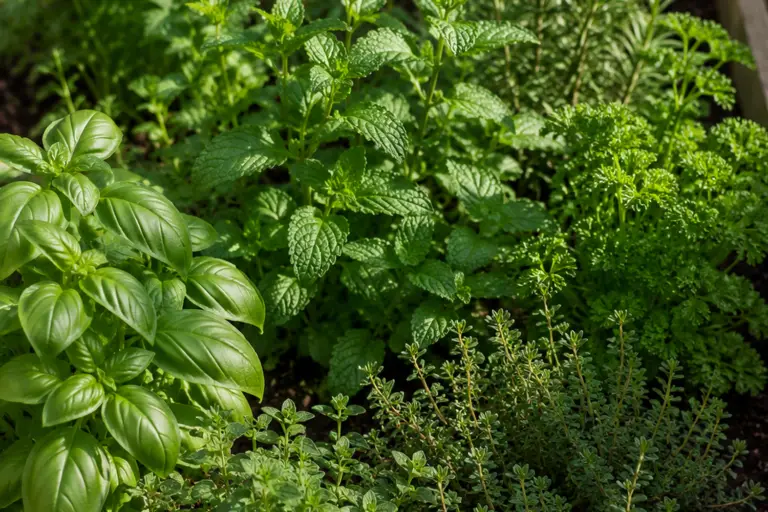
10 Herb Gardening Mistakes Beginners Make
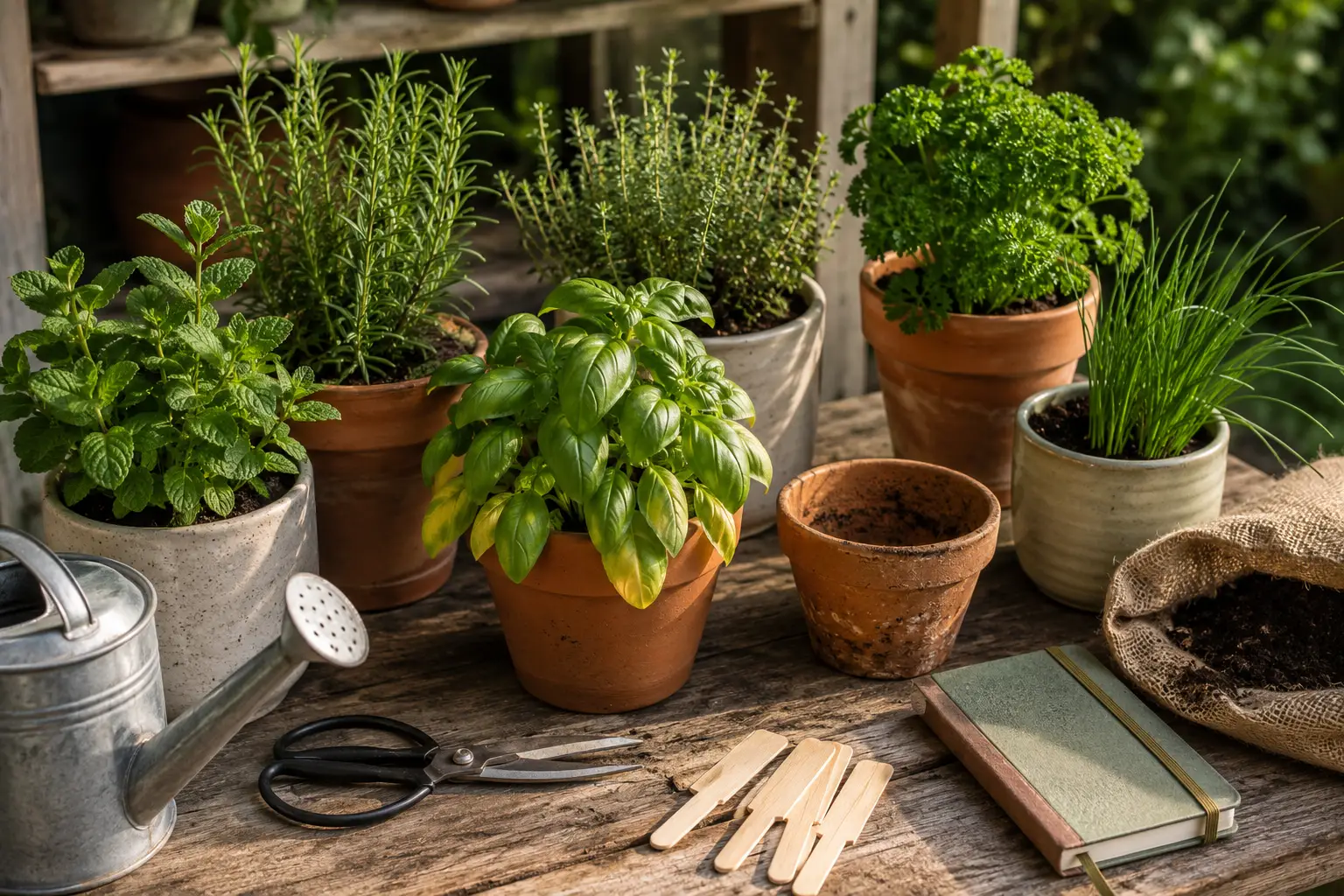
Herb gardening mistakes are very common when you are just starting out. Herbs are often described as easy plants, and many of them are beginner-friendly, but they still need the right light, water, soil, containers, and care to grow well.
A new herb gardener may buy too many plants at once, place them in pots without drainage, water them every day, or keep them in a dark kitchen corner. At first, the herbs may look fine, but after a few weeks they can become yellow, leggy, weak, dry, or completely wilted.
The good news is that most beginner herb garden problems are easy to fix once you understand what is going wrong. You do not need a perfect garden setup. You simply need to match each herb with the right conditions and avoid the most common mistakes.
In this guide, you will learn the 10 most common mistakes new herb gardeners make and how to avoid them, so your herbs can grow healthier, fuller, and more useful in your kitchen, balcony, patio, or small-space garden.
Why New Herb Gardeners Struggle
Herbs are simple plants, but they are not all the same. This is where many beginners get confused.
Some herbs love full sun and drier soil. Rosemary, thyme, oregano, sage, and lavender usually prefer bright light and well-draining soil. Other herbs, like basil, parsley, mint, cilantro, and chives, often need more regular moisture and slightly different care.
This means one watering routine will not always work for every herb. A pot of rosemary may suffer if it is watered like basil. A basil plant may wilt if it is treated like a drought-tolerant herb.
Before choosing your plants, it helps to explore different herb garden ideas so you can pick a setup that fits your space, sunlight, and lifestyle.
The key is to start small, observe your plants, and learn what each herb prefers.
Mistake 1: Choosing Too Many Herbs at Once
One of the biggest beginner herb gardening mistakes is buying too many herbs at the same time. It is easy to get excited at the garden center and come home with basil, mint, rosemary, thyme, oregano, parsley, cilantro, sage, lavender, dill, and chives all at once.
The problem is that each herb has slightly different needs. Some want more sun. Some need more water. Some grow quickly. Some grow slowly. Some stay compact. Others spread aggressively.
When you start with too many herbs, it becomes harder to learn what each plant needs. You may also run out of good light, containers, or time to care for them properly.
How to Avoid This Mistake
Start with three to five herbs you actually use in your kitchen.
Good beginner choices include:
- Basil
- Mint
- Parsley
- Chives
- Thyme
This gives you variety without making the garden overwhelming. Once you understand how these herbs grow, you can add rosemary, oregano, cilantro, sage, or lavender later.
A small, healthy herb garden is much better than a crowded collection of struggling plants.
Mistake 2: Using Pots Without Drainage
Many beginners choose pots because they look pretty, but they forget to check for drainage holes. This is one of the fastest ways to harm herbs.
Most herbs do not like sitting in wet soil. When water cannot drain out of the bottom of the pot, the roots stay too wet. Over time, this can cause root rot, yellow leaves, weak stems, and dying plants.
Decorative pots are not always designed for real planting. Some ceramic pots, metal containers, baskets, bowls, and decorative planters look beautiful but have no way for extra water to escape.
How to Avoid This Mistake
Choose pots with drainage holes whenever possible.
If you love a decorative pot without drainage, use it as a cover pot. Keep the herb in a plastic nursery pot with drainage holes, then place that nursery pot inside the decorative container. This gives you the aesthetic look without trapping water around the roots.
You can still use beautiful planters by choosing aesthetic plant pot ideas that include proper drainage or a removable inner pot.
Also place saucers under indoor pots to protect windowsills, shelves, and furniture from water damage.
Mistake 3: Overwatering Herbs
Overwatering is one of the most common reasons herbs die. Many beginners think watering every day is helpful, but herbs do not always need that much moisture.
When the soil stays constantly wet, roots cannot breathe properly. The plant may start turning yellow, wilting, or dropping leaves. This can be confusing because a wilted plant looks thirsty, even when the real problem is too much water.
Different herbs also have different water needs. Basil and parsley often need more consistent moisture, while rosemary, thyme, oregano, sage, and lavender prefer soil that dries out more between watering.
How to Avoid This Mistake
Do not water on a fixed schedule. Check the soil first.
Push your finger about one inch into the soil. If it feels dry, water. If it still feels moist, wait another day.
When you water, water deeply until water drains from the bottom of the pot. Then allow the soil to dry slightly before watering again.
For Mediterranean herbs like rosemary, thyme, oregano, and lavender, be especially careful not to overwater. These herbs usually prefer a drier, well-drained environment.
Mistake 4: Not Giving Herbs Enough Sunlight
Many herbs struggle because they are not getting enough light. A plant may survive in a dark kitchen corner for a short time, but it will not grow strong and full without enough sunlight.
When herbs do not get enough light, they often become leggy. This means the stems grow long, thin, and weak as the plant stretches toward the light. The leaves may become smaller, paler, and less flavorful.
Most herbs need at least four to six hours of sunlight per day. Some herbs, like rosemary, thyme, oregano, sage, and basil, prefer even more light.
How to Avoid This Mistake
Place herbs in the brightest spot you have.
Good options include:
- A sunny kitchen windowsill
- A bright balcony
- A patio with morning sun
- A south-facing or east-facing window
- A shelf with a grow light
If you are growing in a small outdoor space, a balcony herb garden can give herbs better light and airflow than many indoor setups.
If your home does not get enough natural light, use a simple grow light. This can make a big difference for indoor herbs, especially during winter or in apartments with limited sunlight.
Mistake 5: Using the Wrong Soil
Another common mistake is using heavy garden soil in pots. Garden soil may work outdoors in the ground, but it often becomes compacted in containers.
When soil gets compacted, water does not drain well and roots struggle to grow. Herbs in heavy soil may become weak, yellow, or slow-growing.
Container herbs need soil that is light, loose, and well-draining. This is especially important for herbs like rosemary, thyme, oregano, sage, and lavender.
How to Avoid This Mistake
Use a good-quality potting mix made for containers. Potting mix is lighter than garden soil and helps roots get both moisture and air.
For herbs that prefer drier soil, you can choose a well-draining mix or add materials that improve drainage, depending on your setup.
Avoid filling pots with dense backyard soil. It may seem like a free option, but it can cause more problems in the long run.
Good soil is one of the simplest ways to help herbs grow stronger from the beginning.
Mistake 6: Planting Mint with Other Herbs
Mint is one of the easiest herbs to grow, but it is also one of the most aggressive. Many beginners plant mint in the same container as basil, parsley, thyme, or oregano, then wonder why the other herbs start struggling.
Mint spreads quickly through roots and can take over a pot or garden bed. It grows fast, competes for space, and can crowd out slower-growing herbs.
This does not mean you should avoid mint. Mint is a wonderful herb for tea, drinks, desserts, and fresh recipes. It just needs its own space.
How to Avoid This Mistake
Grow mint in its own container.
A separate pot allows you to enjoy mint without letting it take over the rest of your herb garden. You can place the mint pot near your other herbs, but do not plant it in the same small container.
This rule also applies to lemon balm, which can spread quickly too.
If you want a mixed herb planter, choose herbs with similar growth habits and water needs instead.
Mistake 7: Forgetting to Harvest Regularly
Many new herb gardeners are afraid to cut their plants. They wait too long because they do not want to damage the herb. But regular harvesting is actually good for many herbs.
When herbs are not harvested, they can become tall, leggy, woody, or less productive. Some herbs may start flowering too early, which can change the flavor of the leaves.
Basil is a good example. If you keep cutting or pinching it properly, it grows bushier. If you leave it alone, it may grow tall and thin, then flower quickly.
How to Avoid This Mistake
Harvest small amounts often once the plant is established.
For basil, pinch or cut just above a set of leaves. This encourages new side growth.
For chives, cut the green stems near the base and let them regrow.
For rosemary and thyme, snip small sprigs instead of cutting too much at once.
Avoid removing more than one-third of the plant at one time, especially when the plant is young.
When your herbs grow well, drying extra leaves is one of the easiest food preservation methods for beginners. You can dry small bundles of thyme, oregano, rosemary, mint, or sage and store them for later use.
Mistake 8: Not Matching Herbs with Their Growing Conditions
A common beginner mistake is treating all herbs the same. This usually causes problems because herbs come from different growing environments.
Rosemary, thyme, oregano, sage, and lavender often prefer sunny, dry, well-drained conditions. Basil, parsley, cilantro, mint, and chives usually need more regular moisture.
If you plant herbs with opposite needs in the same pot, one of them may suffer. For example, rosemary and basil can be difficult to keep happy in one small container because basil likes more moisture, while rosemary prefers drier soil.
How to Avoid This Mistake
Group herbs with similar needs together.
Good dry-condition herbs:
- Rosemary
- Thyme
- Oregano
- Sage
- Lavender
Good moisture-loving herbs:
- Basil
- Parsley
- Cilantro
- Chives
- Mint, but in its own pot
This makes watering much easier. Instead of guessing, you can care for each group based on what it actually needs.
If you are unsure, grow each herb in its own pot. This gives you the most control and is often the best choice for beginners.
Mistake 9: Choosing Herbs You Do Not Actually Use
It is easy to choose herbs because they look pretty or sound interesting. But if you do not use them, you are more likely to forget about them.
A herb garden should fit your real life. If you cook with basil every week, grow basil. If you drink mint tea, grow mint. If you love roasted potatoes, grow rosemary and thyme. If you make salsa often, try cilantro.
Growing herbs you already enjoy makes the garden more useful and motivating.
How to Avoid This Mistake
Choose herbs based on your habits.
Ask yourself:
- What herbs do I already buy?
- What herbs do I use when cooking?
- Do I want herbs for tea?
- Do I want herbs for drying?
- Do I want herbs for homemade seasoning blends?
- Do I want herbs for gifts?
If you rarely use sage, dill, or lavender, do not start with them just because they look beautiful. You can always add them later.
The best beginner herb garden is one that you actually use.
Mistake 10: Expecting Perfect Growth Immediately
Many new herb gardeners give up too quickly. A plant wilts, turns yellow, gets leggy, or grows slowly, and they assume they are bad at gardening.
But gardening is learned by observation. Every plant teaches you something. Sometimes the problem is too much water. Sometimes it is not enough sun. Sometimes the pot is too small. Sometimes the plant was weak when you bought it.
No beginner gets everything perfect right away.
How to Avoid This Mistake
Start small and treat the first season as practice.
Keep simple notes about:
- When you water
- Which herbs grow best
- Which herbs struggle
- How much sun the space gets
- Which pots dry out fastest
- What you actually harvest and use
These notes will help you improve quickly.
Growing herbs in pots is also a simple way to start homesteading in an apartment without needing land. You learn plant care, food use, harvesting, and observation in a small, manageable way.
The goal is not perfection. The goal is progress.
Quick Herb Care Table for Beginners
| Herb | Light Needs | Water Needs | Best Growing Tip |
|---|---|---|---|
| Basil | Bright sun | Regular moisture | Pinch often for bushy growth |
| Mint | Sun to partial sun | Regular moisture | Grow in its own pot |
| Rosemary | Full sun | Let soil dry slightly | Use well-draining soil |
| Thyme | Full sun | Moderate to low water | Avoid soggy soil |
| Oregano | Full sun | Moderate water | Harvest to keep compact |
| Parsley | Sun to partial sun | Regular moisture | Keep soil lightly moist |
| Chives | Sun to partial sun | Moderate moisture | Cut regularly |
| Cilantro | Sun to partial sun | Regular moisture | Grow in cooler weather |
| Sage | Full sun | Lower water | Do not overwater |
| Lavender | Full sun | Low water | Needs excellent drainage |
Simple Beginner Herb Garden Setup
If you want to avoid most beginner mistakes, start with a simple setup instead of a complicated one.
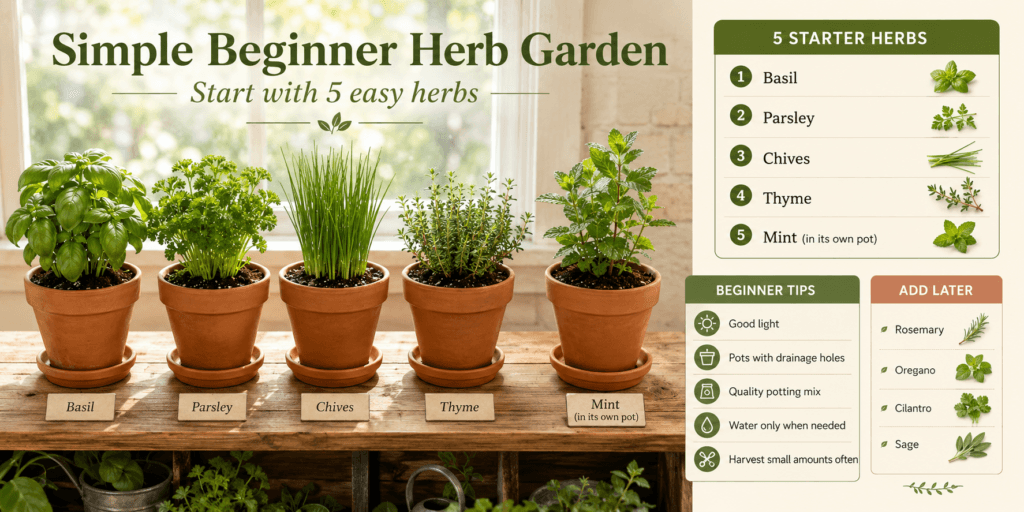
A good beginner herb garden could include:
- One basil plant
- One parsley plant
- One chives plant
- One thyme plant
- One mint plant in its own pot
Place them where they get good light. Use pots with drainage holes. Fill them with quality potting mix. Water only when the soil needs it. Harvest small amounts often.
This simple setup teaches you the most important herb gardening skills without overwhelming you.
Once you feel confident, you can add rosemary, oregano, cilantro, sage, lavender, or dill.
FAQ About Herb Gardening Mistakes
Why do my herbs keep dying?
Herbs usually die because of overwatering, poor drainage, not enough sunlight, or the wrong soil. Start by checking whether the pot has drainage holes and whether the plant is getting enough light. Then check the soil before watering again.
What is the biggest mistake beginners make with herbs?
The biggest mistake is usually overwatering. Many beginners water too often because they think herbs need daily care. Most herbs prefer soil that dries slightly between watering.
Can herbs grow indoors?
Yes, many herbs can grow indoors if they receive enough light. Basil, parsley, chives, mint, and cilantro can grow indoors near a sunny window or under a grow light.
Should I grow herbs from seeds or starter plants?
Starter plants are easier for beginners because they give you a faster result. Seeds are cheaper, but they take more patience. Basil, cilantro, parsley, and chives are easier from seed than rosemary, lavender, or thyme.
What herbs should not be planted together?
Mint should usually be grown alone because it spreads quickly. Also avoid planting herbs with very different watering needs in the same small pot. For example, rosemary and basil may not be ideal together because rosemary likes drier soil while basil needs more moisture.
How often should I harvest herbs?
Harvest small amounts regularly once the plant is established. Regular harvesting helps many herbs grow fuller and prevents them from becoming leggy or flowering too early.
Why are my herbs turning yellow?
Yellow leaves can be caused by overwatering, poor drainage, not enough nutrients, or not enough light. The first thing to check is the soil. If it stays wet for too long, reduce watering and make sure the pot drains properly.
Why are my herbs growing tall and weak?
Tall, weak, leggy growth usually means the plant is not getting enough light. Move it to a brighter window, balcony, patio, or use a grow light indoors.
Conclusion
Herb gardening mistakes are part of learning, especially when you are new to growing plants. The important thing is to understand what went wrong and make small changes.
Most herb problems come from the same few causes: too much water, not enough sunlight, poor drainage, wrong soil, overcrowding, or choosing herbs that do not fit your space. Once you fix those basics, your herbs have a much better chance of growing healthy and strong.
Start with a few herbs you actually use. Give them good light, plant them in containers with drainage, use quality potting mix, and harvest regularly. Keep mint in its own pot, group herbs by similar needs, and do not expect perfection right away.
A healthy herb garden does not need to be big or complicated. It can begin with a few simple pots on a windowsill, balcony, patio, or small garden shelf.
Want more beginner-friendly gardening, small-space homesteading, and simple home garden ideas? Subscribe to the Dreamsteading newsletter and get practical inspiration sent straight to your inbox.