11 Essential DIY and Building Tools Strong for Beginner Homesteaders
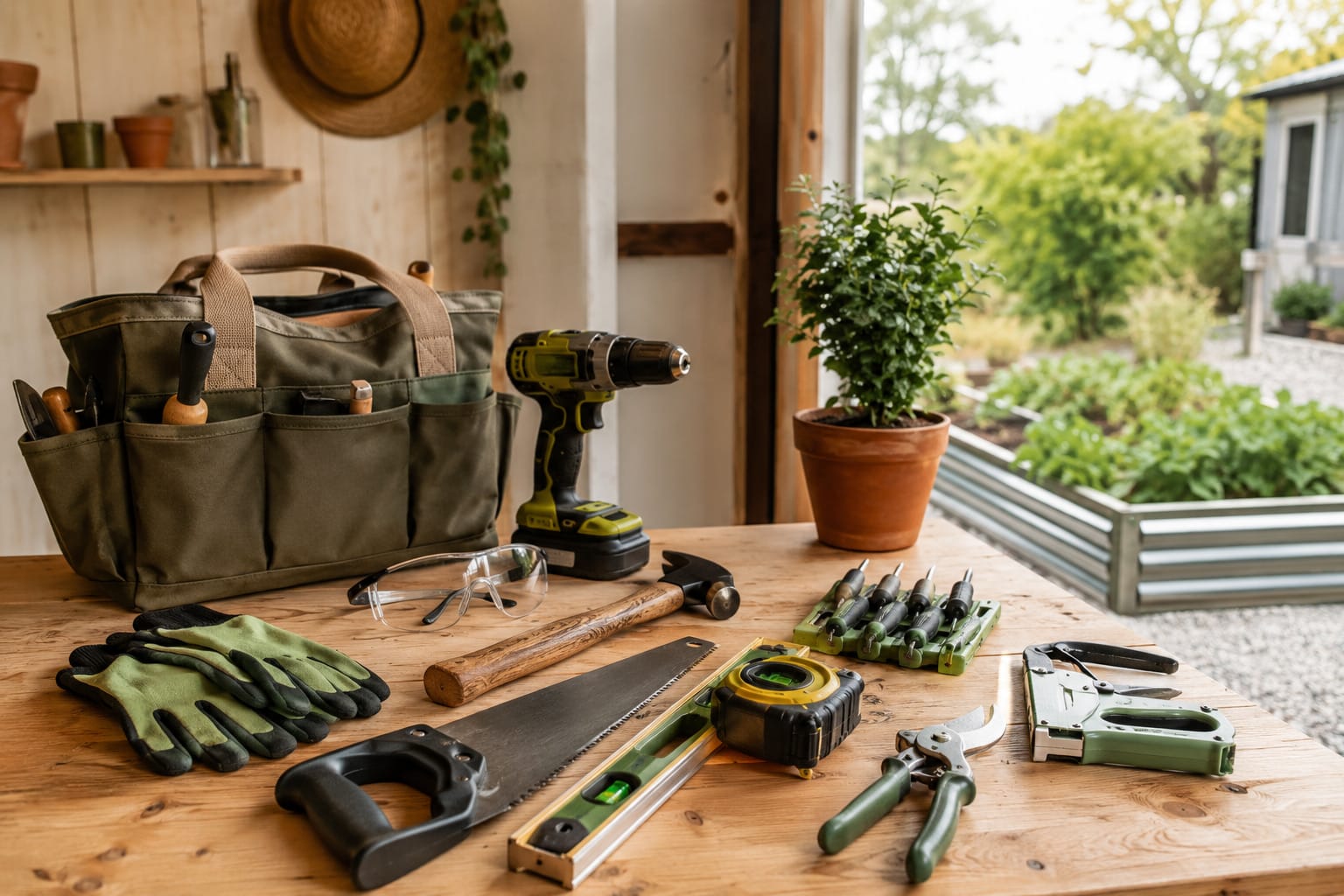
The right DIY and building tools can make homesteading feel much more possible, even if you are just starting.
You do not need a professional workshop to begin. You do not need every expensive tool in the hardware store either. What you need is a small, reliable tool collection that helps you handle simple repairs, build raised beds, install trellises, fix garden structures, prune plants, hang hardware, and maintain your home and backyard with more confidence.
That is the real value of basic tools.
They give you independence.
Instead of waiting for someone else to fix every small problem, you can slowly learn how to measure, cut, fasten, repair, and build simple projects yourself.
If you are planning garden builds this season, DIY Garden Projects on a Budget is a good place to start for simple project ideas that do not require a huge workshop.
Affiliate Disclosure
This post may contain affiliate links. If you buy through these links, Dreamsteading may earn a small commission at no extra cost to you. I only recommend practical DIY tools and homestead supplies that fit a beginner-friendly, budget-conscious lifestyle.
Why Every Homesteader Needs Basic Tools
Homesteading is not only about growing food or keeping animals. It is also about becoming more capable at home.
A loose gate, broken planter, leaning trellis, damaged raised bed, loose screw, missing latch, or simple shelf project becomes much easier when you already have basic tools nearby.
Beginner tools help you with:
- Garden repairs
- Raised bed projects
- Trellis building
- Small fencing fixes
- Coop or shed maintenance
- Plant supports
- Outdoor organization
- Simple home repairs
- Seasonal garden cleanup
- Small woodworking tasks
Tools also help you save money over time.
One simple project may not pay for every tool immediately, but the more you build and repair, the more useful those tools become.
The key is to start small and buy tools you will actually use.
Beginner Hand Tools
Hand tools are the foundation of a beginner homestead toolkit.
They are simple, affordable, and useful for many garden and building tasks. Even if you eventually buy power tools, you will still use basic hand tools all the time.
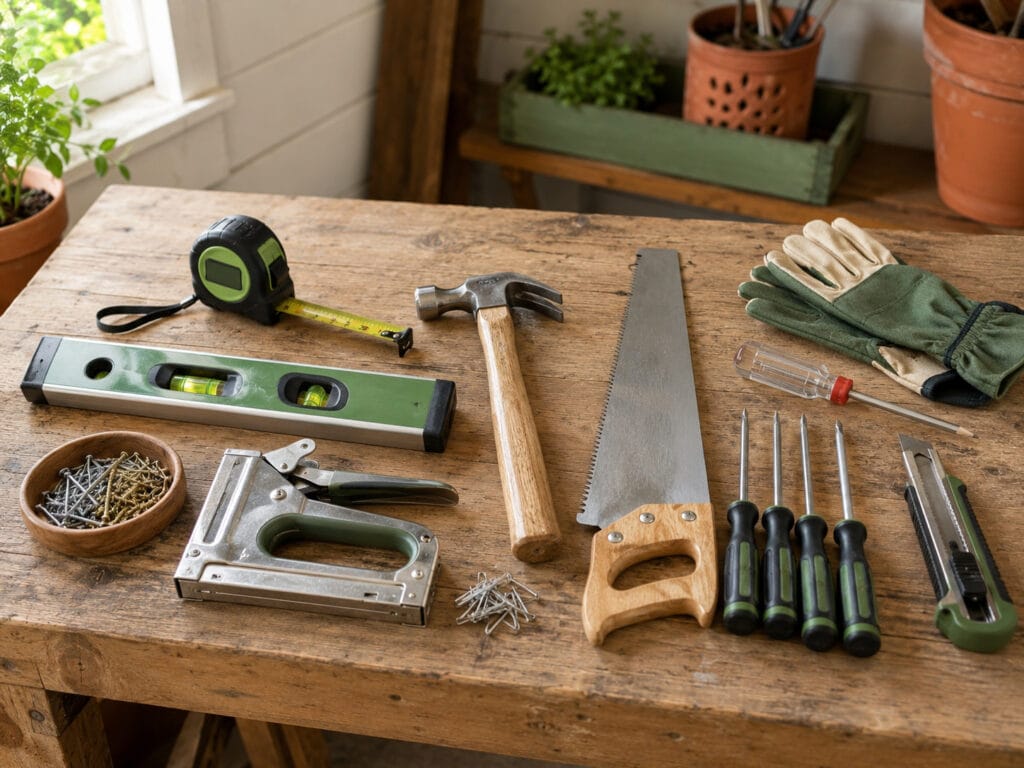
1. Measuring Tape
A measuring tape is one of the first tools every beginner should own.
Use it for raised beds, trellises, garden paths, shelves, fencing, spacing plants, measuring lumber, and checking project dimensions before cutting.
A 25-foot measuring tape is usually enough for most beginner homestead projects.
I recommend keeping one in your tool bag and another near your garden supplies because it is one of those tools you will reach for constantly.
2. Level
A level helps you build straighter, cleaner, better-looking projects.
You can use it when installing shelves, building raised beds, setting posts, hanging garden hooks, placing trellis supports, or checking whether a surface is even.
A small level is easy to store, but a longer level can be helpful for larger outdoor projects.
If you are building How to Build Raised Garden Beds, a level can help the frame sit more evenly and look more professional.
3. Hammer
A hammer is a basic tool you will use for small repairs, nails, stakes, light demolition, and simple building jobs.
For beginners, a standard claw hammer is usually enough.
Use the claw side to remove nails and the flat side for driving nails or tapping pieces into place.
A hammer is simple, but it is still one of the most useful tools on a homestead.
4. Screwdriver Set
A screwdriver set is essential for everyday fixes.
You will use screwdrivers for handles, hinges, small hardware, garden tools, furniture, latches, battery covers, and simple repairs.
Choose a set with both flathead and Phillips head screwdrivers in different sizes.
Even if you have a drill, you will still need screwdrivers for delicate jobs where a power tool can strip screws or damage hardware.
5. Handsaw
A handsaw is useful when you need to cut small boards, branches, stakes, or simple lumber without pulling out a power saw.
It is slower than a circular saw, but it is affordable and beginner-friendly.
A sharp handsaw can help with small garden builds, simple supports, and rough outdoor cuts.
For projects like How to Build a Simple Garden Trellis, a handsaw can be enough if you are using lightweight boards or wooden stakes.
6. Utility Knife
A utility knife is helpful for cutting twine, cardboard, landscape fabric, packaging, rope, plastic sheeting, and garden material.
It is one of the small tools that makes almost every project easier.
Choose one with replaceable blades and always retract the blade when you are done.
7. Pruning Shears
Pruning shears are essential for garden maintenance.
Use them to trim herbs, harvest vegetables, cut small stems, prune flowers, remove dead growth, and manage small woody branches.
A good pair of pruning shears is especially useful if your homestead projects include fruit bushes, herbs, climbing plants, flowers, or vegetable gardens.
Keep them clean and sharp so they cut instead of crushing stems.
Basic Power Tools
Power tools are not required for every beginner, but they can make building projects faster, easier, and cleaner.
Start with one or two tools that match the projects you actually want to build.
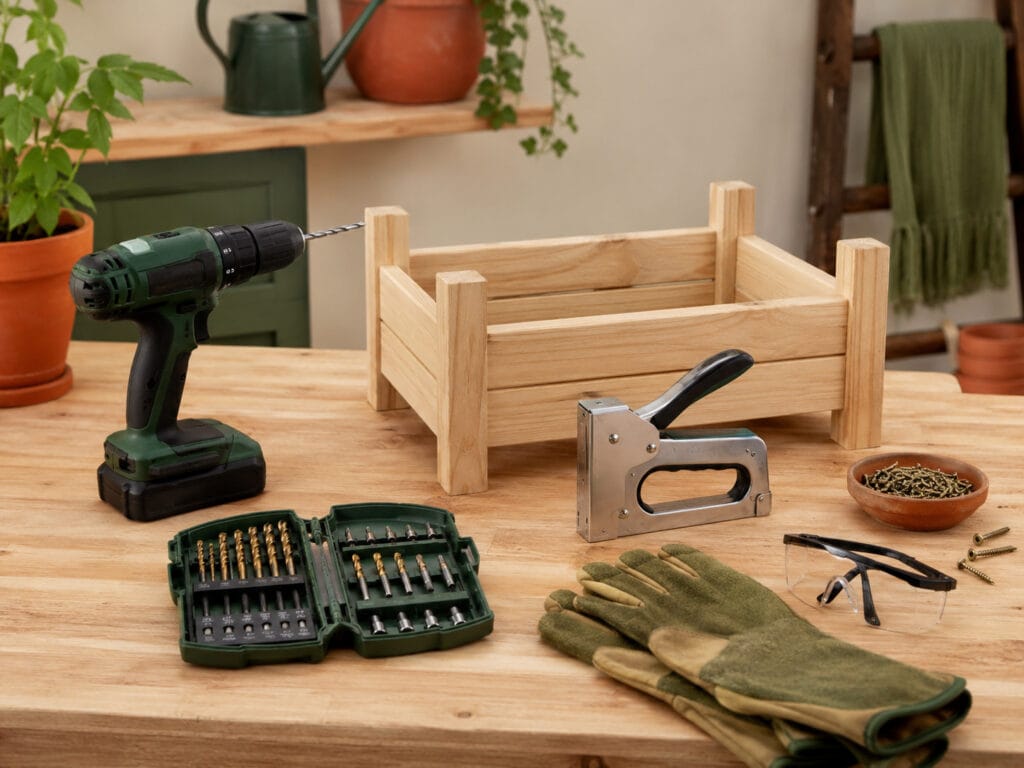
8. Cordless Drill
A cordless drill is the first power tool I recommend for most beginner homesteaders.
It can drill holes, drive screws, assemble raised beds, attach trellis pieces, install hardware, build shelves, repair gates, and handle countless small projects.
A drill saves time and makes DIY projects much easier.
Pair it with a basic drill bit set and exterior-rated screws if you plan to build outdoor garden projects.
If you are building raised beds, trellises, or simple outdoor structures, a cordless drill will quickly become one of your most-used tools.
9. Staple Gun
A staple gun is very useful for garden and homestead projects.
You can use it for attaching hardware cloth, securing landscape fabric, fastening shade cloth, repairing small outdoor coverings, and building simple protective frames.
For chicken coops, garden fencing, and plant protection, a staple gun can be especially helpful.
Just remember that staples alone may not be strong enough for every predator-proofing job. For stronger outdoor builds, pair staples with the correct fasteners and sturdy materials.
10. Basic Saw Option
A handsaw can handle many beginner projects, but if you plan to build often, you may eventually want a simple power saw.
A circular saw, jigsaw, or miter saw can make cutting lumber faster and cleaner.
You do not need all three at the beginning.
For many homestead garden projects, a handsaw plus pre-cut lumber can be enough while you build confidence.
When choosing wood for outdoor projects, read Best Wood for Garden Projects before buying lumber so you choose material that fits your budget, climate, and project.
Garden Building Tools
Garden building tools help you work outside where most homestead projects happen.
These tools are practical for raised beds, trellises, paths, small fences, compost areas, and plant supports.
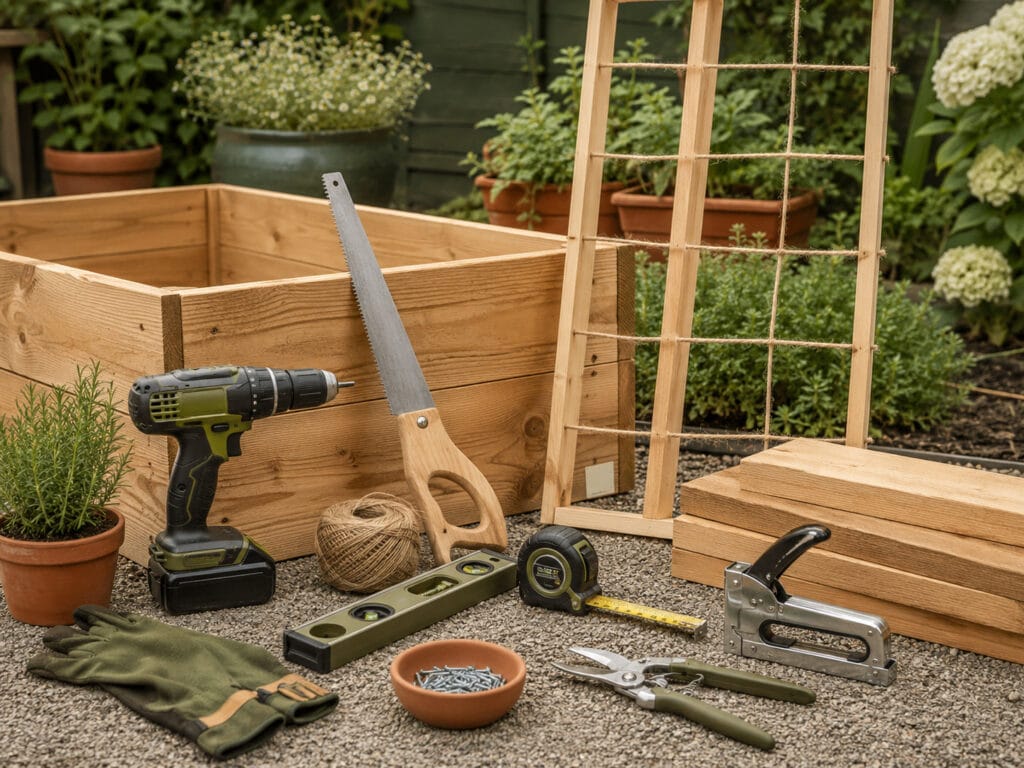
Useful garden building tools include:
- Cordless drill
- Measuring tape
- Level
- Hammer
- Handsaw
- Staple gun
- Pruning shears
- Shovel
- Rake
- Garden fork
- Clamps
- Twine
- Exterior screws
- Work surface or sawhorses
For raised beds, the most useful tools are usually a measuring tape, drill, level, work gloves, and saw.
For trellises, you may need pruning shears, a handsaw, drill, twine, screws, or a staple gun depending on the design.
For small garden repairs, a hammer, screwdriver set, utility knife, and drill often solve the problem quickly.
Start with tools that match your first few projects.
If you are building a garden from scratch, How to Build Raised Garden Beds and How to Build a Simple Garden Trellis are good beginner projects because they teach measuring, fastening, spacing, and simple outdoor building.
Safety Gear
Safety gear is not optional.
Even simple DIY projects can create splinters, flying dust, sharp edges, loud noise, and hand injuries.
You do not need complicated gear for every small task, but you should have the basics ready before you start.
Work Gloves
Work gloves protect your hands from splinters, rough lumber, wire, thorns, soil, and sharp edges.
For garden building, choose gloves that fit well and still let you grip tools.
Loose gloves can make tool handling awkward, while thin gloves may not protect enough for rough work.
Safety Glasses
Safety glasses are one of the most important beginner safety items.
Wear them when cutting, drilling, stapling, hammering, pruning, sanding, or working with wire.
Eye protection is simple, affordable, and easy to keep in your tool bag.
Hearing Protection
If you use loud power tools, hearing protection is smart.
Earplugs or earmuffs can help protect your hearing during repeated cutting, drilling, or sawing.
Dust Mask
A dust mask is helpful when sanding, cutting dusty materials, cleaning old areas, or working around fine debris.
Use the right mask for the task, especially if you are dealing with mold, chemicals, or old painted materials.
Closed-Toe Shoes
Do not build in sandals.
Wear sturdy closed-toe shoes when working with lumber, tools, rocks, screws, or garden materials.
One dropped board or tool can hurt quickly.
The best safety habit is simple: slow down, use the right tool, wear the right protection, and do not rush when you are tired.
Tool Storage Ideas
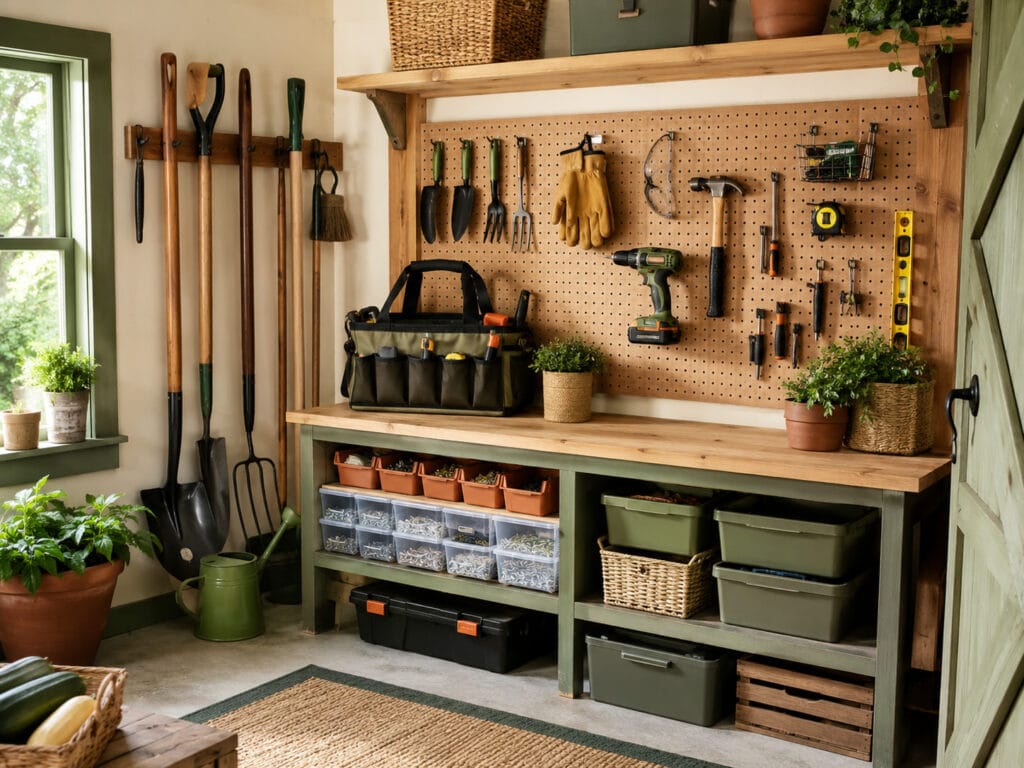
Good tool storage helps you actually use your tools.
If tools are scattered everywhere, you waste time looking for them. If tools are left outside, they rust, dull, crack, and disappear.
Simple tool storage ideas include:
- A tool bag for basic DIY tools
- Wall hooks for larger garden tools
- A small shelf in a shed or garage
- Clear bins for screws and small hardware
- A labeled box for safety gear
- A bucket organizer for outdoor tools
- A pegboard for frequently used tools
- A weatherproof storage box for garden supplies
A tool bag is one of the best beginner options because you can keep your essentials in one place and carry them to the garden, shed, coop, or work area.
A basic starter tool bag could hold:
- Measuring tape
- Level
- Screwdriver set
- Utility knife
- Safety glasses
- Work gloves
- Pencil
- Drill bits
- Small hardware
- Pruning shears
Keep power tools dry and store batteries according to the manufacturer’s instructions.
For outdoor tools, clean off soil and moisture before storage. This helps them last longer and work better.
Budget-Friendly Tool Buying Tips
Tools can get expensive quickly, but you do not need to buy everything at once.
Start with the basics and build your collection slowly.
Buy for Your Next Project
Do not buy random tools because they look useful.
Choose your first project, then buy the tools that project requires.
If your first project is a raised bed, buy the tools needed for raised beds.
If your first project is a trellis, buy the tools needed for trellises.
This keeps your budget focused.
Choose Quality for Tools You Use Often
Spend a little more on tools you will use constantly, such as a cordless drill, measuring tape, work gloves, and safety glasses.
You can go more budget-friendly on tools you only use occasionally.
Borrow Before Buying Expensive Tools
If you only need a tool once, consider borrowing it.
This is especially helpful for larger power tools.
Use Pre-Cut Lumber
Many beginner projects can be made easier by asking the lumber store to cut boards for you.
This can help you build simple projects before buying larger saws.
Buy Sets Carefully
Tool sets can be useful, but only if you need most of the items.
Do not buy a large cheap set full of tools you will never use.
A smaller set of practical tools is better than a large box of weak tools.
Watch for Sales
Basic DIY tools often go on sale during seasonal promotions.
Make a list first so you buy intentionally instead of collecting tools you do not need.
Take Care of What You Buy
Clean tools after use.
Store them dry.
Charge batteries properly.
Replace dull blades.
Tighten loose handles.
A well-maintained beginner toolkit can serve you for years.
DIY Tool Checklist
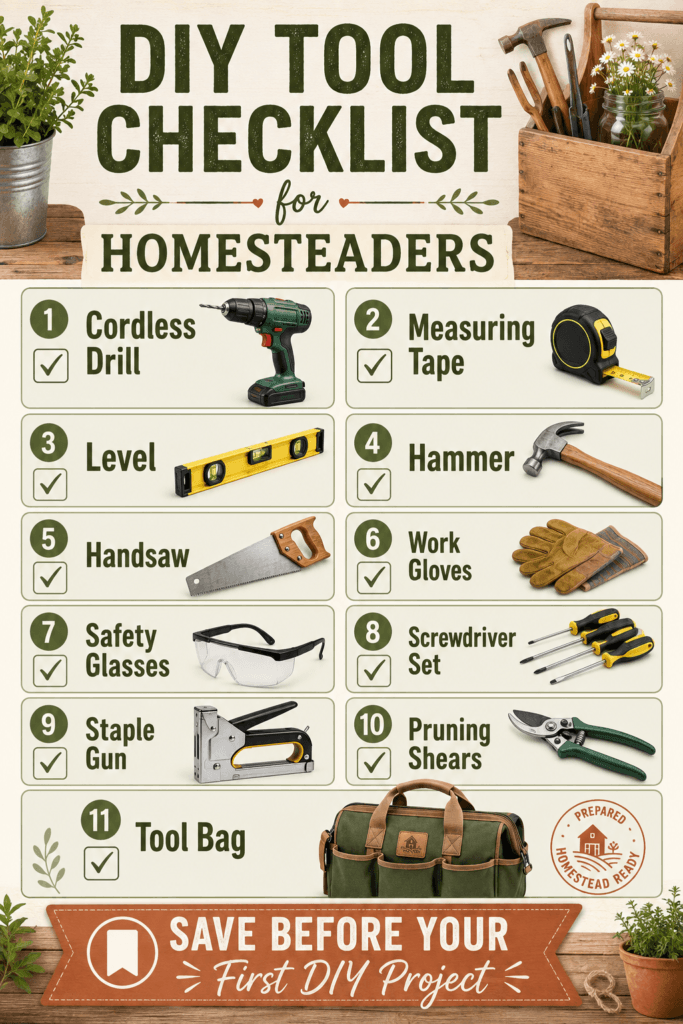
Here is a simple beginner DIY tool checklist for homesteaders.
Essential Hand Tools
- Measuring tape
- Level
- Hammer
- Handsaw
- Screwdriver set
- Utility knife
- Pencil or marker
- Clamps
- Speed square
Essential Power Tools
- Cordless drill
- Drill bit set
- Driver bit set
- Staple gun
- Extension cord if needed
- Spare batteries if needed
Garden Building Tools
- Pruning shears
- Shovel
- Rake
- Garden fork
- Twine
- Exterior screws
- Hardware cloth
- Zip ties
- Sawhorses or work surface
Safety Gear
- Work gloves
- Safety glasses
- Hearing protection
- Dust mask
- Closed-toe shoes
- First aid supplies
Tool Storage
- Tool bag
- Small hardware organizer
- Wall hooks
- Pegboard
- Storage bins
- Dry shelf or cabinet
Start with the first few tools you need most.
A good beginner toolkit is not about having everything. It is about having the right tools ready when a simple project or repair comes up.
FAQ About DIY and Building Tools
What DIY tools should every beginner homesteader own?
Every beginner homesteader should start with a measuring tape, level, hammer, screwdriver set, handsaw, work gloves, safety glasses, pruning shears, tool bag, and a cordless drill if they plan to build often.
What is the first power tool I should buy?
A cordless drill is usually the best first power tool.
It is useful for raised beds, trellises, shelves, repairs, latches, small building projects, and outdoor fixes.
Do I need expensive tools to start DIY projects?
No, you do not need expensive tools to start.
Buy basic tools first, choose reliable quality where it matters, and add more tools as your projects grow.
What tools do I need to build raised garden beds?
For raised beds, you usually need a measuring tape, level, cordless drill, saw or pre-cut lumber, screws, work gloves, and safety glasses.
You can follow How to Build Raised Garden Beds for a beginner-friendly project plan.
What tools do I need to build a garden trellis?
For a simple trellis, you may need a measuring tape, handsaw, cordless drill, screws, twine, staple gun, pruning shears, work gloves, and safety glasses.
A step-by-step guide like How to Build a Simple Garden Trellis can help you start with a manageable design.
Are hand tools enough for beginner projects?
Yes, hand tools can be enough for many small projects.
You can use pre-cut lumber, simple fasteners, a handsaw, hammer, screwdriver set, and measuring tape for many beginner builds.
What safety gear do beginners need?
At minimum, beginners should have work gloves, safety glasses, closed-toe shoes, and a dust mask.
Hearing protection is helpful when using loud power tools.
How should I store DIY tools?
A tool bag is a simple beginner storage solution.
You can also use wall hooks, small bins, pegboards, shelves, and hardware organizers to keep tools dry, visible, and easy to reach.
Should I buy tools one at a time or as a set?
Buy tools based on your first projects.
A small set can be useful if it includes tools you will actually use, but buying one reliable tool at a time often saves money and avoids clutter.
What is the most useful tool for homestead projects?
A cordless drill is one of the most useful tools because it helps with building, repairs, hardware installation, raised beds, trellises, shelves, and many outdoor projects.
Final Thoughts
You do not need a huge workshop to start building useful things around your home and garden.
You only need a small set of reliable tools, a safe work routine, and simple beginner projects that help you practice.
Start with the basics: a measuring tape, level, hammer, handsaw, screwdriver set, work gloves, safety glasses, pruning shears, tool bag, staple gun, and cordless drill.
Then build slowly.
Use your tools to fix small problems, build garden structures, repair outdoor spaces, and create projects that make your homestead more practical.
Every project teaches you something.
The more you measure, cut, fasten, repair, and build, the more confident you become. That confidence is one of the most valuable homesteading skills you can grow.