How to Make Pickles for Beginners: Easy Crunchy Guide
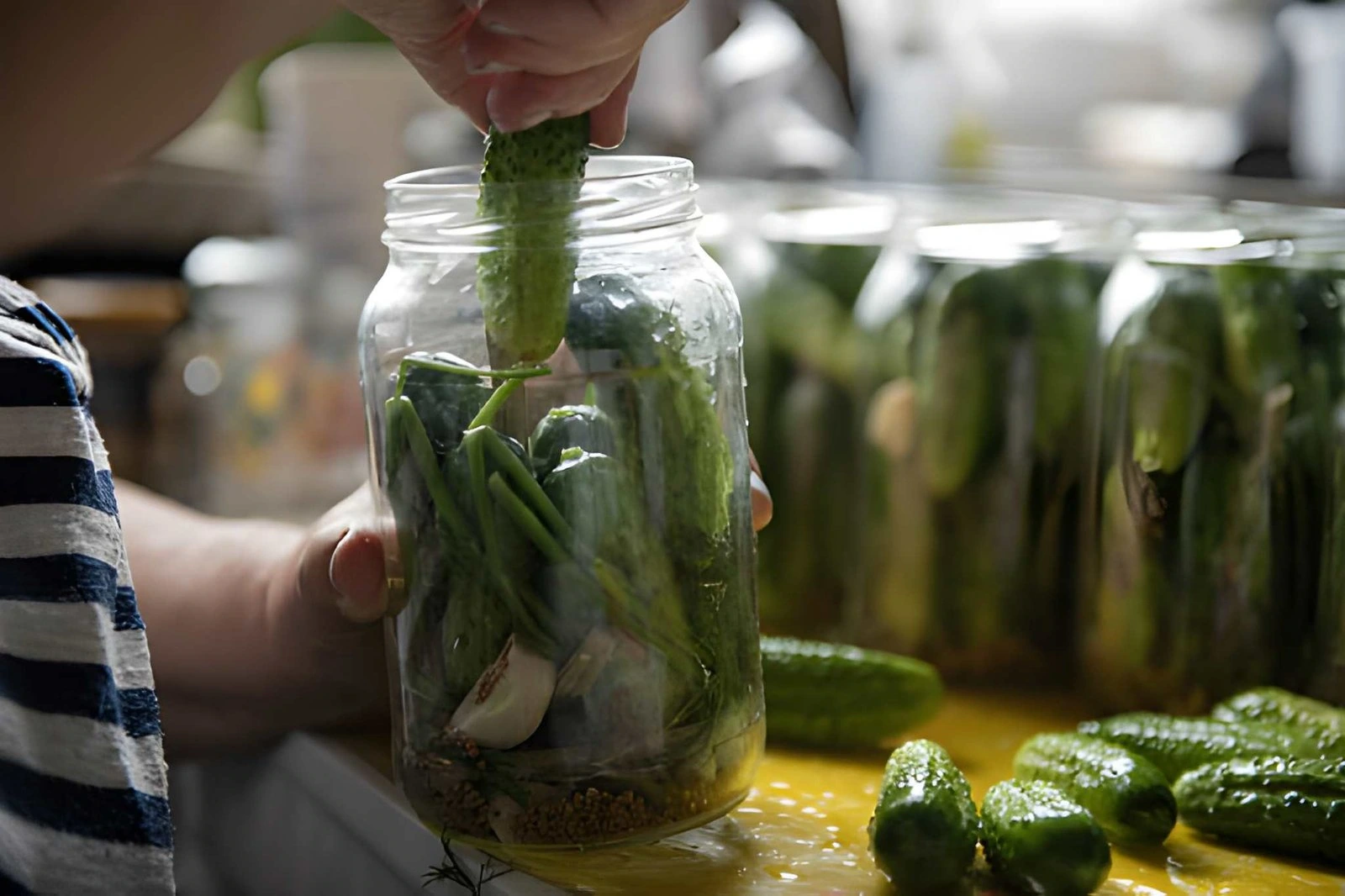
How to make pickles for beginners is one of the easiest food preservation skills to learn because you can start with simple refrigerator pickles before moving into full water bath canning. If you have cucumbers, vinegar, salt, water, a clean jar, and a few seasonings, you can make a crisp, tangy jar of homemade pickles without needing a complicated setup.
When I first learned to make pickles, I thought it would be difficult. I imagined special equipment, exact timing, and a kitchen full of jars.
But beginner pickling can be very simple.
The easiest place to start is with refrigerator pickles. These are quick pickles made with a vinegar brine and stored in the fridge. They are not shelf-stable like canned pickles, but they are perfect for learning the process, using extra cucumbers, and adding homemade flavor to sandwiches, burgers, salads, and snack plates.
Once you understand the basic method, you can decide later if you want to learn shelf-stable canning through Water Bath Canning for Beginners or build your supplies with Home Canning Essentials for Beginners.
For now, let’s start with the simple version.
Affiliate Disclosure
This article may contain affiliate product recommendations. If you choose to purchase through those recommendations, I may earn a small commission at no extra cost to you. I only recommend practical kitchen and food preservation supplies that fit a beginner homesteading kitchen.
Table of Contents
What Are Homemade Pickles?
Homemade pickles are vegetables preserved or flavored in a salty, tangy brine. Most beginners start with cucumber pickles, but you can also pickle onions, carrots, green beans, radishes, peppers, cauliflower, and many other vegetables.
There are different styles of pickles.
Some are fermented in a salt brine over time. Some are quick pickled with vinegar. Some are processed in a water bath canner so they can be stored on a pantry shelf.
For beginners, quick refrigerator pickles are the easiest and safest starting point because they stay in the refrigerator and do not require full canning.
They also give you fast results. Many refrigerator pickles taste good after 24 hours, and the flavor gets stronger after a few days.
Refrigerator Pickles vs. Canned Pickles
Before you begin, it is important to understand the difference between refrigerator pickles and canned pickles.
Refrigerator pickles are stored in the fridge. They are made with vinegar brine, poured over vegetables, cooled, and refrigerated. They are not meant to sit on a pantry shelf.
Canned pickles are processed in a boiling water bath using a tested recipe. That process makes them shelf-stable when done correctly.
This article focuses on beginner refrigerator pickles because they are simple and low-pressure.
If you want shelf-stable jars later, use a tested recipe and follow proper canning guidance. Do not guess with vinegar ratios, processing times, or jar sealing. A complete water bath canning kit can be helpful once you are ready to preserve pickles for the pantry.
For your first batch, the fridge method is the best place to start.
Best Cucumbers for Pickling
The best cucumbers for pickling are small, firm, fresh cucumbers with thin skins and fewer seeds.
Pickling cucumbers are usually shorter and bumpier than regular slicing cucumbers. They hold their texture better and fit nicely into jars.
Look for cucumbers that are:
Firm
Fresh
Bright green
Not soft or wrinkled
Small to medium in size
Free from large yellow spots
Fresh cucumbers make crunchier pickles. If cucumbers sit too long before pickling, they can become soft.
If you grow your own cucumbers, pick them in the morning and make pickles as soon as possible. If you buy cucumbers, choose the freshest ones you can find.
You can use regular slicing cucumbers if that is all you have, but the texture may be softer.
Basic Pickle Ingredients
You do not need many ingredients to make beginner pickles.
The basic ingredients are:
Cucumbers
Vinegar
Water
Salt
Garlic
Dill
Spices
For vinegar, use vinegar labeled 5% acidity. White vinegar gives a clean, classic pickle flavor. Apple cider vinegar gives a slightly warmer, fruitier flavor.
For salt, use pickling salt or canning salt if possible. It dissolves clearly and does not contain additives that may cloud the brine.
For jars, wide-mouth mason jars are the easiest for beginners because cucumbers are easier to pack and remove.
Garlic, dill, mustard seed, peppercorns, coriander seed, and red pepper flakes are all simple seasonings that work well in homemade pickles.
Easy Refrigerator Pickle Recipe
This beginner recipe makes about 2 pint jars of refrigerator dill pickles.
Ingredients
1 pound small cucumbers
1 cup 5% white vinegar or apple cider vinegar
1 cup water
1 tablespoon pickling salt
2 garlic cloves, peeled
2 teaspoons dill seed or a few fresh dill sprigs
1 teaspoon mustard seed
1 teaspoon black peppercorns
Optional: pinch of red pepper flakes
Supplies
2 clean pint jars
Small saucepan
Knife and cutting board
Measuring cups and spoons
Clean towel
Optional: canning funnel
Important Safety Note
These are refrigerator pickles. Store them in the fridge. They are not shelf-stable pantry pickles.
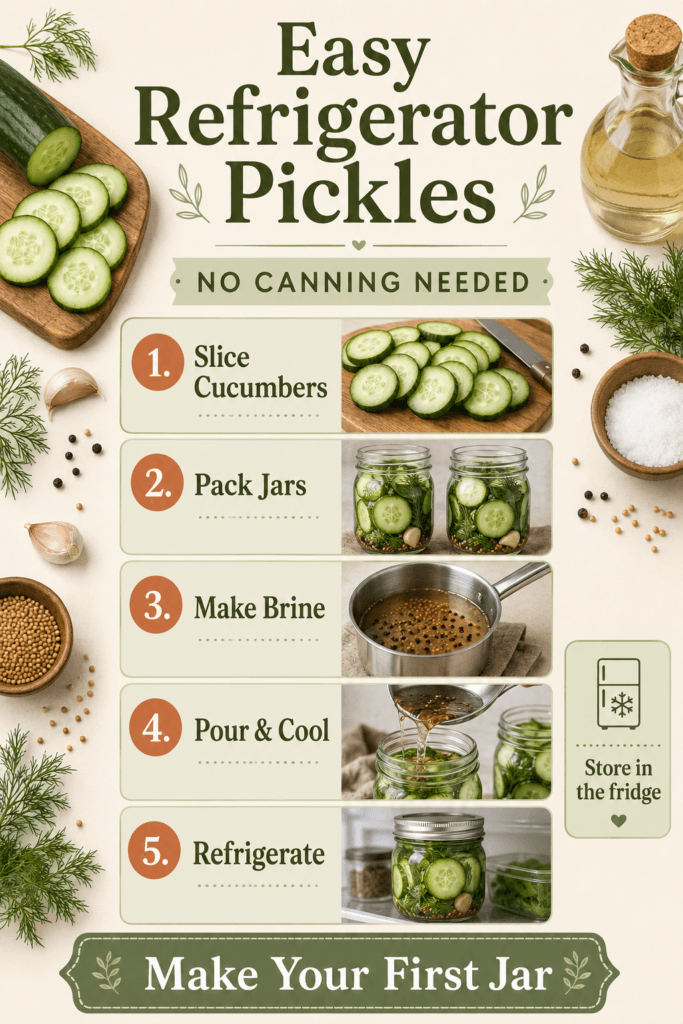
This easy refrigerator pickle recipe is the best place to start if you are learning how to make pickles for beginners. It uses a simple vinegar brine, fresh cucumbers, garlic, dill, and basic spices. These pickles are stored in the refrigerator, so you do not need water bath canning equipment for this first batch.
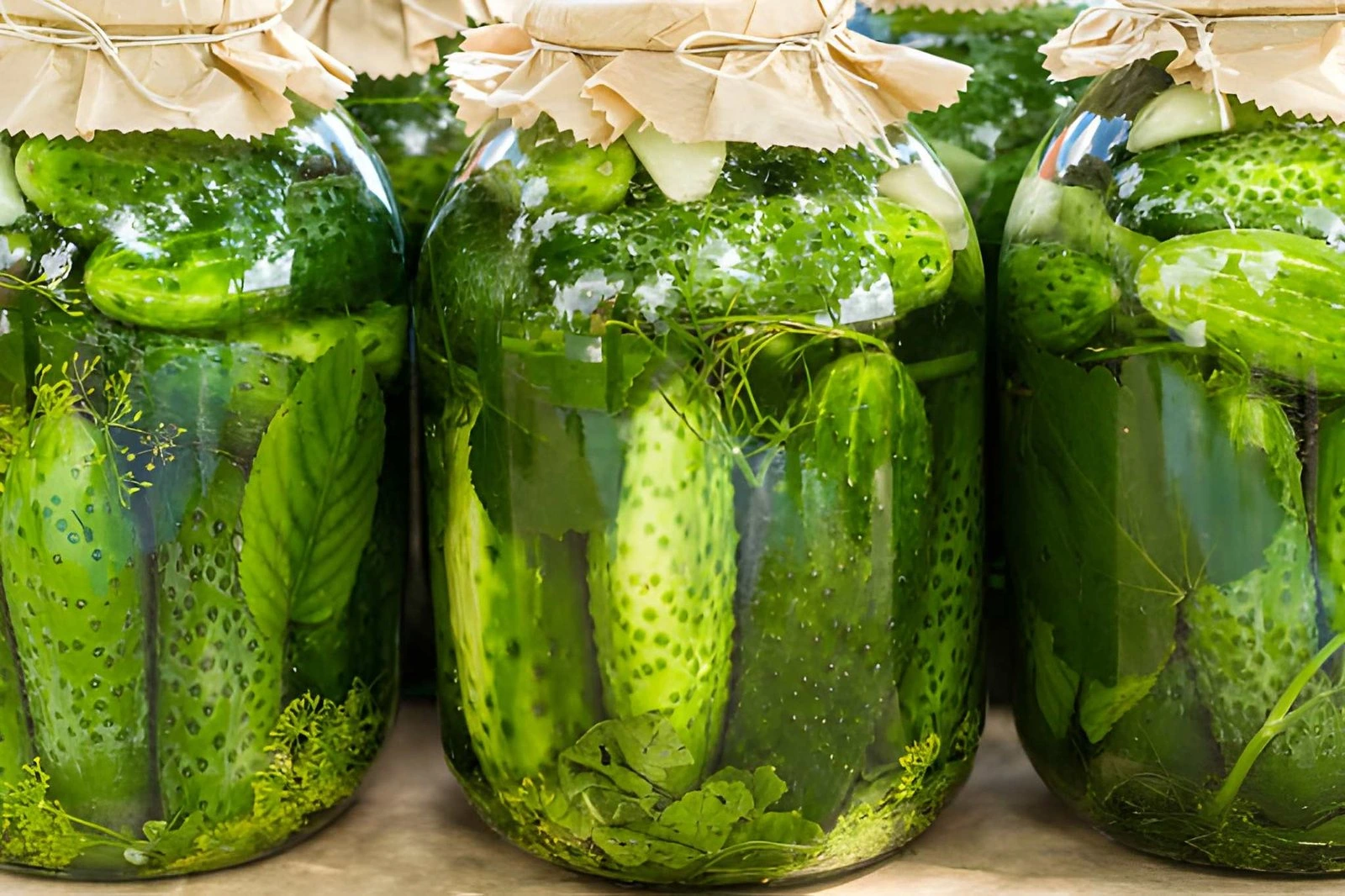
Easy Refrigerator Pickles for Beginners
Ingredients
Equipment
Method
- Wash the cucumbers under cool running water. Trim a small slice from the blossom end of each cucumber to help keep the pickles crisp.
- Cut the cucumbers into spears, chips, or slices, depending on how you want to use them.
- Place the garlic, dill, mustard seed, peppercorns, and optional red pepper flakes into clean pint jars.
- Pack the cucumber slices or spears into the jars, leaving a little space at the top.
- In a small saucepan, combine the vinegar, water, and pickling salt. Bring to a simmer and stir until the salt dissolves.
- Carefully pour the hot brine over the cucumbers until they are fully covered.
- Wipe the jar rims, add the lids, let the jars cool slightly, then refrigerate.
- Let the pickles rest in the refrigerator for at least 24 hours before tasting. The flavor improves after 2 to 3 days.
Notes
Step-by-Step Pickling Instructions
Step 1: Wash the Cucumbers
Wash the cucumbers under cool running water.
Gently rub away any dirt, especially if they came from the garden. Clean cucumbers help keep the brine fresh and clear.
Trim off the blossom end of each cucumber. The blossom end can contain enzymes that may soften pickles, so removing a small slice from the end is a good beginner habit.
Step 2: Cut the Cucumbers
Cut the cucumbers into the shape you like best.
You can make:
Spears
Slices
Chips
Halves
Whole small pickles
Spears are great for snacking. Chips are perfect for burgers and sandwiches. Whole small cucumbers are classic, but they take longer to absorb flavor.
For your first batch, I recommend slices or spears because they are easy to pack and flavor quickly.
Step 3: Prepare the Jars
Wash your jars in hot, soapy water and rinse them well.
For refrigerator pickles, jars do not need the same full canning process as shelf-stable jars, but they should be very clean.
Place garlic, dill, mustard seed, peppercorns, and any optional spices into the bottom of each jar.
A set of jar labels is helpful if you plan to make different flavors. Write the date and flavor on each jar so you know when you made them.
Step 4: Pack the Cucumbers
Pack the cucumber slices or spears into the jars.
Try to pack them snugly without crushing them. Leave a little space at the top so the brine can fully cover the cucumbers.
If you use a canning funnel, this step is cleaner and easier, especially when pouring hot brine.
Step 5: Make the Brine
In a small saucepan, combine vinegar, water, and pickling salt.
Bring the mixture to a simmer and stir until the salt dissolves.
This simple brine gives the pickles their tangy flavor. For refrigerator pickles, you can adjust seasonings, but do not reduce the vinegar too much if you want a strong pickle flavor and safe refrigerator storage.
If you prefer a sweeter pickle, add 1 to 2 tablespoons of sugar to the brine.
Step 6: Pour the Brine Over the Cucumbers
Carefully pour the hot brine over the cucumbers in the jars.
Make sure the cucumbers are fully covered. If any pieces float above the brine, gently press them down with a clean spoon.
For refrigerator pickles, some people use glass fermentation weights to keep vegetables under the brine, especially for wider jars.
Wipe the jar rims with a clean towel and add the lids.
Step 7: Cool and Refrigerate
Let the jars cool at room temperature for a short time, then place them in the refrigerator.
Do not leave them sitting out for hours.
Once chilled, let the pickles rest for at least 24 hours before tasting. They will have more flavor after 2 to 3 days.
The longer they sit in the refrigerator, the stronger the pickle flavor becomes.
Step 8: Taste and Adjust Next Time
After a day or two, taste your pickles.
If they are too mild, add more garlic, dill, mustard seed, or peppercorns in your next batch.
If they are too sharp, try using part apple cider vinegar next time for a softer flavor.
If they are not salty enough, slightly increase the pickling salt in your next refrigerator batch.
This is why refrigerator pickles are perfect for beginners. You can practice flavor without worrying about pantry storage.
Flavor Ideas for Beginners
Once you understand the basic brine, you can try simple flavor variations.
Classic Dill Pickles
Use garlic, dill, mustard seed, and peppercorns.
This is the best first flavor because it tastes familiar and works well with cucumbers.
Spicy Garlic Pickles
Add extra garlic and red pepper flakes.
This is a good option if you like pickles with a little heat.
Sweet Refrigerator Pickles
Add sugar to the brine and use mustard seed, celery seed, and turmeric.
This creates a sweeter sandwich-style pickle.
Herby Garden Pickles
Use dill, thyme, oregano, or a small amount of rosemary.
If you grow your own herbs, this is a nice way to connect pickling with How to Dry Herbs at Home and other homestead kitchen skills.
Mixed Vegetable Pickles
Try carrots, onions, radishes, cauliflower, or green beans.
Keep the pieces similar in size so they pickle evenly.
Common Pickling Mistakes to Avoid
Mistake 1: Using Old Cucumbers
Soft cucumbers make soft pickles.
Use the freshest cucumbers you can find. If possible, pickle them the same day you harvest or buy them.
Mistake 2: Forgetting to Trim the Blossom End
Trimming the blossom end helps reduce the chance of soft pickles.
It only takes a few seconds and is worth doing.
Mistake 3: Using the Wrong Vinegar
Use vinegar labeled 5% acidity, especially if you plan to move into canning later.
For refrigerator pickles, vinegar gives flavor and acidity. For canned pickles, the correct vinegar strength is even more important.
Mistake 4: Making Refrigerator Pickles Shelf-Stable by Guessing
This is the biggest mistake to avoid.
Refrigerator pickles must stay in the refrigerator. They are not shelf-stable just because they are in jars.
If you want pantry pickles, follow a tested water bath canning recipe from a reliable source.
Mistake 5: Overloading the Jar With Spices
A little seasoning goes a long way.
Too much garlic, dill, or spice can overpower the pickles. Start simple and adjust the next batch.
Mistake 6: Not Labeling the Jars
Pickles look similar once they are in the fridge.
Use jar labels to mark the date and flavor. This is especially helpful when you start experimenting.
How to Store Homemade Pickles
Refrigerator pickles should be stored in the fridge.
Keep the cucumbers covered with brine and use clean utensils when removing pickles from the jar.
For best quality, enjoy them within a few weeks. If the brine becomes cloudy in an unusual way, smells bad, grows mold, or the texture seems slimy, throw the jar away.
Canned pickles are different. They must be made with a tested recipe, processed correctly, sealed properly, and stored safely. If you are ready for that step, read 10 Food Preservation Methods Every Beginner Homesteader Should Know and Water Bath Canning for Beginners before making pantry-stable jars.
Beginner food preservation is easier when you move step by step.
Start with refrigerator pickles, then learn canning once you feel comfortable.
Best Supplies for Beginner Pickling
You can make refrigerator pickles with basic kitchen tools, but a few simple supplies make the process easier.
Wide-mouth mason jars are the most useful because they are easy to fill, clean, and store.
A canning funnel helps you pour brine into jars without spilling.
Pickling salt dissolves clearly and keeps the brine simple.
A bottle of 5% white vinegar gives a classic pickle flavor, while apple cider vinegar gives a slightly softer taste.
A simple pickle spice mix is helpful if you do not want to buy several individual spices.
Jar labels help you track flavor and date.
If you later decide to make shelf-stable pickles, a water bath canning kit and magnetic lid lifter can make canning safer and easier.
Start small. You do not need every tool on the first day.
Final Thoughts
Learning how to make pickles for beginners is a simple way to build confidence in the homestead kitchen.
Start with refrigerator pickles. They are easy, quick, and forgiving. You can practice cutting cucumbers, making brine, choosing flavors, and storing jars without jumping straight into shelf-stable canning.
Once you make your first batch, you will see how simple it can be.
Fresh cucumbers, vinegar, salt, garlic, dill, and a clean jar can turn into crunchy homemade pickles with very little work.
As you get more comfortable, you can try new spices, different vegetables, sweeter brines, spicy versions, and eventually safe water bath canning.
Homemade pickles are one of those small kitchen projects that make a home feel more self-sufficient. They help you use extra garden produce, reduce waste, and enjoy simple food made by hand.
Start with one jar.
Taste it after a day.
Then make the next batch even better.
FAQ: How to Make Pickles for Beginners
What is the easiest way to make pickles for beginners?
The easiest way is to make refrigerator pickles. You pack cucumbers into clean jars, cover them with vinegar brine and seasonings, cool them, and store them in the refrigerator.
Are refrigerator pickles shelf-stable?
No. Refrigerator pickles must stay in the refrigerator. They are not safe for pantry storage unless you use a tested water bath canning recipe and process the jars correctly.
What vinegar is best for homemade pickles?
White vinegar is best for a classic clean pickle flavor. Apple cider vinegar gives a warmer, slightly fruity flavor. Choose vinegar labeled 5% acidity.
How long before refrigerator pickles are ready?
Most refrigerator pickles taste good after 24 hours, but the flavor is better after 2 to 3 days.
Why are my homemade pickles soft?
Pickles can become soft if the cucumbers were old, if the blossom end was not trimmed, if the cucumbers sat too long before pickling, or if the brine was too weak.
Can I reuse pickle brine?
It is better not to reuse pickle brine for a new batch because it becomes diluted by the vegetables. For best flavor and quality, make fresh brine.
Can I pickle vegetables other than cucumbers?
Yes. You can pickle onions, carrots, radishes, cauliflower, green beans, peppers, and more. Refrigerator pickling is a great way to experiment with small batches.
Do I need special jars to make pickles?
For refrigerator pickles, any clean glass jar with a tight lid can work. Wide-mouth mason jars are easier to pack and clean, especially for cucumber spears.