How to Start a Homesteading Side Hustle in 30 Days
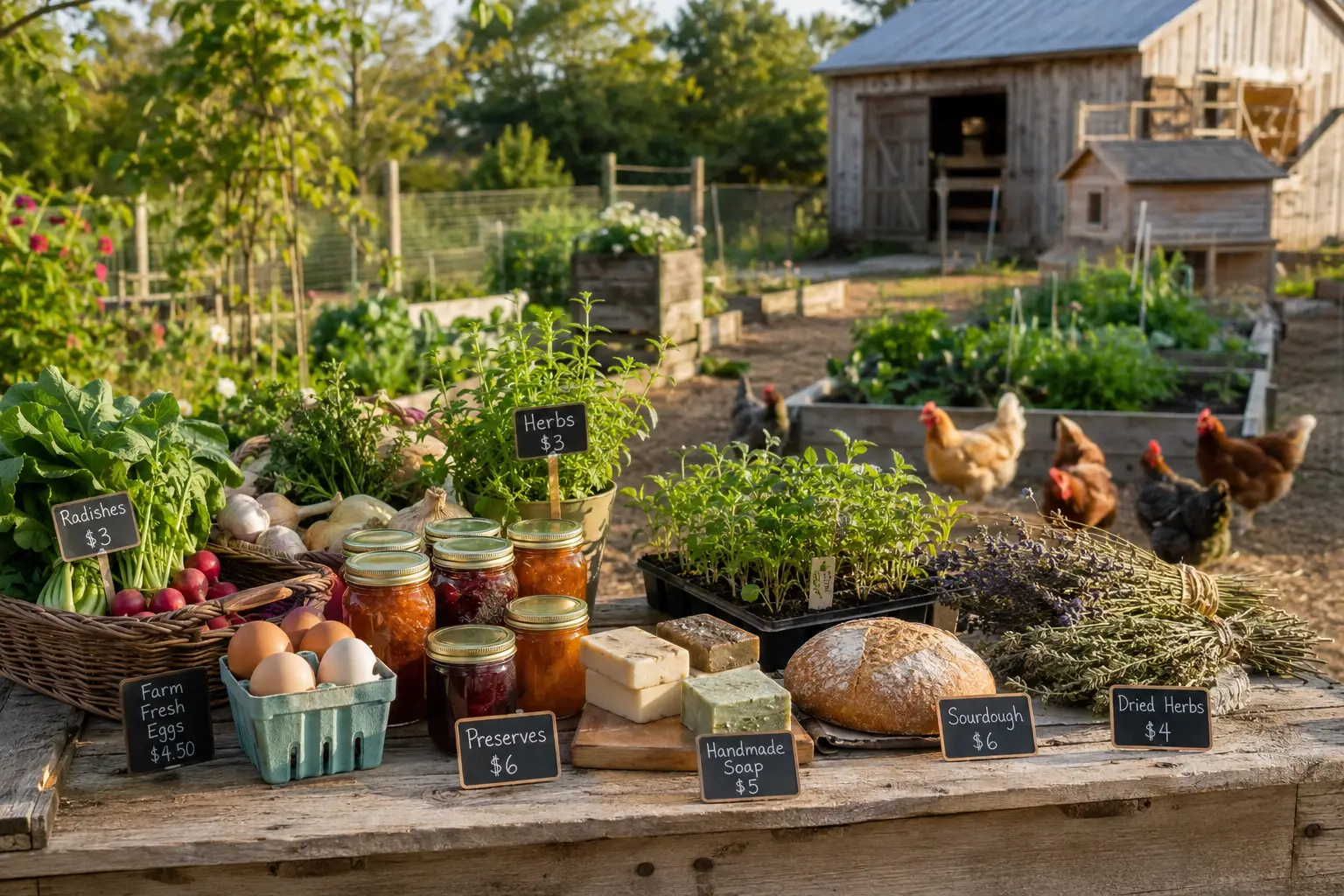
Homesteading side hustle ideas are perfect when you want to earn from simple living skills without building a full business right away. You do not need to quit your job, buy a large farm, or invest in expensive equipment to begin. A side hustle can start with one practical skill, one small offer, and a realistic plan you can test from home, a backyard, or even online.
Maybe you already grow herbs, start seeds, bake bread, preserve food, care for animals, write about gardening, or help friends with simple homesteading tasks. Any of these skills can become a small income stream when you choose the right idea and keep the first step manageable.
The key is not to start everything at once. Many beginners get overwhelmed because they try to sell products, offer services, and create content all at the same time. A better approach is to compare your options, choose one idea that fits your space and budget, avoid common mistakes, and test it for 30 days.
In this guide, you will learn how to choose a homesteading side hustle, compare different income ideas, avoid beginner mistakes, and follow a simple 30-day plan to start with confidence.
Homesteading Jobs Comparison Table
Choosing between different homesteading jobs can feel overwhelming at first, especially when every idea sounds interesting. One job may be better for someone with a backyard, while another may be better for someone living in an apartment. Some ideas need very little money to start, while others require more tools, supplies, animals, or growing space.
Use this comparison table as a simple starting point. It will help you compare each idea by space, startup cost, difficulty, and who it is best for.
| Homesteading Job | Space Needed | Startup Cost | Difficulty | Best For |
|---|---|---|---|---|
| Selling herbs | Small | Low | Easy | Apartments, balconies, beginners |
| Seed starting | Small to medium | Low | Easy | Spring income, gardeners |
| Market gardening | Medium to large | Medium | Medium | Backyard or small homestead owners |
| Homemade bread | Small | Low to medium | Medium | Skilled home bakers |
| Food preservation | Small | Medium | Medium | Kitchen-focused homesteaders |
| Handmade soap | Small | Medium | Medium | Creative makers |
| Backyard egg sales | Medium | Medium | Medium | Chicken keepers |
| Farm sitting | None | Low | Medium | Animal lovers |
| Garden setup services | Medium | Low | Medium | Handy gardeners |
| Composting services | Medium | Low | Medium | Soil-focused gardeners |
| Teaching workshops | Small | Low | Medium | Confident skill-sharers |
| Homesteading blog | None | Low | Medium | Writers and online creators |
| Pinterest content creation | None | Low | Easy to medium | Creative online workers |
| Freelance writing | None | Low | Medium | Writers with niche knowledge |
| Seasonal farm work | None | Low | Medium to hard | Hands-on learners |
The best option is not always the one with the highest income potential. For beginners, the best choice is usually the one that is easiest to start, easiest to repeat, and closest to the skills you already use.
If you only have a small space, herbs, seed starting, writing, blogging, Pinterest content, and handmade products may be the easiest place to begin. If you have a backyard, you can add garden setup services, composting, produce sales, or small plant sales. If you already have animals, farm sitting or egg sales may fit naturally into your routine.
Quick Tip: Choose the job that fits your real life now. You can always grow into bigger homesteading income ideas later.
Homesteading Jobs Without Land vs Jobs That Need More Space
You do not need land to start earning from homesteading skills. Many ideas can begin from a kitchen, windowsill, laptop, balcony, small shelf, or local service. However, some jobs do become easier when you have a backyard or small homestead.
This table can help you decide what fits your current situation.
| Jobs You Can Start Without Land | Jobs That Work Better With Space |
| Selling herbs in containers | Market gardening |
| Seed starting | Backyard egg sales |
| Handmade soap | Compost sales |
| Homemade bread | Cut flowers |
| Food preservation education | Plant nursery starts |
| Homesteading blog | Larger herb production |
| Pinterest content creation | Farm sitting |
| Freelance writing | Animal care services |
| Online workshops | Small produce boxes |
| Digital guides and printables | Backyard workshops |
If you do not have land yet, focus on skills that need more knowledge than space. Writing, teaching, small handmade products, herbs, food preservation education, and online content can all help you build confidence before you have a bigger homestead.
If you do have space, be careful not to expand too quickly. A backyard can become productive, but it can also become overwhelming if you try to grow, sell, build, raise animals, and teach all at once.
Budget Tip: A small, well-managed space can teach you more than a large space with no plan.
Best Homesteading Jobs by Season
Homesteading income often follows the seasons. Some jobs are best in spring, while others work better in winter. Understanding the rhythm of the year helps you plan ahead instead of rushing at the last minute.
| Season | Best Homesteading Jobs |
| Spring | Seed starting, garden setup, seedlings, compost services, herb plants |
| Summer | Market gardening, fresh herbs, farm sitting, cut flowers, produce boxes |
| Fall | Food preservation, dried herbs, baked goods, seed saving, pantry workshops |
| Winter | Blogging, Pinterest content, handmade soap, candles, online workshops |
Spring
Spring is one of the best seasons for beginner homesteading jobs. Gardeners are preparing beds, buying seedlings, setting up containers, improving soil, and planning what to grow.
Good spring income ideas include seed starting, selling herb plants, garden setup services, raised bed preparation, compost bin setup, and beginner gardening workshops.
If you want to earn in spring, start preparing before spring arrives. Seedlings need time to grow, and people often begin planning their gardens early.
Summer
Summer is a strong season for fresh products and outdoor services. Gardens are producing, herbs are growing, flowers are blooming, and many people travel.
Good summer jobs include market gardening, fresh herb sales, cut flowers, produce boxes, farm sitting, garden watering, and backyard harvest help.
Farm sitting can be especially useful in summer because animal owners and gardeners may need someone reliable while they are away.
Fall
Fall is a natural season for preservation and pantry work. People are thinking about storing food, using harvests, baking, drying herbs, and preparing gardens for the next season.
Good fall jobs include food preservation, dried herbs, baked goods, seed saving, pantry organization, fall garden cleanup, compost building, and canning workshops.
This is also a good time to create cozy Pinterest content around homemade food, preserved harvests, and simple living.
Winter
Winter is a good season for indoor and online homesteading jobs. Outdoor work may slow down, but planning, creating, teaching, and writing can continue.
Good winter jobs include blogging, Pinterest content creation, freelance writing, handmade soap, candles, digital printables, online workshops, and garden planning services.
Winter is also a good time to prepare for spring income. You can plan seed orders, create garden guides, write blog posts, design Pinterest pins, and prepare workshop ideas.
Expert Advice: Do not wait until a season begins to prepare for it. Many homesteading jobs need planning weeks or months ahead.
Common Mistakes Beginners Make with Homesteading Jobs
Starting a homesteading job can be exciting, but it is easy to make mistakes when you are eager to begin. Most mistakes happen because beginners start too big, spend too much, or try to turn every hobby into income at once.
The goal is not to be perfect. The goal is to start wisely, learn from small tests, and build slowly.
1. Starting Too Many Ideas at Once
Homesteading naturally creates many possibilities. You may want to sell eggs, grow herbs, bake bread, make soap, start a blog, teach workshops, and sell seedlings all at the same time.
The problem is that every idea needs time, attention, supplies, planning, and customers. When you start too many jobs at once, you may end up tired before any of them has a chance to work.
A better approach is to choose one idea and test it for a short period. For example, start with seedling sales in spring or one simple bread offer each week. Once that becomes manageable, you can add another idea.
Better Approach: Start with one homesteading job, improve it, and only expand when it feels steady.
2. Ignoring Local Rules
Some homesteading jobs involve food, animals, eggs, homemade products, or local markets. These areas may have rules about safety, labeling, permits, selling locations, and storage.
This matters especially for:
- Eggs
- Baked goods
- Preserves
- Pickles
- Fermented foods
- Dairy products
- Meat
- Skin products
- Farmers market sales
Rules can vary depending on where you live, so do not assume that what works for someone online is allowed in your area.
Better Approach: Check local laws before selling food, animal products, or handmade body products.
3. Underpricing Your Products or Services
Many beginners underprice because they only think about the obvious cost. For example, a baker may count flour and yeast but forget electricity, packaging, delivery, cleanup, failed batches, and time.
The same problem happens with gardening products. Seeds may be cheap, but soil, trays, water, labels, tools, compost, transport, and hours of work all matter.
If you underprice too much, your homesteading job can become exhausting instead of helpful.
Better Approach: Track every cost from the beginning, including your time. Your work has value.
4. Buying Too Much Equipment Too Soon
It is easy to get excited and buy tools, jars, molds, labels, shelves, animals, seeds, packaging, grow lights, or market supplies before testing the idea.
But buying too much too soon can put pressure on you. It can also make a simple idea feel like a financial risk.
For example, do not buy hundreds of jars before you know which product people want. Do not invest in a large greenhouse before testing seedling sales. Do not buy expensive soap supplies before making a simple batch and getting feedback.
Better Approach: Start with the smallest useful version of the idea. Upgrade only after you know there is demand.
5. Copying Someone Else’s Homestead
It is easy to look at another homesteader online and think you should do the same thing. But their land, climate, time, budget, audience, family situation, and experience may be completely different from yours.
An idea that works beautifully for someone with five acres may not work for someone in an apartment. A cut flower business may work in one climate but be difficult in another. A chicken business may look simple online but require daily care and local permission.
Better Approach: Use other homesteaders for inspiration, but choose based on your own reality.
6. Not Testing Demand First
Some beginners produce a lot before knowing if anyone wants to buy. They grow too many seedlings, bake too much bread, make too many soaps, or plant too much produce before finding customers.
This can lead to waste, stress, and disappointment.
Testing demand does not need to be complicated. You can ask local people, take small preorders, offer a limited batch, or share one simple service before scaling up.
Better Approach: Test interest with a small offer before making a large investment.
7. Turning Every Hobby into a Business
Homesteading can become less enjoyable if every skill turns into pressure. Not every hobby needs to make money. Some skills can simply support your home, feed your family, reduce waste, or bring peace.
It is okay to sell some things and keep others just for yourself.
For example, you might sell seedlings but keep baking as a relaxing family habit. Or you might write a blog but keep your chickens only for home eggs.
Better Approach: Choose income ideas carefully and protect the parts of homesteading that bring you joy.
8. Forgetting to Keep Records
Even small homesteading jobs need basic records. Without records, you will not know what you spent, what sold, what failed, or what is worth repeating.
Keep simple notes on:
- Supplies bought
- Time spent
- Products made
- Products sold
- Customer questions
- Profit or loss
- Seasonal timing
- Mistakes to avoid next time
Records do not need to be complicated. A notebook or spreadsheet is enough when you are starting.
Better Approach: Track your costs, sales, and lessons from the beginning.
FAQ About Starting a Homesteading Side Hustle
What is a homesteading side hustle?
A homesteading side hustle is a small income idea built around practical self-sufficiency skills. It can include selling herbs, seedlings, eggs, baked goods, handmade products, compost, digital guides, or offering services like farm sitting, garden setup, workshops, writing, or Pinterest content creation.
The goal is not to build a full business immediately. The goal is to start with one useful skill and test it in a simple, manageable way.
How do I start a homesteading side hustle?
Start by choosing one skill you already have or want to improve. Then turn it into one small offer. For example, instead of saying “I want to make money homesteading,” choose something specific like selling basil plants, offering garden cleanup, baking one type of bread, or creating Pinterest pins for garden bloggers.
After that, check any local rules, calculate basic costs, share your offer, and track the results.
What is the best homesteading side hustle for beginners?
The best homesteading side hustle for beginners is one that is low-cost, simple, and easy to repeat. Good options include selling seedlings, growing herbs, offering garden setup help, farm sitting, baking where allowed, freelance writing, Pinterest content creation, and handmade products.
The best choice is the one that fits your current space, time, and budget.
Can I start a homesteading side hustle in 30 days?
Yes, you can start testing a homesteading side hustle in 30 days. The goal is not to build a perfect business in one month. The goal is to choose one idea, research the basics, create one clear offer, share it with a small audience, and learn from the response.
A 30-day test helps you avoid spending too much money before you know whether the idea works.
How much money do I need to start?
Some homesteading side hustles can start with very little money, especially service-based or online ideas. Farm sitting, garden cleanup, freelance writing, Pinterest content creation, and simple workshops can be low-cost.
Product-based ideas may need more supplies. Seed starting may require seeds, soil, trays, and labels. Baking may require ingredients and packaging. Handmade products may require molds, oils, wax, jars, or labels.
Start with what you already have before buying more.
What mistakes should I avoid when starting?
The biggest mistakes are starting too many ideas at once, spending too much money too soon, ignoring local rules, underpricing your work, copying someone else’s homestead, and failing to track costs.
Start small, keep records, and test demand before expanding.
How do I know if my homesteading side hustle is working?
A homesteading side hustle is working if people understand your offer, show interest, buy or book your service, and the work fits your time and energy.
Track simple numbers like costs, sales, time spent, customer questions, and profit. Also pay attention to how the work feels. If it earns money but makes your life too stressful, it may not be the right fit.
When should I grow my side hustle?
Grow your side hustle when your first offer is steady, people are interested, and you understand your costs. Do not expand just because you are excited. Expand when the idea has proven itself.
For example, if your first herb plants sell well, you can grow more varieties next season. If your garden setup service gets good feedback, you can add a second package. If your blog posts start getting traffic, you can create related printables or email content.
Conclusion
Starting a homesteading side hustle does not have to be complicated. You do not need to quit your job, buy a farm, or create a perfect business plan before you begin. You only need one useful skill, one clear offer, and a simple way to test it.
The smartest way to start is small. Choose one idea that fits your current life, research the basic rules and costs, share it with a small audience, and track what happens. If it works, improve it. If it does not, adjust the offer or try a better fit.
A side hustle should support your homesteading lifestyle, not take away the peace and purpose that made you interested in simple living in the first place.
Start with one 30-day test. One tray of seedlings, one herb garden setup, one farm sitting offer, one blog post, or one handmade product can teach you more than months of planning. Small steps are how real homesteading income begins.