12 Essential Off Grid Living for Beginners Tips to Start Strong
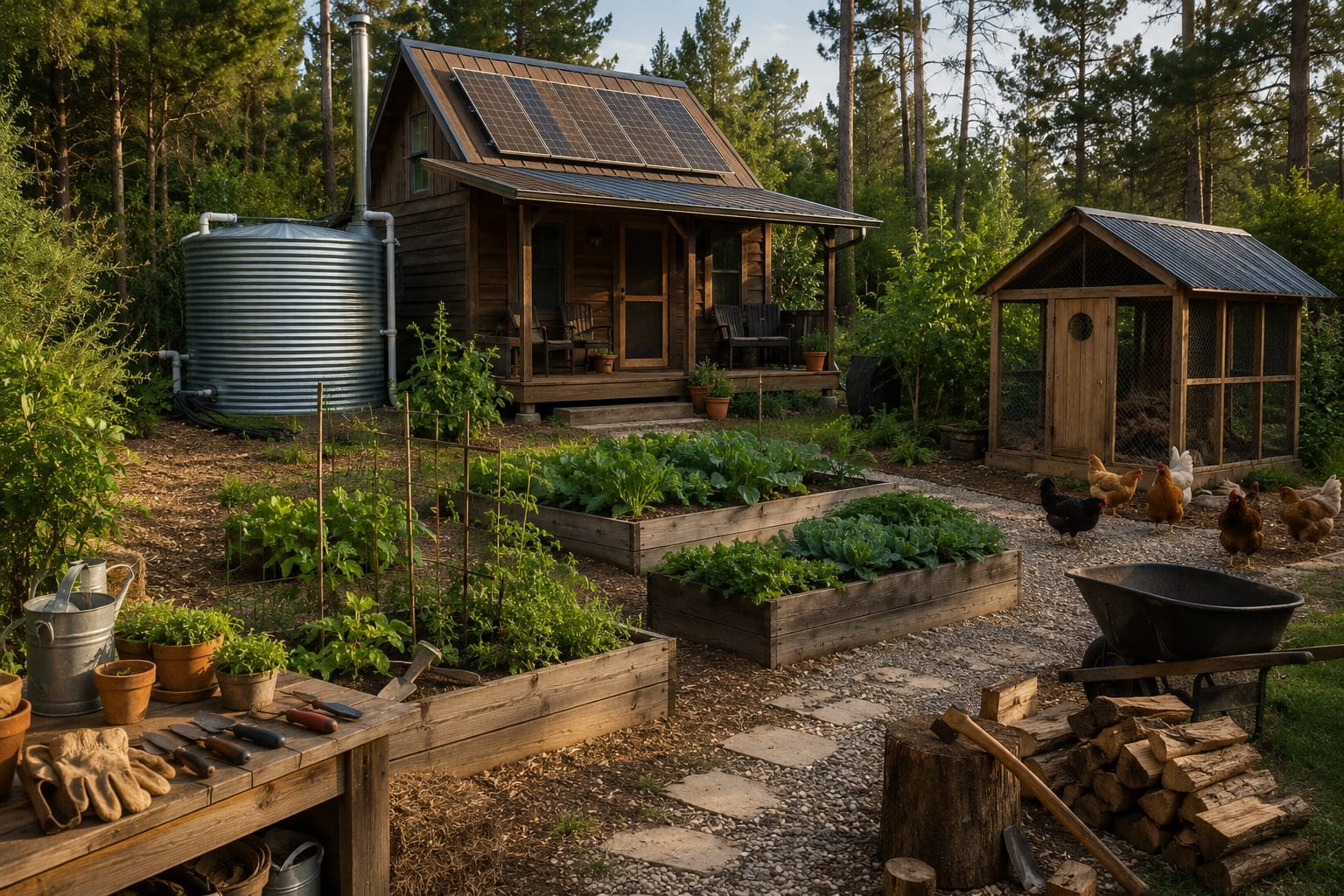
Off grid living for beginners can sound exciting, peaceful, and overwhelming all at the same time.
The idea of living with more freedom, growing your own food, producing your own power, collecting or managing your own water, and becoming less dependent on outside systems is very attractive. But off grid living is not only a lifestyle dream.
It is a practical system.
You need power. You need water. You need food. You need shelter. You need heat. You need tools. You need safety plans. You need skills that make everyday life easier when you cannot rely on the grid to solve every problem for you.
That does not mean you need to move to remote land immediately.
In fact, I believe the best way to start off grid living is to learn the skills slowly before you fully depend on them.
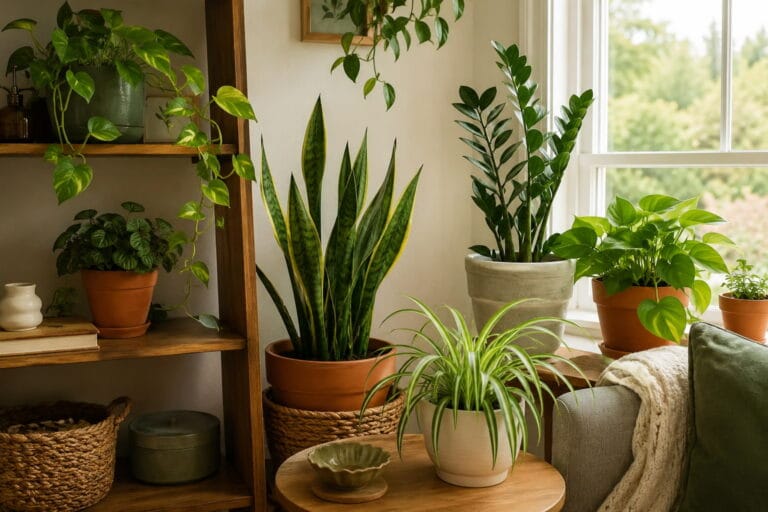
You can begin in a backyard, a small home, a rented space, or even an apartment. Start with food storage, seed starting, basic repairs, emergency water, simple solar, and practical homesteading routines.
If you are still building your foundation, Essential Homesteading Skills for Beginners is a good place to start before making big off grid decisions.
Affiliate Disclosure
This post may contain affiliate links. If you buy through these links, Dreamsteading may earn a small commission at no extra cost to you. I only recommend practical tools, supplies, and learning resources that fit a beginner-friendly homesteading lifestyle.
What Is Off Grid Living?
Off grid living means living without depending fully on public utility systems.
For most people, this usually means producing your own electricity, managing your own water, handling waste responsibly, growing or storing more of your own food, and becoming more self-reliant in daily life.
Some people live completely off grid in remote cabins.
Others live partly off grid while still keeping some modern services.
You might have:
- Solar power instead of grid electricity
- A well or rainwater system instead of municipal water
- A composting toilet or septic system
- A wood stove or propane backup heat
- A garden and pantry system
- Food preservation routines
- Hand tools and repair skills
- Backup lighting and emergency supplies
Off grid living does not have one single definition.
For beginners, it is better to think of off grid living as a direction, not a single dramatic move.
Every skill you learn makes you more capable.
Is Off Grid Living Right for You?
Off grid living is rewarding, but it is not effortless.
It can give you more independence, but it also gives you more responsibility.
Before you start, ask yourself what you really want.
Do you want to lower your bills?
Grow your own food?
Live in a quieter place?
Prepare for emergencies?
Build a homestead?
Escape city life?
Become more self-sufficient?
Your reason matters because it will shape the way you plan.
Off grid living may be right for you if you enjoy practical work, learning new skills, solving problems, spending time outside, maintaining systems, and living with a slower rhythm.
It may feel difficult if you want convenience without responsibility.
Off grid life often includes chores that grid-connected life hides from you. Water does not simply appear. Heat must be planned. Power must be stored. Food must be grown, bought, preserved, rotated, and cooked wisely.
That is why beginners should start small.
If you live in a small home or apartment right now, How to Start Homesteading in an Apartment can help you begin self-sufficient habits before moving anywhere.
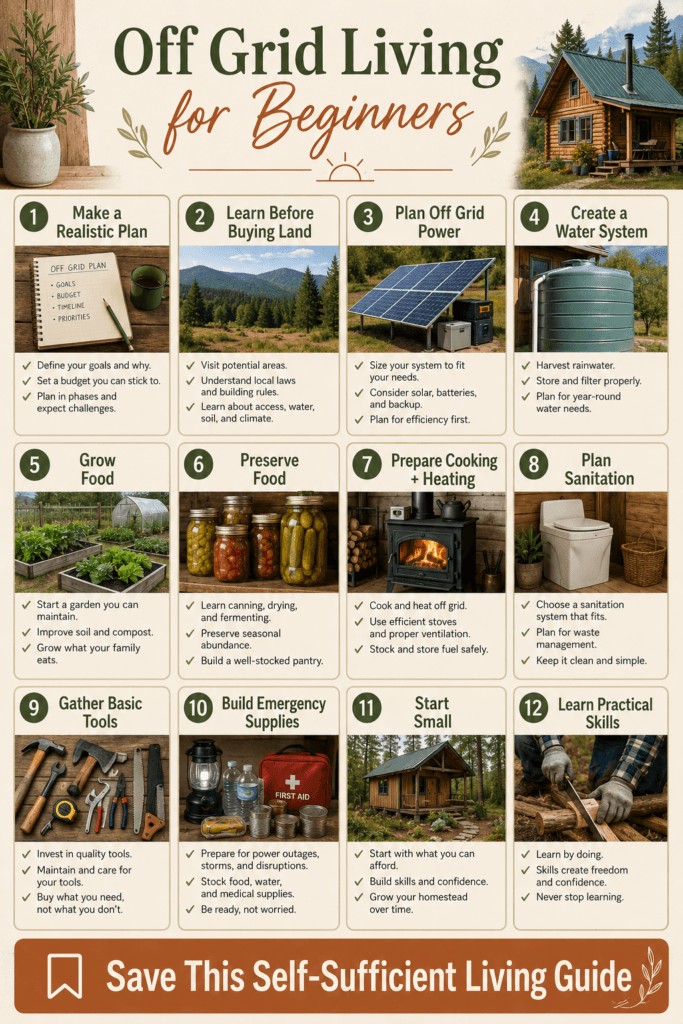
Step 1: Start with a Realistic Off Grid Plan
The first step is not buying land.
The first step is making a realistic plan.
Many beginners jump straight into dreaming about cabins, solar panels, wood stoves, chickens, and big gardens. That is fine for inspiration, but a real off grid plan needs details.
Start by writing down:
- Where you want to live
- How much land you need
- Your climate
- Your budget
- Your income plan
- Your water options
- Your power needs
- Your food goals
- Your heating needs
- Your waste system
- Your current skills
- The skills you still need to learn
Do not build your plan around a perfect version of yourself.
Build it around your real habits, your real budget, and your real experience.
If you have never grown food before, do not plan your first year around producing all your vegetables.
If you have never built anything before, do not plan a complicated DIY cabin as your first project.
Start with the next honest step.
Step 2: Learn Before You Buy Land
Land is important, but skills matter more than land in the beginning.
You can own land and still feel helpless if you do not know how to grow food, fix things, manage water, store food, or maintain basic systems.
Before buying land, practice simple skills where you are.
Learn how to:
- Start seeds indoors
- Grow herbs or vegetables
- Preserve food
- Cook from pantry staples
- Use basic tools
- Repair small things
- Store water
- Reduce electricity use
- Build a simple emergency kit
- Plan meals
- Track expenses
If gardening is part of your future plan, Seed Starting Indoors for Beginners is a simple skill to learn before you ever move off grid.
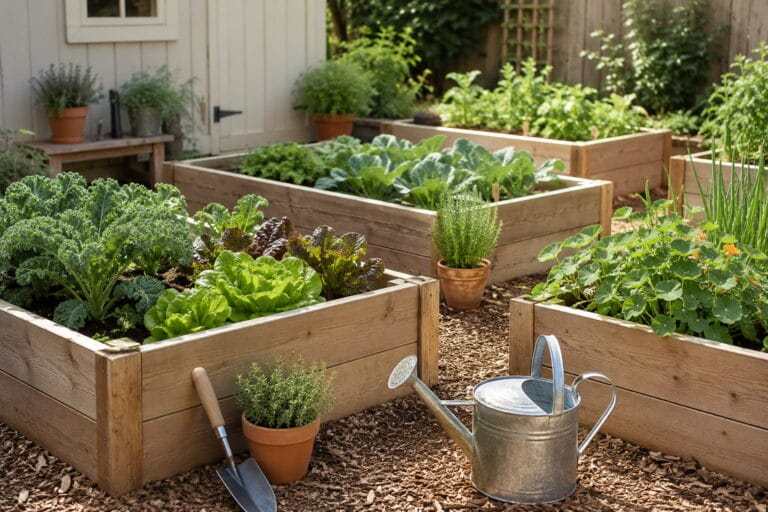
If you want to grow food outside, Raised Bed Gardening Guide can help you start with a manageable garden system.
The more skills you learn now, the less overwhelming off grid life becomes later.
Step 3: Plan Your Off Grid Power System
Power is one of the biggest parts of off grid living.
Most beginners think of solar panels first, but an off grid power system is more than panels.
A basic setup may include a solar panel kit, deep cycle battery, solar charge controller, power inverter, wiring, safety equipment, and a way to monitor your system.
The solar panels collect energy.
The battery stores energy.
The charge controller helps manage charging.
The inverter helps convert power so you can use normal household devices.
A solar generator can be a useful beginner option for small backup power, especially if you are not ready to install a full system yet.
Before buying anything, calculate what you actually need to power.
Start with basics:
- Lights
- Phone charging
- Laptop
- Small refrigerator
- Water pump
- Internet equipment
- Basic kitchen tools
- Medical devices if needed
Then decide what is essential and what is optional.
Off grid power becomes much easier when you lower your energy needs first.
Use efficient lights. Choose simple appliances. Turn things off when not in use. Avoid building a huge system just to support wasteful habits.
If you plan to use a fuel generator as backup, keep safety in mind. Use a carbon monoxide detector, keep the generator outdoors, and never run it in a house, garage, shed, or enclosed area.
Step 4: Create a Reliable Water System
Water is more important than power.
You can live without many modern comforts, but you cannot live without safe water.
An off grid water system may include:
- A private well
- Rainwater collection
- Water storage tanks
- Water filters
- A hand pump
- A water pressure system
- Emergency water containers
- Greywater planning where legal
- Seasonal backup plans
A water storage tank can help you store water for daily use, gardening, livestock, or emergencies.
A water filter system can help improve water quality, but you need to choose the right filter for your actual water problem.
A rain barrel can be useful for garden watering, but rainwater rules vary by location. Always check local laws before designing a rainwater system.
If you use a private well, water testing matters. Do not assume clear water is safe water.
For emergency preparation, keep emergency water containers filled and rotated.
A small backup water supply gives you breathing room if a pump fails, a pipe freezes, a filter breaks, or a storm creates problems.
Step 5: Build an Off Grid Food Supply
Food is one of the most practical places to begin off grid living.
You do not have to grow all your food right away.
Start by building a simple food system:
- Grow some vegetables
- Store pantry staples
- Preserve seasonal food
- Learn simple cooking
- Reduce food waste
- Plan meals around what you store
- Keep backup meals for emergencies
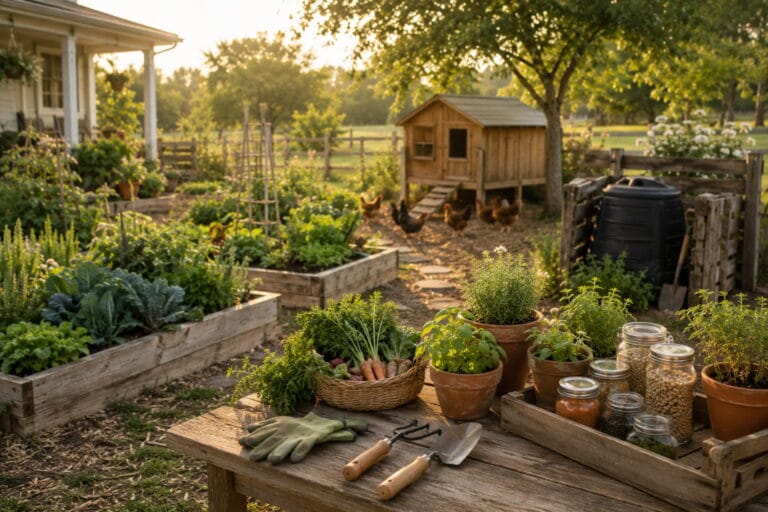
A raised bed kit can help you start growing food without digging a large in-ground garden.
A garden planning journal is useful because it helps you track planting dates, harvests, mistakes, and what varieties work best for your space.
Beginner-friendly crops include lettuce, radishes, herbs, beans, tomatoes, peppers, kale, spinach, and zucchini.
If you are not sure what to plant first, 10 Easy Vegetables to Grow for Beginners can help you choose crops that are less intimidating.
Off grid food is not only about gardening.
It is also about storing what you eat and eating what you store.
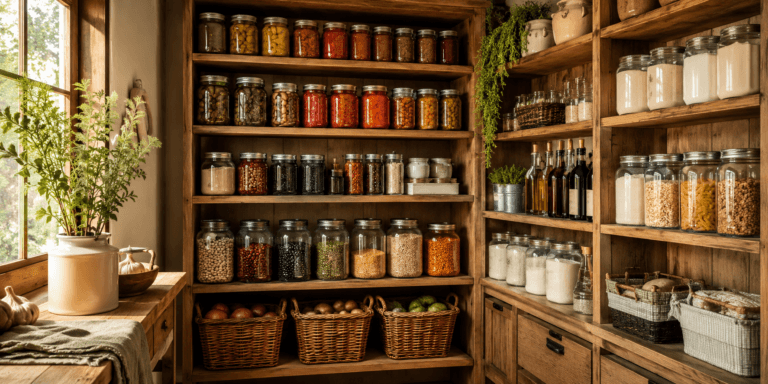
That is where pantry organization becomes very important.
Step 6: Learn Food Preservation
Food preservation turns seasonal abundance into long-term value.
If your garden gives you too many tomatoes, herbs, peppers, beans, or cucumbers at once, preservation helps you keep that food from going to waste.
Useful food preservation methods include:
- Freezing
- Dehydrating
- Water bath canning
- Pressure canning
- Fermenting
- Pickling
- Dry storage
- Root cellar storage where climate allows
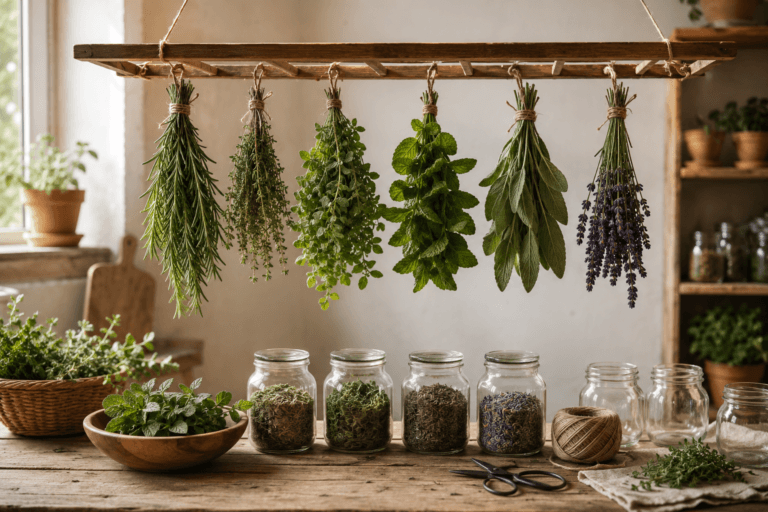
A food dehydrator can be useful for herbs, fruit, vegetables, and simple pantry ingredients.
A water bath canner, mason jars, and safe tested recipes can help you preserve high-acid foods like jams, pickles, and many fruit recipes.
A pressure canner is important if you want to safely can low-acid foods such as vegetables, beans, broth, meat, poultry, and soups.
If you are new to this skill, start with Food Preservation Methods for Beginners.
Then move into Water Bath Canning for Beginners and Home Canning Essentials when you are ready to preserve shelf-stable jars safely.
Food preservation is one of the most valuable off grid skills because it connects the garden, pantry, kitchen, and self-sufficient lifestyle together.
Step 7: Prepare for Heating and Cooking
Heating and cooking are daily needs.
In a grid-connected home, it is easy to forget how dependent we are on electricity or gas. Off grid, you need reliable options and backups.
Possible off grid cooking methods include:
- Propane stove
- Wood cookstove
- Rocket stove
- Solar oven
- Outdoor grill
- Camp stove
- Dutch oven
- Cast iron cooking
A cast iron skillet is useful because it works on many heat sources and can last for years.
A camp stove can be a practical backup for emergencies, camping, or early off grid setups.
For heating, options may include:
- Wood stove
- Passive solar design
- Propane heater
- Improved insulation
- Thermal curtains
- Backup heating plan
Heating is highly climate-dependent.
A mild climate may need only occasional backup heat. A cold climate needs serious planning, safe installation, dry firewood storage, and proper ventilation.
If you use wood heat or fuel-burning appliances, keep a carbon monoxide detector and fire extinguisher in the home.
Never treat heating safety as optional.
Step 8: Plan Waste and Sanitation
Waste and sanitation are not the most glamorous parts of off grid living, but they are essential.
You need a legal, safe, and practical plan for human waste, greywater, trash, compost, animal waste, and kitchen scraps.
Possible sanitation options include:
- Septic system
- Composting toilet
- Outhouse where legal
- Greywater system where legal
- Compost bins for organic waste
- Safe trash storage
- Recycling and reuse systems
A composting toilet may be an option in some off grid setups, but rules vary widely by location.
Do not assume you can install any system you want without checking regulations.
Good sanitation protects your health, your soil, your water, and your neighbors.
This is one reason off grid living requires planning before action.
Step 9: Gather Essential Off Grid Tools
Tools make off grid living more manageable.
When something breaks, you may not be able to call for help immediately. Basic tools help you fix small problems before they become big ones.
Useful beginner tools include:
- Cordless drill
- Tool bag
- Hammer
- Measuring tape
- Level
- Screwdriver set
- Handsaw
- Work gloves
- Safety glasses
- Staple gun
- Pruning shears
- Utility knife
- Wrench set
- Pliers
- Shovel
- Garden rake
- First aid supplies
If you are just starting your toolkit, read DIY and Building Tools before buying random tools you may not need.
A small, organized tool collection is better than a messy pile of cheap tools you cannot find when you need them.
For off grid living, maintenance is part of the lifestyle.
Tools help you stay capable.
Step 10: Build Safety and Emergency Systems
Off grid living should not mean unsafe living.
You need basic emergency systems before you need them.
Start with:
- First aid kit
- Emergency radio
- Backup lights
- Fire extinguisher
- Smoke alarms
- Carbon monoxide detectors
- Emergency water
- Backup food
- Backup cooking method
- Backup heat plan
- Extra batteries
- Basic repair supplies
- Printed emergency contacts
- Local maps
- Weather alerts
A good first aid kit is important because remote living can make small injuries more serious if you are not prepared.
An emergency radio can help you receive weather and emergency information when internet or phone service is limited.
Preparedness is not about fear.
It is about reducing panic.
The more you prepare basic systems, the calmer you can stay when something goes wrong.
Step 11: Start Small Before Going Fully Off Grid
One of the biggest mistakes beginners make is trying to change everything at once.
You do not need to move off grid tomorrow to begin living more self-sufficiently.
Start with small steps:
- Grow herbs in pots
- Start a small raised bed
- Store two weeks of pantry staples
- Learn to cook simple meals
- Practice water storage
- Buy one backup light source
- Learn basic tool skills
- Start composting
- Preserve one seasonal food
- Reduce electricity use
- Create a small emergency kit
Small steps teach real skills.
They also show you what you enjoy and what you do not.
You may discover that you love gardening but dislike complicated DIY projects.
You may enjoy food preservation but not want livestock.
You may prefer partial off grid living instead of full isolation.
That is fine.
Your version of self-sufficiency should fit your real life.
Step 12: Build Skills Before You Depend on Them
Skills are the real foundation of off grid living.
Supplies help, but skills are what make the supplies useful.
Important off grid skills include:
- Gardening
- Seed starting
- Composting
- Food preservation
- Cooking from scratch
- Basic carpentry
- Tool use
- Water storage
- Fire safety
- First aid
- Animal care
- Budgeting
- Repair skills
- Pantry management
- Seasonal planning
If you want chickens someday, Backyard Chicken Keeping can help you understand supplies, coop basics, feed, bedding, and beginner mistakes before getting hens.
If you want to build outdoor projects, DIY Garden Projects on a Budget is a good way to practice small builds without overwhelming yourself.
Off grid living is not built in one weekend.
It is built skill by skill.
Common Off Grid Living Mistakes
Buying Land Before Understanding Water
Water should be one of the first things you investigate.
A beautiful property without reliable water can become very difficult and expensive.
Before buying land, understand wells, water rights, rainwater rules, seasonal water availability, and testing.
Underestimating Power Needs
Many beginners think a few solar panels will run everything.
Power planning requires understanding how much energy you use, what you need to run, how long you need backup power, and what your climate allows.
Ignoring Local Rules
Off grid does not mean outside the law.
Building codes, septic rules, well permits, fire rules, zoning, livestock rules, and rainwater regulations may still apply.
Always check before building.
Trying to Grow All Your Food Immediately
Growing all your food is a serious skill.
Start with part of your food supply first.
A small successful garden teaches more than a huge garden that becomes unmanageable.
Forgetting Maintenance
Every system needs maintenance.
Solar batteries, water filters, pumps, tools, wood stoves, generators, gardens, fences, and storage areas all need attention.
Not Having Backup Plans
Off grid systems can fail.
A pump can stop. A battery can die. A filter can clog. A storm can damage something. A crop can fail.
Backups are not optional. They are part of the system.
Spending Too Much Too Soon
You can waste a lot of money buying supplies before you understand your needs.
Start with skills, planning, and essential tools first.
Then buy equipment based on your real setup.
Off Grid Living Checklist
Use this beginner checklist as a starting point.
Planning
- Clear reason for going off grid
- Budget plan
- Income plan
- Location research
- Local rules checked
- Climate considered
- Skills list created
Power
- Energy needs calculated
- Solar panel kit researched
- Deep cycle battery planned
- Power inverter chosen
- Solar charge controller included
- Backup power plan
- Carbon monoxide detector
- Fire extinguisher
Water
- Water source identified
- Water testing plan
- Water storage tank
- Water filter system
- Rain barrel if legal
- Emergency water containers
- Backup water plan
Food
- Garden plan
- Raised bed kit
- Seed starting plan
- Pantry staples
- Garden planning journal
- Food preservation plan
- Food dehydrator
- Mason jars
Cooking and Heating
- Main cooking method
- Backup cooking method
- Cast iron skillet
- Camp stove
- Safe fuel storage
- Heating plan
- Backup heat plan
Sanitation
- Legal toilet system
- Greywater plan if allowed
- Compost system
- Trash plan
- Cleaning supplies
Tools and Safety
- Cordless drill
- Tool bag
- Basic hand tools
- Work gloves
- Safety glasses
- First aid kit
- Emergency radio
- Printed emergency contacts
Start with what you can control now.
You do not need every item immediately, but you do need a clear plan.
FAQ About Off Grid Living for Beginners
What does off grid living mean?
Off grid living means living without depending fully on public utilities.
This often includes producing your own power, managing your own water, handling waste responsibly, growing or storing food, and becoming more self-reliant.
Is off grid living good for beginners?
Off grid living can work for beginners if they start slowly and learn skills before depending on them.
It is better to practice gardening, food storage, basic repairs, water storage, and backup power first.
What is the first step to living off grid?
The first step is creating a realistic plan.
Understand your goals, budget, location, water needs, power needs, food plan, heating plan, and the skills you need to learn.
Do I need land to start off grid living?
No, you can start learning off grid skills without land.
You can grow herbs, store food, preserve food, learn tools, reduce energy use, and build emergency supplies from your current home.
What is the most important off grid system?
Water is the most important system.
Without safe water, off grid living becomes difficult very quickly.
Power matters, but water comes first.
Can solar panels run an off grid home?
Solar panels can be part of an off grid power system, but they usually need batteries, a charge controller, inverter, wiring, safety equipment, and proper system sizing.
What should beginners grow for off grid food?
Beginners can start with lettuce, herbs, radishes, beans, tomatoes, peppers, zucchini, kale, and spinach.
Start small and expand as your skills improve.
Is food preservation important for off grid living?
Yes, food preservation is very important.
It helps you store seasonal harvests, reduce waste, and build a more useful pantry.
What tools do I need for off grid living?
Start with basic hand tools, a cordless drill, tool bag, measuring tape, hammer, screwdriver set, saw, gloves, safety glasses, shovel, rake, and first aid supplies.
Can I live fully off grid on a budget?
It is possible to move toward off grid living on a budget, but full off grid systems can be expensive.
The best approach is to start with skills, reduce needs, buy essentials slowly, and avoid expensive mistakes.
Final Thoughts
Off grid living is not only about moving to land or installing solar panels.
It is about becoming more capable.
You learn how to manage power, water, food, heat, tools, safety, waste, and everyday routines with more independence.
The best way to start is not to rush.
Start where you are.
Grow one thing. Store water. Learn one preservation method. Build one small project. Buy one useful tool. Cook more from scratch. Reduce waste. Learn how your home actually works.
Every small skill makes you more prepared.
Off grid living for beginners becomes much easier when you stop seeing it as one huge leap and start seeing it as a series of practical steps.
One skill at a time, you can build a life that feels simpler, stronger, and more self-sufficient.