Homesteading Jobs You Can Start Without a Big Farm
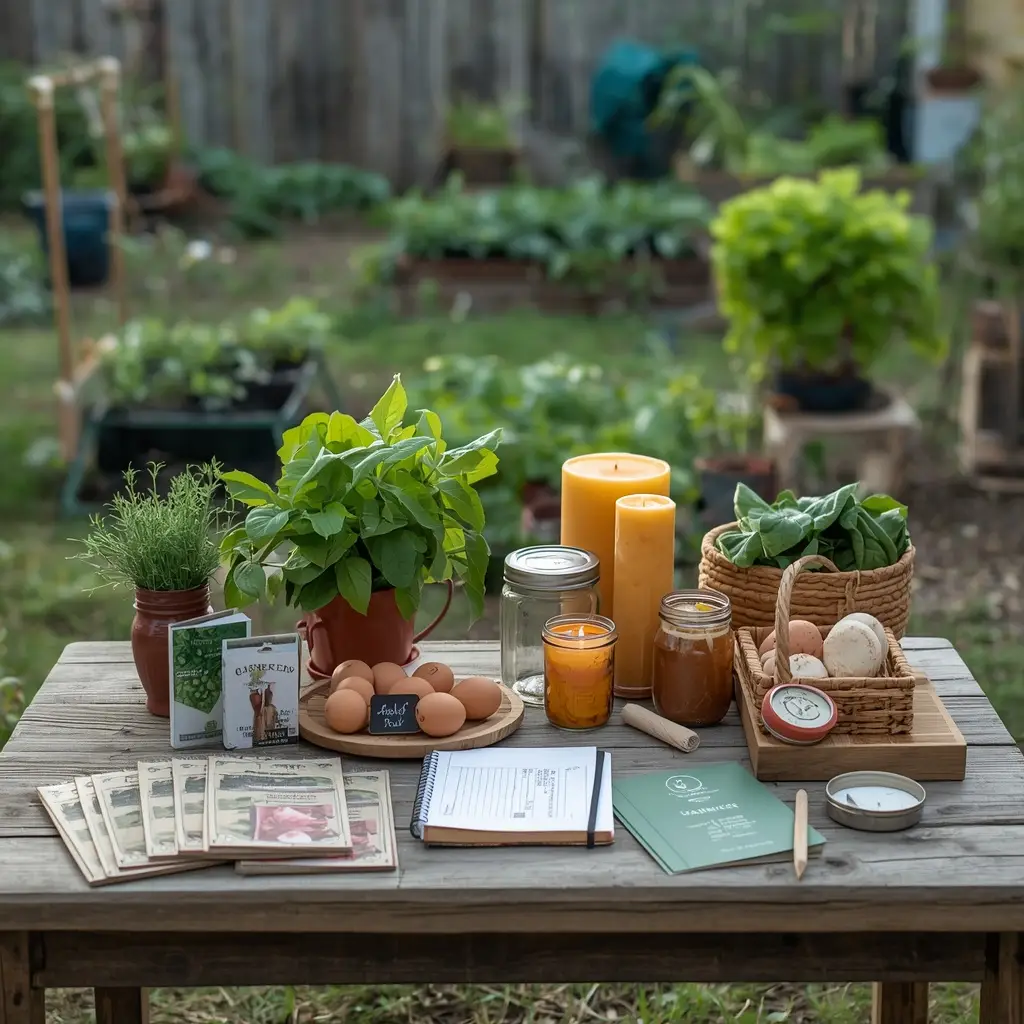
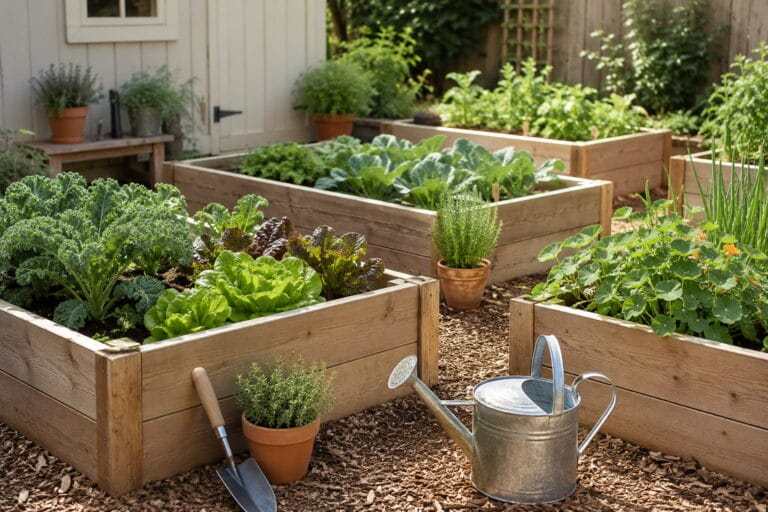
Homesteading jobs do not always require acreage, barns, expensive machinery, or a large crop harvest. Many opportunities come from practical skills such as gardening, animal care, food preparation, repair work, teaching, organization, and helping small producers reach customers. You may be able to start with containers on a patio, a modest backyard, a basic workshop, or skills performed on someone else’s property. The most realistic approach is to choose one service or product with clear local demand, verify the legal requirements, calculate every cost, and test it on a small scale before investing heavily.
In Short
Realistic homesteading jobs without a large farm include garden maintenance, seedling sales, farm or market assistance, animal care, cottage-food production where legal, food-preservation education, repair work, handmade household goods, virtual support for small agricultural businesses, and educational content. Service-based work is usually simpler to test because you can sell an existing skill without producing a large inventory.
Key Takeaways
- You can work in the homesteading field by providing services on customers’ properties or supporting existing farms and small businesses.
- Service jobs generally require less land, inventory, and startup capital than product-based businesses.
- Food, childcare, animal care, pesticide application, construction, and home-based businesses may require permits, insurance, training, or inspections.
- Calculate labor, materials, travel, fees, taxes, losses, and replacement costs before setting a price.
- Keep accurate records of all income and business expenses from the first transaction.
What Counts as a Homesteading Job?
A homesteading job uses skills connected to food growing, animal care, preservation, practical household work, land stewardship, repair, or self-reliant living. It may be regular employment, seasonal work, freelance service, a small home business, or occasional contract work.
The job does not need to happen on your own land. A gardener can maintain customers’ vegetable beds. A reliable animal caretaker can look after someone else’s chickens. A virtual assistant can manage scheduling for a farm. A market worker can help producers sell their goods without growing any products personally.
Some opportunities generate active income from work performed for a customer. Others involve creating and selling a product. Active services often have lower upfront costs, while products may require materials, inventory, packaging, storage, legal labeling, and a way to manage unsold stock.
If you are still developing your foundation, begin with these essential homesteading skills for beginners. Reliable paid work should grow from a skill you can perform consistently—not from a project you have tried only once.
Benefits
- Many service jobs can begin without owning land or expensive equipment.
- Work can often start part-time and expand after demand is proven.
- Existing gardening, cooking, repair, writing, or animal-care skills may transfer directly.
- Local work can build useful relationships with gardeners, farms, markets, and households.
Considerations
- Income can be seasonal, inconsistent, and affected by weather or local demand.
- Travel, insurance, licensing, taxes, and equipment replacement can reduce profit.
- Physical work may involve heat, lifting, repetitive motion, animals, tools, or allergens.
- Food and animal-related businesses can carry substantial legal and safety responsibilities.
Start With Services Before Expensive Products
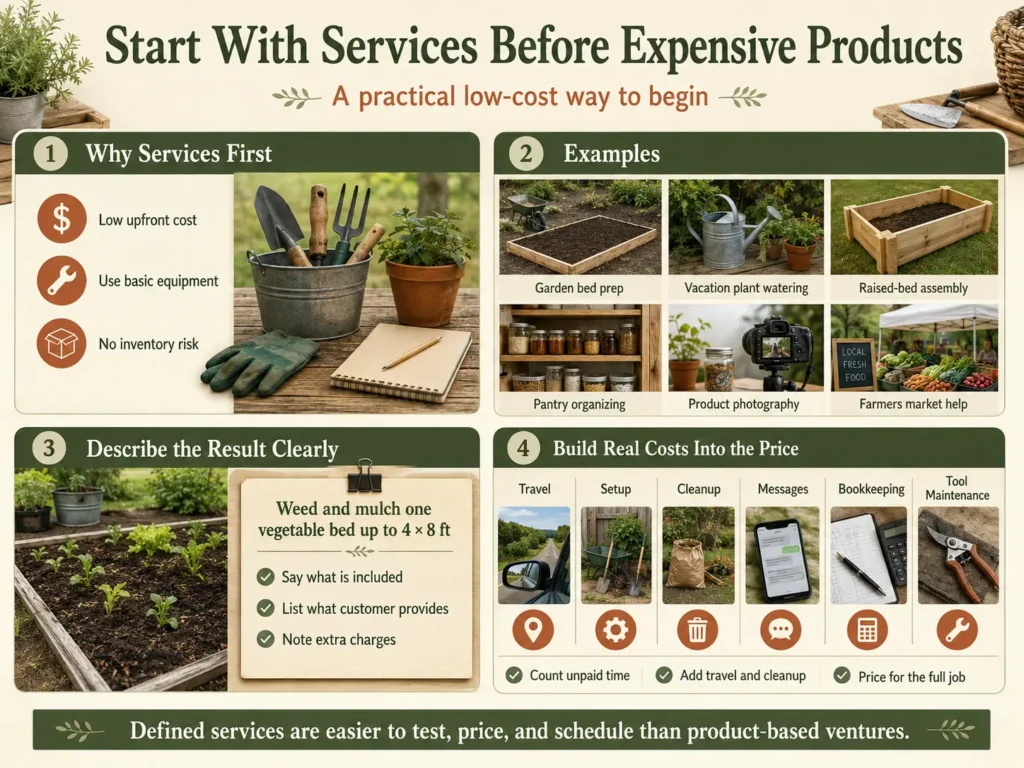
A service business is often the most practical starting point when you do not own a farm. Instead of paying for seeds, feed, packaging, storage, market fees, and unsold inventory, you sell a defined task using basic equipment and your time.
Examples include preparing garden beds, watering plants during vacations, assembling raised beds, organizing a pantry, photographing products, or assisting at a farmers market. You can test whether customers want the service before making a large investment.
Start by describing the result clearly. “Two hours of garden help” is vague. “Weed and mulch one established vegetable bed up to 4 × 8 feet, using customer-provided mulch” is easier to price, schedule, and explain. State what is included, what the customer must provide, and what would create an additional charge.
Do not underestimate travel, setup, cleanup, communication, bookkeeping, and equipment maintenance. A job that takes two hours at the property may require additional unpaid time unless those costs are built into the price.
1. Vegetable-Garden Setup and Maintenance
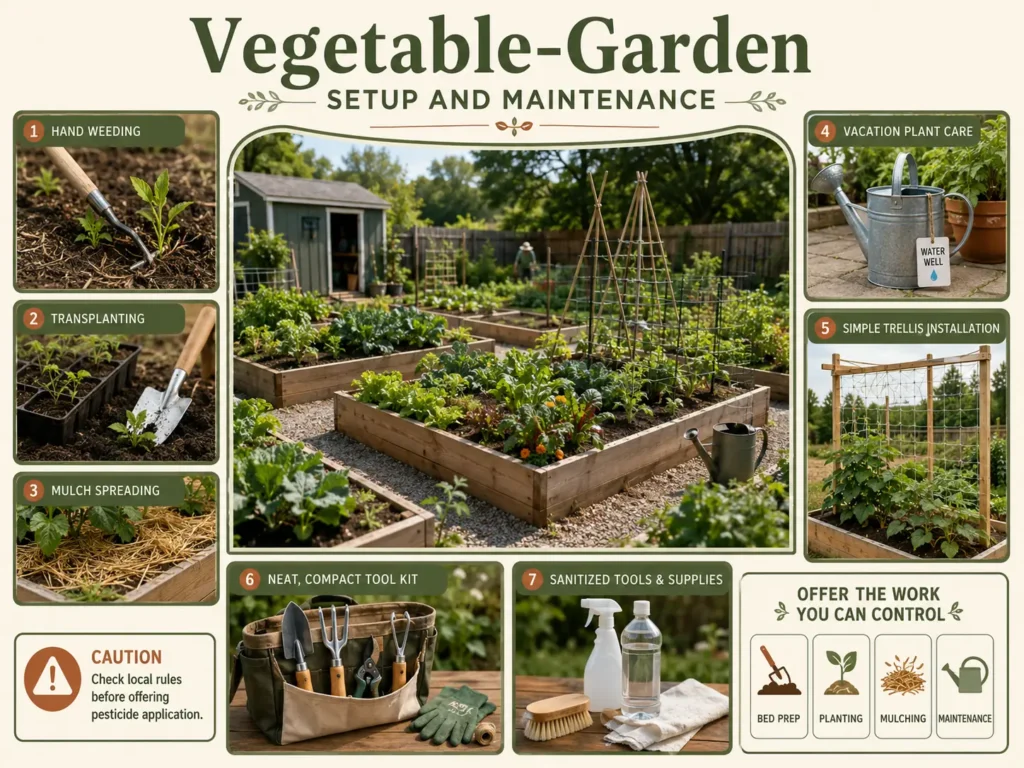
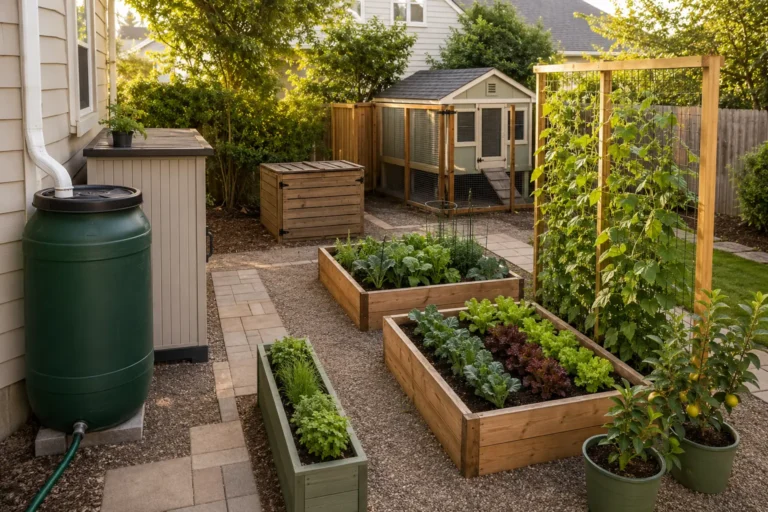
Many homeowners want a vegetable garden but need help preparing beds, planting crops, installing simple supports, mulching, watering, weeding, or cleaning the garden at the end of the season. You can provide these services without owning growing land because the work happens at the customer’s home.
Begin with tasks you can perform safely and accurately. Bed cleanup, hand weeding, transplanting, mulch application, basic trellis installation, and vacation watering are reasonable examples. Pesticide application may require certification or a professional license, even when using products available to homeowners, so check your state and local rules before offering it.
A compact kit might include bypass pruning shears, a hand cultivator, trowel, soil knife, kneeling pad, gloves, buckets, measuring tape, and cleaning supplies. Sanitize tools appropriately between properties to reduce the risk of transferring soil or plant problems.
Avoid guaranteeing harvest quantities. Weather, soil, wildlife, irrigation, plant health, and the customer’s ongoing care all affect results. Sell the work you can control, such as correct planting depth, clean bed preparation, or scheduled maintenance.
2. Seedling and Potted-Herb Sales
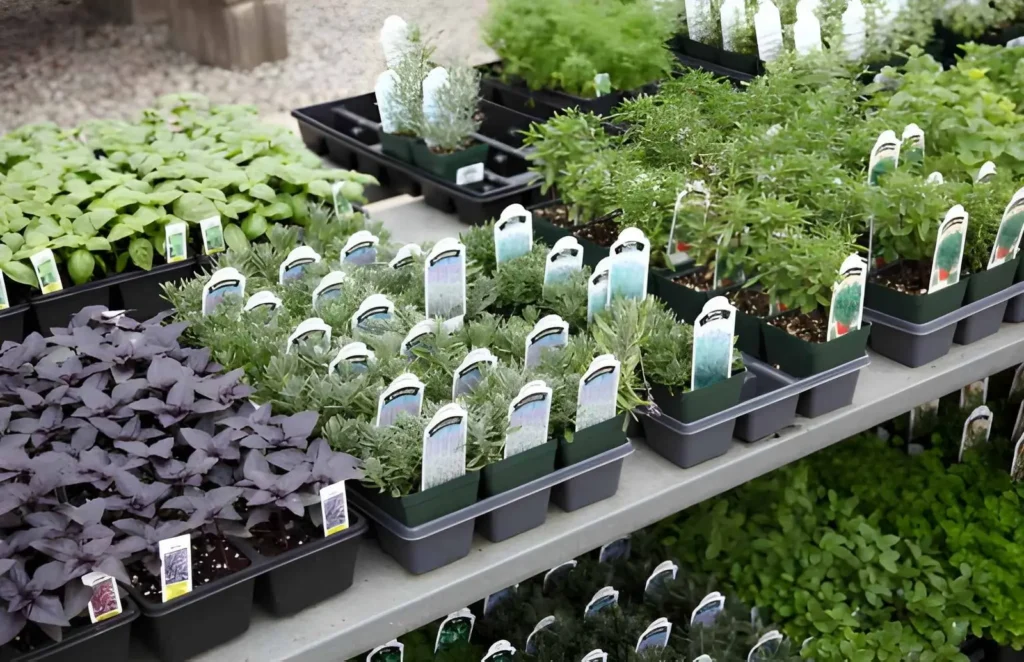
Seedlings and potted herbs can be produced in a greenhouse, spare room, sunny window, patio, balcony, or compact backyard. Popular options may include tomatoes, peppers, basil, parsley, thyme, lettuce, and regionally appropriate flowers.
This work requires more planning than placing seeds in pots. You need reliable germination, appropriate light, clean containers, accurate labels, pest monitoring, proper hardening off, and a sales date that matches the local planting season.
Calculate the cost of seeds, potting mix, containers, labels, water, lighting, electricity, losses, growing space, market fees, and labor. Seedlings that become overgrown before sale can quickly reduce the value of the entire batch.
Check rules regarding plant sales, nursery registration, sales tax, and the movement of regulated plants or soil. Requirements vary by location. Start with a small number of varieties, record germination and loss rates, and increase production only after you understand local demand.
3. Vacation Garden and Houseplant Care

Garden and houseplant care can become a useful service in cities, suburbs, and rural communities. Customers may need someone to water containers, check an irrigation timer, harvest ripe produce, remove damaged leaves, or monitor indoor plants while they travel.
This job depends heavily on trust. Use a written checklist for each customer, confirm access instructions, photograph existing plant damage when appropriate, and document completed visits. Never apply fertilizers, pesticides, or homemade treatments without specific authorization and any legally required qualifications.
Ask customers to identify plants with special care requirements and demonstrate unfamiliar irrigation equipment. Establish what should happen if a leak, pest outbreak, extreme weather event, or access problem occurs.
Because the service involves entering private property, consider business insurance, secure key management, identity verification, and clear communication procedures before accepting customers.
4. Chicken and Small-Livestock Care
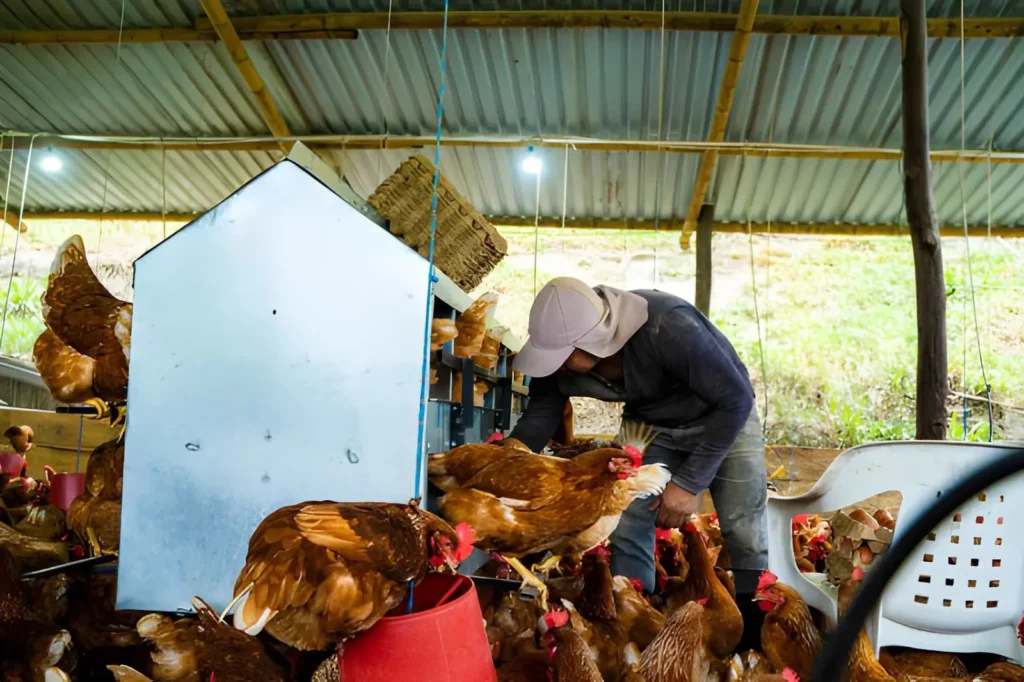
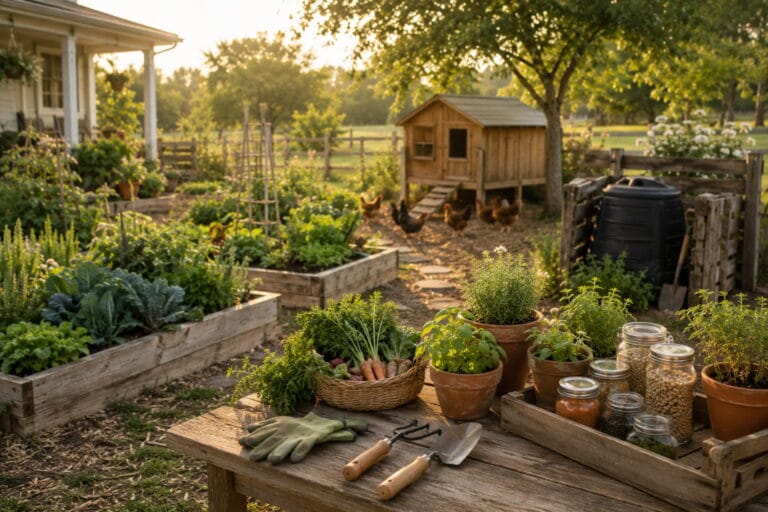
People who keep chickens, ducks, rabbits, goats, or other small livestock often need reliable help during travel, illness, or busy periods. Feeding, refreshing water, collecting eggs, cleaning designated areas, closing coops, and observing animals for obvious changes can become paid work.
Animal care should not be improvised. Learn the customer’s exact routine, safe handling procedures, emergency contacts, predator protections, and biosecurity expectations. Do not accept responsibility for a species you cannot handle safely.
Use dedicated or disinfected footwear and equipment as instructed so you do not carry disease between properties. Report unusual behavior, injuries, reduced eating or drinking, unexplained deaths, or signs of disease promptly. Veterinary diagnosis and treatment belong to qualified professionals.
The backyard chicken keeping guide explains routine housing, feeding, hygiene, and planning considerations that should be understood before offering poultry care.
5. Farmers-Market or Farm-Stand Assistance

You can work in local food without producing the food yourself. Farmers, bakers, preserves makers, and craft producers may need help transporting displays, setting up stalls, arranging products, tracking inventory, accepting permitted payments, cleaning the space, and speaking with customers.
Market work can be seasonal and may begin early in the morning. It often involves standing, lifting containers, working in heat or rain, and learning food-handling or payment procedures. Reliability matters because a vendor may have no replacement if a worker cancels shortly before opening.
The USDA Agricultural Marketing Service maintains Local Food Directories, including a national farmers-market directory. Use it to identify markets in your area, then visit their official websites or contact market managers about vendor and employment opportunities.
6. Cottage-Food Production Where Permitted

Cottage-food laws may allow certain low-risk foods to be prepared in a home kitchen and sold directly to customers. Commonly permitted foods can include some breads, cookies, cakes without temperature-sensitive fillings, candies, granola, or dry mixes, but every jurisdiction defines its own approved products and conditions.
Do not assume that a familiar recipe is legal to sell. The FDA advises home-based food businesses to learn the requirements of federal authorities and state and local health departments. Depending on your location and product, you may need registration, training, inspections, approved labels, allergen declarations, sales-channel restrictions, or a commercial kitchen.
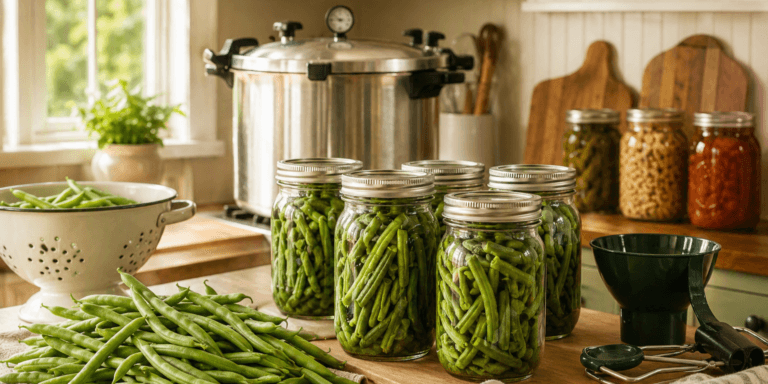
Acidified foods, canned vegetables, meat products, dairy products, refrigerated sauces, and other potentially hazardous foods can fall outside cottage-food permissions. Verify the exact product, process, packaging, storage, and sales method before offering it.
Use a digital kitchen scale for consistent batches and retain ingredient, supplier, lot, production, and sales records as required. Account for ingredients, packaging, labels, electricity, equipment, payment fees, rejected products, market fees, delivery, cleaning, and labor when setting prices.
Food sales are regulated
Food-business requirements vary by product and location. Contact the appropriate state, county, or municipal authority before selling anything prepared in a home kitchen. A cottage-food exemption in one jurisdiction does not automatically apply in another.
7. Food-Preservation Classes or Demonstrations
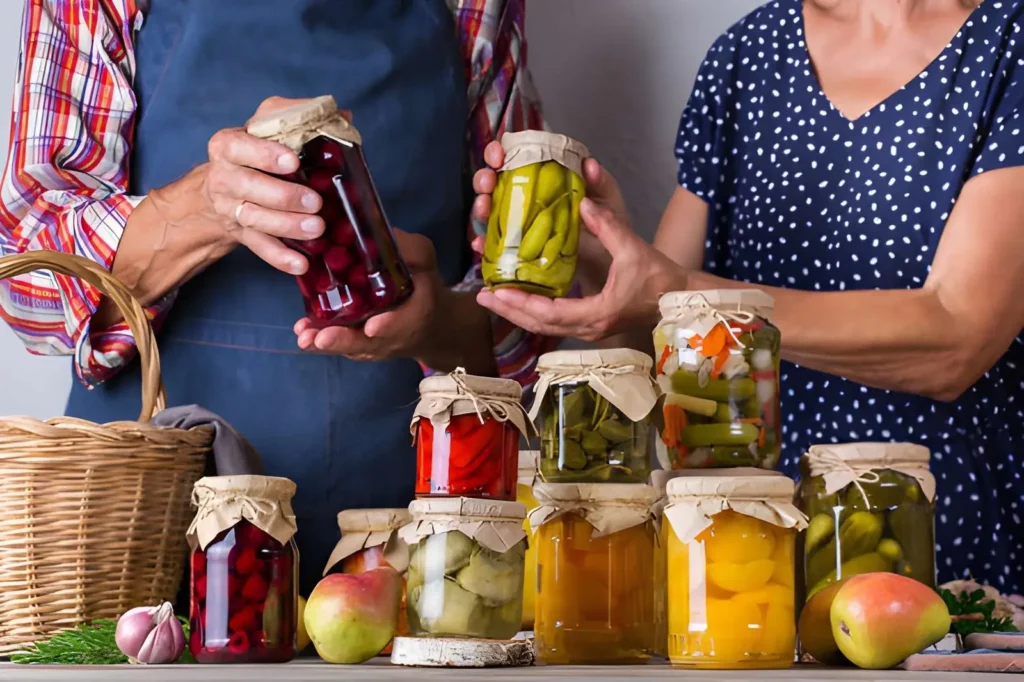
Experienced preservers may be able to teach freezer organization, herb drying, dehydrator use, or tested canning principles through community organizations, adult-education programs, garden clubs, or private workshops.
This is not an appropriate beginner business. You should have strong knowledge of current research-based methods, understand the limits of the technique being demonstrated, and use authoritative instructions. Some organizations may require recognized training, food-handler credentials, insurance, or approval of the course material.
Never teach improvised canning processes, altered acidity, untested processing times, or unsafe storage methods. Clearly distinguish an educational demonstration from individualized safety certification.
If your preservation knowledge is still developing, begin by learning from current authoritative resources and using the beginner homesteading book guide to identify useful foundational references.
8. Simple Repairs and Garden-Structure Assembly
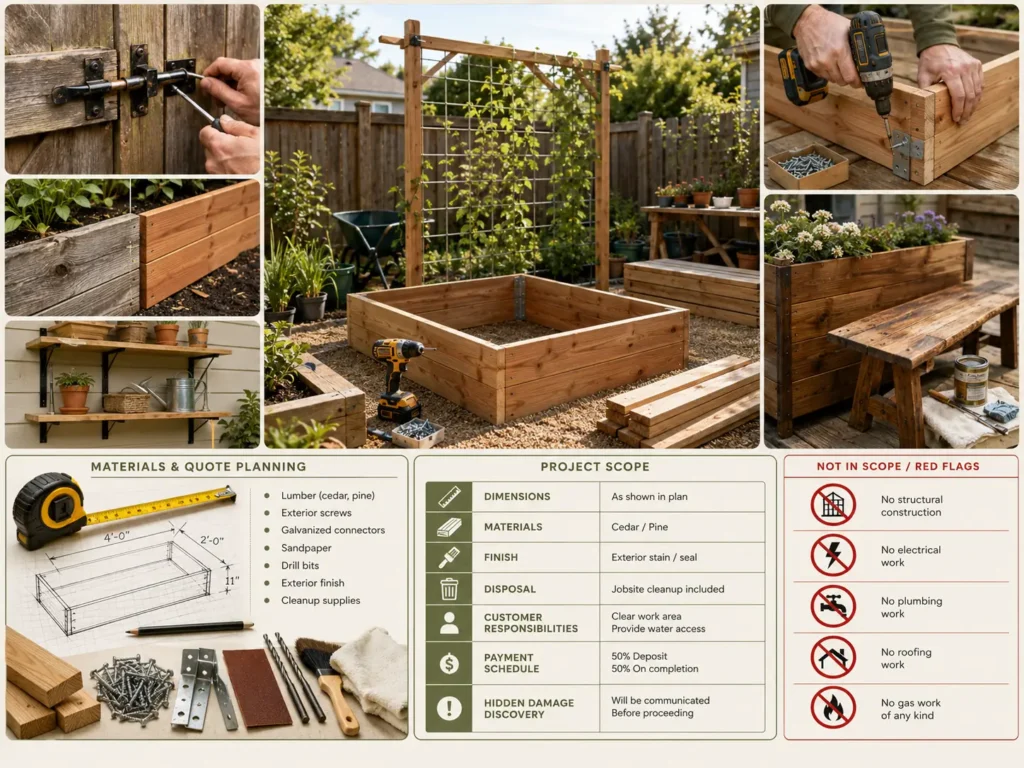
People may pay for straightforward tasks such as assembling raised-bed kits, repairing a garden gate, installing simple shelving, replacing damaged planter boards, building basic trellises, or maintaining wooden outdoor items.
Offer only work that fits your competence, tools, insurance, and local licensing rules. Structural construction, electrical systems, plumbing, roofs, foundations, gas, large retaining walls, and permit-required work may require licensed professionals.
Define the project in writing, including dimensions, materials, finish, site preparation, disposal, customer responsibilities, payment schedule, and what happens if hidden damage is discovered. Use exterior-rated structural screws, compatible connectors, and materials suited to the actual exposure rather than relying on indoor hardware.
Take accurate measurements and produce a materials list before quoting the job. Include waste, delivery, consumables, blade or bit wear, cleanup, and return visits. A low quote that ignores these items can turn a busy project into a financial loss.
9. Handmade Practical Household Goods

Small-batch goods can connect traditional household skills with modern buyers. Possible products include sewn produce bags, garden aprons, reusable cloths, simple plant markers, wooden propagation stands, tool rolls, basket liners, or printed garden journals.
Choose an item that solves a clear problem and can be produced consistently. Calculate the complete material and labor cost before developing several colors, sizes, or variations. Too many options can make inventory difficult to manage.
Inspect every product for sharp edges, loose parts, inaccurate measurements, weak seams, or misleading claims. Products intended for food contact, children, candles, cosmetics, soap, electrical use, or body care can carry additional safety and labeling requirements.
Test demand with a small batch or made-to-order system. Product photography, accurate descriptions, packaging, returns, shipping damage, platform fees, and customer communication are part of the job and should be included in the price.
10. Virtual Support for Farms and Homestead Businesses
Small producers often have limited time for administrative work. If you have office or digital skills, you may be able to help with appointment scheduling, email organization, product listings, inventory spreadsheets, customer messages, newsletters, order tracking, basic photography, or website updates.
This work can be done from an apartment and does not require growing experience for every task. However, you must understand the business well enough to avoid inaccurate product claims, incorrect availability, mishandled customer information, or missed orders.
Start with a narrow service, such as uploading approved product descriptions or organizing weekly customer orders. Use written procedures, protect passwords and personal data, back up authorized files, and confirm who is responsible for final approval.
11. Homesteading Writing, Photography, or Educational Content

Writers, photographers, editors, and designers can serve garden centers, farms, food businesses, educational publications, and practical-living brands. Potential work includes articles, newsletters, instruction sheets, product photography, garden journals, social-media content, or printable planners.
Credibility matters. Do not claim personal experience you do not have, copy source material, invent results, or give technical instructions that have not been verified. Attribute research, obtain permission for private-property photography, and disclose commercial relationships where required.
Build a small portfolio around one subject you understand. Three accurate, well-presented examples are more useful than dozens of shallow pieces covering unfamiliar topics. Income can be inconsistent, so avoid purchasing expensive equipment until paid demand is established.
12. Community Classes and Skill-Based Workshops
Community centers, libraries, garden clubs, schools, and local organizations may host practical workshops. Suitable subjects can include seed starting, container gardening, basic garden planning, mending, pantry organization, compost principles, or simple tool care.
Teach only within your competence. Provide accurate materials, identify regional differences, and explain when participants need an Extension professional, licensed contractor, veterinarian, food-safety authority, or another qualified specialist.
Ask the host about insurance, background checks, accessibility, room capacity, equipment, cancellations, participant age, and material costs. If children attend, follow the organization’s supervision and safeguarding requirements.
How to Choose the Right Homesteading Job
The right job sits where your proven skills, available time, local demand, and acceptable risk overlap. Use a simple comparison before spending money.
| Opportunity | Land needed | Typical startup needs | Main consideration |
|---|---|---|---|
| Garden maintenance | None of your own | Hand tools, transportation, insurance | Seasonal demand and physical work |
| Seedling sales | Small growing area | Light, containers, seeds, potting mix | Timing, losses, and nursery rules |
| Animal care | None of your own | Training, travel, insurance | Daily reliability and biosecurity |
| Cottage food | Approved kitchen space | Ingredients, packaging, permits | Product restrictions and food safety |
| Repair and assembly | None of your own | Tools, transport, insurance | Licensing and project liability |
| Virtual farm support | None | Computer, internet, software skills | Data security and reliable communication |
| Educational content | None | Research, portfolio, computer or camera | Credibility and inconsistent demand |
Renters and people with very limited space can still build relevant skills. The guide to apartment homesteading includes food growing, storage, repair, and preservation habits that can develop into future services.
Business, Tax, and Legal Checks Before You Start
A casual job can still create business and tax responsibilities. The U.S. Small Business Administration explains that a business location affects registration, taxes, zoning, licenses, and permits. Local zoning rules can apply even to home-based businesses.
Before accepting payment, check the requirements that apply to your location and activity:
- Business registration and local licenses
- Home-occupation and zoning rules
- Rental agreements or homeowner-association restrictions
- Sales-tax registration where applicable
- Food, nursery, animal-care, contractor, or pesticide requirements
- Business and product-liability insurance
- Vehicle coverage for business travel
- Contracts, cancellation terms, and customer-property access
- Federal, state, and local tax responsibilities
The IRS requires self-employed individuals to report applicable income and maintain records supporting business income and expenses. Keep receipts, invoices, mileage records, payment-platform statements, supply costs, market fees, and other documentation from the beginning. A separate business checking account can make transactions easier to track, although the appropriate business and banking structure depends on your circumstances.
Verify requirements where you live
Business, food, tax, zoning, insurance, contractor, animal-care, and sales rules vary by location and activity. Consult the appropriate government agencies and qualified legal, accounting, or insurance professionals for advice about your specific business.
Test the Idea Before Making a Large Investment
A simple test can reveal whether the job fits your abilities and whether customers will pay enough to cover the real work. Start with one clearly defined service or a very small product batch.
- Choose one customer problem you can solve reliably.
- Write down exactly what the service or product includes.
- Calculate materials, labor, travel, fees, taxes, waste, and replacement costs.
- Check licensing, insurance, zoning, and safety requirements.
- Offer the work to a limited number of suitable customers.
- Record the actual time, cost, questions, and problems involved.
- Adjust the offer before expanding or buying more equipment.
Do not measure success only by revenue. A job that produces sales but consumes excessive time, creates injury risk, or requires constant unpaid communication may not be sustainable. Track the amount remaining after every business expense and the number of hours the complete job required.
For a structured way to turn one skill into a tested offer, continue with the guide to building a homesteading side hustle.
Common Mistakes to Avoid
Buying Equipment Before Finding Customers
Start with tools you own or can reasonably rent. Purchase specialized equipment only after repeated demand shows that it will save time or improve quality.
Pricing Only the Materials
Your price must also account for planning, labor, communication, travel, processing fees, packaging, cleanup, rejected work, insurance, taxes, and equipment wear.
Offering Work Beyond Your Skill Level
A paid job carries more responsibility than a personal experiment. Do not accept safety-sensitive, structural, animal-health, food-processing, or regulated work you are not qualified to perform.
Relying on Seasonal Demand
Garden and market work can change sharply by season. Consider compatible off-season services, maintain a financial reserve, or keep the work part-time until its annual pattern is clear.
Failing to Keep Records
Without records, you cannot tell which products sell, which jobs remain profitable, what expenses are rising, or what information is needed for tax reporting.
Frequently Asked Questions
Can you work in homesteading without owning land?
Yes. Garden services, animal care, market assistance, repair work, classes, virtual farm support, writing, photography, and administrative services can be performed without owning agricultural land.
Which homesteading job is easiest to start?
A narrow service based on an existing skill is usually easiest to test. Examples include vacation plant care, hand weeding, garden cleanup, market assistance, or basic virtual administration.
Can a renter start a homesteading business?
Possibly. Check the lease, zoning rules, home-business restrictions, insurance, storage limits, customer-traffic rules, and any product-specific licensing before operating from a rental.
Can homemade food be sold legally?
Some jurisdictions permit specific foods under cottage-food laws, while others require permits, training, inspections, approved kitchens, or specific labels. Verify the exact product and sales method with state and local authorities.
Do small side jobs need to be reported for taxes?
Business and self-employment income may be reportable even when the work is part-time or no tax form is issued. Keep complete records and use current IRS and state guidance or consult a qualified tax professional.
Should a beginner sell seedlings or preserved food first?
Seedlings may avoid some food-processing risks but can still require nursery registration and careful timing. Preserved foods can carry stricter safety and licensing requirements. The better choice depends on your proven skills and local laws.
Final Thoughts
Homesteading jobs are built around useful skills, not the size of your property. Garden care, seedlings, animal sitting, market assistance, cottage foods, repair work, virtual services, handmade goods, and education can all begin without a large farm.
Choose one job you can perform reliably, verify every applicable requirement, calculate its complete cost, and test it before expanding. The broader Homesteading for Beginners guide can help you decide which practical skill is worth developing first.
Sources and Further Reading
- U.S. Small Business Administration — Launch Your Business — business structure, registration, tax identification, licenses, banking, and insurance considerations.
- U.S. Small Business Administration — Pick Your Business Location — zoning, licensing, tax, and home-business location guidance.
- Internal Revenue Service — Recordkeeping — business income, expense, transaction, and supporting-document guidance.
- Internal Revenue Service — Manage Taxes for Gig Work — current income, expense, receipt, and estimated-tax guidance for independent work.
- U.S. Food and Drug Administration — How to Start a Food Business — federal, state, and local regulatory considerations for home-based food businesses.
- USDA Agricultural Marketing Service — Local Food Directories — official directories for farmers markets, CSAs, food hubs, and on-farm markets.