12 Easy Tips for Raising Chickens and Starting a Healthy Flock
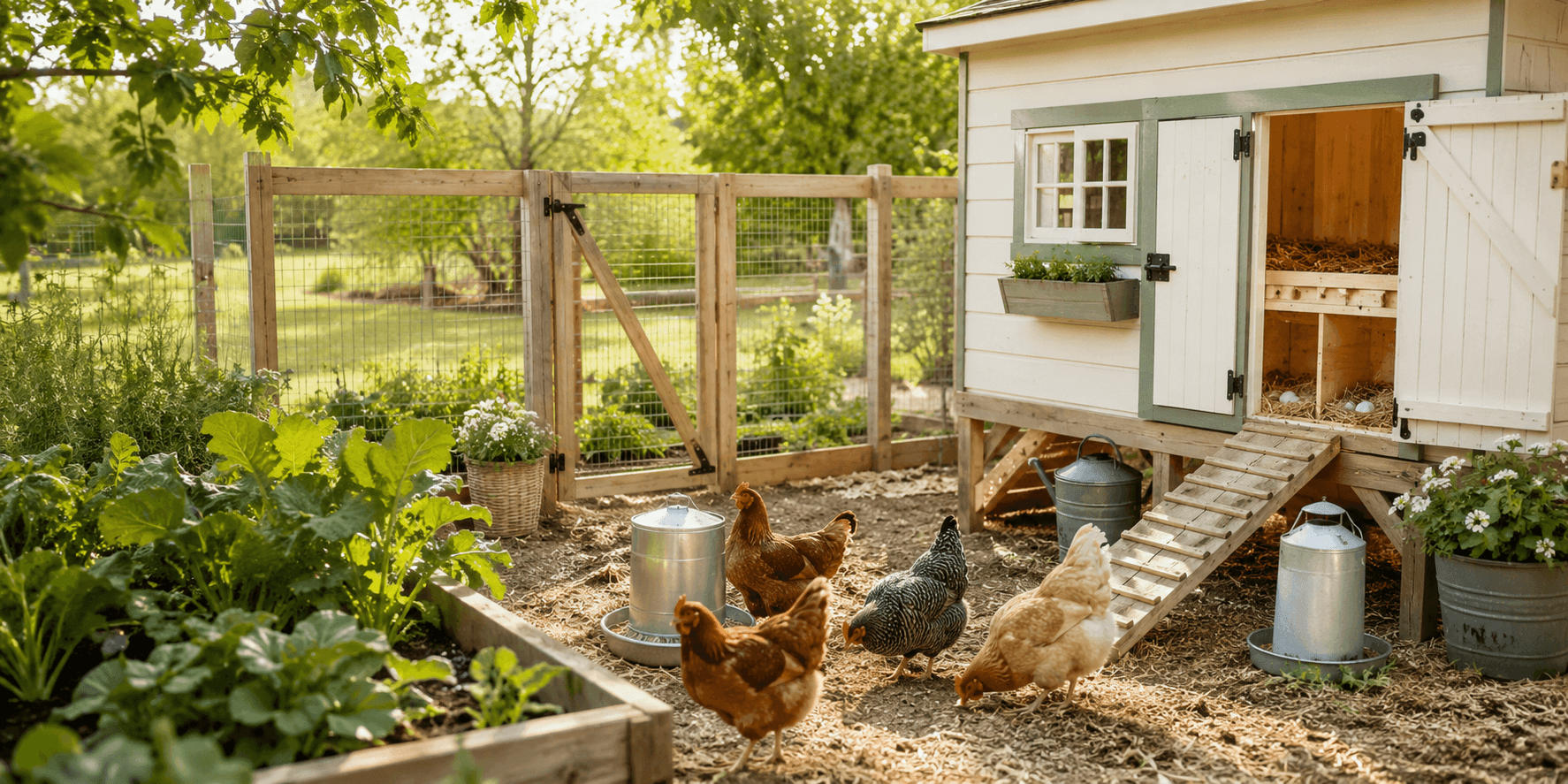
Raising chickens for beginners can be one of the most rewarding steps toward a more self-sufficient lifestyle. Chickens can give you fresh eggs, help you connect with your food, turn some kitchen and garden scraps into manure, and bring life to a backyard homestead. But before you bring home your first chicks or hens, it is important to understand what chickens actually need.
Chickens are not difficult animals compared with larger livestock, but they still need daily care. They need a safe coop, clean water, the right feed, enough space, protection from predators, dry bedding, nesting boxes, roosts, and regular attention. A healthy flock starts before the chickens arrive.
Many beginners make the mistake of buying chickens first and figuring out the setup later. That can lead to stress, wasted money, predator problems, unhealthy birds, and a messy backyard. The better approach is simple: plan first, build or prepare the space, then bring home a small flock you can manage confidently.
This guide will walk you through the most important things to know before raising backyard chickens, including local rules, coop setup, flock size, feeding, daily care, egg expectations, chick care, hygiene, predator protection, and common beginner mistakes to avoid.
Affiliate Disclosure
This article may contain affiliate links. If you purchase through these links, Dreamsteading may earn a small commission at no extra cost to you. Only choose chicken supplies, feed, and coop equipment that are appropriate for your flock size, climate, and local regulations.
1. Check Local Rules Before Raising Chickens
Before buying chickens, check your local rules. This is the first step because some cities, neighborhoods, rental agreements, or homeowners associations have restrictions on backyard poultry.
Look for rules about:
- Whether chickens are allowed
- How many hens you can keep
- Whether roosters are allowed
- Coop distance from property lines
- Coop distance from neighbors
- Permit requirements
- Noise rules
- Waste management rules
- Egg selling rules
Roosters are often restricted because they can be noisy. Hens are quieter, but they still make sound, especially after laying eggs or when disturbed. If you live close to neighbors, it is better to know the rules before spending money on a coop and birds.
You should also think about your climate. Chickens can live in many environments, but hot summers, cold winters, heavy rain, wind, predators, and humidity all affect how you design the coop.
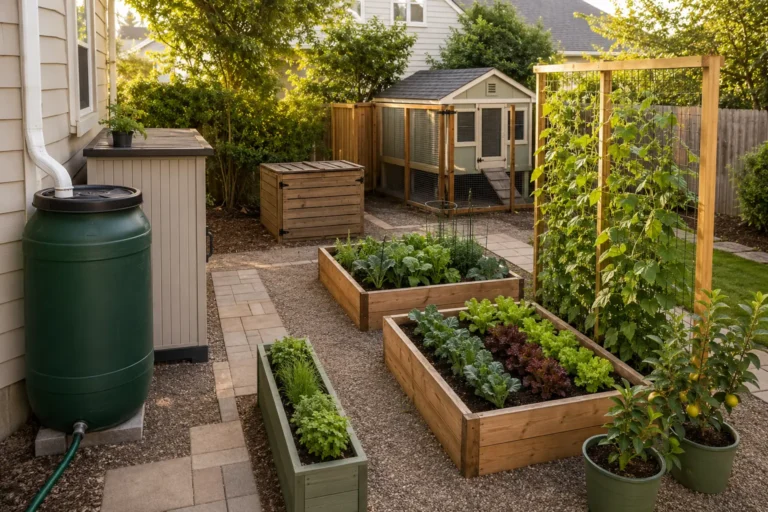
If your backyard is limited, these small garden design tips can help you plan a space that includes both plants and a chicken area without feeling crowded.
2. Decide Why You Want Chickens
Before choosing breeds or buying a coop, decide why you want chickens.
Common reasons include:
- Fresh eggs
- Backyard homesteading
- Family learning project
- Compost and manure
- Pest control
- A more self-sufficient lifestyle
- Enjoying animals in the backyard
Your reason matters because it affects the type of chickens you choose.
If your main goal is eggs, you will want reliable laying breeds. If your goal is a calm family flock, temperament matters. If your climate is very hot or cold, choose breeds that handle your conditions well.
Raising chickens is one of the most useful easy homesteading skills for beginners because it teaches daily animal care, food production, observation, and responsibility.
But chickens are not completely free food. You will still pay for feed, bedding, coop materials, fencing, waterers, feeders, and health supplies. Fresh eggs are wonderful, but the real value is the lifestyle, learning, and self-sufficiency skill.
3. Start with a Small Flock
Beginners should usually start small. A flock of 3 to 6 hens is often easier to manage than starting with 12 or more birds.
Chickens are social animals, so one chicken alone is not ideal. They do better with a small flock. But too many birds can quickly overwhelm a beginner, especially if your coop is too small or you are still learning the daily routine.
A small flock is easier to:
- Feed
- Water
- Observe
- Clean up after
- Protect from predators
- Manage during illness
- Fit into a small backyard
Starting small also helps you learn what you actually enjoy. Some people love raising chickens and expand later. Others realize they only want a few hens for eggs and companionship.
If chickens are not possible where you live, these homesteading jobs without land can help you build practical self-sufficiency skills in a smaller space.
4. Choose Beginner-Friendly Chicken Breeds
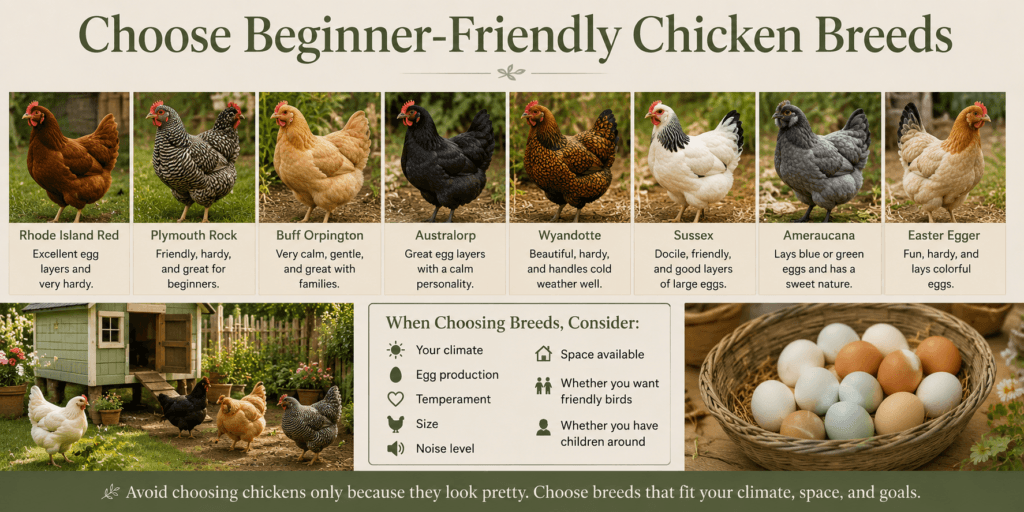
Not all chicken breeds are the same. Some are excellent egg layers. Some are calm and friendly. Some handle cold weather better. Others do better in heat.
Good beginner-friendly chicken breeds include:
- Rhode Island Red
- Plymouth Rock
- Buff Orpington
- Australorp
- Wyandotte
- Sussex
- Ameraucana
- Easter Egger
Rhode Island Reds and Australorps are often known for good egg production. Buff Orpingtons are popular for their calm temperament. Plymouth Rocks are hardy and friendly. Wyandottes can handle cooler climates well. Easter Eggers are fun because they may lay colored eggs.
When choosing breeds, consider:
- Your climate
- Egg production
- Temperament
- Size
- Noise level
- Space available
- Whether you want friendly birds
- Whether you have children around
Avoid choosing chickens only because they look pretty. A beautiful bird that does not fit your climate, space, or goals may not be the best choice for a beginner flock.
5. Chicks vs. Pullets: Which Is Better for Beginners?
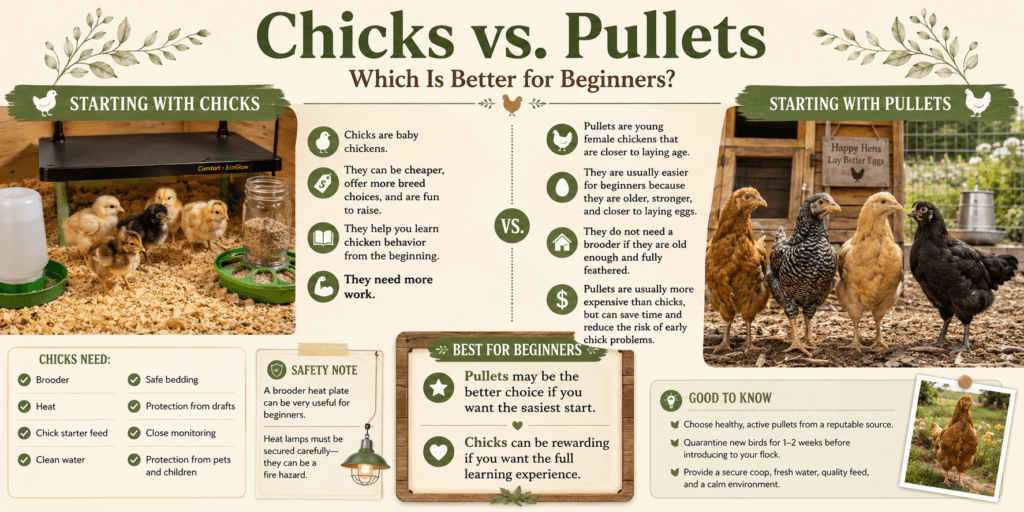
You can start with chicks or pullets.
Chicks are baby chickens. Pullets are young female chickens that are usually closer to laying age.
Starting with Chicks
Chicks can be cheaper and give you more breed choices. They are also fun to raise and help you learn a lot about chicken behavior from the beginning.
But chicks need more work.
They need:
- A brooder
- Heat
- Chick starter feed
- Clean water
- Safe bedding
- Protection from drafts
- Close monitoring
- Protection from pets and children
A brooder heat plate can be a useful option for beginners because chicks need a warm area during their first weeks of life. Some people use heat lamps, but heat lamps must be secured very carefully because they can become a fire hazard.
Chicks are fragile, so they need consistent care.
Starting with Pullets
Pullets are usually easier for beginners because they are older, stronger, and closer to laying eggs. They do not need a brooder if they are old enough and fully feathered.
Pullets are usually more expensive than chicks, but they can save you time and reduce the risk of early chick problems.
If you want the easiest start, pullets may be the better choice. If you want the full learning experience, chicks can be rewarding.
6. Set Up the Chicken Coop Before the Birds Arrive
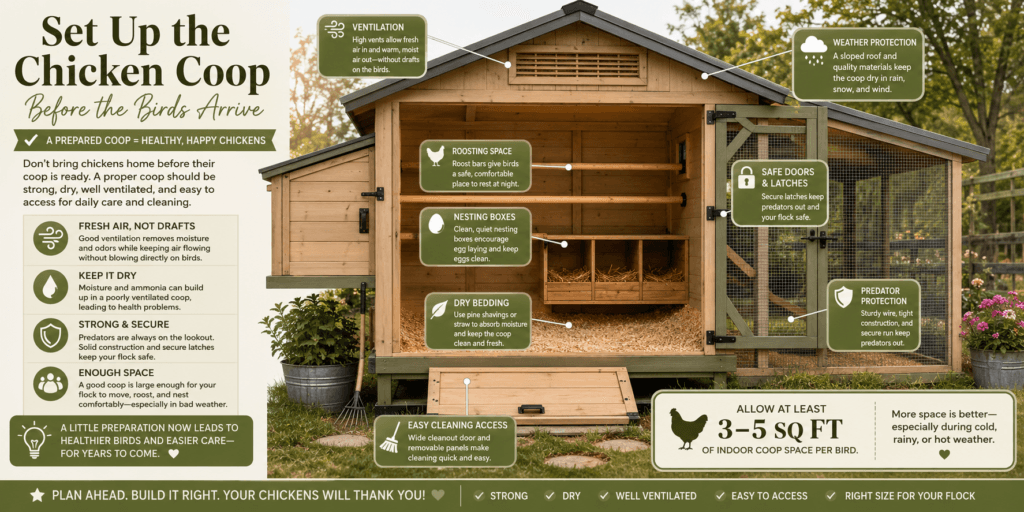
Do not bring chickens home before the coop is ready. A proper coop is one of the most important parts of raising chickens.
A chicken coop should provide:
- Predator protection
- Weather protection
- Ventilation
- Roosting space
- Nesting boxes
- Dry bedding
- Easy cleaning access
- Safe doors and latches
- Enough space for the flock
A good backyard chicken coop should be strong, easy to clean, and large enough for the number of birds you plan to keep. If you are building your own, good chicken coop plans can help you avoid mistakes with size, ventilation, roosts, and access doors.
As a beginner rule, allow at least 3 to 5 square feet of indoor coop space per bird. More space is better if possible, especially if the birds spend a lot of time inside during bad weather.
The coop should be dry but not sealed tight. Ventilation is important because moisture and ammonia can build up inside a poorly ventilated coop. Good ventilation lets fresh air move through without creating strong drafts directly on the birds.
The coop should also be easy for you to access. If cleaning is difficult, you are less likely to do it often.
7. Add Roosts and Nesting Boxes
Chickens naturally like to sleep off the ground. That is why roosting space is important.
Roosts should be placed higher than the nesting boxes if possible, because chickens prefer to sleep in the highest comfortable place. If nesting boxes are higher than the roosts, hens may sleep in the boxes, which can make eggs dirty.
A simple coop should include:
- Roosting bars
- Nesting boxes
- Dry bedding
- Safe entry and exit points
- Easy egg collection access
For nesting boxes, a good beginner guideline is one nesting box for every 4 to 5 hens. A chicken nesting boxes setup can be built into the coop or added separately, depending on your design.
Use clean bedding in nesting boxes. Common options include straw, pine shavings, or nesting pads. nesting pads for chickens can make egg collection cleaner and easier, especially if you want a low-maintenance option.
Hens do not need one nesting box each. They often choose the same favorite box anyway.
8. Build a Safe Chicken Run
A chicken run is the outdoor fenced area where chickens can scratch, move, dust bathe, and spend time outside while still being protected.
A safe run is especially important if you cannot let chickens free-range.
A chicken run should have:
- Strong fencing
- Predator protection
- Shade
- Dry ground if possible
- Enough space
- A secure door
- Protection from digging predators
- Protection from flying predators if needed
A hardware cloth for chicken coop is usually stronger and safer than basic chicken wire for predator protection. Chicken wire can help keep chickens in, but many predators can tear through it or reach through larger openings. Hardware cloth with small openings is better for keeping smaller predators out.
For digging predators, consider burying fencing or adding a predator apron around the run. A chicken coop predator apron can help stop animals from digging under the fence.
A covered or partially covered run can also help protect against hawks, owls, heavy rain, and too much sun.
As a beginner guideline, allow about 8 to 10 square feet of outdoor run space per bird if the birds will spend most of their outdoor time in the run.
9. Feed Chickens the Right Way
Chicken feed should match the bird’s age and purpose.
Do not rely on kitchen scraps, garden extras, or free-ranging as the main diet. Chickens need a balanced feed that gives them the right protein, vitamins, minerals, and energy.
Basic feed stages include:
- Chick starter feed for chicks
- Grower feed for growing birds
- Layer feed for laying hens
- Oyster shell for laying hens if needed
- Grit when chickens eat foods other than commercial feed
A chick starter feed is made for young chicks. A layer feed for chickens is made for hens that are old enough to lay eggs. Do not feed layer feed to young chicks because the calcium level is not appropriate for them.
A good chicken feeder helps reduce waste and keeps feed cleaner. Chickens scratch, spill, and knock things over, so a proper feeder is better than simply placing feed in an open bowl.
Kitchen scraps can be offered in moderation, but they should be treats, not the foundation of the diet.
Good treats may include small amounts of:
- Leafy greens
- Vegetable scraps
- Fruit pieces
- Cooked rice
- Oats
- Garden extras
Avoid feeding chickens spoiled, moldy, salty, greasy, or unsafe foods.
10. Provide Clean Water Every Day
Clean water is one of the most important parts of chicken care.
Chickens need constant access to fresh water. In hot weather, water becomes even more important because chickens cool themselves partly by panting and need hydration to stay healthy.
A good chicken waterer can help keep water cleaner than an open bowl. Chickens will scratch bedding, dirt, and manure into water if they can.
Check water daily. In hot weather, check it more than once. In cold weather, make sure water does not freeze.
Dirty water can lead to health problems and reduced egg production. If the waterer is slimy, dirty, or filled with bedding, clean it.
For laying hens, you may also provide oyster shell for chickens separately so they can take what they need for strong eggshells. Chickens that eat food beyond commercial feed may also need chicken grit to help with digestion.
11. Create a Daily Chicken Care Routine
Chickens need daily care. It does not usually take long, but it must be consistent.
Daily chicken care tasks include:
- Check feed
- Refresh water
- Collect eggs
- Observe the flock
- Open the coop in the morning
- Lock the coop at dusk
- Look for signs of illness
- Check for predator damage
- Make sure all birds are present
Weekly care tasks include:
- Clean dirty bedding
- Refresh nesting boxes
- Inspect the run
- Check latches and fencing
- Clean feeders and waterers
- Manage manure buildup
- Look for mites or pests
- Check ventilation
A daily routine helps you notice problems early. You will learn how your chickens normally behave. When one bird is suddenly quiet, weak, isolated, breathing strangely, or not eating, you will notice faster.
Healthy chickens are usually active, alert, scratching, eating, drinking, dust bathing, and moving with the flock.
12. Understand Egg Laying Expectations
Many beginners imagine that every hen will lay one egg every day all year. That is not realistic.
Egg production depends on:
- Breed
- Age
- Daylight
- Season
- Nutrition
- Stress
- Heat
- Molting
- Health
- Coop conditions
Many hens begin laying around 5 to 6 months of age, but this varies by breed and individual bird.
Egg production is usually best in the first few laying years. It often slows during winter when daylight is shorter. Hens may also stop or reduce laying during molting, extreme heat, stress, illness, or poor nutrition.
You do not need a rooster for hens to lay eggs. Hens lay eggs without a rooster. A rooster is only needed if you want fertile eggs for hatching.
For egg collection, a simple egg basket can make daily collection easier and keep eggs from rolling around in your hands or pockets.
13. Keep the Coop Clean and Dry
A clean coop helps keep chickens healthier and eggs cleaner.
You do not need to make the coop spotless every day, but you should prevent heavy manure buildup, wet bedding, strong ammonia smell, and dirty nesting boxes.
Common bedding options include:
- Pine shavings
- Straw
- Hemp bedding
- Chopped straw
- Sand in some setups
Avoid damp bedding. Moisture can create odor, attract flies, and contribute to unhealthy coop conditions.
Clean more often if:
- The coop smells strong
- Bedding is wet
- Eggs are dirty
- Manure is building up
- Flies are increasing
- The flock is crowded
- Weather is humid
Chicken manure can be valuable for the garden, but it should be composted properly before use around plants. Fresh chicken manure is strong and can burn plants or create food safety risks if handled carelessly.
14. Protect Chickens from Predators
Predators are one of the biggest risks for backyard chickens.
Common predators include:
- Raccoons
- Foxes
- Coyotes
- Dogs
- Cats
- Hawks
- Owls
- Snakes
- Rats
- Weasels
- Opossums
Predators may attack birds, steal eggs, damage the coop, or stress the flock.
Good predator protection includes:
- Strong fencing
- Hardware cloth
- Secure latches
- Covered run
- Buried fencing or predator apron
- No large gaps
- Locking the coop at dusk
- Keeping feed secure
- Removing hiding places around the coop
Raccoons can open simple latches, so use secure locks. Small predators can enter through tiny gaps, so check corners, vents, doors, and floor edges.
An automatic chicken coop door can be helpful if you are not always home at sunrise or dusk, but it should not replace regular checks. You still need to make sure every bird is inside and the door is working correctly.
15. Keep Chickens Healthy
Chicken health starts with good basics:
- Clean water
- Balanced feed
- Dry bedding
- Ventilation
- Enough space
- Predator protection
- Clean nesting boxes
- Dust bathing area
- Regular observation
A dust bath area helps chickens clean their feathers and manage external parasites. Many chickens make their own dust baths in dry soil. If your run is wet or compacted, you can create a dust bath area using dry soil, sand, or wood ash in moderation.
Signs of a healthy chicken include:
- Bright eyes
- Active behavior
- Normal eating and drinking
- Smooth movement
- Clean feathers
- Normal droppings
- Interest in scratching and dust bathing
- Staying with the flock
Warning signs include:
- Lethargy
- Wheezing
- Sneezing
- Swollen eyes
- Not eating
- Sitting alone
- Pale comb
- Limping
- Diarrhea
- Sudden drop in laying
- Dirty vent area
- Strange posture
Keep a chicken first aid kit on hand for basic emergencies, but contact a veterinarian or local poultry extension resource when you are unsure. Do not guess with serious illness.
16. Practice Good Hygiene Around Chickens
Backyard chickens can carry germs even when they look healthy. Good hygiene protects you, your family, and your flock.
Important hygiene habits include:
- Wash hands after touching chickens
- Wash hands after collecting eggs
- Wash hands after touching feeders or waterers
- Keep coop shoes outside
- Do not bring chickens into the kitchen
- Do not clean poultry equipment in kitchen sinks
- Do not kiss or snuggle chickens
- Supervise children around chickens
- Keep young children away from chicks and poultry
- Refrigerate eggs after collection
- Throw away cracked eggs
Use dedicated shoes or boots for the coop area. Keep those shoes outside or away from living spaces.
Children should be taught not to put fingers in their mouths after touching chickens, eggs, bedding, or coop materials.
Good hygiene does not mean you should be afraid of chickens. It simply means treating them like livestock and keeping poultry germs away from food preparation spaces.
17. Plan for Heat, Cold, and Weather
Chickens need protection from weather extremes.
In hot weather, chickens need:
- Shade
- Fresh cool water
- Good ventilation
- Airflow
- Dust bath access
- Less crowding
- Protection from heat stress
Signs of heat stress can include panting, wings held away from the body, weakness, reduced eating, and lethargy.
In cold weather, chickens need:
- Dry bedding
- Draft-free roosting space
- Ventilation without direct drafts
- Fresh water that does not freeze
- Protection from wind and moisture
A dry chicken is usually better prepared for cold than a damp chicken. Moisture inside the coop can cause more problems than cold alone.
Do not seal the coop completely in winter. Ventilation still matters.
18. Understand the Real Cost of Raising Chickens
Chickens can support a self-sufficient lifestyle, but they are not free.
Common costs include:
- Coop
- Run
- Fencing
- Feed
- Waterer
- Feeder
- Bedding
- Nesting supplies
- Health supplies
- Predator protection
- Chicks or pullets
- Egg storage supplies
- Replacement parts
The biggest costs are usually coop setup and feed.
You can save money by building parts yourself, using reclaimed materials safely, starting with a small flock, and avoiding unnecessary accessories. But do not cut corners on predator protection or coop safety.
A cheap coop that lets predators in is not really cheap.
19. Common Beginner Mistakes to Avoid
Buying Chickens Before Preparing the Coop
Set up the coop, run, feeder, waterer, bedding, and supplies before the chickens arrive.
Starting with Too Many Birds
A small flock is easier to manage and less expensive.
Choosing a Coop That Is Too Small
Many store-bought coops claim to hold more chickens than they comfortably should. Give your flock enough space.
Using Weak Predator Protection
Chicken wire alone is not enough for many predator situations. Use stronger barriers where needed.
Feeding Too Many Scraps
Scraps should be treats, not the main diet.
Feeding Layer Feed to Chicks
Chicks need chick starter feed, not layer feed.
Forgetting Daily Water Checks
Water must be fresh, clean, and available every day.
Ignoring Ventilation
A coop needs fresh air without strong drafts on the birds.
Not Collecting Eggs Often
Eggs left in the nest can become dirty, cracked, or broken.
Letting Bedding Stay Wet
Wet bedding creates odor and unhealthy conditions.
Assuming Chickens Need a Rooster for Eggs
Hens lay eggs without a rooster.
Not Planning for Sick Birds
Have a plan to separate a sick or injured bird if needed.
Beginner Chicken Setup Checklist
Before bringing chickens home, prepare:
- Local rule confirmation
- Coop
- Secure run
- Roosts
- Nesting boxes
- Bedding
- Feeder
- Waterer
- Feed matched to bird age
- Grit, if needed
- Oyster shell for laying hens
- Predator protection
- Cleaning tools
- Egg basket
- First aid supplies
- Brooder setup if raising chicks
- Handwashing routine
- Daily care plan
This checklist can save you from many beginner problems.
FAQ About Raising Chickens for Beginners
How many chickens should a beginner start with?
Many beginners do well with 3 to 6 hens. Chickens are social, so one chicken alone is not ideal, but starting with too many birds can be overwhelming.
Do chickens need a rooster to lay eggs?
No. Hens lay eggs without a rooster. A rooster is only needed if you want fertile eggs for hatching.
How much coop space do chickens need?
A good beginner rule is at least 3 to 5 square feet of indoor coop space per bird. More space is better if your birds spend a lot of time inside.
How much run space do chickens need?
A common beginner guideline is about 8 to 10 square feet of outdoor run space per bird if they spend most of their outdoor time in the run.
What do chickens eat?
Chickens need a balanced feed matched to their age and purpose. Chicks need starter feed, growing birds need grower feed, and laying hens need layer feed. Scraps should be treats, not the main diet.
When do hens start laying eggs?
Many hens begin laying around 5 to 6 months of age, but timing depends on breed, health, nutrition, season, and daylight.
Are chickens hard to care for?
Chickens are not difficult, but they need daily care. You must check food, water, eggs, safety, and flock health consistently.
Can chickens live in a small backyard?
Yes, chickens can live in a small backyard if local rules allow them and you provide enough space, a secure coop, a safe run, and good care.
What is the best chicken breed for beginners?
Good beginner breeds include Rhode Island Red, Plymouth Rock, Buff Orpington, Australorp, Wyandotte, Sussex, and Easter Egger.
What is the biggest mistake beginners make with chickens?
One of the biggest mistakes is buying chickens before the coop and run are fully ready. Another common mistake is underestimating predator protection.
Conclusion
Raising chickens for beginners is exciting, practical, and rewarding, but it works best when you prepare before bringing birds home.
Start by checking your local rules. Decide why you want chickens. Choose a small beginner-friendly flock. Set up a safe coop and run. Provide the right feed and clean water. Build a daily routine. Learn what healthy chickens look like. Protect the flock from predators. Practice good hygiene around birds and eggs.
Chickens can give you fresh eggs, manure for compost, daily learning, and a stronger connection to your homestead lifestyle. But they also need time, attention, and responsible care.
Start small, keep the setup simple, and focus on the basics. A healthy backyard flock begins with a safe coop, clean water, good feed, enough space, and a keeper who pays attention.
Want more beginner-friendly homesteading guides, backyard living ideas, and practical self-sufficiency tips? Subscribe to the Dreamsteading newsletter and get simple guides sent straight to your inbox.