How to Grow Asparagus: 7 Essential Tips for Amazing Harvests for Years
If you want a garden crop that rewards you for years instead of just one season, learning how to grow asparagus is one of the best decisions you can make.
Asparagus is different from most vegetables we grow in the garden. You do not plant it every spring like lettuce, tomatoes, cucumbers, or beans. You plant it once, let it establish, and with the right care, it can come back year after year with fresh spring harvests.
That is what makes asparagus such a valuable crop for a self-sufficient garden.
The only thing you need to understand from the beginning is this: asparagus takes patience. You cannot plant it today and expect a full harvest right away. The first couple of years are about building strong roots and healthy ferns so the plant can feed itself for future harvests.
But once the bed is established, asparagus becomes one of those crops that makes you glad you planned ahead.
If you are building a long-term food garden, asparagus fits beautifully with other beginner-friendly crops from 10 Easy Vegetables to Grow for Beginners.
Affiliate Disclosure
This post may contain affiliate links. If you buy through these links, Dreamsteading may earn a small commission at no extra cost to you. I only recommend practical gardening tools and supplies that fit a simple, beginner-friendly homesteading lifestyle.
Why Asparagus Is Worth Growing
Asparagus is one of those crops that feels like a garden investment.
You put in the work at the beginning, and then the bed keeps giving back each spring. Once established, asparagus can produce for many years when it is planted in the right place and cared for properly.
It is also one of the first vegetables to appear in spring. When the rest of the garden is still waking up, asparagus spears can already be pushing through the soil.
That early harvest is one of my favorite reasons to grow it.
Asparagus is also useful if you want a more permanent food garden. Instead of starting everything from scratch every season, you can create a garden that becomes more productive over time.
That is the kind of gardening I like most: practical, patient, and rewarding.
What Makes Asparagus Different from Other Vegetables?
Asparagus is a perennial vegetable.
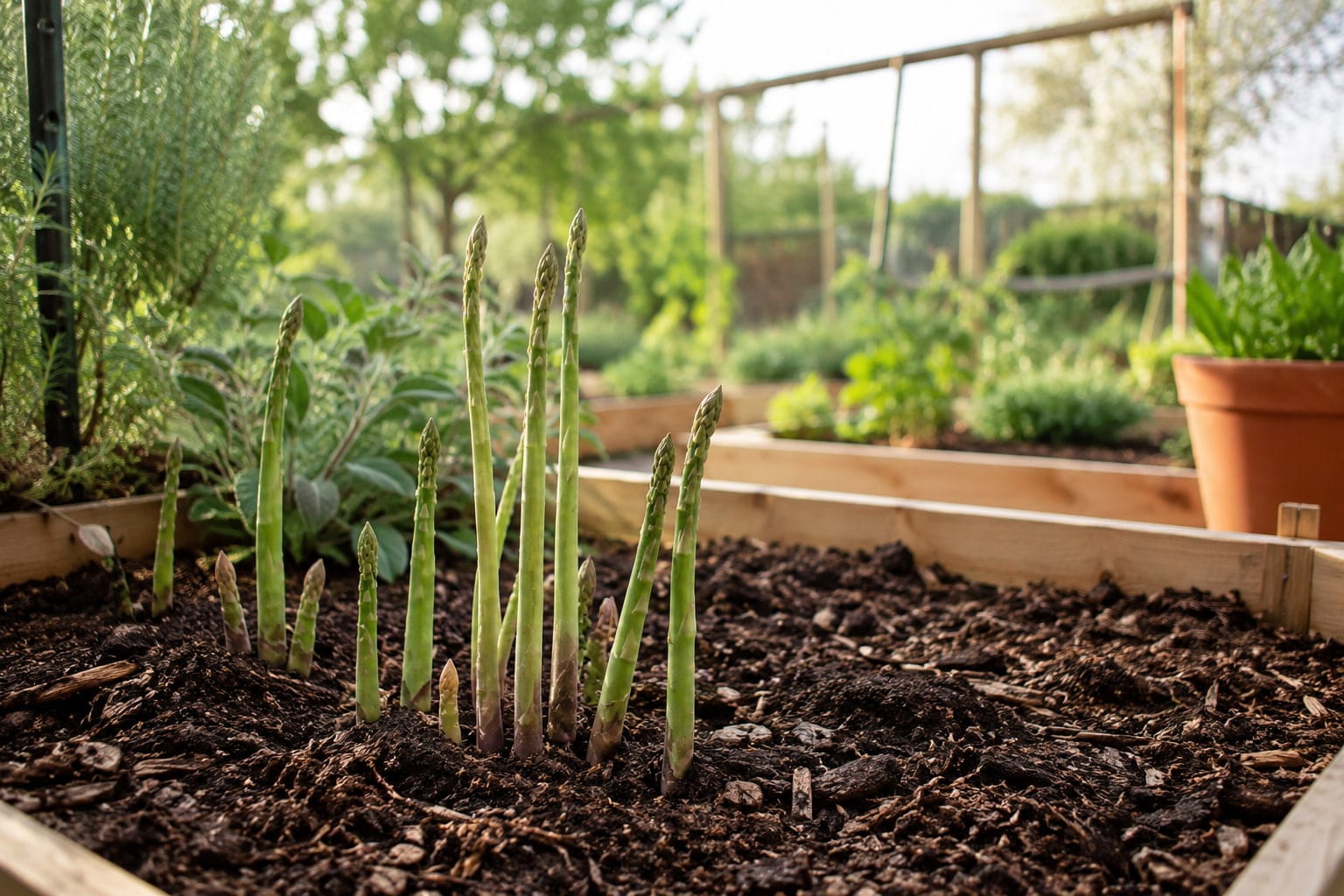
That means the plant lives for many years. The part you harvest is the tender young spear that comes up from the underground crown.
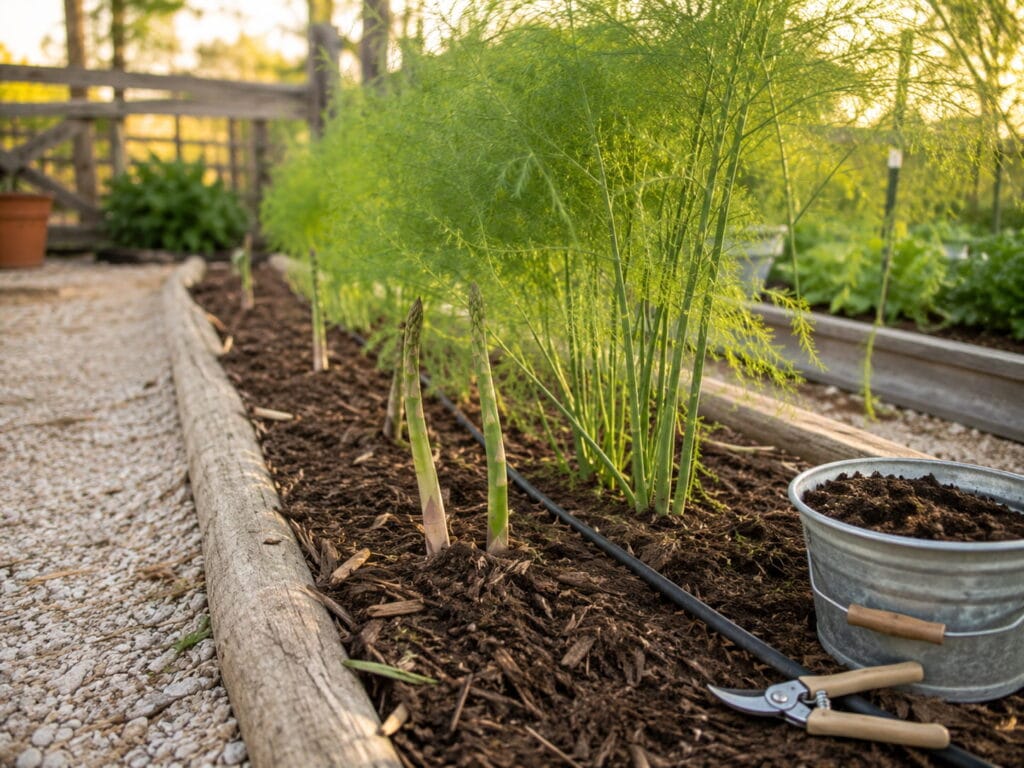
If you do not harvest the spear, it grows tall and turns into soft, fern-like foliage.
Those ferns are not a problem. They are important.
The ferns collect energy from the sun and send it back down into the crown and roots. That stored energy is what helps the plant produce more spears the following spring.
This is why you should not cut asparagus ferns while they are still green and healthy. They are feeding the plant for the future.
With asparagus, you are not only growing for this season. You are growing for the next several years.
Should You Plant Asparagus Seeds or Crowns?
You can grow asparagus from seed, but for most beginners, I recommend starting with asparagus crowns.
Crowns are young asparagus root systems that are usually one year old. They give you a faster and easier start than seeds.
Seeds are cheaper, but they take longer before you can harvest. They also need more care in the early stages.
If this is your first asparagus bed, healthy asparagus crowns are usually the simplest choice.
When you buy crowns, choose a reliable supplier and look for varieties that grow well in your climate. You can also use plant labels to mark the variety and planting year so you remember exactly when the bed was started.
That small detail helps later, especially when you are deciding when to begin harvesting.
Choose the Right Spot Before You Plant
The most important decision you make with asparagus is where to plant it.
Because asparagus is a long-term crop, you do not want to place it somewhere you may need to dig up next year. Choose a permanent area where the plants can stay undisturbed.
A good asparagus spot should have:
- Full sun
- Well-drained soil
- Space for tall summer ferns
- Easy access for weeding and harvesting
- No standing water
- Low competition from tree roots
I like to think of asparagus as a permanent part of the garden layout, not a temporary crop.
If you are still planning your backyard food garden, Small Garden Design Tips can help you think through the layout before you commit to permanent beds.
Asparagus works well along the edge of a vegetable garden, near a fence, or in a dedicated bed where it will not be disturbed by yearly planting and digging.
Prepare the Asparagus Bed Well
Asparagus will stay in the same place for years, so good soil preparation matters.
Before planting, clear the bed completely. Remove grass, weeds, roots, rocks, and anything that will compete with the young crowns.
Then loosen the soil deeply with a garden fork or garden rake. Asparagus roots need room to spread, so compacted soil is not ideal.
Mix in plenty of organic compost before planting. Compost improves the soil structure, adds nutrients, and helps the bed hold moisture without becoming soggy.
A soil test kit is also useful before planting because asparagus is a long-term crop. It is much easier to improve the soil before the crowns go in than to fix a poor bed later.
If your native soil is heavy clay, rocky, compacted, or poorly draining, a deep raised bed can make asparagus easier to manage. A permanent asparagus bed pairs well with the ideas in How to Build Raised Garden Beds, especially if you want a cleaner and more organized food garden.
For raised beds, use a good raised bed soil mix blended with organic compost so the crowns start in loose, fertile soil.
How to Plant Asparagus Crowns Step by Step
Plant asparagus crowns in early spring when the soil can be worked.
You do not need a complicated setup, but you do need to plant the crowns correctly.
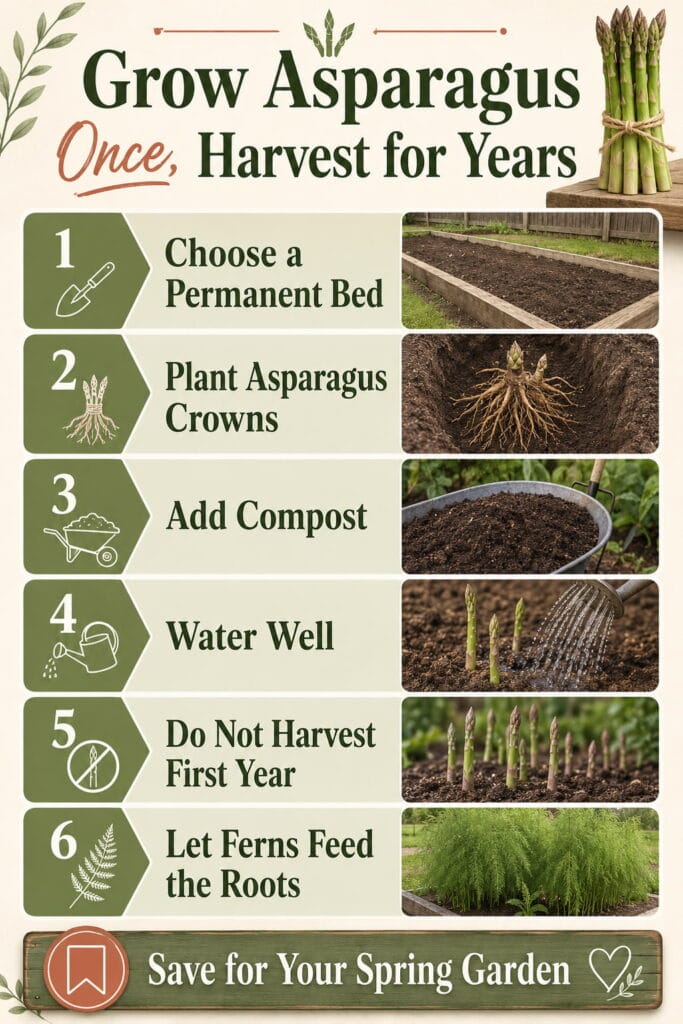
Step 1: Dig a Trench
Dig a trench about 6 to 8 inches deep.
The trench should be wide enough for the roots to spread naturally. A garden shovel, hand trowel, or garden fork will make this easier, depending on the size of your bed.
Do not squeeze the crowns into a narrow hole. Give the roots space.
Step 2: Add Compost
Add a layer of organic compost to the bottom of the trench and mix it lightly with the soil.
Avoid placing strong fertilizer directly against the crowns. Young crowns need good soil, but they should not be burned by harsh fertilizer.
Step 3: Make a Small Soil Ridge
Create a small ridge or mound of soil down the center of the trench.
This gives the crown a place to sit while the roots spread down and outward.
Think of it like setting the crown on a small support instead of dropping it flat into the trench.
Step 4: Place the Crowns
Place each asparagus crown on the ridge with the roots spread out gently.
Space crowns about 12 to 18 inches apart.
Do not plant them too close together. Asparagus needs room to develop strong crowns underground.
Step 5: Cover the Crowns
Cover the crowns with a few inches of soil at first.
As the spears begin to grow, gradually fill in the trench until the bed is level.
This helps the plants settle in without burying them too heavily at once.
Step 6: Water Well
After planting, water the bed gently but deeply.
A soaker hose or drip irrigation kit is helpful because it keeps moisture consistent without soaking the foliage.
Keep the soil moist while the crowns establish, but do not let the bed stay soggy.
How to Care for Asparagus the First Year
The first year is about patience.
When the spears appear, let them grow. Do not harvest them.
I know this is difficult because the spears may look ready to pick, but the plant needs them to turn into ferns. Those ferns feed the roots and help build a stronger bed for the future.
During the first year, focus on simple care:
- Keep the bed weed-free.
- Water during dry weather.
- Add mulch to protect the soil.
- Let the ferns grow tall.
- Do not harvest spears.
- Do not step in the bed.
A layer of straw mulch or wood chip mulch can help reduce weeds and keep soil moisture more even.
Use garden gloves when weeding so you can work carefully around the young plants without damaging the spears or crowns.
The first year may feel slow, but this is the foundation of your future harvest.
When Can You Start Harvesting Asparagus?
Asparagus harvest timing depends on how strong the bed is and whether you started from crowns or seeds.
For a beginner-friendly approach, follow this simple rule:
- Planting year: do not harvest.
- Second year: harvest very lightly, or skip if the plants look weak.
- Third year: begin a more useful harvest.
- Mature years: harvest each spring, then stop and let ferns grow.
When you harvest, pick spears when they are about 6 to 8 inches tall and still tender.
You can cut them near the soil line with a knife or snap them by hand where they naturally break.
Stop harvesting when the spears become thin. Thin spears are a sign that the plant needs time to rebuild energy.
After harvest season, let the remaining spears grow into tall ferns. Those ferns are what help create next year’s harvest.
This is the part many beginners miss. The ferns are not wasted growth. They are the reason the bed keeps producing.
How to Care for an Established Asparagus Bed
Once asparagus is established, it becomes easier to maintain.
You still need to care for the bed each year, but the work is simple and seasonal.
Spring Care
In spring, watch for new spears.
Keep the bed weeded and harvest only during the proper window for the age of your plants.
If the weather is dry, water the bed deeply. A soaker hose makes this much easier, especially if you have a larger asparagus bed.
After Harvest
After you stop harvesting, let the ferns grow.
This is when the plant rebuilds energy.
You can add organic compost around the bed after harvest. If your soil needs extra support, use a balanced organic vegetable fertilizer according to the package directions.
Do not overfeed. Healthy soil and steady care are better than forcing growth.
Summer Care
During summer, the ferns may become tall and full.
They may look a little messy, but they are doing important work. Keep the bed watered during dry spells and watch for pests.
A good layer of mulch helps keep weeds down and makes the bed easier to maintain.
Fall and Winter Care
When the ferns turn brown and die back naturally, cut them down.
Use clean pruning shears and remove the dead foliage from the bed.
Then add compost or mulch to protect the soil through winter.
Do not cut healthy green ferns too early. Wait until they have finished feeding the crown.
Can You Grow Asparagus in Raised Beds?
Yes, asparagus can grow well in raised beds if the bed is deep enough and permanent.
A raised bed is especially helpful if your soil is heavy, rocky, compacted, or poorly draining.
Because asparagus can stay in place for many years, choose durable materials and build the bed carefully from the beginning. If you are choosing lumber for your garden projects, Best Wood for Garden Projects can help you plan a stronger outdoor setup.
Just remember that asparagus ferns get tall in summer. Place the bed where the ferns will not shade smaller vegetables.
A dedicated asparagus bed is usually better than mixing it into a bed you dig and replant every year.
Common Mistakes to Avoid When Growing Asparagus
Harvesting Too Early
This is the biggest mistake.
If you harvest during the planting year, you weaken the crowns before they are ready.
Let first-year spears grow into ferns so the roots can develop.
Choosing the Wrong Location
Asparagus needs a permanent space.
Do not plant it where you may want to redesign, dig, or move beds soon.
Planting in Poorly Drained Soil
Asparagus does not like sitting in wet soil.
If your soil holds too much water, improve drainage before planting or use a raised bed.
Letting Weeds Take Over
Weeds compete with young asparagus plants.
Keep the bed clean, especially during the first two years. Mulch helps, but you still need to check the bed regularly.
Crowding the Crowns
Asparagus needs space underground.
Planting crowns too close together can reduce long-term strength and production.
Cutting Ferns Too Early
Do not cut green ferns just because they look messy.
Wait until they turn brown naturally before cutting them down.
Forgetting to Feed the Soil
A productive asparagus bed depends on healthy soil.
Add organic compost every year and use organic vegetable fertilizer when your soil needs extra nutrients.
Ignoring Water During Establishment
Young asparagus crowns need steady moisture while they settle in.
A drip irrigation kit or soaker hose can help keep the bed evenly watered without making daily watering feel like a chore.
Asparagus Growing Checklist
Before planting asparagus, make sure you have:
- A sunny permanent location
- Well-drained soil
- Healthy asparagus crowns
- Organic compost
- A garden fork or shovel
- Garden gloves
- Straw mulch or wood chip mulch
- A watering plan
- Enough spacing between crowns
- Plant labels
- Patience for the first harvest
A good asparagus bed starts with planning, but it becomes easier once the crowns are established.
FAQ About Growing Asparagus
How many years does asparagus produce?
A healthy asparagus bed can produce for many years when it is planted in the right place and cared for properly.
The key is to avoid overharvesting, keep the bed weeded, and allow the ferns to grow after harvest.
Can I harvest asparagus the first year?
No, it is best not to harvest asparagus in the planting year.
Let the spears grow into ferns so the crowns can build strong roots.
Is asparagus better from seeds or crowns?
For beginners, asparagus crowns are usually easier.
Seeds are cheaper, but they take longer before you can harvest. Crowns give you a faster start and are simpler to manage.
How deep do you plant asparagus crowns?
Most gardeners plant asparagus crowns in a trench about 6 to 8 inches deep.
Cover them with a few inches of soil at first, then gradually fill the trench as the plants grow.
Does asparagus need full sun?
Yes, asparagus grows best in full sun.
A little light shade may be tolerated, but a sunny location usually gives stronger plants and better harvests.
Can asparagus grow in containers?
Asparagus can grow in containers, but it is not the easiest option.
The roots need depth, space, and long-term stability. A permanent garden bed or raised bed is usually better.
What should I plant near asparagus?
Asparagus is best grown in its own dedicated bed or with very low-competition plants nearby.
Avoid planting aggressive or deep-rooted crops too close to the crowns.
Why are my asparagus spears thin?
Thin spears can happen when the bed is young, stressed, overharvested, or low on stored energy.
If most spears become thin, stop harvesting and let the ferns grow.
Final Thoughts
Asparagus is not the fastest crop you can grow, but it is one of the most rewarding.
When you plant asparagus, you are not just planting for one season. You are creating a long-term food source that can return every spring for years.
Start with a sunny permanent location. Prepare the soil well. Plant healthy crowns. Keep the bed weeded, watered, and mulched. Most importantly, do not rush the harvest.
That patience is what turns a small asparagus planting into a productive perennial bed.
If you want a garden that becomes more useful over time, asparagus is one of the best crops to plant once and enjoy for years.