15 Garden Pathway Ideas on a Budget for a Beautiful Backyard
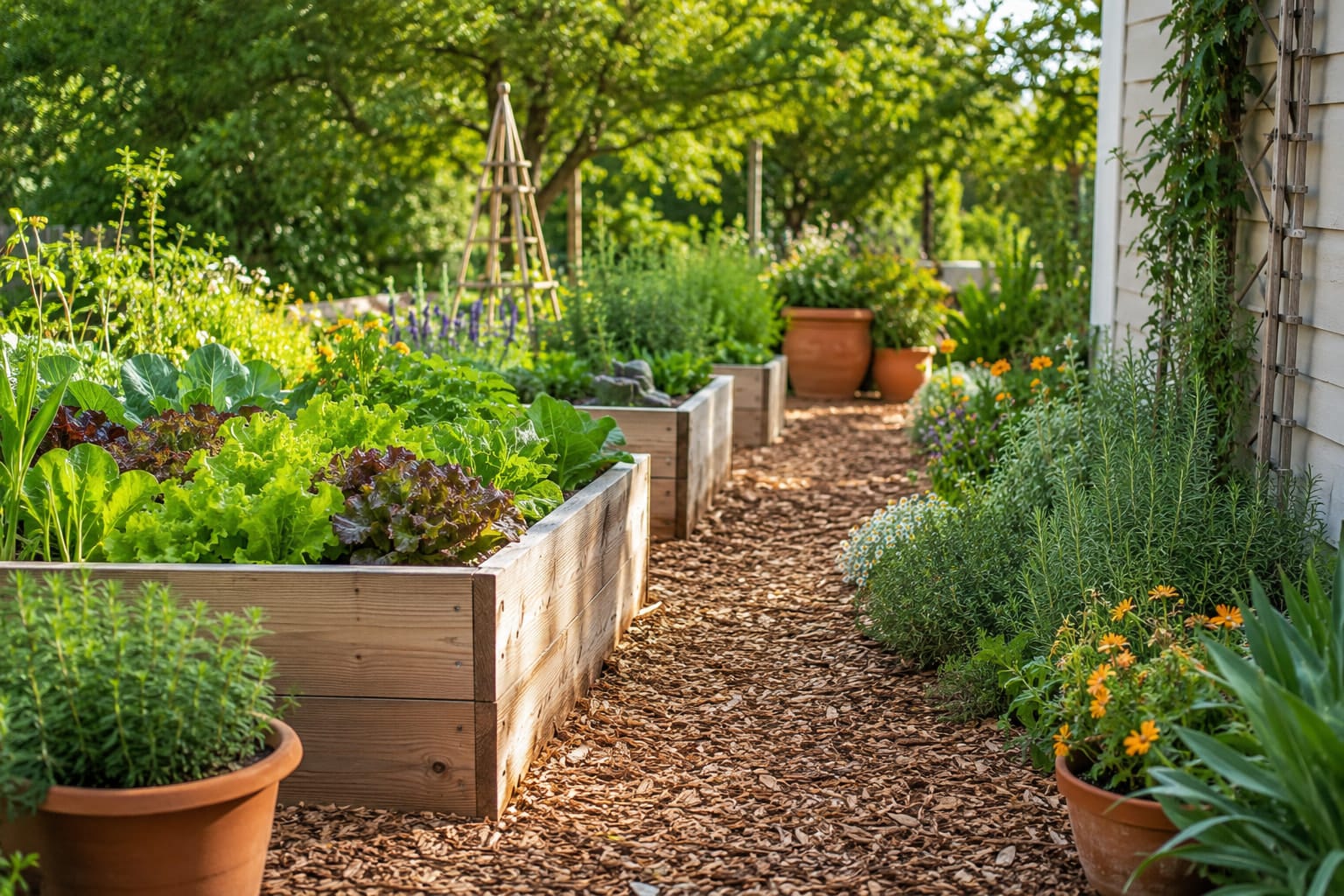
Simple garden pathway ideas on a budget can completely change the way your backyard feels.
A garden path does not have to be expensive, formal, or professionally installed. Even a simple mulch walkway between raised beds can make a garden feel cleaner, easier to maintain, and more inviting.
Pathways help guide movement through your garden. They keep your shoes out of muddy soil, protect planting areas from foot traffic, and make it easier to harvest, water, weed, and enjoy your space.
The best part is that you can build a beautiful garden pathway with simple materials like wood chips, gravel, stepping stones, reclaimed bricks, mulch, or even mowed grass.
If you are already working on a backyard garden, you may also like How to Build Raised Garden Beds and Small Garden Design Tips.
Affiliate Disclosure
This post may contain affiliate links. If you buy through these links, Dreamsteading may earn a small commission at no extra cost to you. We only recommend practical tools and supplies that fit a simple, beginner-friendly homesteading lifestyle.
Why Garden Pathways Matter
A garden pathway does more than look pretty.
It creates structure.
Without paths, a backyard garden can quickly feel messy and hard to use. You may step into planting beds, compact the soil, drag mud into the house, or struggle to move a wheelbarrow through the space.
A pathway helps divide the garden into useful areas.
It can lead to raised beds, a compost area, a herb garden, a seating corner, a chicken coop, a potting bench, or a backyard gate.
A simple path also makes your garden feel more intentional, even if you are working with a small budget.
What to Consider Before Choosing a Budget Garden Path
Before choosing a pathway material, think about how the path will be used.
A decorative path through flowers can be simple and narrow. A main walkway to raised beds should be wider, stronger, and easier to walk on.
Ask yourself:
- Will I use this path every day?
- Does it need to handle a wheelbarrow?
- Is the area sunny, shady, wet, or sloped?
- Do I want a natural cottage garden look or a cleaner modern style?
- Do I need something temporary or long-lasting?
- How much maintenance am I willing to do?
The cheapest pathway is not always the best one if it becomes difficult to maintain.
For vegetable gardens and raised bed areas, choose practical materials that are comfortable to walk on and easy to refresh.
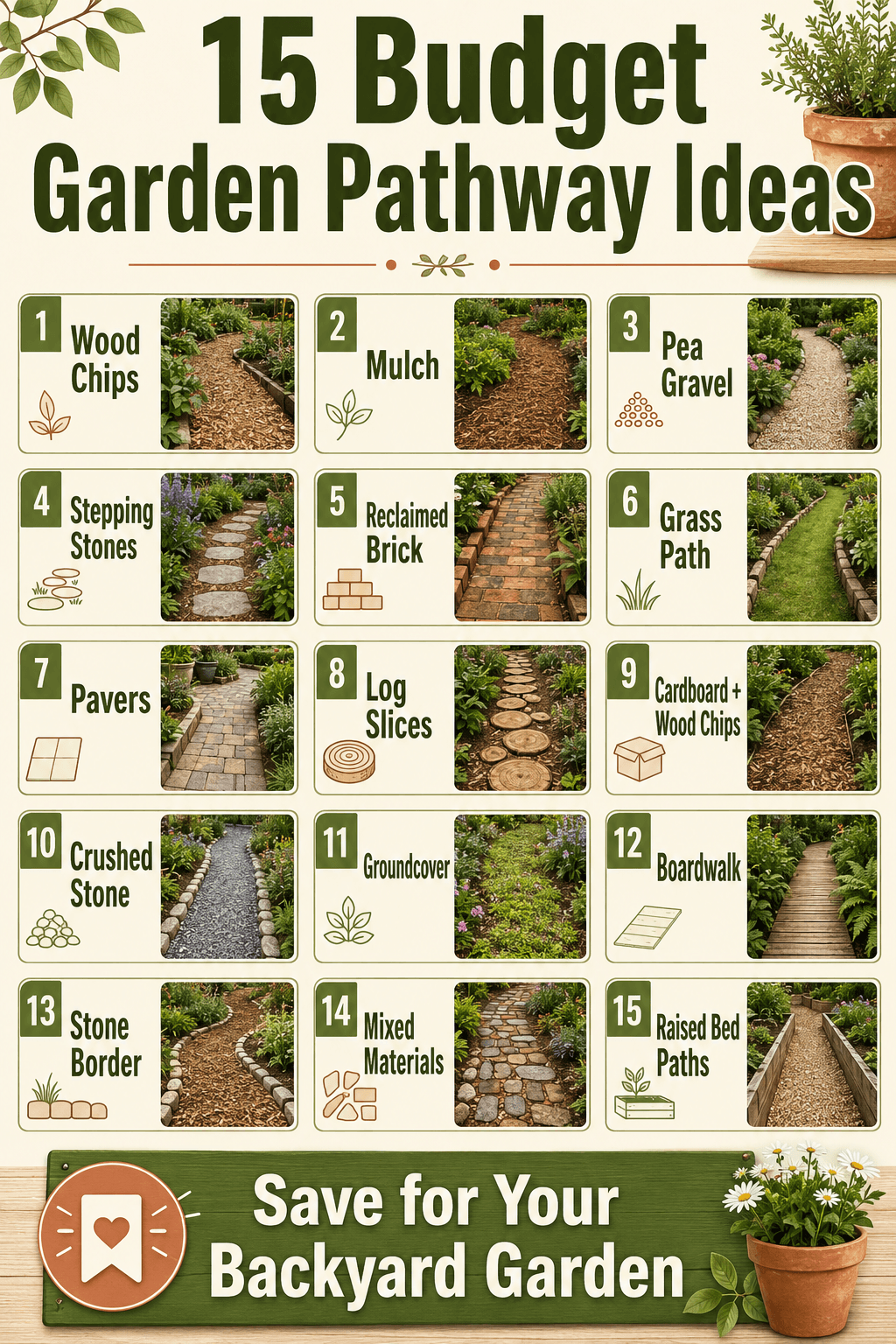
15 Simple Garden Pathway Ideas on a Budget
1. Wood Chip Garden Path
A wood chip pathway is one of the easiest and most affordable garden paths.
It works beautifully between raised beds, around vegetable gardens, and in informal backyard spaces.
Wood chips create a soft, natural look. They are comfortable to walk on and help reduce muddy areas. They also fit perfectly with a homesteading garden style.
To make it look clean, define the edges with bricks, logs, stones, or simple metal edging.
Wood chips will break down over time, so you may need to refresh the path once or twice a year.
This is a great option if you want a natural garden path that feels warm, simple, and beginner-friendly.
2. Mulch Pathway
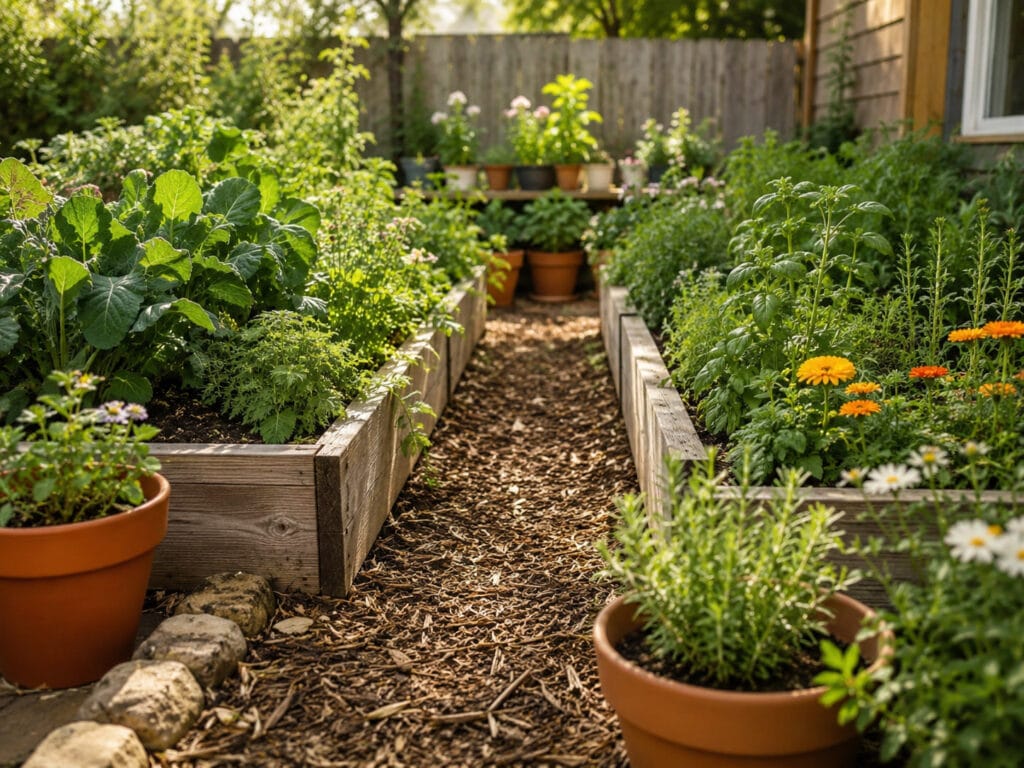
A mulch pathway is similar to a wood chip path but can look softer and more decorative.
You can use shredded bark, natural mulch, pine bark, or other organic mulch materials.
Mulch paths are especially useful in flower gardens, cottage gardens, and around raised beds.
They are inexpensive, easy to install, and easy to repair. If part of the path gets thin, simply add more mulch.
For best results, remove weeds first, level the area, add a thick layer of mulch, and keep the path edges tidy.
Avoid making the layer too thin. A thin mulch path will expose bare soil quickly and allow weeds to return faster.
3. Pea Gravel Path
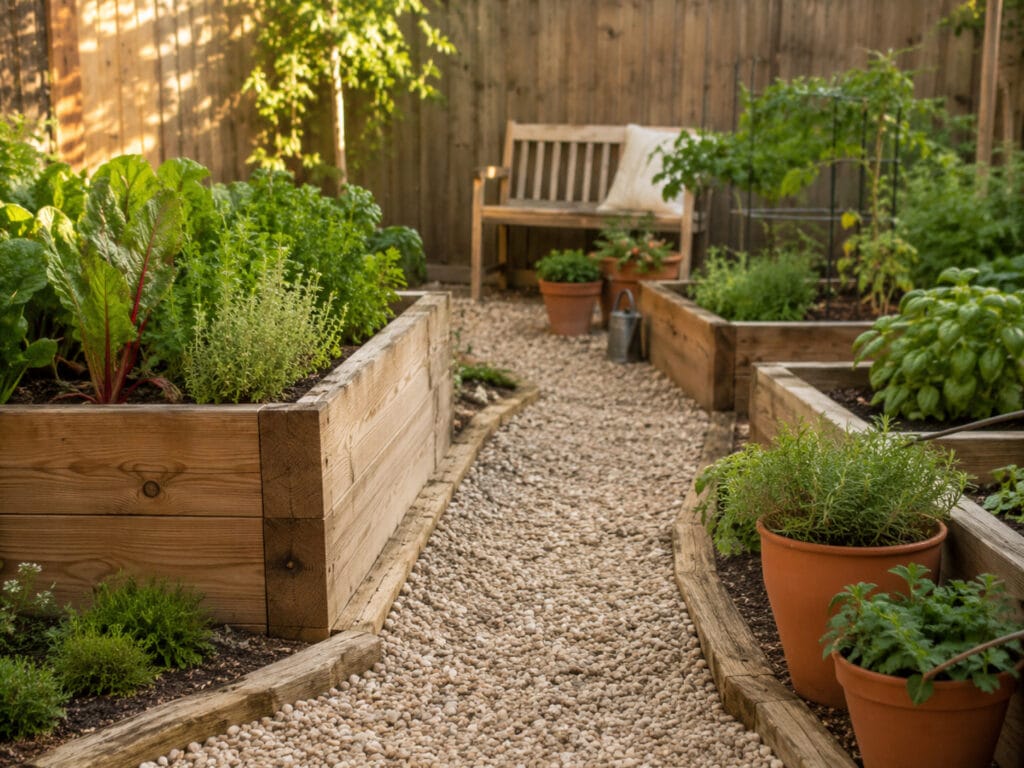
Pea gravel is a classic budget-friendly pathway material.
It gives a garden a clean, finished look without the cost of large pavers or poured concrete.
Pea gravel works well for backyard walkways, side yard paths, raised bed gardens, and seating areas.
The key is edging. Without edging, gravel can spread into the lawn or garden beds.
Use bricks, metal edging, wood boards, or stones to contain the gravel and keep the path looking neat.
Pea gravel can move underfoot, so it may not be the best choice for steep slopes or areas where you need a very firm surface.
4. Stepping Stone Path
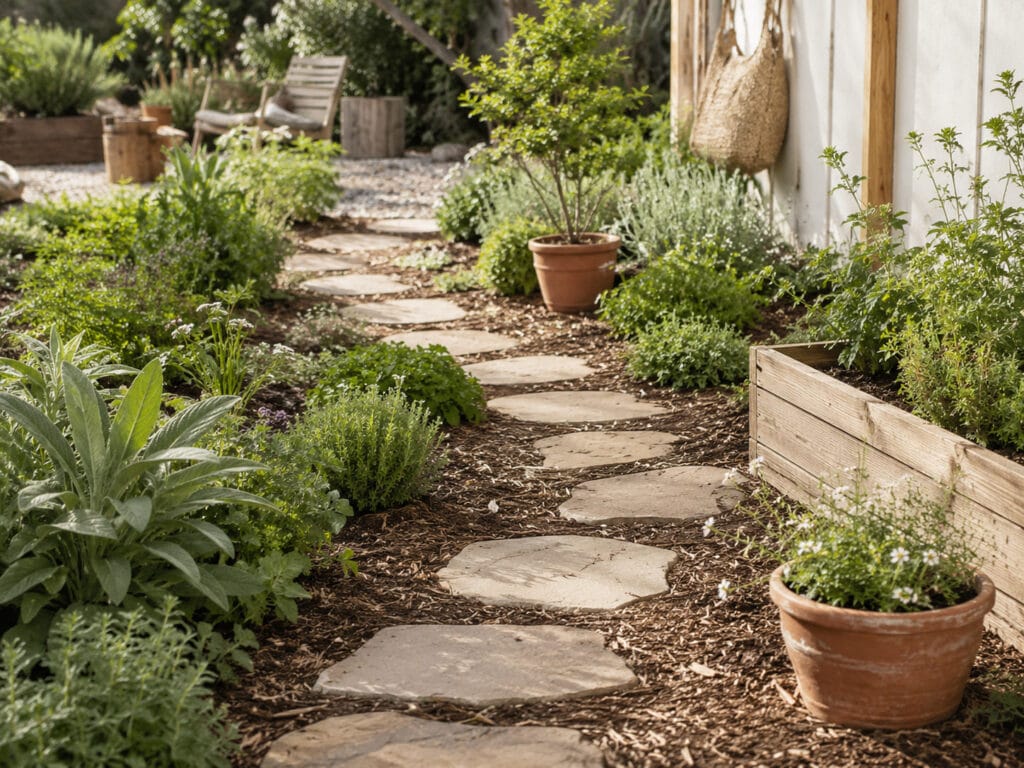
A stepping stone path is simple, charming, and flexible.
You can place stepping stones through grass, mulch, gravel, or groundcover plants.
This is a good choice if you want a path without covering the entire area. It also works well in small gardens because it creates direction without feeling heavy.
Budget-friendly stepping stone options include:
- Concrete stepping stones
- Reclaimed pavers
- Flat stones
- DIY concrete stepping stones
- Broken patio slabs
Place the stones close enough for a natural walking stride. Before setting them permanently, walk the path and adjust the spacing.
5. Reclaimed Brick Path
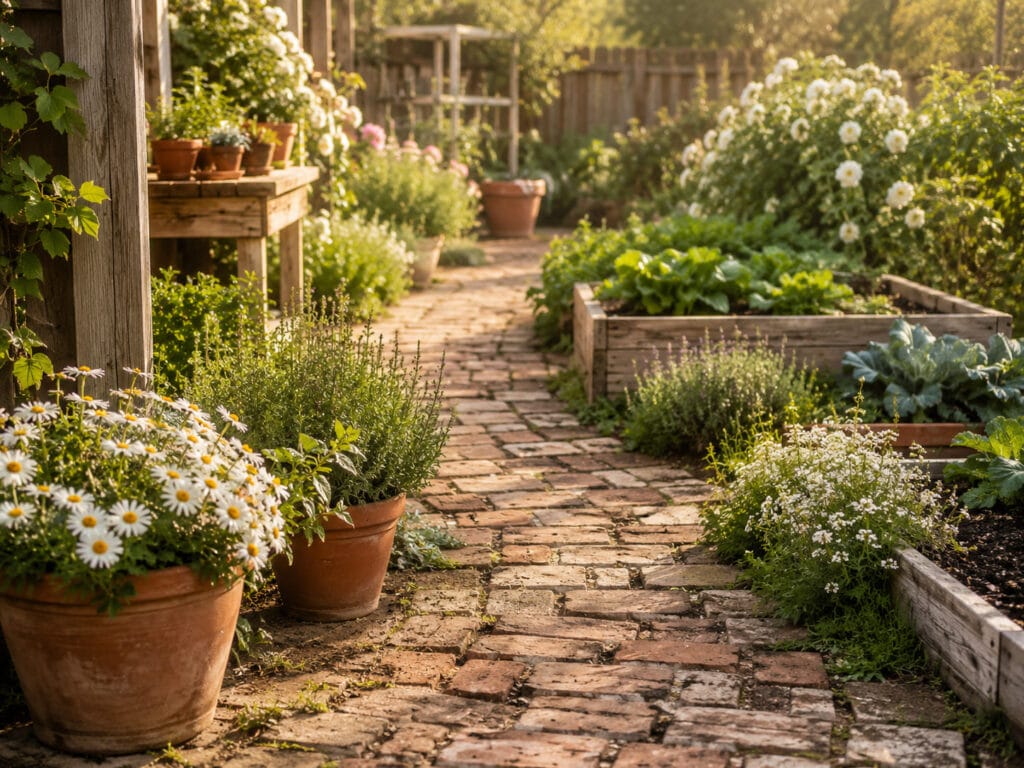
Reclaimed bricks can make a garden path look timeless and cozy.
This is a beautiful option for cottage gardens, herb gardens, backyard paths, and entryways.
You may be able to find old bricks from renovation projects, salvage yards, local marketplaces, or leftover building materials.
A brick path can be laid in a straight line, basket weave, herringbone pattern, or casual rustic style.
For a budget version, use bricks only as edging and fill the middle with mulch or gravel.
This gives you the charm of brick without needing as many materials.
6. Gravel and Stepping Stone Combo
Combining gravel with stepping stones gives you a polished look on a smaller budget.
The gravel fills the path area, while the stepping stones create a stable walking surface.
This combination works well near patios, backyard gates, raised beds, and garden seating areas.
It also looks more intentional than gravel alone.
Use larger stepping stones for comfort and keep the gravel level around them.
For a clean Dreamsteading-style look, choose warm natural stones, light gravel, and sage green planting around the edges.
7. Mowed Grass Path
A mowed grass path is one of the cheapest garden pathway ideas because you may not need to buy anything.
This works best in larger gardens, meadow-style areas, orchards, or informal backyard spaces.
Simply mow a clear path through taller grass, wildflowers, or a garden area.
The result feels natural, soft, and peaceful.
A mowed path needs regular maintenance, but it can look beautiful when paired with flowers, herbs, or vegetable beds.
This is a great low-cost idea if you want your backyard to feel more relaxed and natural.
8. Recycled Paver Path
If you can find secondhand pavers, you can create a strong pathway for less money.
Check local marketplaces, construction leftovers, neighborhood groups, and salvage areas.
Pavers are useful because they are durable, flat, and easy to arrange.
You can use matching pavers for a cleaner look or mix different shapes for a rustic garden style.
To save money, space the pavers apart and fill the gaps with gravel, mulch, creeping thyme, or low-growing groundcover.
9. Log Slice Path
A log slice path can look rustic, natural, and charming.
It is made from round slices of wood placed into soil, mulch, or gravel.
This type of path fits beautifully in woodland gardens, cottage gardens, and natural homestead-style backyards.
However, wood slices can become slippery when wet and may break down over time.
Use this idea for low-traffic decorative areas rather than your main garden walkway.
If you are using wood outdoors, you may also want to read Best Wood for Garden Projects.
10. Cardboard and Wood Chip Path Between Raised Beds
This is one of the most practical pathways for a vegetable garden.
First, lay overlapping plain cardboard over the path area. Then cover it with a thick layer of wood chips.
The cardboard helps smother existing grass and weeds while the wood chips create a walkable surface.
This method is popular because it is affordable, simple, and useful for new garden areas.
Use plain cardboard without glossy coatings, tape, or plastic labels.
This type of path is perfect between raised beds because it reduces mud and makes the garden easier to maintain.
11. Stone Border with Mulch Center
A stone border with a mulch center is a simple way to make a budget path look more expensive.
The stones create clean edges, while mulch keeps the center affordable.
This works well for curved garden paths, flower bed paths, and informal backyard walkways.
You can use found stones, leftover rocks, or inexpensive border stones.
The contrast between stone edges and soft mulch makes the path feel intentional without requiring a large budget.
12. Crushed Stone Path
Crushed stone creates a firmer surface than pea gravel.
It can work well for paths that need to handle more regular use.
Crushed stone has a more structured look and can be used around raised beds, sheds, garden gates, and seating areas.
It usually needs good edging to stay contained.
If you want a tidy path but do not want concrete, crushed stone can be a good middle option.
13. Groundcover Path with Stepping Stones
A groundcover path feels soft, green, and beautiful.
Use stepping stones as the main walking surface, then plant low-growing groundcover around them.
Some gardeners use creeping thyme, clover, chamomile, sedum, or other low-growing plants depending on climate and foot traffic.
This type of path is best for light-use areas, not heavy wheelbarrow routes.
It can be a lovely choice near a seating area, herb garden, or small cottage garden.
14. Simple Boardwalk Path
A small wooden boardwalk can be useful in damp or uneven areas.
This does not need to be a large deck-style project. Even a short walkway made from simple boards can help you cross a muddy section of the garden.
Use weather-appropriate wood and make sure the boards are stable.
A boardwalk path works especially well in rustic gardens, side yards, or areas that stay wet after rain.
For outdoor wood choices, link naturally to Best Wood for Garden Projects.
15. Mixed Material Garden Path
A mixed material path can be both affordable and creative.
You can combine:
- Brick and gravel
- Mulch and stepping stones
- Wood chips and logs
- Pavers and groundcover
- Stone borders and bark mulch
This is a great way to use materials you already have.
The key is to repeat colors and textures so the path looks intentional, not random.
For example, use terracotta bricks, light gravel, and natural wood edging for a warm homestead garden look.
Easy DIY Garden Path Instructions
Here is a simple method for building a budget garden pathway.
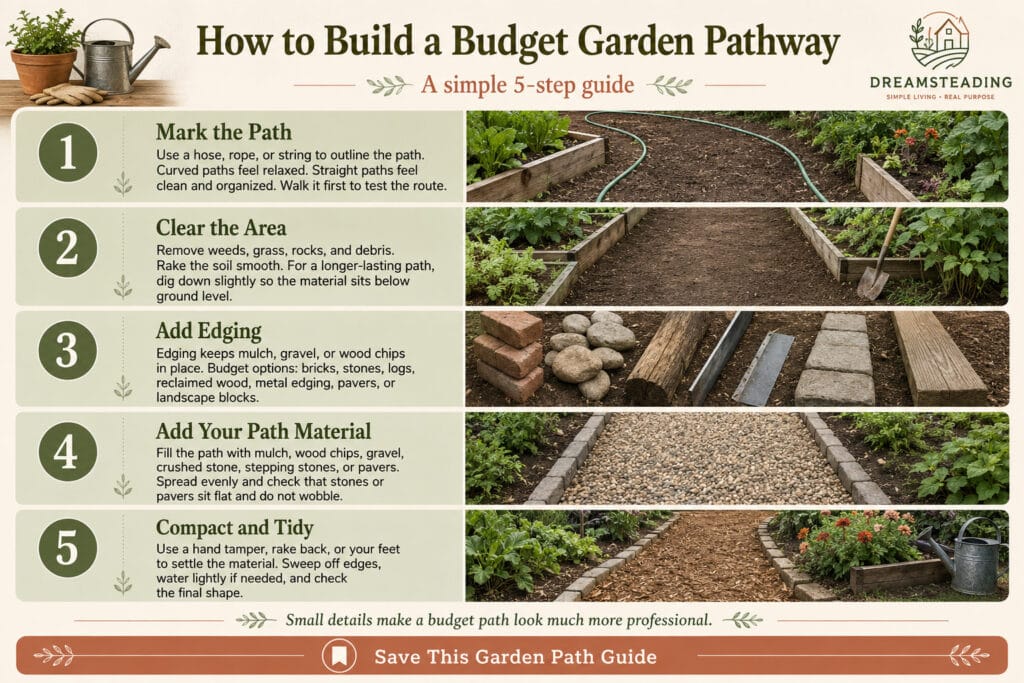
Step 1: Mark the Path
Use a garden hose, rope, or string to mark the shape of your path.
Curved paths feel natural and relaxed. Straight paths feel clean and organized.
Walk through the path before digging to make sure the route feels comfortable.
Step 2: Clear the Area
Remove weeds, grass, rocks, and debris.
If the soil is uneven, rake it smooth.
For a more permanent path, dig down slightly so the material sits below the surrounding ground level.
Step 3: Add Edging
Edging helps keep mulch, gravel, or wood chips in place.
Budget edging options include:
- Bricks
- Stones
- Logs
- Reclaimed wood
- Metal edging
- Pavers
- Landscape blocks
Edging is one of the easiest ways to make a cheap path look finished.
Step 4: Add Your Path Material
Fill the path with your chosen material.
For mulch or wood chips, add a thick enough layer so bare soil does not show through.
For gravel or crushed stone, spread it evenly and rake it flat.
For stepping stones or pavers, set each piece carefully and check that it does not wobble.
Step 5: Compact and Tidy
Use a hand tamper, the back of a rake, or your feet to settle the material.
Sweep off stones or pavers.
Water the path lightly if needed to help everything settle.
Then step back and check the edges.
Small details make a budget path look much more professional.
Common Garden Pathway Mistakes to Avoid
Making the Path Too Narrow
A very narrow path may look cute at first, but it can be frustrating to use.
If you need to carry baskets, tools, or a watering can, give yourself enough room to walk comfortably.
For main garden paths, wider is usually better.
Skipping Edging
Loose materials like mulch, wood chips, and gravel spread easily.
Without edging, the path can quickly look messy.
Even simple brick or log edging makes a big difference.
Ignoring Drainage
Do not build a path where water naturally pools without thinking about drainage.
Wet paths can become muddy, slippery, or uneven.
If the area stays damp, choose materials that drain well, such as gravel or raised wooden boards.
Using Slippery Materials
Smooth wood, polished stones, and some pavers can become slippery when wet.
Choose textured surfaces for areas that receive rain, irrigation, or shade.
Overusing Landscape Fabric in Living Garden Areas
Landscape fabric can seem like an easy weed solution, but it can become frustrating over time in planted areas.
For organic garden paths, cardboard with mulch or a thick layer of wood chips is often simpler to refresh.
Forgetting Maintenance
Every path needs some care.
Mulch needs refreshing. Gravel needs raking. Grass paths need mowing. Stepping stones may need leveling.
Choose a path that matches the time you are willing to spend maintaining it.
Budget Garden Pathway Checklist
Before building your path, check these items:
- Choose the main purpose of the path.
- Decide if it needs to handle daily use.
- Measure the width.
- Choose affordable materials.
- Plan the edging.
- Clear weeds and grass.
- Level the path area.
- Think about drainage.
- Add path material evenly.
- Keep extra material for future touch-ups.
FAQ About Simple Garden Pathway Ideas on a Budget
What is the cheapest way to make a garden path?
One of the cheapest ways to make a garden path is to use cardboard covered with wood chips or mulch.
A mowed grass path can also be very affordable if you already have a grassy area.
What is the easiest DIY garden path?
A mulch or wood chip path is usually the easiest DIY garden path for beginners.
You can mark the path, clear weeds, add edging, and spread the material without special tools.
Is gravel good for a garden path?
Yes, gravel can be a good garden path material because it drains well and gives the garden a clean look.
It works best with edging to keep the gravel contained.
Do I need landscape fabric under a garden path?
Not always.
For organic mulch or wood chip paths, many gardeners prefer cardboard or simply a thick layer of mulch because it is easier to refresh.
For gravel paths where you do not want plants growing through, a base layer may help, but it still needs maintenance over time.
How wide should a garden path be?
A small decorative path can be narrow, but a main working garden path should be wide enough to walk comfortably.
If you use a wheelbarrow, make the path wide enough for it to pass easily.
What can I use instead of pavers?
You can use stepping stones, reclaimed bricks, gravel, mulch, wood chips, log slices, crushed stone, or secondhand patio slabs.
How do I make a cheap path look expensive?
Use clean edging, repeat materials, keep the path level, and add simple details like solar lights, herbs, flowers, or a neat border.
A tidy path always looks more intentional.
Final Thoughts
You do not need a large budget to create a beautiful garden pathway.
Start with the space you have, choose simple materials, and focus on making the garden easier to use.
A wood chip path between raised beds, a gravel walkway to a seating area, or a few stepping stones through herbs can make your backyard feel more organized and welcoming.
The best garden paths are not always the most expensive ones.
They are the ones that help you move through your garden, enjoy your space, and make everyday outdoor tasks feel simpler.
Start small, use what you have, and build a pathway that fits your garden one step at a time.