25 Small Backyard Garden Ideas For a Beautiful Backyard Oasis
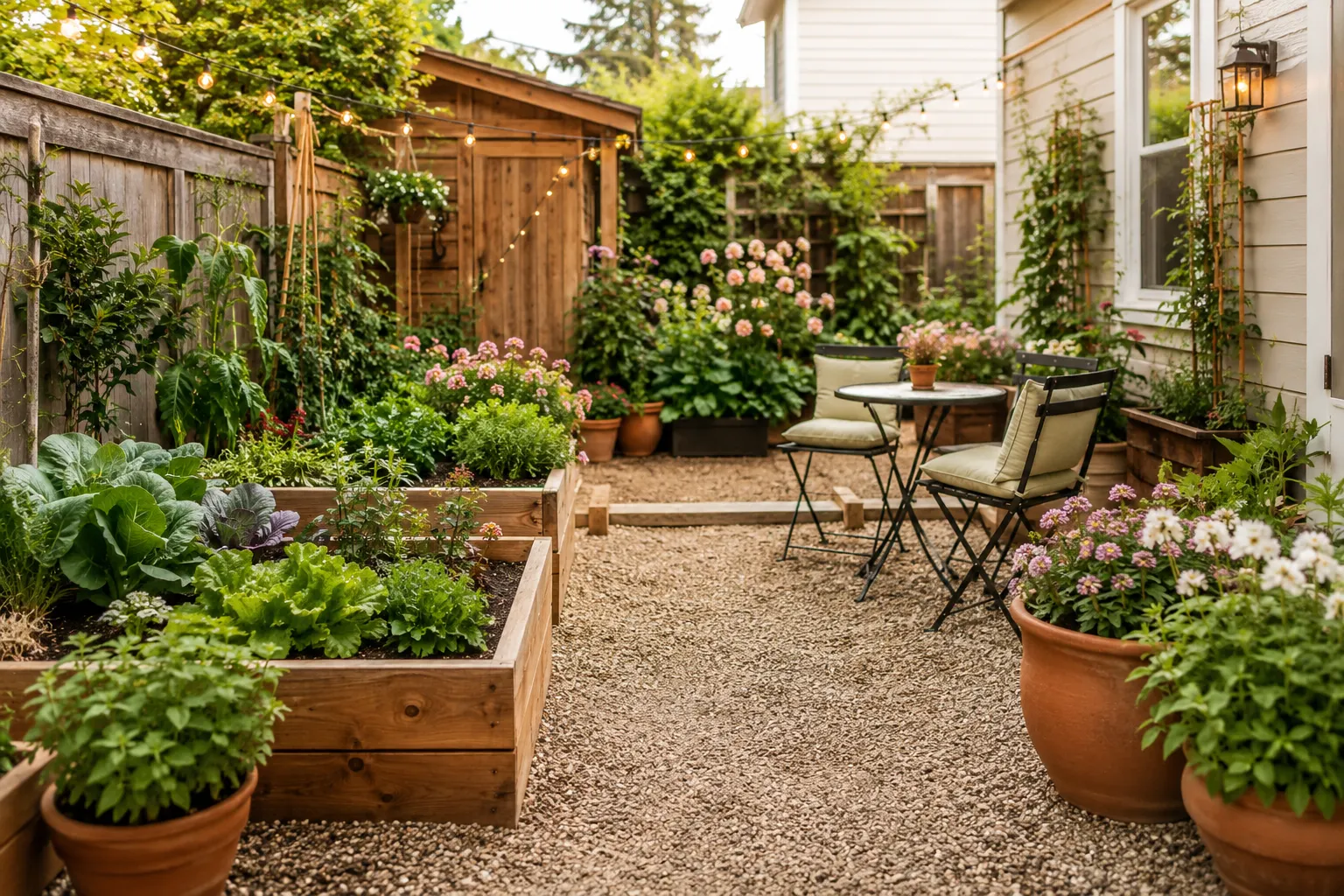
Small backyard garden ideas work best when they make a limited area more useful, comfortable, and visually connected—not when they try to fit every possible garden feature into one space. A compact yard can become a beautiful oasis with a clear layout, appropriately scaled furniture, layered plants, practical privacy, and one or two memorable focal points.
The following 25 ideas range from simple container arrangements to pathways, water features, edible planting, lighting, and outdoor gathering areas. You can use one idea to solve a specific problem or combine several that support the same purpose. Begin by measuring the yard and deciding how you most want to use it. That small planning step will help you avoid crowding the space or spending money on features that do not fit.
In Short
The best way to create a beautiful small backyard oasis is to divide the space into a few useful zones, preserve comfortable circulation, and select features in proportion to the yard. Use vertical surfaces, layered planting, compact furniture, repeated materials, and one strong focal point to make the garden feel cohesive without filling every open area.
Key Takeaways
- Measure first and give each part of the backyard a clear purpose.
- Use vertical planting and narrow borders to add greenery without sacrificing floor space.
- Choose one main focal feature instead of filling the yard with competing decorations.
- Repeat a limited palette of plants, containers, colors, and materials for a calmer design.
- Check mature plant sizes, drainage, utilities, fire restrictions, and property rules before installation.
Plan Your Small Backyard Before Choosing Features
A rough plan prevents the most common small-yard problem: collecting attractive individual items that do not work together. Measure the usable length and width, then record doors, steps, gates, utility equipment, hose connections, drains, existing trees, and areas that must remain accessible.
Observe sunlight at different times of day. A wall that looks sunny in the morning may shade the surrounding bed by afternoon, while paving beside a south- or west-facing wall may become much hotter than the rest of the yard. For more detailed layout guidance, use these small garden design tips before purchasing plants or furniture.
Decide which one or two activities matter most. Dining, vegetable growing, quiet reading, children’s play, entertaining, and wildlife gardening require different layouts. A yard designed around every activity can feel cramped; a yard designed around two compatible priorities usually feels intentional.
| Design goal | Useful features | Space-saving approach | Watch for |
|---|---|---|---|
| Quiet retreat | Two chairs, shade, fragrant plants | Corner seating area | Afternoon heat and privacy |
| Outdoor dining | Compact table, lighting, firm surface | Folding or bench seating | Door and walkway clearance |
| Food garden | Raised beds, pots, trellises | Vertical crops and succession planting | Sun, irrigation, and soil depth |
| Low maintenance | Perennials, mulch, simple hardscape | Fewer plant varieties in larger groups | Mature plant size |
25 Small Backyard Garden Ideas
1. Create One Clearly Defined Seating Area
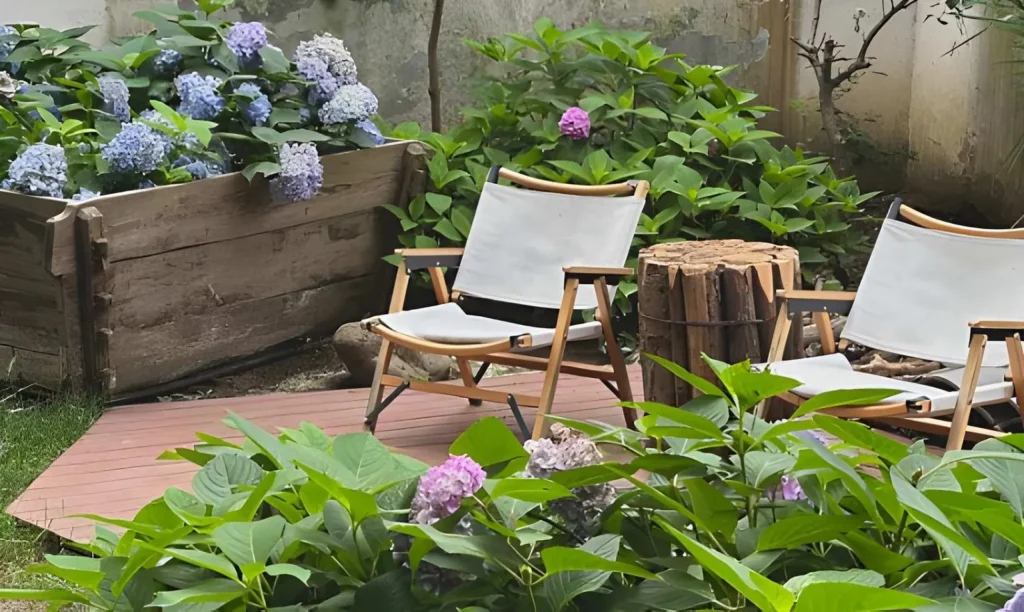
A pair of chairs and a small table can establish an outdoor room without occupying the whole yard. Place the grouping in a corner, against a boundary, or near the best garden view. Keep the route from the house to the seating area clear rather than forcing people to step around furniture.
Choose furniture in proportion to the available surface. Slim arms, open chair backs, and a small round table tend to look lighter than bulky outdoor sofas. If flexibility matters, folding garden chairs can be stored or moved when you need more open space.
2. Divide the Yard Into Simple Garden Rooms
A small backyard can feel larger when you cannot see every feature at once. Use a low hedge, a narrow trellis, tall ornamental grasses, a change in paving, or two large containers to suggest a transition between areas.
Keep the divisions partial. Solid barriers across a compact yard can make it feel boxed in, while filtered views create curiosity and depth. Two zones—such as dining and planting—are often enough.
3. Use a Curving or Diagonal Path
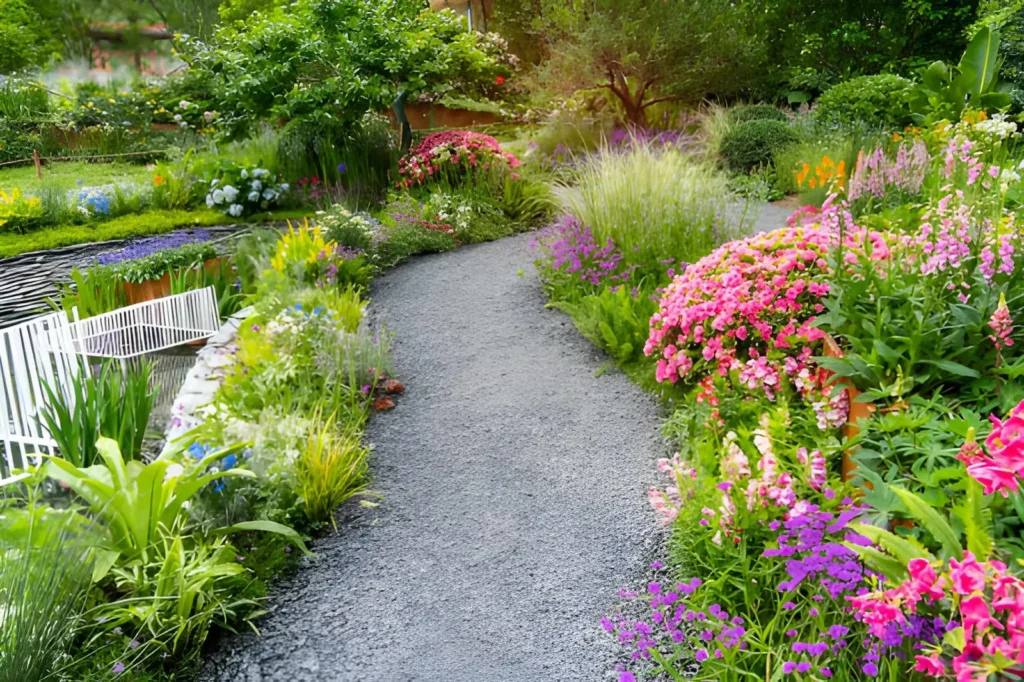
A direct path is practical, but a gentle curve or diagonal route can make a short garden journey feel longer. The path should still lead somewhere useful: a bench, gate, shed, water feature, or planting area.
Gravel, stepping stones, brick, and mulch each produce a different appearance and maintenance requirement. Compare affordable materials and edging options in this guide to simple garden pathway ideas.
4. Grow Up With a Vertical Garden
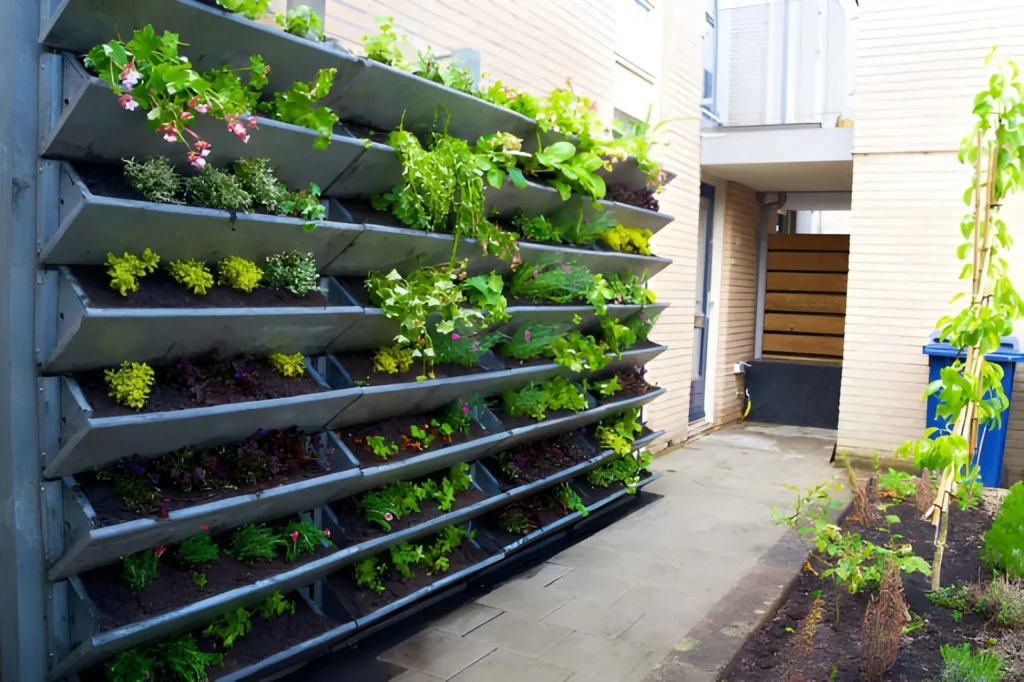
Walls, fences, and freestanding supports provide growing area without taking much ground space. Use a trellis for suitable climbing plants, wall-mounted planters for shallow-rooted herbs, or a narrow shelving unit for containers.
Confirm that the support and fixings can carry the wet weight of plants, containers, and soil. Leave ventilation around siding and avoid blocking utility meters, gates, windows, or drainage openings.
5. Layer Plants From Tall to Low
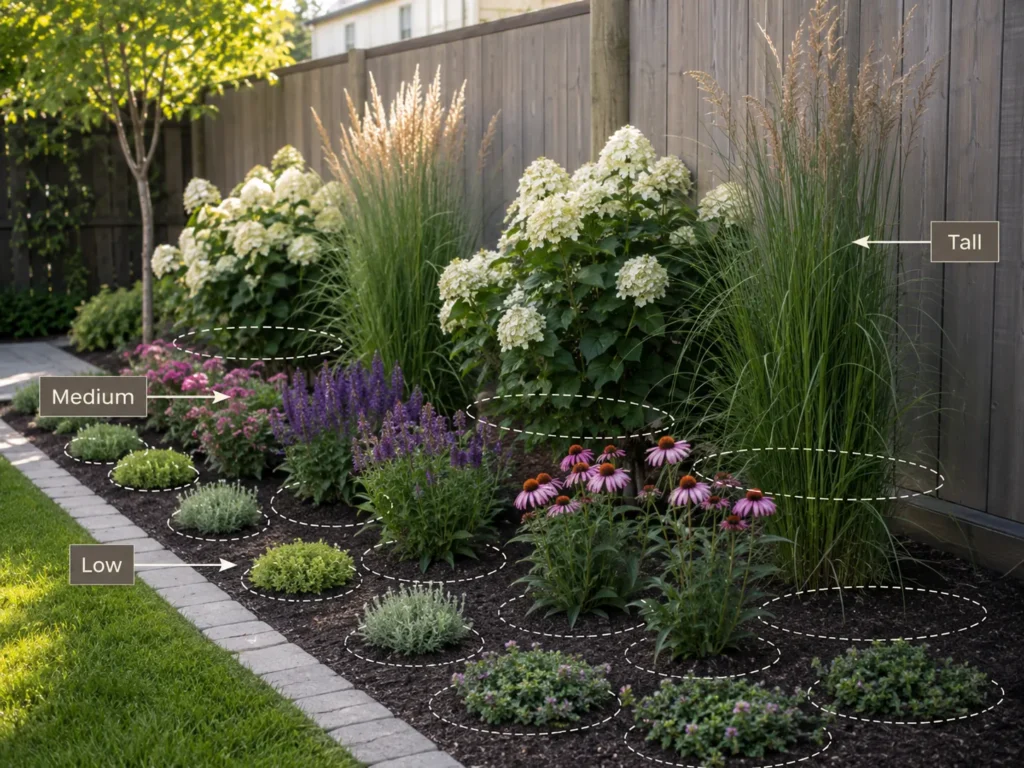
Layering gives a narrow bed more visual depth. Position taller shrubs or grasses toward the rear, medium perennials in the middle, and low-growing plants near the edge. In an island bed viewed from several sides, place the tallest plants near the center instead.
Check mature height and width rather than relying on the size of a young nursery plant. Proper spacing may initially look sparse, but it reduces crowding, pruning, and competition later.
6. Repeat a Limited Plant Palette
Repeating three to five dependable plants can make a small garden look calmer and more established. Use repetition to carry a foliage color, flower color, or texture from one side of the yard to another.
This approach is often easier to maintain than planting one of everything. Select species for the actual sunlight, soil drainage, moisture, climate, and mature size of the site. Hardiness zones help estimate winter survival for perennial plants, but they do not replace local knowledge about heat, wind, humidity, and soil.
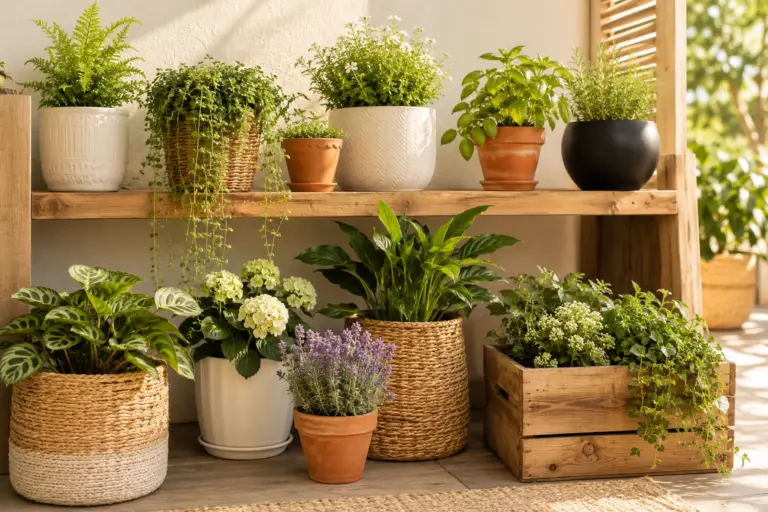
7. Build a Coordinated Container Garden
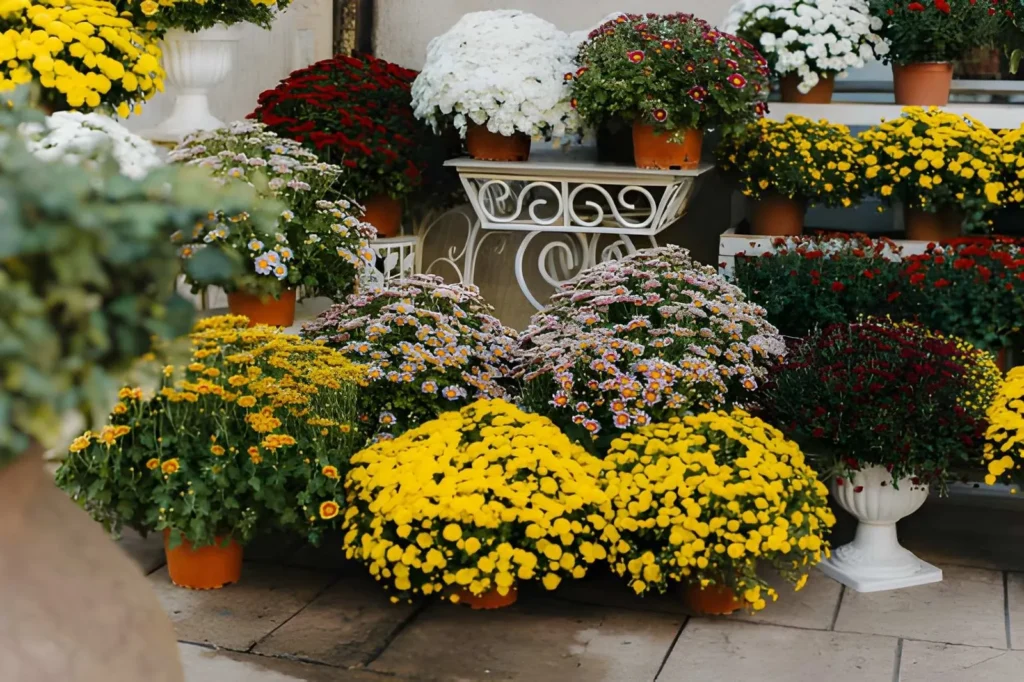
Containers add color where digging is impossible and allow tender plants to be moved or replaced seasonally. Group pots in odd-numbered arrangements and vary their heights while repeating one material or color.
Every outdoor container needs adequate drainage. Larger pots generally dry more slowly than tiny ones, but all containers may need frequent checks during hot or windy weather. A few appropriately sized weather-resistant planters usually create a stronger design than many unrelated small pots. These aesthetic plant-pot ideas offer additional ways to coordinate a display.
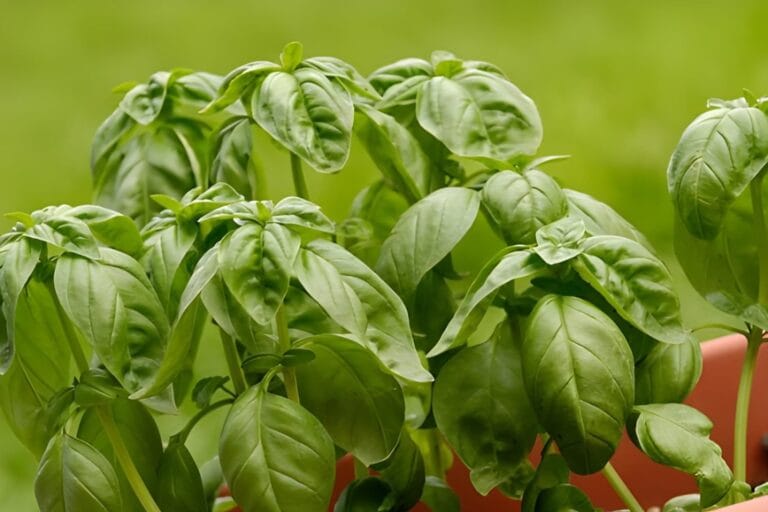
8. Make a Narrow Herb Garden
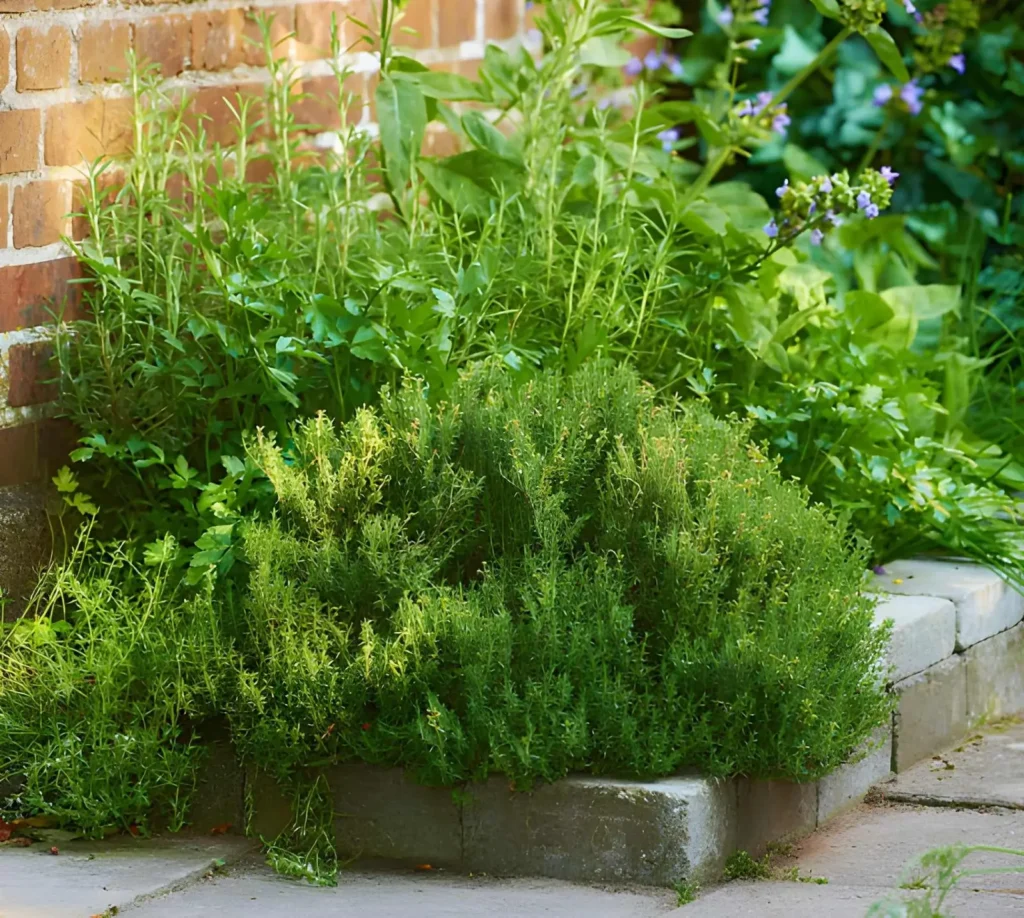
A sunny strip near the kitchen can hold frequently used herbs without becoming a large vegetable garden. Use a narrow raised planter, railing boxes, individual pots, or pockets within an ornamental border.
Group herbs according to compatible light, moisture, and soil needs rather than appearance alone. Keep vigorous spreaders contained where they cannot overwhelm neighboring plants, and make sure every herb is correctly identified before eating it.
9. Add One Compact Raised Bed
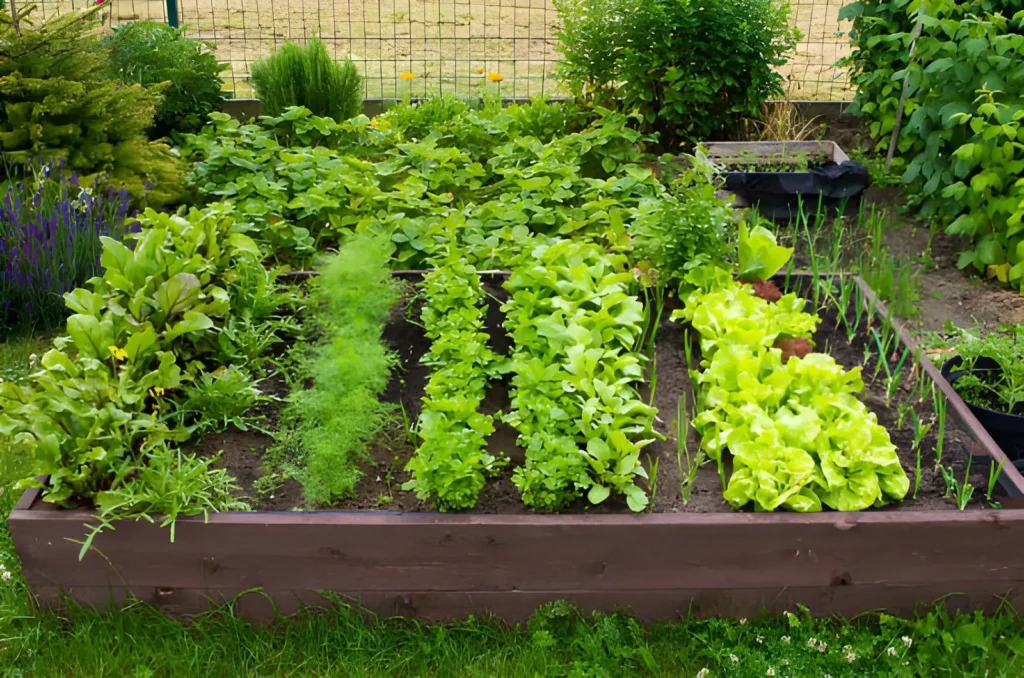
One well-positioned raised bed can provide fresh herbs, salad crops, flowers, or compact vegetables while giving the yard a clean structure. Place it where crops receive appropriate sunlight and where you can reach the growing area without stepping into it.
Do not make the bed wider than you can comfortably reach from the accessible sides. Before installation, confirm that the location does not interfere with drainage, utilities, gates, or required property setbacks.
10. Train Edible Plants on a Trellis
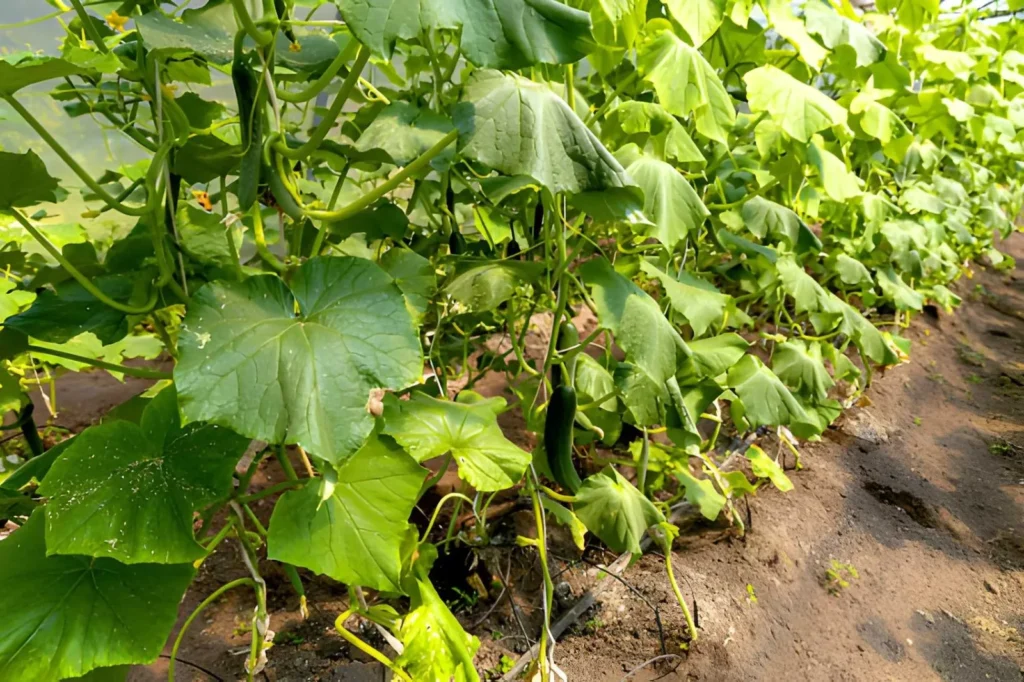
Suitable climbing beans, peas, cucumbers, and compact vining varieties can use vertical space while keeping paths clearer. A trellis may also screen a utility area or soften a plain fence during the growing season.
Match the support to the mature weight and climbing habit of the crop. Keep edible plants away from contaminated soil, treated runoff, or surfaces that may leach unsuitable substances.
11. Replace a Small Patch of Lawn With Planting
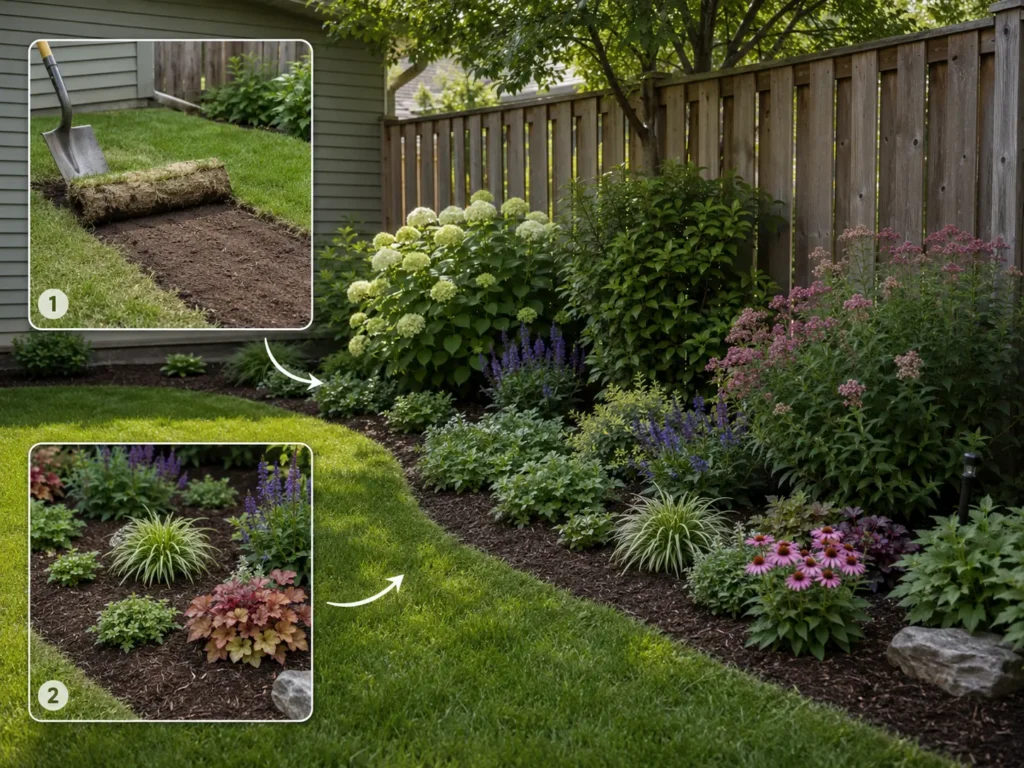
If a small lawn receives little use but requires regular mowing and watering, convert part of it into a border, ground-cover area, or mixed planting bed. Curved or simple geometric edges are easier to maintain than many tiny projections.
Remove persistent turf thoroughly before planting and avoid placing aggressive ground covers where they can escape into neighboring property or natural areas. Choose plants appropriate to local conditions rather than assuming every “low-maintenance” plant behaves the same everywhere.
12. Use Ground Covers Between Stepping Stones
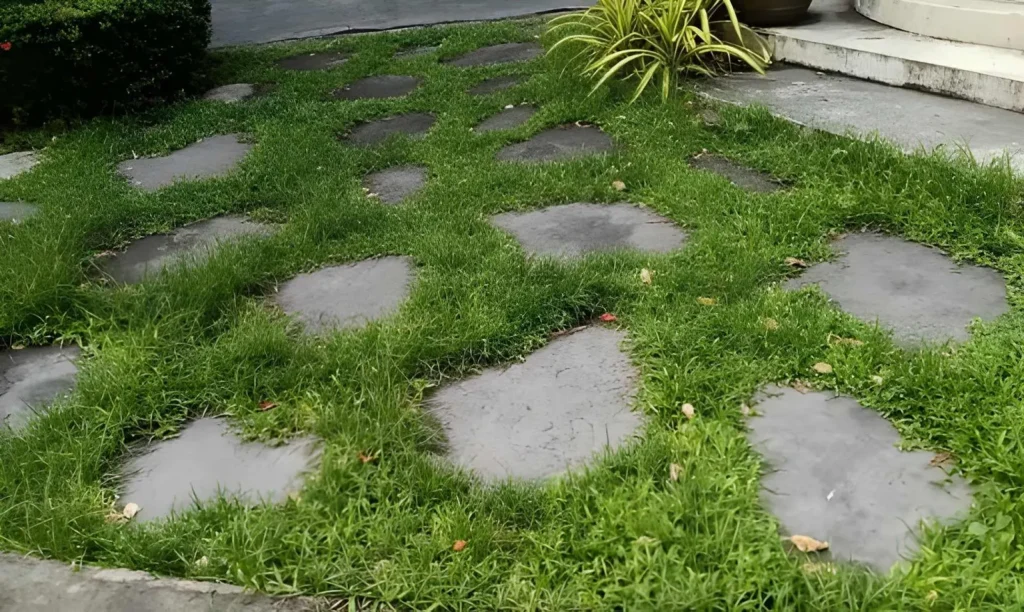
Low-growing plants can soften gaps around lightly used stepping stones. Select plants that tolerate the site’s light, moisture, climate, and expected foot traffic. Keep the primary walking surface level and stable.
This idea is less suitable for frequently traveled routes, wheelchair access, rolling equipment, or places where uneven growth may create a trip hazard. A firm, continuous path is safer in those situations.
13. Frame a View With an Arbor or Trellis
A narrow arbor can frame a bench, gate, sculpture, or distant planting and make the destination feel more significant. In a very tight yard, a flat wall trellis may create the same effect with less depth.
Position structures so they do not narrow an important walkway or hide security lighting. Freestanding structures must be anchored for local wind and soil conditions, and climbing plants should not be allowed to conceal damage.
14. Create Privacy With Filtered Planting
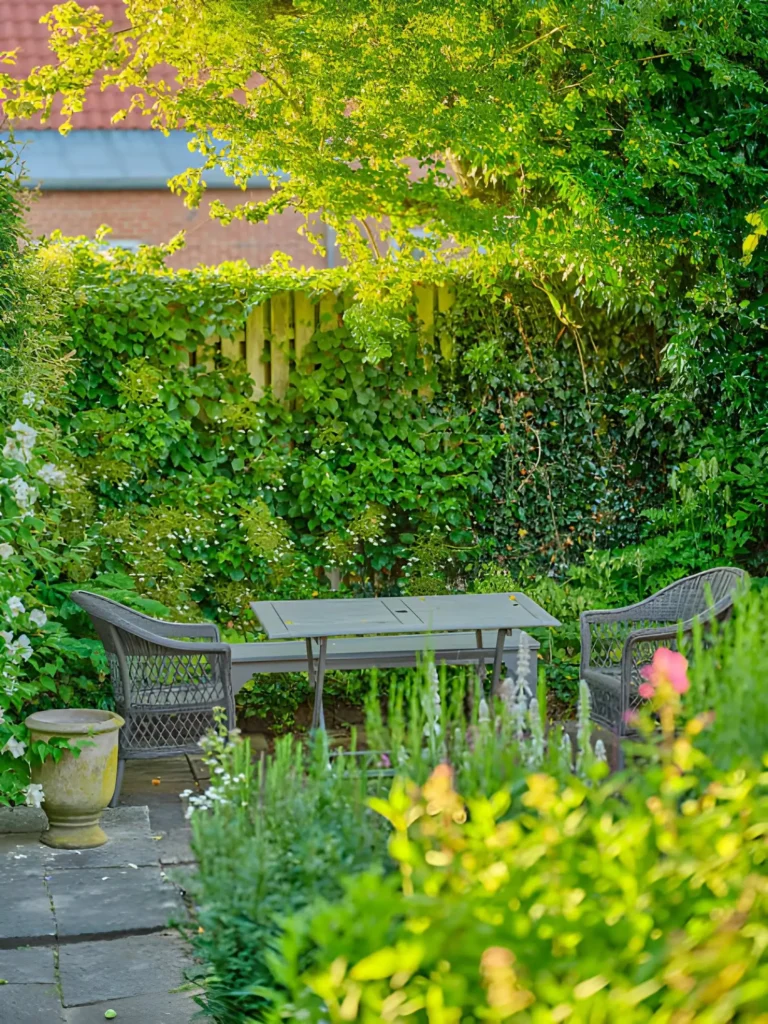
Privacy does not always require a solid wall. Tall ornamental grasses, narrow shrubs, trellised vines, or small trees can interrupt direct views while allowing light and air to move through the garden.
Check mature size, root behavior, maintenance needs, and local invasive-species guidance. Keep plants within your property and away from overhead lines, foundations, drains, and utility access. Fences and permanent screens may require approval or permits.
15. Place a Bench at the End of the Garden
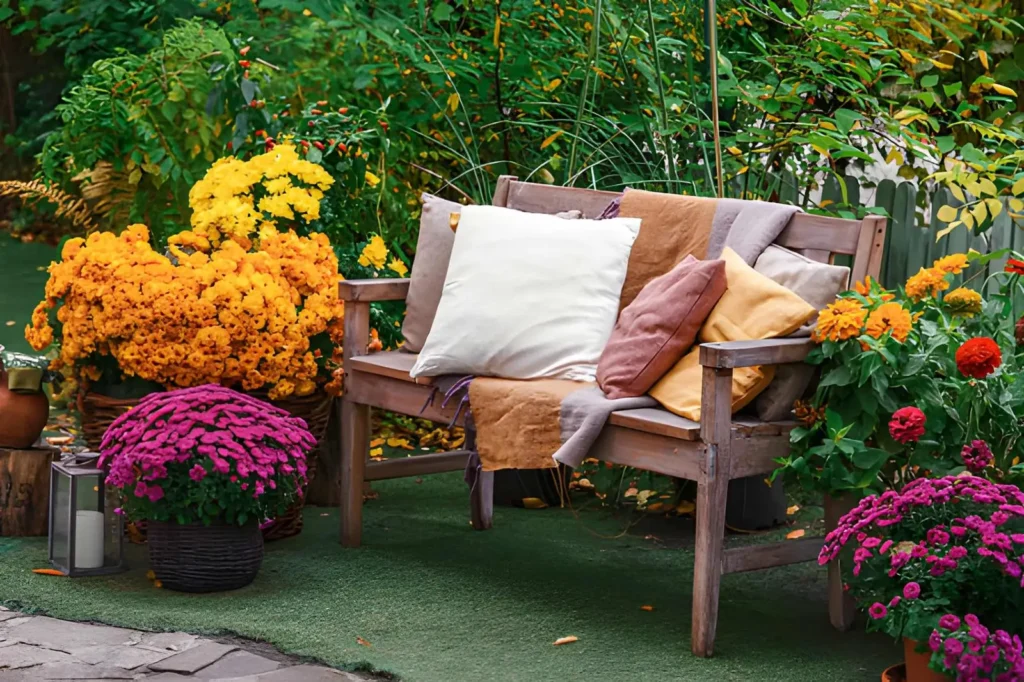
A bench positioned at the far boundary draws the eye across the full length of the yard. It also creates a destination and may provide seating without breaking up the central area.
Choose a level, stable surface and leave enough clearance to sit comfortably. A simple bench often works better than oversized lounge furniture when the goal is to preserve visual depth.
16. Add a Compact Water Feature
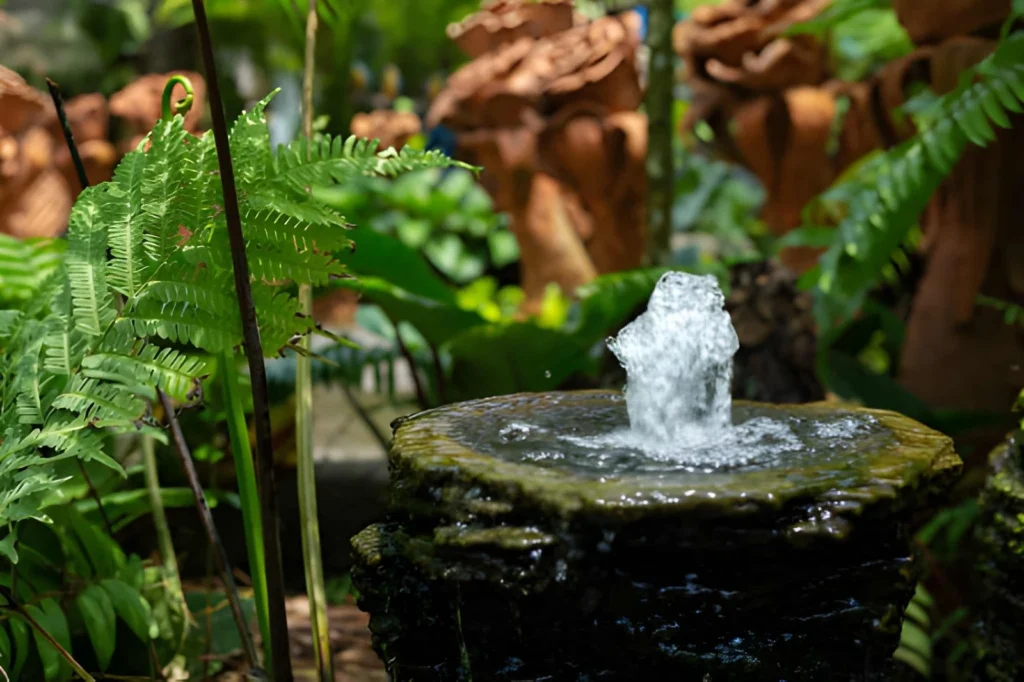
A small recirculating fountain, bubbling basin, or water bowl can introduce movement and sound without requiring a pond. Position it where splashing will not make paving slippery or damage nearby surfaces.
Use equipment rated for outdoor conditions and follow electrical safety requirements. Manage standing water to avoid mosquito breeding and protect children and animals. If you want an attainable project, this DIY small fountain guide explains a compact approach.
17. Design a Miniature Rose Corner
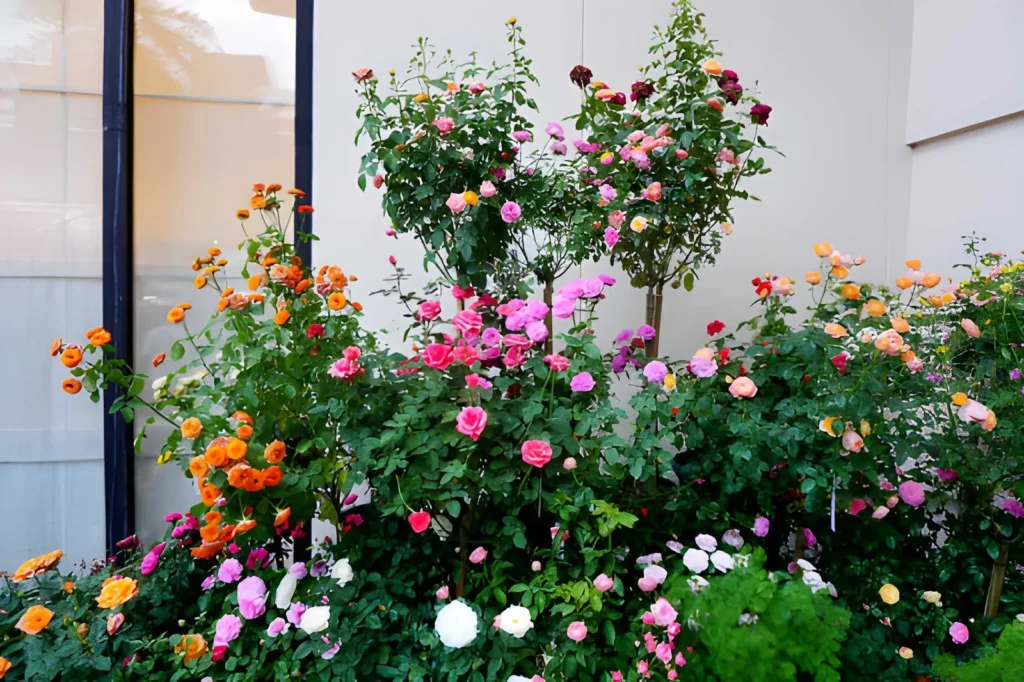
You do not need a large formal bed to enjoy roses. One appropriately sized shrub rose, a compact variety in a container, or a climber on a suitable support can anchor a sunny corner.
Give the plant enough air circulation and room to reach its mature size. Disease pressure, winter hardiness, heat tolerance, and pruning requirements vary by region and variety. Use these rose garden ideas to choose a layout that fits the available space.
18. Make a Small Wildlife-Friendly Border
A mixed border can provide flowers, shelter, and seasonal interest for local wildlife. Prioritize regionally appropriate plants with different bloom periods and avoid pesticide use that conflicts with your wildlife goals.
A shallow water source can be included if it is kept clean and designed so small animals can exit. Research which plants are safe if pets or livestock can access the area, because “wildlife friendly” does not automatically mean nontoxic.
19. Use Mirrors Carefully to Suggest Depth
An outdoor-rated mirror can reflect greenery and light, making a blank boundary seem less abrupt. Place it where it reflects planting rather than neighboring windows, intense glare, or a cluttered work area.
Secure it with exterior-rated hardware and use a product intended for the location. Avoid placements that may confuse birds or create concentrated reflected sunlight. A framed panel that resembles garden art may be safer and more convincing than a large unbroken mirror.
20. Add Warm, Purposeful Garden Lighting
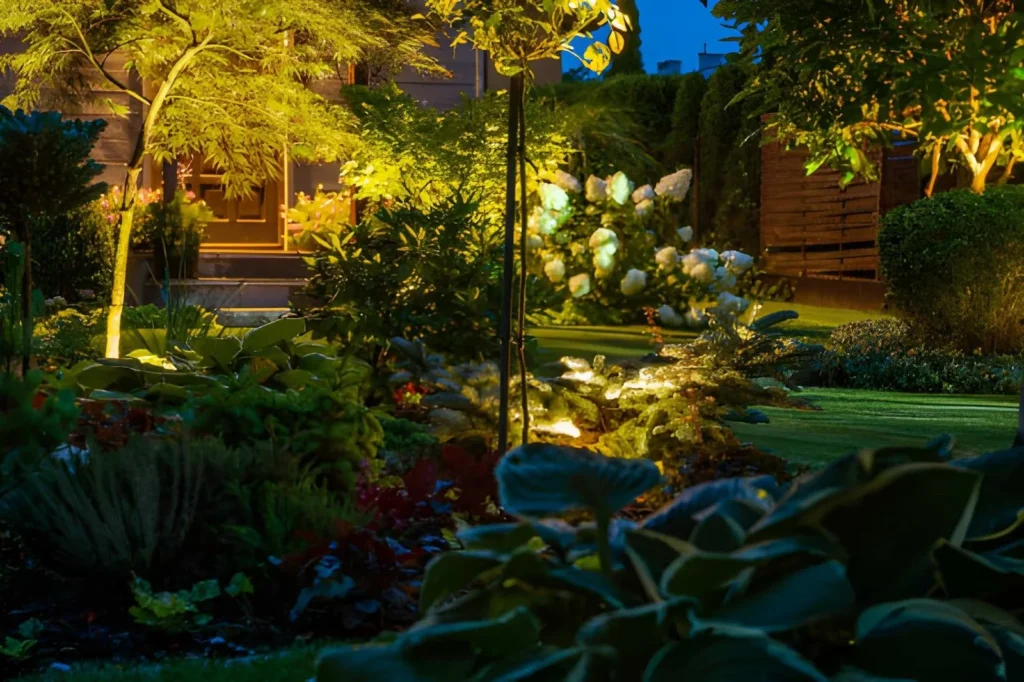
Use lighting to illuminate steps, changes in level, entrances, seating, and primary paths. A few well-placed fixtures usually create a calmer atmosphere than covering every surface with bright lights.
Direct light downward where practical and avoid shining it into neighboring homes or wildlife habitat. Exterior electrical equipment must be rated for outdoor use and installed according to local requirements. Outdoor-rated string lights can add warmth over a seating area when their supports, clearances, and connections follow manufacturer instructions.
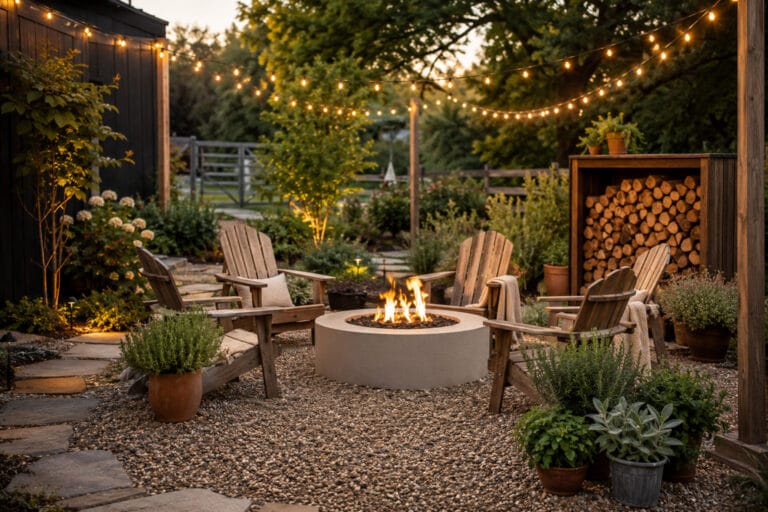
21. Create a Compact Fire-Pit Gathering Area
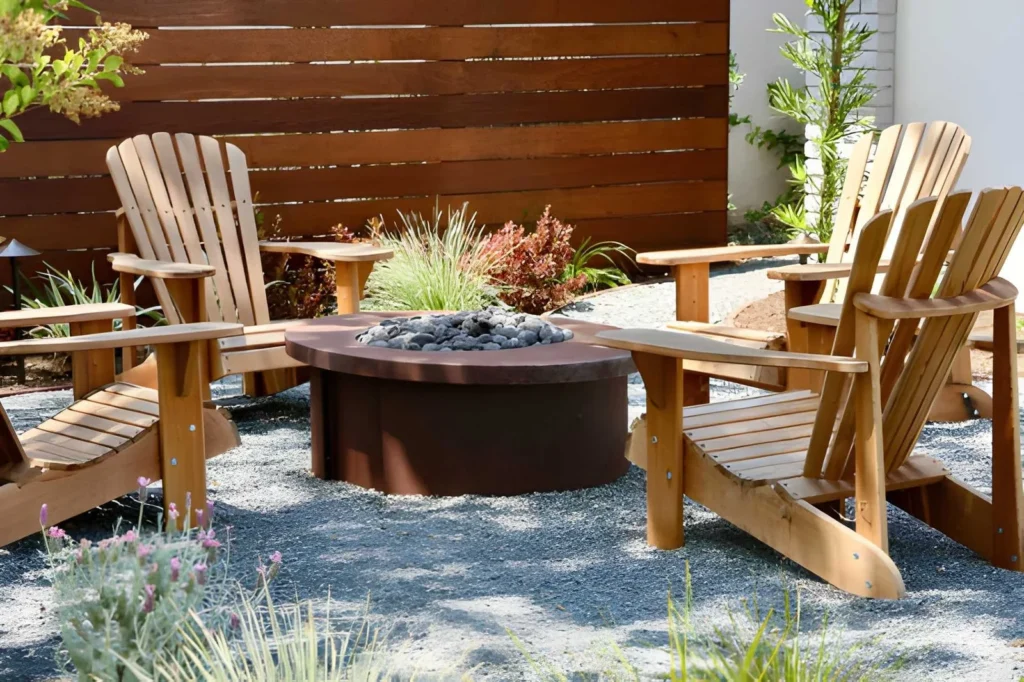
A fire feature can become the focal point of a small yard only when the site provides the required clearances and a safe, stable surface. In many compact backyards, a fire pit will not be appropriate because buildings, fences, vegetation, overhead branches, or neighboring property are too close.
Before planning one, check local fire rules, burn restrictions, rental or homeowners-association requirements, fuel restrictions, and the manufacturer’s listed clearances. Browse these backyard fire-pit ideas for design inspiration, or review the separate gravel fire-pit area guide only after confirming that a fire feature is permitted and suitable.
Fire features are not suitable for every small backyard
Never position a fire feature based on appearance alone. Required clearances, approved fuel, surface construction, supervision, extinguishing equipment, smoke restrictions, and permit requirements vary by location and product. Do not use a fire pit during burn bans or unsafe wind and drought conditions.
22. Build Concealed Garden Storage
A narrow storage bench or compact weather-resistant cabinet can keep cushions, hand tools, and watering supplies from dominating the yard. Position storage where doors and lids can open fully without blocking a path.
Do not use general garden storage for fuel, pesticides, fertilizers, propane cylinders, or other materials that require specific storage conditions. Keep hazardous products secured, labeled, ventilated when required, and separated according to their instructions.
23. Use Multipurpose Furniture
A bench with suitable storage, a folding table, nesting side tables, or a narrow ledge can serve more than one purpose. This reduces the number of objects competing for floor space.
Prioritize stability and weather resistance over novelty. Storage seating should be used only within its rated capacity, and a folding item should lock securely when open.
24. Soften Hard Edges With Planting
Narrow strips of planting can soften the edges of patios, fences, sheds, and paths. Allow foliage to overlap visually without letting thorny, irritating, or sprawling plants obstruct walking routes.
Mulch can unify the beds while reducing evaporation and moderating soil temperature. The EPA advises that three to four inches provides suitable coverage for most plants, but mulch should be kept a few inches away from trunks and the bases of woody plants. Avoid excessive depth that restricts water movement or holds moisture against stems.
25. Give the Garden One Strong Focal Point
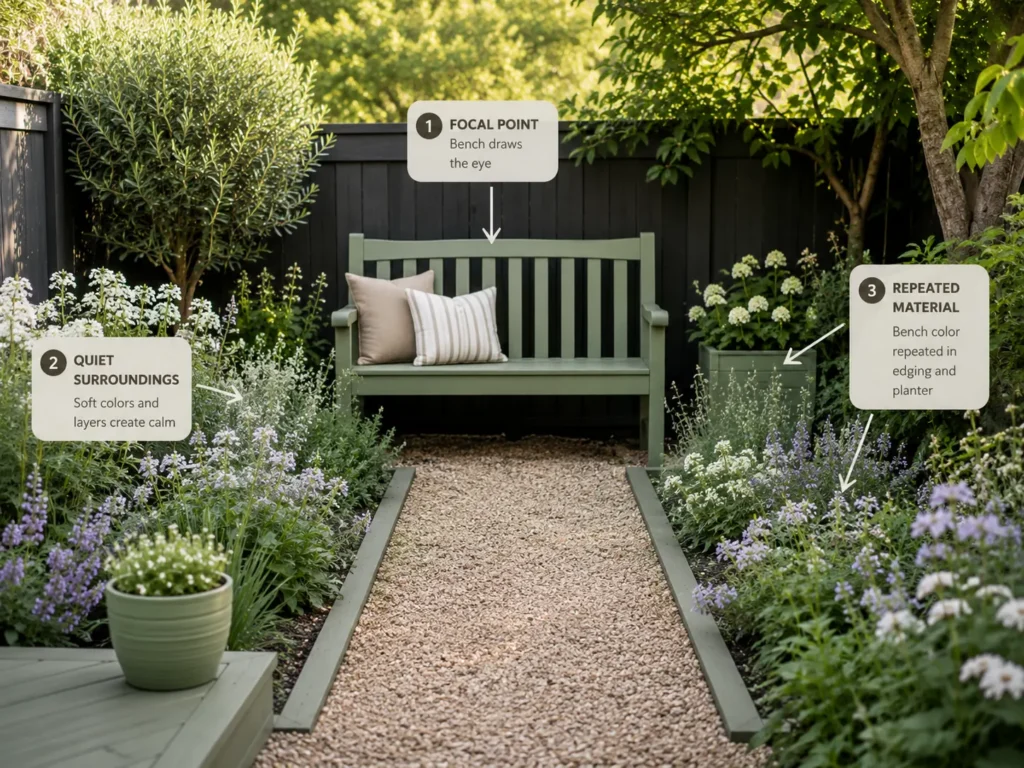
A focal point gives the eye a place to rest. It might be a specimen plant, painted gate, fountain, bench, large container, sculpture, or beautifully framed view. Choose one that fits the scale and character of the yard.
Support the focal point with quieter surroundings rather than adding several equally bold decorations. Repeating its color or material in two or three smaller details can connect it to the rest of the design.
How to Combine These Ideas Without Overcrowding the Yard
Choose ideas that solve different parts of the same plan. For example, a corner seating area, narrow border, vertical trellis, simple path, and small fountain can work together because each feature has a distinct role. Five separate seating arrangements or several unrelated focal points would compete for the same limited space.
A useful sequence is to establish circulation first, then place the largest functional feature, define planting areas, and add lighting or decoration last. Leave some open ground or visual breathing room. Empty space is part of the design, not evidence that the garden is unfinished.
Benefits
- Defined zones make a compact yard more functional.
- Vertical planting and narrow borders preserve floor space.
- Repeated plants and materials make the garden feel cohesive.
- Multipurpose features can reduce clutter and unnecessary purchases.
Considerations
- Small spaces reveal clutter, poor spacing, and inconsistent materials quickly.
- Containers and vertical planters may require frequent watering.
- Large plants and structures can outgrow their locations.
- Privacy, fire, drainage, and electrical projects may be restricted or require professional work.
Budget-Friendly Ways to Start Your Backyard Makeover
Begin with cleanup, pruning, edging, and rearranging items you already own. These changes clarify the space before you buy anything. Next, improve one high-impact area such as the main seating corner, the view from the house, or the path between the door and garden.
Spend first on infrastructure that affects safety or plant survival: stable walking surfaces, sound containers, appropriate soil, irrigation repair, and secure structural supports. Decorative accessories are easier to add later. For more phased projects, see these budget-friendly garden landscaping ideas.
- Divide or propagate suitable plants instead of buying many mature specimens.
- Group inexpensive smaller plants, allowing room for their mature spread.
- Use one repeated container style rather than buying unrelated decorative pots.
- Refresh sound furniture with appropriate cleaning or exterior finishes.
- Complete one zone before beginning another.
- Reserve part of the budget for soil, mulch, fixings, drainage, and maintenance.
Choose Plants for Your Climate and Microclimate
A plant list copied from a photograph may fail if your conditions are different. Start with sunlight, soil drainage, water availability, summer heat, winter cold, humidity, wind exposure, salt, and local pest pressure. Then compare those conditions with reliable local plant guidance.
In the United States, the USDA Plant Hardiness Zone Map helps estimate whether perennial plants can tolerate average annual extreme minimum winter temperatures. It does not predict summer heat, drought, soil performance, or every unusual cold event. Other countries use different regional climate and hardiness resources, so select the system relevant to your location.
Small backyards also contain microclimates. Masonry walls and paving may hold heat, sheltered corners may stay warmer, and low areas may collect cold air or water. Observe the yard through changing weather before committing to expensive plants.
Common Small Backyard Design Mistakes
Myth
A small backyard needs tiny versions of many different features
Reality
A compact yard usually benefits from fewer, better-defined features. One comfortable seating area, one clear route, and one focal point can make the space feel more generous than several undersized zones competing for attention.
- Ignoring mature plant size: young plants may eventually block paths, windows, or neighboring property.
- Buying furniture before measuring: chairs may fit physically but leave too little room for comfortable circulation.
- Using too many materials: unrelated paving, pots, edging, furniture, and decorations create visual noise.
- Blocking drainage: raised beds, edging, and paving can redirect water toward structures or adjacent properties.
- Creating privacy at any cost: overly tall or solid screening may reduce light, airflow, or legal compliance.
- Forgetting maintenance access: utilities, drains, fences, plants, and outdoor equipment still need to be reached.
- Adding lighting without a purpose: excessive brightness can disturb neighbors and wildlife without improving safety.
Safety, Drainage, and Property Considerations
Before digging, use the applicable utility-location service and wait for the required markings. Private lines—such as irrigation, lighting, septic, or lines beyond a utility’s responsibility—may require separate locating. Do not assume that an apparently empty planting area is free of buried services.
Avoid sending runoff toward the house, neighboring property, or an unstable slope. Significant grading, retaining walls, drainage alterations, decks, fences, electrical work, plumbing, and permanent structures may require permits or qualified professionals.
If children, pets, or vulnerable adults use the garden, review water depth, toxic or irritating plants, sharp edging, climbing hazards, gates, tool storage, lighting, and fire features. Product instructions and local requirements take priority over general design suggestions.
Frequently Asked Questions
How can you make a small backyard look larger?
Use an uncluttered layout, preserve a clear route through the space, repeat a limited group of plants and materials, and draw the eye toward a focal point near the far boundary. Partial screening, diagonal lines, layered planting, and open furniture frames can add depth without physically enlarging the yard.
What should you put in a very small backyard?
Prioritize the activity you will use most. A comfortable chair or two, one narrow planting area, suitable lighting, and a single focal plant or feature may provide more value than trying to include a lawn, dining area, vegetable garden, fire pit, pond, and storage zone.
How do you create backyard privacy without losing too much space?
Consider narrow shrubs, a slim trellis with a suitable vine, partial screens, tall containers, or filtered planting. Check mature width, root behavior, property boundaries, fence rules, and access requirements before installation.
What colors work best in a small garden?
There is no required color palette, but repeating a limited selection creates visual continuity. Cooler flower colors may feel restful, while warm colors attract attention. Foliage texture, bloom season, and suitability for the site are more important than following a rigid color rule.
Can a small backyard include both vegetables and ornamental plants?
Yes. Herbs, compact vegetables, edible flowers, and trellised crops can be integrated into containers and mixed beds when their light, soil, water, spacing, and food-safety requirements are met. Keep edible crops away from potentially contaminated soil or runoff.
How do you make a small backyard easier to maintain?
Use fewer plant varieties, choose plants suited to the site, allow mature spacing, group plants with similar water needs, mulch appropriately, simplify bed edges, and keep access to every area. Avoid features that require maintenance you cannot perform consistently.
Create Your Backyard Oasis One Zone at a Time
A beautiful small backyard does not depend on fitting in more features. It comes from choosing the right features, placing them deliberately, and leaving enough room for plants and people to function comfortably.
Measure the yard, choose its primary purpose, and improve one zone first. A defined seating corner, clear path, layered border, or coordinated container group can begin the transformation. Once that area works, repeat its materials and colors elsewhere to create a connected backyard oasis.
Sources and Further Reading
- U.S. Environmental Protection Agency: Landscaping Tips — supports water-conscious landscaping, mulch depth, plant selection, soil, and slope considerations.
- USDA Agricultural Research Service: How to Use the Plant Hardiness Zone Map — explains plant hardiness zones, their limitations, and the influence of microclimates and other environmental conditions.