11 Best Homesteading Books for Beginners Who Want Practical Skills
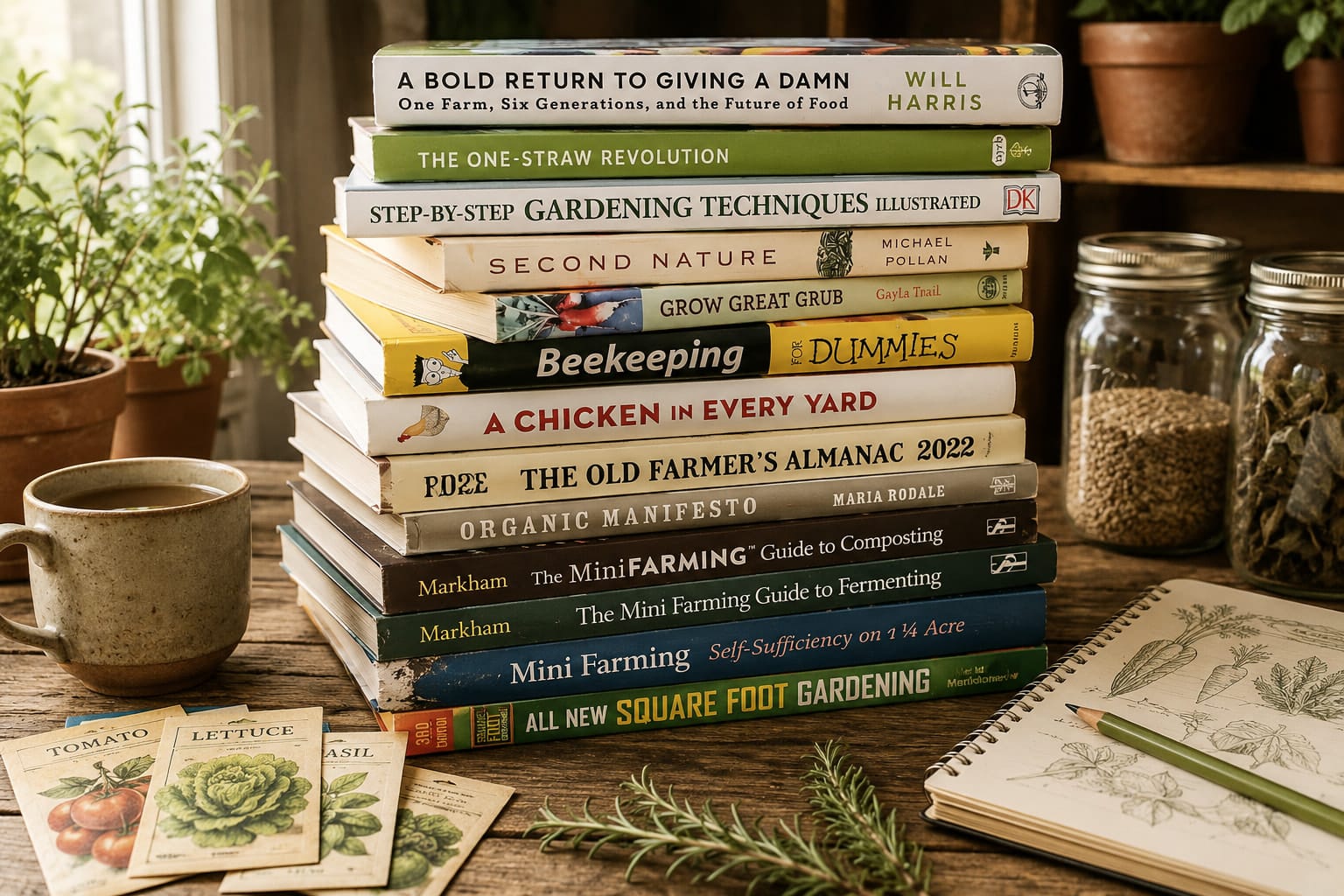
The best homesteading books for beginners are the books that help you take action, not just dream about a slower life.
I love online articles, videos, and quick tutorials, but there is still something very useful about having a good homesteading book on your shelf. A book gives you a clear path. It helps you slow down, understand the basics, and return to the same trusted information when you need it.
That matters when you are learning practical skills like growing food, preserving harvests, raising chickens, planning a pantry, building simple garden projects, or creating a more self-sufficient home.
You do not need a huge farm to learn from homesteading books.
You can start with a balcony, a backyard, a small kitchen, a few raised beds, or even one shelf of pantry staples. The right book can help you understand what to do first and what to leave for later.
If you are still building your foundation, I recommend starting with Essential Homesteading Skills for Beginners so you know which practical skills are worth learning first.
Affiliate Disclosure
This post may contain affiliate links. If you buy through these links, Dreamsteading may earn a small commission at no extra cost to you. I only recommend practical books, planners, and learning resources that fit a beginner-friendly homesteading lifestyle.
Why Homesteading Books Are Still Useful
Homesteading books are useful because they give you organized knowledge.
A quick online search can help with one question, but a good book helps you understand a whole skill from start to finish.
For example, a gardening book can teach you soil, seeds, spacing, watering, pests, harvest timing, and seasonal planning in one place.
A food preservation book can help you understand safe canning, dehydrating, freezing, pickling, and pantry storage.
A chicken keeping book can explain breeds, coops, feed, health, eggs, and daily care before you bring hens home.
That is why I still think books are valuable for beginners.
They help you learn slowly and build confidence.
They also give you something to return to when your internet answer feels too short or confusing.
A small homesteading library can become one of your most useful tools.
Best Books for Beginner Homesteaders
If you are new to homesteading, start with broad beginner books before buying very specialized guides.
A broad beginner homesteading book can help you understand the main areas of homesteading, such as gardening, food preservation, animals, DIY, simple living, and seasonal planning.
Good beginner homesteading books usually cover:
- Growing vegetables
- Starting seeds
- Composting
- Preserving food
- Keeping chickens
- Making simple repairs
- Planning a pantry
- Reducing waste
- Learning practical home skills
- Building a more self-sufficient routine
One popular style of book for beginners is a backyard homesteading guide. These books are useful because they make homesteading feel possible in normal spaces, not only on large farms.
A beginner homesteading book is a good first purchase if you feel interested in many skills but do not know where to begin.
Look for books that are practical, clearly organized, and realistic for your space.
If you live in a small home, rented space, or apartment, How to Start Homesteading in an Apartment can help you connect these ideas to your current lifestyle.
Best Gardening Books
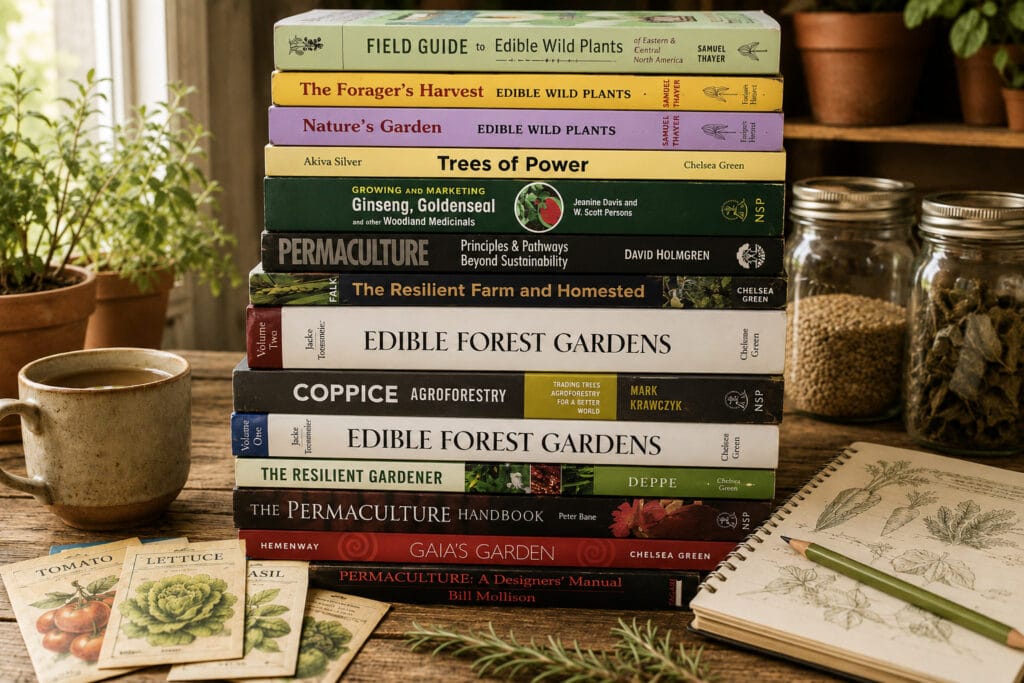
Gardening is one of the most important homesteading skills because it teaches patience, observation, food production, and seasonal planning.
A good vegetable gardening book can help you understand soil, planting dates, seed starting, spacing, watering, pests, harvesting, and crop rotation.
For beginners, I recommend choosing gardening books that are clear and practical rather than overly advanced.
Look for gardening books that explain:
- Soil preparation
- Compost
- Seed starting
- Direct sowing
- Transplanting
- Raised beds
- Container gardening
- Watering
- Mulching
- Common pests
- Harvest timing
- Seasonal planting
A book focused on vegetable gardening is especially useful if your goal is to grow food at home.
If you are starting seeds indoors before planting outside, pair your gardening book with Seed Starting Indoors for Beginners so you understand the early stage of plant growth.
A garden planning journal is also helpful because it lets you track what you planted, when you planted it, what worked, and what failed.
Your garden will teach you a lot, but only if you keep notes.
A simple garden planning journal can help you remember:
- Seed starting dates
- Transplant dates
- First harvest dates
- Varieties you liked
- Pest problems
- Weather notes
- Soil amendments
- Mistakes to avoid next season
For beginners, a gardening book plus a planning journal is one of the best learning combinations.
Best Food Preservation Books
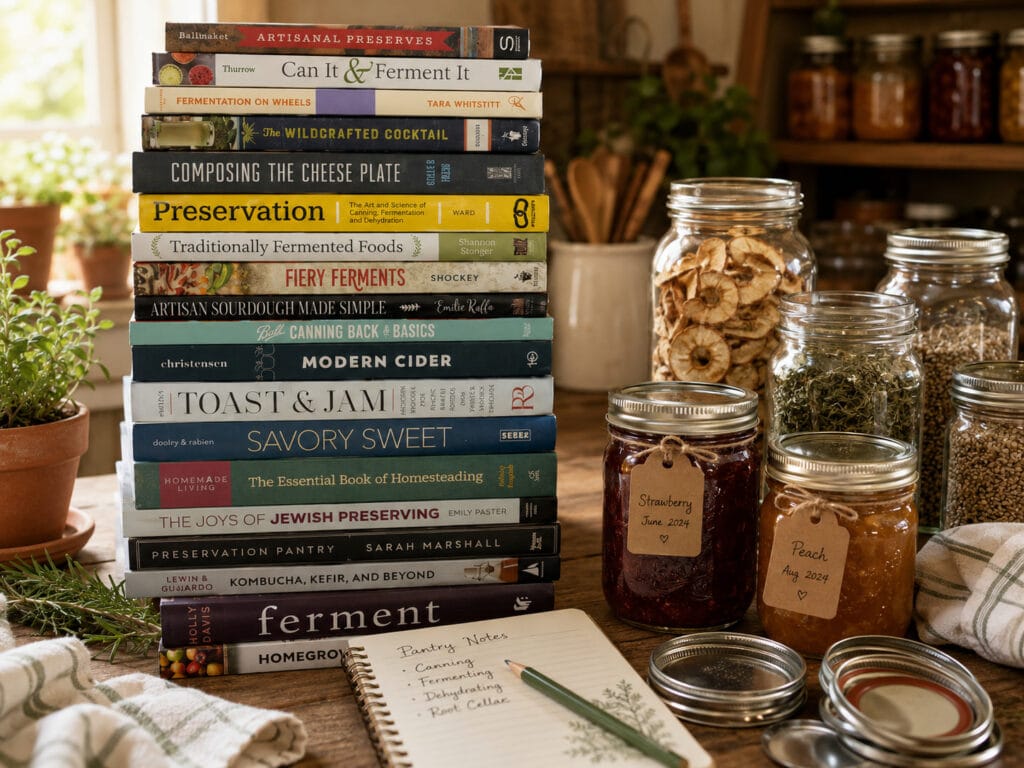
Food preservation is one of the most useful skills for a homesteader.
It helps you waste less food, store seasonal produce, build pantry confidence, and enjoy your harvest longer.
A good food preservation book should explain the method clearly and safely.
This is especially important for canning.
Canning is not the place to guess. You need tested recipes, correct jar sizes, correct processing times, altitude adjustments, and safe methods.
For beginners, look for food preservation books that cover:
- Water bath canning
- Pressure canning
- Freezing
- Dehydrating
- Pickling
- Jams and jellies
- Fermenting basics
- Pantry storage
- Food safety
- Troubleshooting
A modern canning recipe book is one of the most important books to buy if you plan to can food at home.
For safe preserving, choose updated canning books from trusted sources and avoid old recipes that may not follow current safety guidance.
If you are new to preserving, start with Food Preservation Methods for Beginners before choosing which method to learn first.
Then, if you want to start with jams, fruit, pickles, and high-acid foods, read Water Bath Canning for Beginners.
Food preservation books are also useful because they help you plan your pantry around what your family actually eats.
A pretty pantry is nice, but a useful pantry is better.
Best Chicken Keeping Books
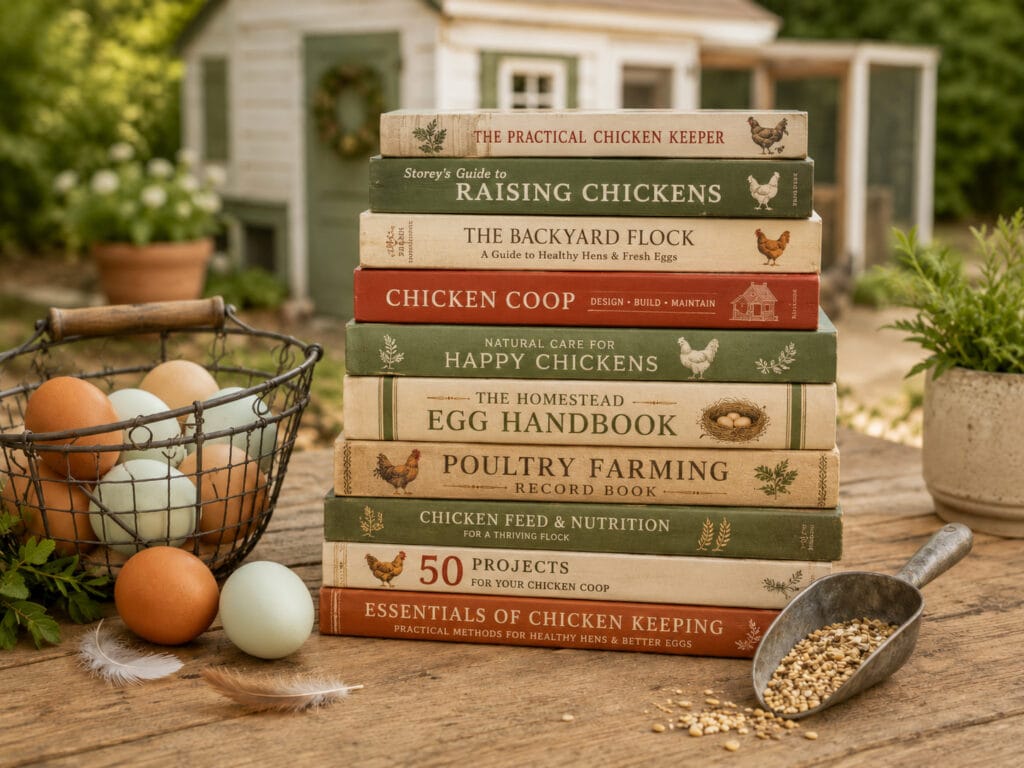
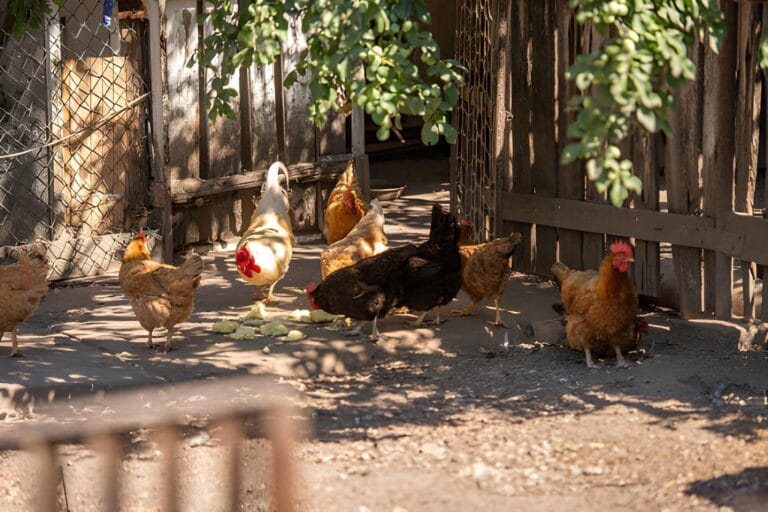
If you want backyard chickens, a good chicken keeping book can save you from many beginner mistakes.
Chickens are not complicated, but they do need daily care, clean water, balanced feed, predator protection, dry bedding, nesting space, and health observation.
A beginner chicken book should explain:
- Chicken breeds
- Coop setup
- Brooders
- Chicks vs started pullets
- Feed and water
- Nesting boxes
- Roosts
- Bedding
- Egg laying
- Predator protection
- Common health problems
- Seasonal care
- Cleaning routines
A good chicken book is especially helpful before you bring hens home.
It is much easier to prepare correctly than to fix problems after your chickens are already in the backyard.
If you are planning your first flock, look for a chicken keeping book that is written for backyard keepers, not only large farms.
You can also read Raising Chickens for Beginners and Best Chicken Breeds for Beginners before choosing your birds.
For a beginner, the best chicken book is the one that helps you answer practical questions quickly.
You want a book you can open when you need to know what to feed, how much space chickens need, how to clean a coop, or what to watch for when a hen acts strange.
Best DIY and Self-Sufficiency Books
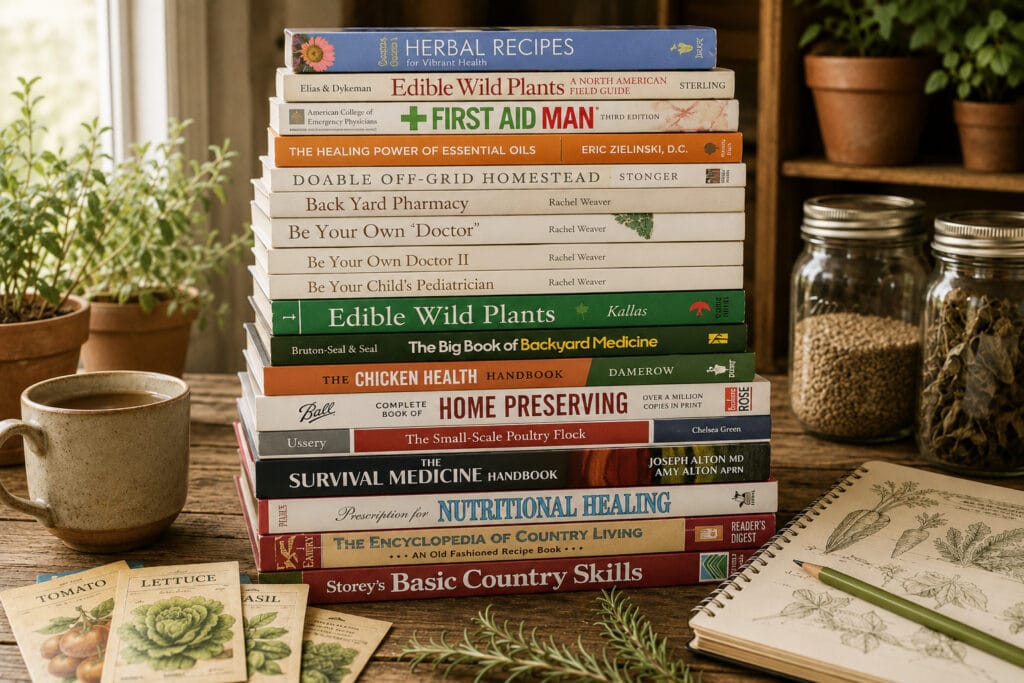
Homesteading is not only about growing and preserving food.
It is also about becoming more capable at home.
A good DIY/self-sufficiency book can help you learn simple repairs, basic building, tool use, garden structures, compost systems, storage solutions, and seasonal home skills.
These books are useful because they teach you how to think more practically.
Instead of buying every solution, you slowly learn how to fix, build, reuse, maintain, and organize.
For beginners, look for DIY and self-sufficiency books that cover:
- Basic tools
- Simple repairs
- Raised bed building
- Trellis building
- Compost bins
- Outdoor storage
- Chicken coop basics
- Fencing basics
- Water-saving projects
- Simple woodworking
- Seasonal maintenance
If you are starting with garden builds, How to Build Raised Garden Beds, How to Build a Simple Garden Trellis, and Best Wood for Garden Projects can help you choose simple projects before investing in more advanced DIY books.
A broad self-sufficiency book can also be helpful if you enjoy learning many small skills instead of focusing on one topic.
The best DIY book for a beginner is not the thickest book.
It is the one that makes you feel capable enough to start.
A Practical Beginner Homesteading Book List
Here are practical book categories I would include in a beginner homesteading library.
You do not need all of them at once.
Start with the category that matches your first goal.
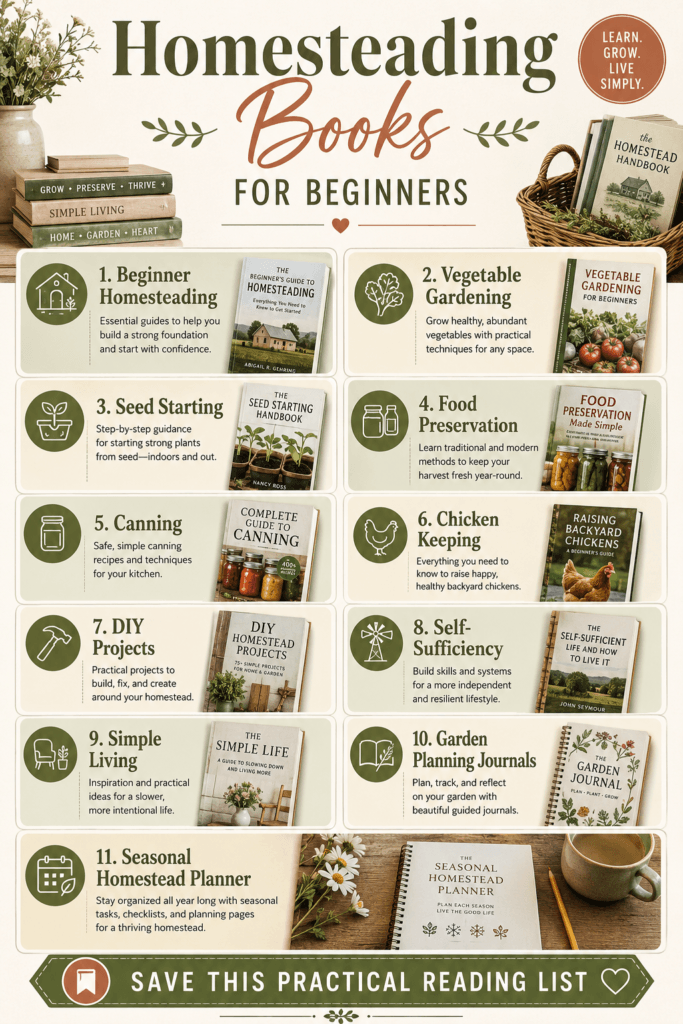
1. A Complete Beginner Homesteading Book
Choose a broad beginner homesteading book if you want an overview of many skills.
This is the best first book if you are still deciding whether to focus on gardening, food preservation, chickens, DIY, or simple living.
2. A Vegetable Gardening Book
A vegetable gardening book is essential if your goal is to grow more food.
Choose one with clear planting advice, seasonal guidance, and beginner-friendly explanations.
3. A Seed Starting Book or Guide
A seed starting book is useful if you want to grow plants from seed instead of buying transplants every year.
It should explain indoor seed starting, light, watering, potting mix, hardening off, and transplanting.
4. A Garden Planning Journal
A garden planning journal helps you learn from your own garden.
This is one of the most underrated tools for beginners because it helps you track what actually works in your climate and space.
5. A Food Preservation Book
A food preservation book is useful if you want to preserve seasonal harvests.
Choose one that clearly explains safe methods and includes beginner-friendly recipes.
6. A Canning Recipe Book
A modern canning recipe book is important if you want shelf-stable jars.
Use updated, tested recipes and do not rely on random old canning instructions.
7. A Chicken Keeping Book
A chicken keeping book is helpful before you buy chickens.
It can guide you through coop setup, feed, breeds, health, eggs, and daily routines.
8. A DIY Homesteading Book
A DIY/self-sufficiency book helps you learn basic building and repair skills.
This is useful for raised beds, trellises, compost areas, storage projects, and simple outdoor builds.
9. A Simple Living Book
A simple living book can help with the mindset side of homesteading.
These books are less about projects and more about slowing down, reducing waste, spending intentionally, and creating better routines.
10. A Pantry Planning Book or Journal
A pantry journal helps you track preserved foods, dry goods, freezer meals, bulk staples, and what your family actually uses.
This is especially useful if food preservation is one of your main goals.
11. A Seasonal Homestead Planner
A seasonal planner helps you organize tasks by month or season.
It can include planting dates, preservation plans, chicken care notes, garden maintenance, pantry goals, and project lists.
For beginners, a planner can turn homesteading from a vague dream into a practical rhythm.
How to Choose the Right Homesteading Book
Not every homesteading book is right for every beginner.
Before buying, think about your space, goals, budget, and learning style.
Choose Books That Match Your Current Life
If you live in an apartment, do not start with a book focused only on large livestock and acreage.
Start with books about container gardening, herbs, food preservation, pantry skills, DIY basics, and simple living.
If you have a backyard, you may want books about raised beds, chickens, compost, and small garden projects.
If you have land, you may eventually want books about larger systems, animals, fencing, orchards, and long-term food production.
Choose the book that fits where you are now.
Look for Practical Instructions
The best beginner books include clear steps, photos, diagrams, checklists, or examples.
Avoid books that are only inspirational if your goal is to learn practical skills.
Inspiration is good, but action is better.
Check the Publication Date for Safety Topics
For food preservation, especially canning, use current trusted resources.
Older books may contain recipes or instructions that are no longer recommended.
This does not mean old books are useless, but safety-sensitive topics need updated guidance.
Read Reviews Carefully
Reviews can help you understand whether a book is beginner-friendly or too advanced.
Look for comments about clarity, photos, recipes, instructions, and real usefulness.
Start with One Skill
Do not buy ten books and try to learn everything at once.
Start with your first priority.
If you want to grow food, buy a gardening book.
If you want to preserve food, buy a food preservation book.
If you want chickens, buy a chicken keeping book.
If you want to build, buy a DIY/self-sufficiency book.
One useful book you actually read is better than a shelf full of books you never open.
FAQ About Homesteading Books
What are the best homesteading books for beginners?
The best homesteading books for beginners are practical books that teach clear skills such as gardening, food preservation, chicken keeping, DIY projects, simple living, and seasonal planning.
Start with one broad beginner homesteading book, then add skill-specific books as your goals become clearer.
Do I need homesteading books if I can learn online?
You can learn a lot online, but books are still useful because they organize information in one place.
A good book gives you structure, depth, and a reference you can return to without searching again.
What homesteading book should I buy first?
Buy the book that matches your first goal.
If you want an overview, choose a broad beginner homesteading book.
If you want to grow food, choose a vegetable gardening book.
If you want to preserve food, choose a food preservation book.
If you want chickens, choose a chicken keeping book.
Are old homesteading books still useful?
Some old homesteading books are useful for inspiration, traditional skills, and simple living ideas.
But for food preservation, especially canning, use current tested recipes and updated safety guidance.
What gardening books should beginners buy?
Beginners should choose gardening books that explain soil, seeds, planting dates, watering, spacing, pests, harvesting, and seasonal planning in a simple way.
A garden planning journal is also helpful for tracking your own results.
What food preservation book is best for beginners?
The best beginner food preservation book is one that explains safe methods clearly and uses tested recipes, especially for canning.
Look for updated books from trusted food preservation sources.
Should I buy a chicken keeping book before getting chickens?
Yes, buying a chicken keeping book before getting chickens is a smart idea.
It helps you understand coop setup, breeds, feed, water, bedding, egg laying, predators, and common health problems before the birds arrive.
Are DIY homesteading books worth it?
Yes, DIY homesteading books are worth it if you want to build raised beds, trellises, compost bins, simple storage, or backyard projects.
Choose beginner-friendly books with clear instructions and realistic projects.
Should I use a garden planning journal?
Yes, a garden planning journal is very useful for beginners.
It helps you track planting dates, harvests, seed varieties, mistakes, weather, pests, and what to improve next season.
How many homesteading books do I need?
You do not need many books to start.
Begin with one broad homesteading book and one skill-specific book based on your first priority. Build your library slowly as your skills grow.
Final Thoughts
Homesteading books are not just for people with large farms.
They are for anyone who wants to learn practical skills and become more capable at home.
A good book can help you grow vegetables, preserve food, care for chickens, build simple projects, organize your pantry, and create a more intentional lifestyle.
Start small.
Choose one book that matches the skill you want to learn first.
Read it slowly. Take notes. Try one project. Track what works. Then add another book when you are ready for the next skill.
The best homesteading library is not the biggest one.
It is the one you actually use.