15 Best Indoor Plants for Beginners That Are Easy to Grow
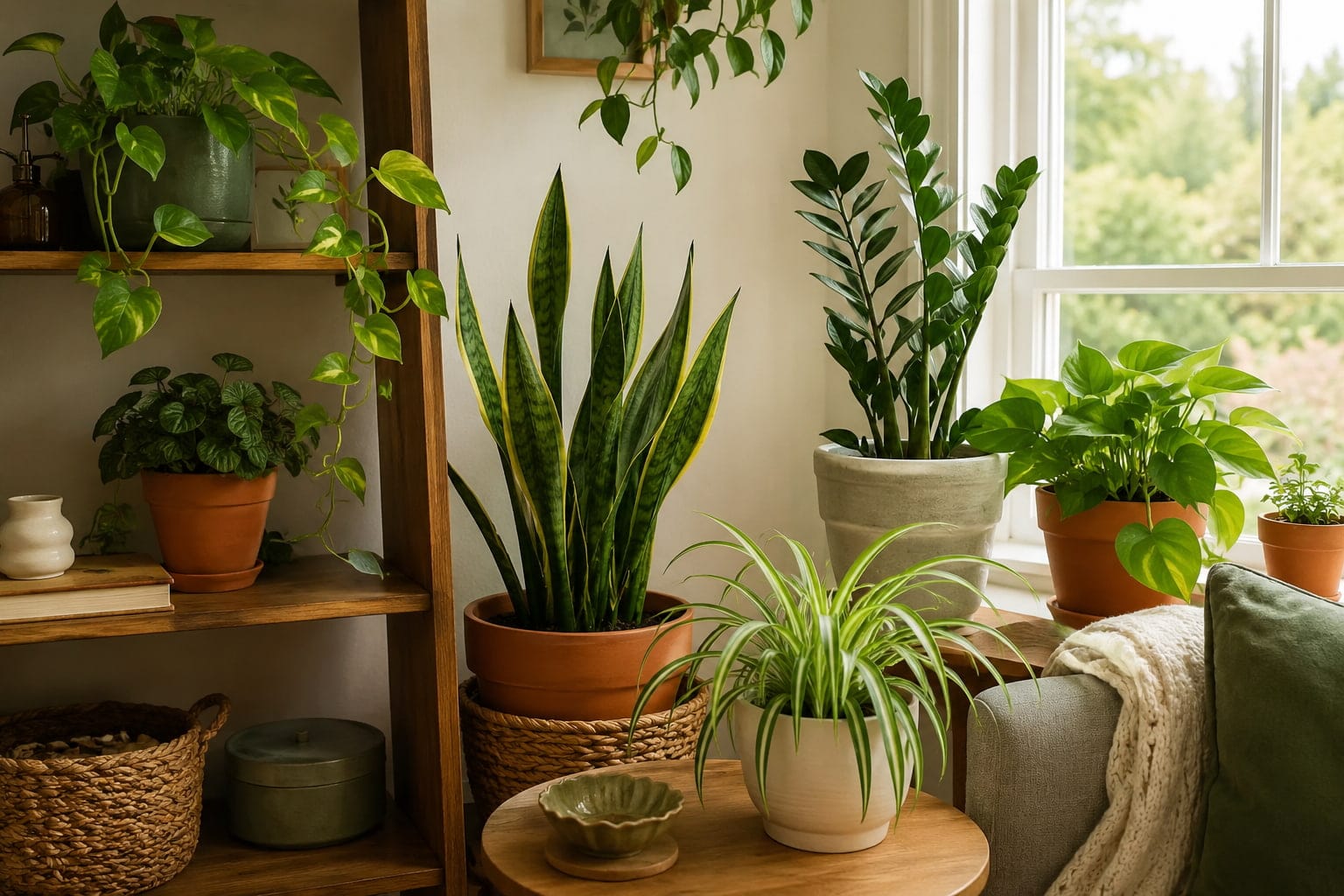
Best indoor plants for beginners are the plants that make indoor gardening feel simple, not stressful.
If you are new to houseplants, it is easy to feel confused by watering schedules, sunlight needs, pot sizes, yellow leaves, and all the plant care advice online. But you do not need a complicated indoor jungle to start.
You only need a few forgiving plants that can handle normal home conditions.
I always recommend starting small. Choose one or two easy indoor plants, learn how they behave in your home, and build your confidence from there.
Indoor plants can make a room feel warmer, calmer, and more alive. They are also a beautiful way to bring a little homesteading spirit indoors, especially if you live in an apartment or do not have outdoor garden space yet.
If that sounds like your situation, you may also enjoy How to Start Homesteading in an Apartment.
Affiliate Disclosure
This post may contain affiliate links. If you buy through these links, Dreamsteading may earn a small commission at no extra cost to you. I only recommend practical plant care tools and supplies that fit a simple, beginner-friendly home.
Why Start with Easy Indoor Plants?
The best way to enjoy indoor plants is to begin with varieties that forgive small mistakes.
Some houseplants are sensitive. They complain quickly when the light is wrong, the air is dry, or the watering is not perfect.
Beginner-friendly plants are different.
They can usually handle average indoor light, missed watering, and normal home temperatures better than fussy plants.
This matters because your first plants should help you learn, not make you feel like you failed.
Before buying any houseplant, I like to check three things: light, watering needs, and drainage. A good indoor plant potting mix, a pot with drainage holes, and a simple watering can with a narrow spout can make plant care much easier from the beginning.
What Makes an Indoor Plant Beginner-Friendly?
A beginner-friendly indoor plant should be simple to understand and easy to maintain.
Look for plants that:
- Tolerate average home conditions
- Do not need constant watering
- Can handle bright indirect light or lower light
- Do not need daily misting
- Recover from small mistakes
- Grow well in normal containers
- Do not need complicated pruning
Light is one of the most important things to understand.
Low light does not mean no light. Most indoor plants still need some natural or artificial light to grow well. If your home is dark, a small indoor grow light can make a big difference.
Watering is the second big thing.
Most beginners kill houseplants by overwatering, not underwatering. If you are unsure, a simple moisture meter can help you check the soil before adding more water.
15 Best Indoor Plants for Beginners
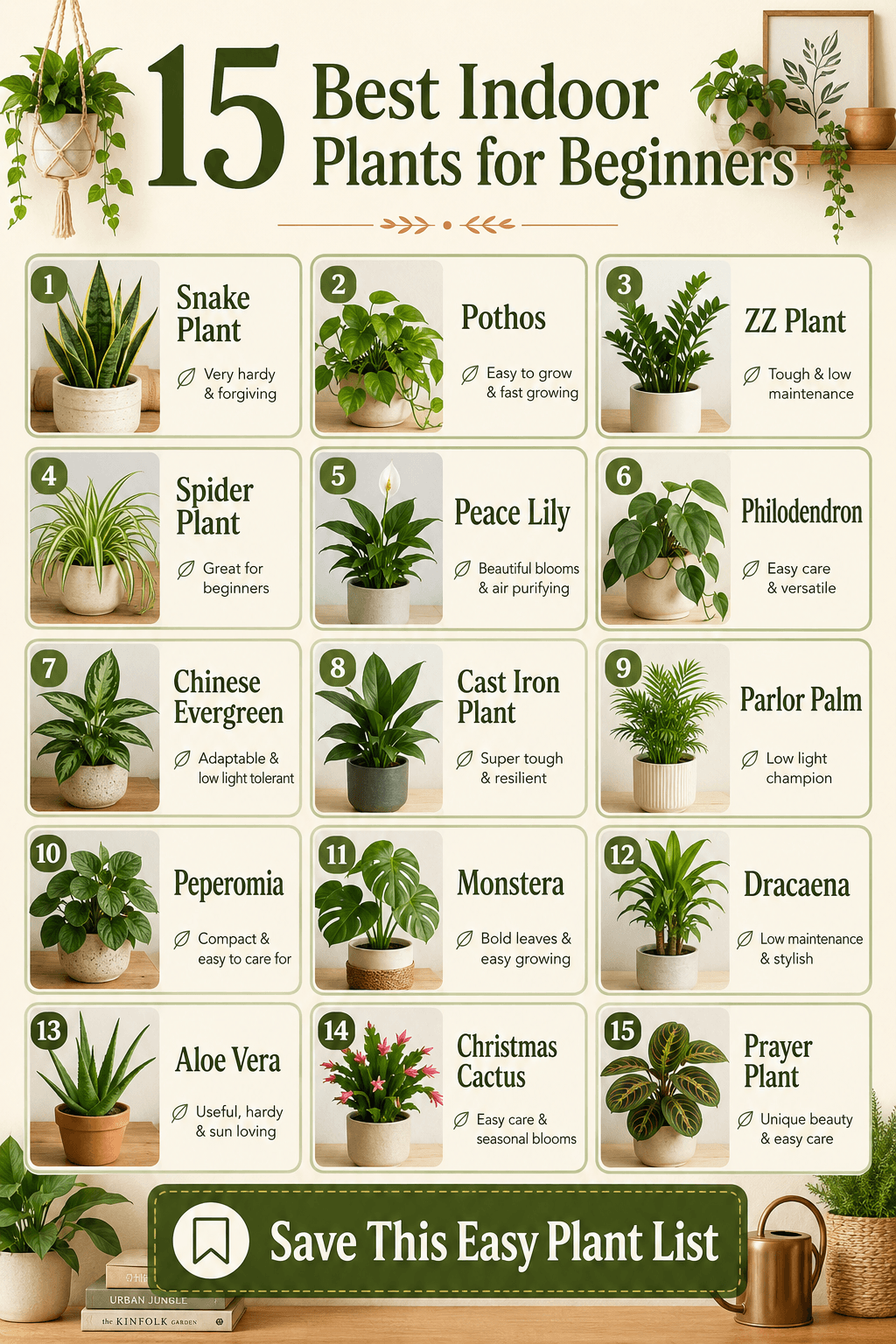
1. Snake Plant
Snake plant is one of the easiest indoor plants for beginners.
It has upright, sword-like leaves and a clean modern look that works in bedrooms, offices, living rooms, and apartments.
Snake plants tolerate lower light, but they usually grow best in bright indirect light. They also do not need frequent watering.
Let the soil dry before watering again. This plant does not like sitting in soggy soil.
A well-draining potting mix and a pot with drainage holes are very important for snake plants.
If you forget to water sometimes, this plant is usually forgiving.
2. Pothos
Pothos is a classic beginner houseplant because it grows quickly, trails beautifully, and does not need much attention.
It looks lovely on shelves, bookcases, hanging planters, or kitchen corners.
Pothos can tolerate lower light, but it grows fuller and healthier in bright indirect light.
Water when the top part of the soil feels dry. If the leaves start looking limp, the plant may be thirsty.
A hanging planter or decorative plant basket works well for pothos because the vines can trail naturally.
If you have pets, keep pothos out of reach and check plant safety before bringing it home.
3. ZZ Plant
ZZ plant is a strong, low-maintenance houseplant with glossy green leaves.
It is a good choice for beginners because it tolerates lower light and does not need frequent watering.
This plant stores water in its thick stems and roots, so it is better to underwater than overwater.
Place it in a simple decorative pot with drainage and let the soil dry well between waterings.
ZZ plant is perfect for people who travel, forget to water, or want a plant that looks polished with very little effort.
4. Spider Plant
Spider plant is cheerful, easy to grow, and great for beginners.
It has arching green-and-white leaves and often produces small baby plants that hang from long stems.
This makes it a fun plant if you want to learn propagation later.
Spider plants prefer bright indirect light but can tolerate less light. Water when the top of the soil begins to dry.
They look beautiful in a hanging planter or on a plant stand where the baby plants can drape over the sides.
Spider plant is also a good option to consider for pet-friendly homes, but I still recommend keeping all plants away from pets that like to chew.
5. Peace Lily
Peace lily is popular because it has dark green leaves and elegant white blooms.
It is also helpful for beginners because it tells you when it needs water. The leaves droop when the plant is thirsty, then perk back up after watering.
Peace lilies prefer bright indirect light but can tolerate lower light. They bloom better with more light.
Use a watering can with a narrow spout so you can water the soil without soaking the leaves.
Peace lilies are not the best choice for homes with curious pets, so place them safely or choose another plant if pet safety is a concern.
6. Philodendron
Philodendron is another easy trailing houseplant that works well for beginners.
It has heart-shaped leaves and a soft, relaxed look that fits beautifully in cozy home interiors.
Philodendron likes bright indirect light but usually handles average indoor conditions well.
Water when the top inch or two of soil feels dry. Do not let it sit in water.
A trailing philodendron looks beautiful on shelves, plant stands, or in hanging baskets.
This is a good plant if you want that lush indoor garden look without complicated care.
7. Chinese Evergreen
Chinese evergreen is a beautiful beginner plant with patterned leaves in shades of green, silver, cream, or pink depending on the variety.
It tolerates lower light better than many decorative houseplants.
That makes it useful for living rooms, bedrooms, offices, or corners that are not directly beside a window.
Water when the soil begins to dry. Avoid keeping it constantly wet.
A moisture meter can help if you are unsure when to water, especially in winter when plants often use less water.
8. Cast Iron Plant
The name says a lot.
Cast iron plant is known for being tough, slow-growing, and forgiving.
It has dark green leaves and does well in lower light areas where many other plants struggle.
It does not need frequent watering, and it can handle normal indoor conditions.
This is a great choice if you want something simple for a hallway, shaded room, or quiet corner.
Use a sturdy plant pot with drainage holes and avoid overwatering.
9. Parlor Palm
Parlor palm gives a soft, classic indoor look without being too difficult.
It has delicate palm-like leaves and works well in living rooms, bedrooms, and cozy reading corners.
Parlor palm prefers bright indirect light but can tolerate lower light.
Keep the soil lightly moist, but not soggy.
A plant stand can help lift the palm closer to indirect light and make the plant part of your decor.
This is a good choice if you want a gentle, elegant plant that does not feel too modern or bold.
10. Peperomia
Peperomia is a small, easy indoor plant that comes in many leaf shapes and colors.
It is perfect for shelves, desks, nightstands, and small apartments.
Peperomia does not like soggy soil, so let the top layer dry before watering.
Because it stays compact, it is easy to manage even if you do not have much space.
Use a small ceramic pot with drainage and a light indoor plant potting mix.
Peperomia is also one of the better options to consider if you want a pet-friendlier houseplant.
11. Monstera
Monstera is popular for its large split leaves and bold tropical look.
It is not the smallest plant on this list, but it can still be beginner-friendly if you give it enough light and room.
Monstera prefers bright indirect light and a pot that drains well.
Water when the top few inches of soil feel dry.
As it grows, it may need support. A moss pole, plant ties, or a larger decorative planter can help keep it upright and attractive.
Monstera is best for someone who wants a statement plant and has enough space for it to grow.
12. Dracaena
Dracaena plants are easy-care indoor plants with upright growth and attractive leaves.
They work well in corners, offices, and simple modern interiors.
Most dracaenas prefer bright indirect light but tolerate lower light.
Let the soil dry slightly between waterings. Avoid overwatering, because soggy roots can cause problems.
A tall dracaena looks beautiful in a woven plant basket or simple neutral planter.
This is a good plant if you want height without needing a large, bushy plant.
13. Aloe Vera
Aloe vera is a simple indoor plant for sunny windowsills.
It has thick, fleshy leaves and needs less water than many tropical houseplants.
Aloe needs bright light to grow well. It is not the best plant for dark rooms.
Use a cactus and succulent potting mix and a terracotta pot with drainage holes to help prevent soggy soil.
Water deeply, then let the soil dry before watering again.
Aloe is a good choice if you already have a bright window and want a clean, practical plant.
14. Christmas Cactus
Christmas cactus is a beautiful indoor plant that can live for many years with simple care.
Unlike desert cacti, it prefers bright indirect light and a little more moisture.
It can produce beautiful blooms during the cooler months when many other plants are quiet.
Water when the top of the soil feels dry, and avoid letting the pot sit in water.
A humidity tray can be useful if your home is very dry, especially during winter heating.
This is a lovely plant if you want something easy but still seasonal and special.
15. Prayer Plant
Prayer plant has beautiful patterned leaves that fold upward at night.
It is a little more sensitive than snake plant or pothos, but it can still be a good beginner plant if you pay attention to light and moisture.
It prefers bright indirect light and slightly more humidity than many basic houseplants.
Keep the soil lightly moist, but not soaked.
A humidity tray, small plant mister, or grouping it near other plants can help if your indoor air is dry.
Prayer plant is a beautiful choice if you want something decorative and colorful for a shelf or side table.
Simple Indoor Plant Care Tips for Beginners
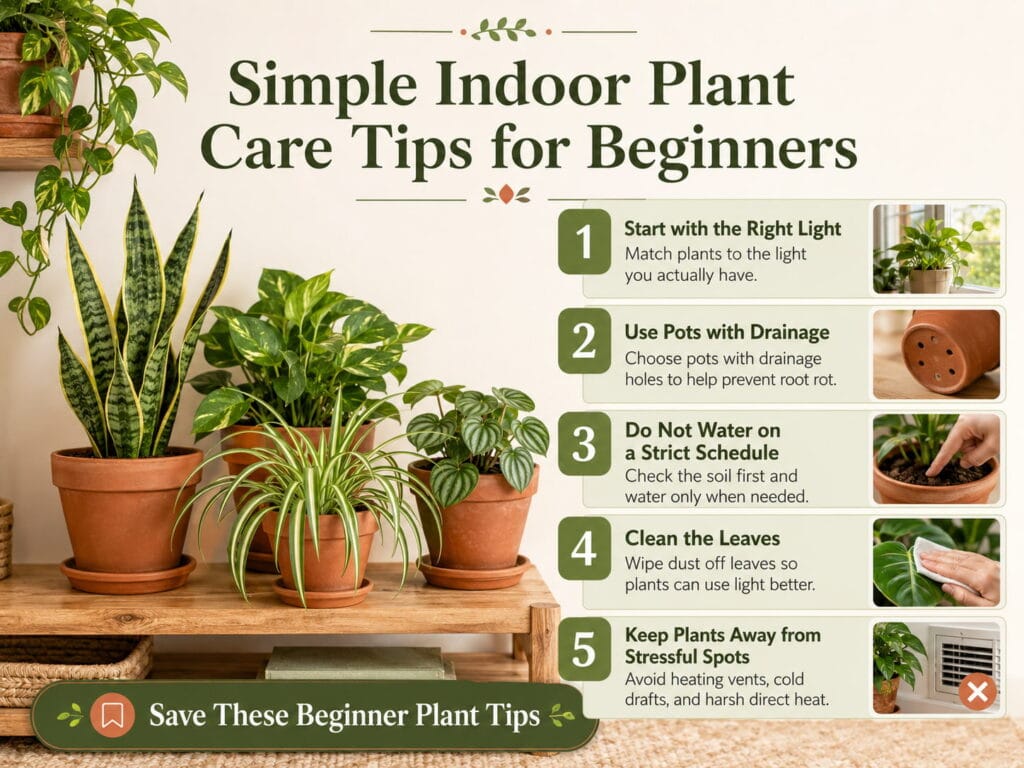
Start with the Right Light
Before you buy a plant, look at your home.
Do you have bright windows? Soft filtered light? Mostly shade?
Choose plants that match the light you actually have, not the light you wish you had.
If your space is dark, choose tolerant plants like snake plant, ZZ plant, pothos, cast iron plant, or Chinese evergreen.
If your space is bright, you can try aloe vera, monstera, peperomia, or Christmas cactus.
A small indoor grow light is helpful if your home does not get enough natural light.
Use Pots with Drainage
Drainage is one of the biggest keys to keeping indoor plants alive.
A beautiful pot is not enough if water collects at the bottom and rots the roots.
Choose pots with drainage holes whenever possible. If you use a decorative cover pot, keep the plant in a nursery pot inside it so extra water can drain out.
This simple habit prevents many beginner problems.
Do Not Water on a Strict Schedule
Plants do not always need water every Saturday.
Water needs change with light, season, pot size, temperature, and plant type.
Instead of following a fixed schedule, check the soil.
Use your finger or a moisture meter before watering. If the soil is still moist, wait.
Overwatering is one of the most common houseplant mistakes.
Clean the Leaves
Dust can collect on indoor plant leaves and block light.
Every few weeks, gently wipe large leaves with a damp cloth.
This keeps the plant looking fresh and helps it use light better.
For small leaves, a gentle rinse or soft brush can help.
Keep Plants Away from Stressful Spots
Avoid placing houseplants near heating vents, cold drafts, air conditioners, or very hot windows.
Sudden temperature changes can stress indoor plants.
Most houseplants prefer stable conditions.
A calm corner with steady light is usually better than a dramatic window that gets too hot or too cold.
Common Indoor Plant Mistakes to Avoid
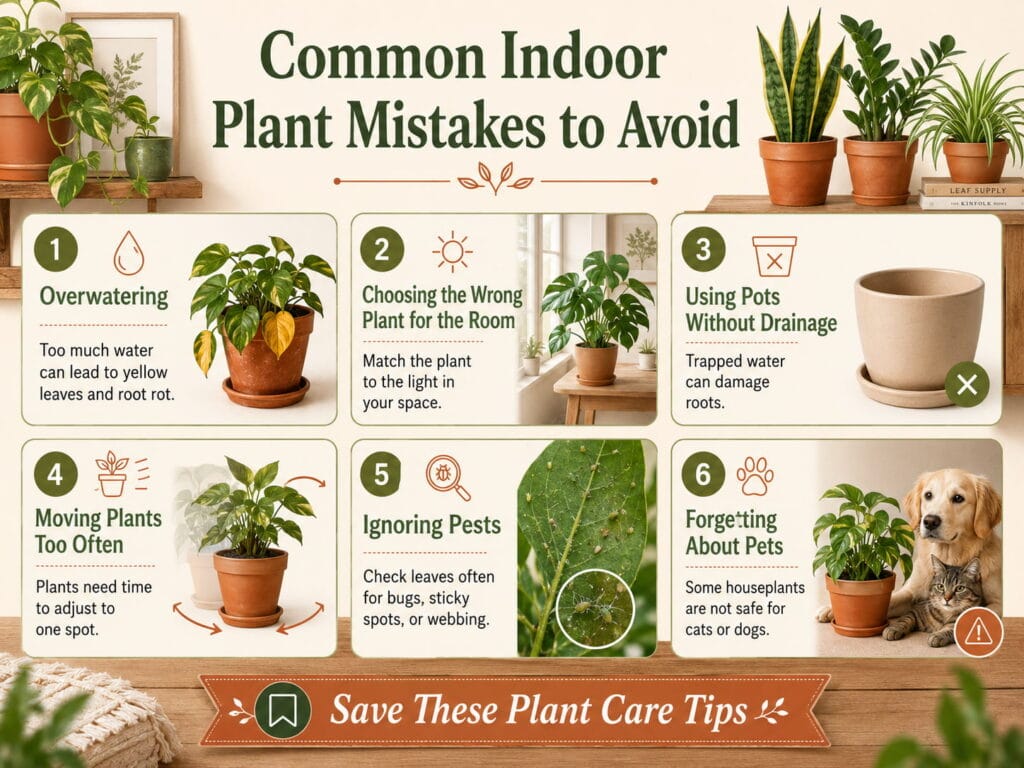
Overwatering
This is the number one mistake.
If the leaves yellow, the soil smells bad, or the plant looks weak even though you keep watering, the roots may be too wet.
Always check the soil first.
Choosing the Wrong Plant for the Room
A plant that needs bright light will struggle in a dark corner.
Match the plant to the room, not just the photo you saw online.
Using Pots Without Drainage
Decorative pots are beautiful, but trapped water can cause root rot.
Use drainage whenever possible.
Moving Plants Too Often
Plants need time to adjust.
Do not move them every few days unless they are clearly struggling.
Ignoring Pests
Check leaves regularly for small insects, sticky residue, or webbing.
If you notice pests early, a gentle insecticidal soap or neem oil spray may help, depending on the plant and pest.
Forgetting About Pets
Some popular indoor plants are not pet-safe.
If you have cats or dogs, check each plant before buying and keep plants out of reach.
Beginner Indoor Plant Checklist
Before buying your first indoor plants, gather a few simple basics:
- Indoor plant potting mix
- Pots with drainage holes
- Watering can with narrow spout
- Moisture meter
- Plant stand
- Pruning snips
- Plant labels
- Decorative plant baskets
- Indoor grow light if your home is dark
- Humidity tray for moisture-loving plants
You do not need everything at once.
Start with the basics: one easy plant, one good pot, proper soil, and a simple watering routine.
FAQ About the Best Indoor Plants for Beginners
What is the easiest indoor plant for beginners?
Snake plant, pothos, ZZ plant, spider plant, and cast iron plant are some of the easiest indoor plants for beginners.
They are forgiving and can handle normal home conditions better than many sensitive houseplants.
What indoor plant is hardest to kill?
Snake plant and ZZ plant are often considered very hard to kill because they tolerate missed watering and lower light.
They still need care, but they are more forgiving than many other plants.
Which indoor plants are best for low light?
Good lower-light options include snake plant, ZZ plant, pothos, cast iron plant, Chinese evergreen, and parlor palm.
Low light does not mean no light, so place them where they still receive some natural or artificial light.
How often should beginners water indoor plants?
Do not water only by the calendar.
Check the soil first. Many indoor plants should be watered when the top inch or two of soil feels dry.
Are indoor plants safe for pets?
Some are, and some are not.
Spider plant and peperomia are often chosen for pet-friendly homes, but many popular plants can be toxic to cats or dogs. Always check plant safety before buying if you have pets.
What should I buy with my first indoor plant?
Start with a pot with drainage holes, indoor plant potting mix, and a watering can.
A moisture meter is also helpful if you are nervous about overwatering.
Can I grow indoor plants in an apartment?
Yes, indoor plants are perfect for apartments.
Choose compact plants like peperomia, pothos, spider plant, snake plant, or ZZ plant. For more small-space ideas, read How to Start Homesteading in an Apartment.
Final Thoughts
Indoor plants do not have to be complicated.
If you are just starting, choose easy plants that match your home, your light, and your routine. Start with one or two, learn how they respond, and slowly build your confidence.
The best indoor plants for beginners are not the rarest or most expensive ones.
They are the plants that help you enjoy growing something without feeling overwhelmed.
A snake plant in the bedroom, pothos on a shelf, spider plant in a hanging basket, or peperomia on a desk can make your home feel softer, greener, and more alive.
Start simple, pay attention, and let your indoor garden grow one plant at a time.