10 Easy Food Preservation Methods Every Homesteader Should Know
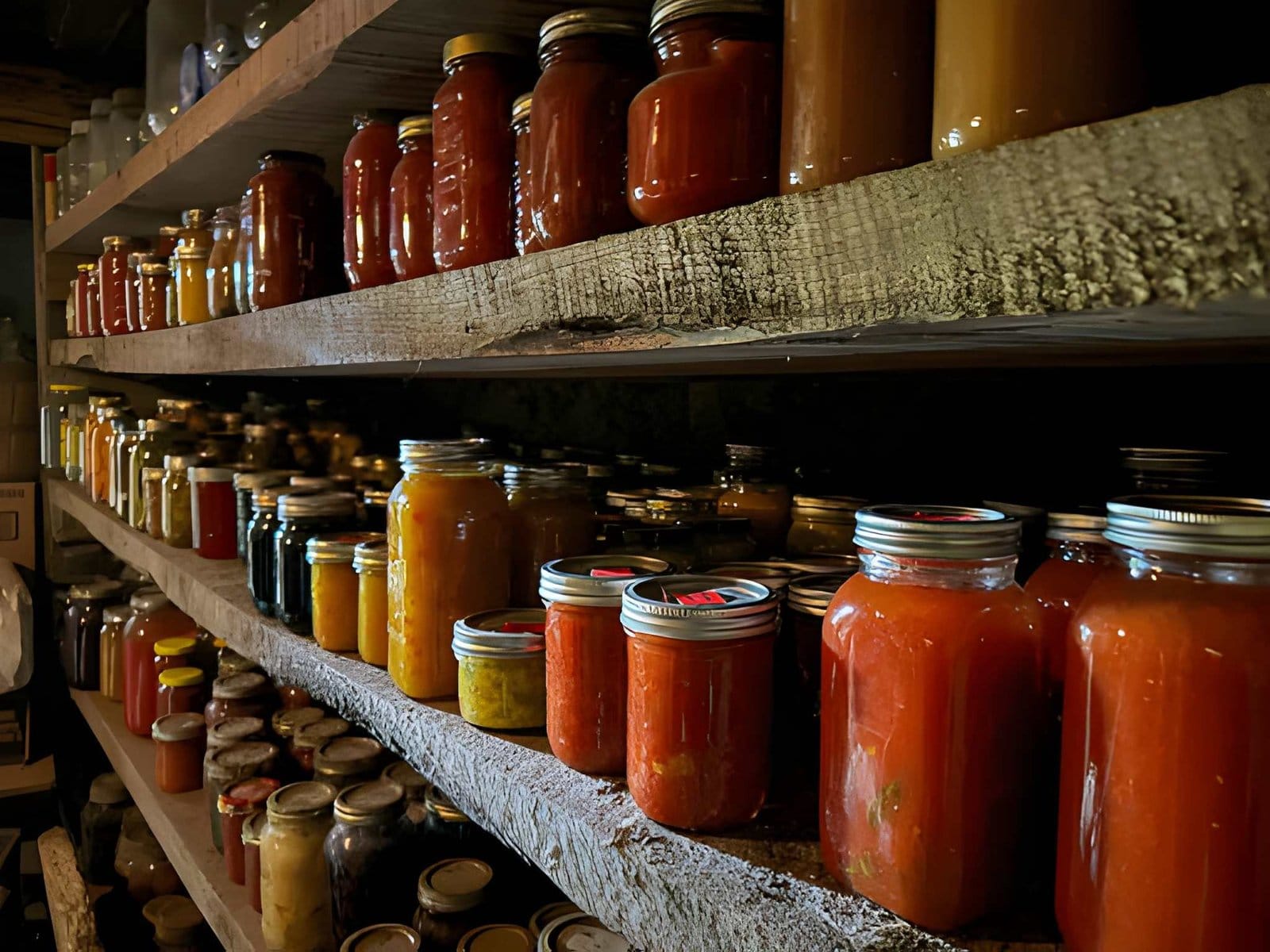
Food preservation methods help homesteaders extend seasonal harvests, reduce avoidable waste, and keep useful ingredients available beyond their fresh season. The most practical options include refrigeration, freezing, dehydrating, water-bath canning, pressure canning, pickling, fermentation, making fruit spreads, freeze-drying, and storing suitable crops under controlled cool or dry conditions.
These methods are not interchangeable. A technique that is safe for peaches may be completely unsuitable for green beans, meat, or soup. Some methods create shelf-stable food, while others require continuous refrigeration or freezing.
This guide explains what each method does, which foods it suits, the equipment it requires, and its most important limitation. It does not replace a current tested recipe. For canning, pickling, fermenting, curing, and other safety-sensitive processes, follow instructions from the USDA, National Center for Home Food Preservation, or a university extension program.
In Short
Freezing and refrigeration are the easiest methods for beginners. Dehydrating is useful for herbs, fruits, and selected vegetables. Water-bath canning is limited to properly acidified or naturally high-acid foods, while low-acid vegetables, meat, poultry, seafood, and many mixed foods require pressure canning. Pickling and fermentation require tested ingredient ratios and careful handling. No single preservation method is best for every food.
Key Takeaways
- Choose the preservation method according to the food’s acidity, moisture, density, and intended storage conditions.
- Freezing, refrigeration, vacuum sealing, drying, and freeze-drying do not sterilize food.
- Use only current research-tested recipes for home canning, pickling, and fermentation.
- A pressure cooker or electric multicooker must not be substituted for a pressure canner unless a tested process specifically authorizes that exact equipment.
- Label every preserved product with its contents and processing or packaging date.
- When safety is uncertain, discard the food without tasting it.
What Food Preservation Actually Does
Food naturally changes because of microorganisms, enzymes, moisture movement, oxygen, light, temperature, and physical damage. Preservation controls one or more of these factors to slow spoilage or prevent hazardous microbial growth.
Different methods work in different ways:
- Cold temperatures slow microbial and enzymatic activity.
- Freezing stops microbial growth while the food remains frozen but does not reliably kill every microorganism.
- Drying removes enough available moisture to prevent microbial growth during suitable storage.
- Heat processing destroys targeted microorganisms and creates a sealed container when an approved canning process is followed.
- Acidification creates conditions that inhibit dangerous organisms when a tested recipe achieves the required acidity.
- Fermentation allows selected microorganisms to produce acids or other compounds under controlled conditions.
“Shelf-stable” means the correctly processed and packaged food can be stored safely at room temperature under its specified conditions. It does not mean the food lasts forever or that quality cannot decline.
Food-preservation safety
Never guess canning times, pressure, acidity, salt concentration, jar size, headspace, or ingredient proportions. Do not use oven canning, open-kettle canning, dishwasher canning, microwave canning, or an unapproved pressure appliance. Harmful toxins may be present without a visible change, unpleasant smell, or unusual taste. If a preserved food shows leakage, swelling, spurting liquid, mold, broken seals, or other signs of spoilage, discard it safely without tasting.
Comparison of 10 Food Preservation Methods
| Method | Best suited to | Storage needed | Important limitation |
|---|---|---|---|
| Refrigeration | Short-term produce, leftovers, ferments | Continuous refrigeration | Usually provides only short-term preservation |
| Freezing | Produce, prepared foods, meat | 0°F (-18°C) freezer | Power and freezer space are required |
| Dehydrating | Herbs, fruits, selected vegetables | Moisture-proof packaging | Food must be dried sufficiently and protected from moisture |
| Water-bath canning | Tested high-acid or acidified foods | Cool, dark pantry after processing | Unsafe for low-acid foods |
| Pressure canning | Low-acid vegetables, meat, poultry and seafood | Cool, dark pantry after processing | Requires a true pressure canner and exact processing |
| Pickling | Vegetables and selected fruits | Refrigerator or pantry, depending on recipe | Vinegar, water and food ratios cannot be improvised |
| Fermentation | Tested vegetable ferments | Controlled fermentation, then specified storage | Salt, temperature and submersion matter |
| Fruit spreads | Jams, jellies and preserves | Refrigerator or pantry, depending on process | Reduced-sugar changes require tested recipes |
| Freeze-drying | Many prepared and fresh foods | Moisture- and oxygen-resistant packaging | Specialized, expensive equipment is required |
| Cool or dry storage | Suitable onions, garlic, squash and root crops | Crop-specific temperature and humidity | Conditions differ substantially by crop |
10 Food Preservation Methods for Homesteaders
1. Refrigeration
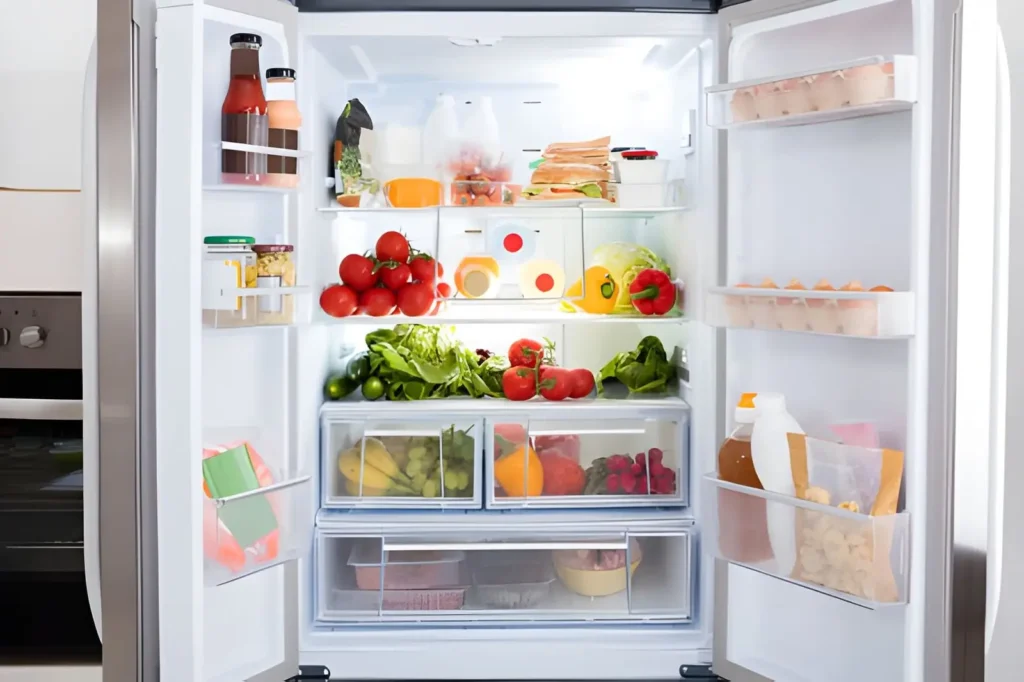
Refrigeration is the simplest short-term preservation method. It slows microbial growth and enzymatic changes but does not stop them completely. Fresh produce, dairy products, eggs, leftovers, opened canned food, refrigerator pickles, and many fermented foods depend on consistent cold storage.
Keep the refrigerator at 40°F (4°C) or below and verify the temperature with an appliance thermometer. Store raw meat, poultry, and seafood where leaks cannot contaminate ready-to-eat foods. Cool prepared food promptly in shallow containers instead of leaving large, hot pots at room temperature.
Refrigeration is ideal when you expect to use the food soon. It is not a substitute for a tested shelf-stable preservation process. A refrigerated sauce, pickle, or ferment must remain refrigerated if its recipe does not include a validated canning process.
2. Freezing
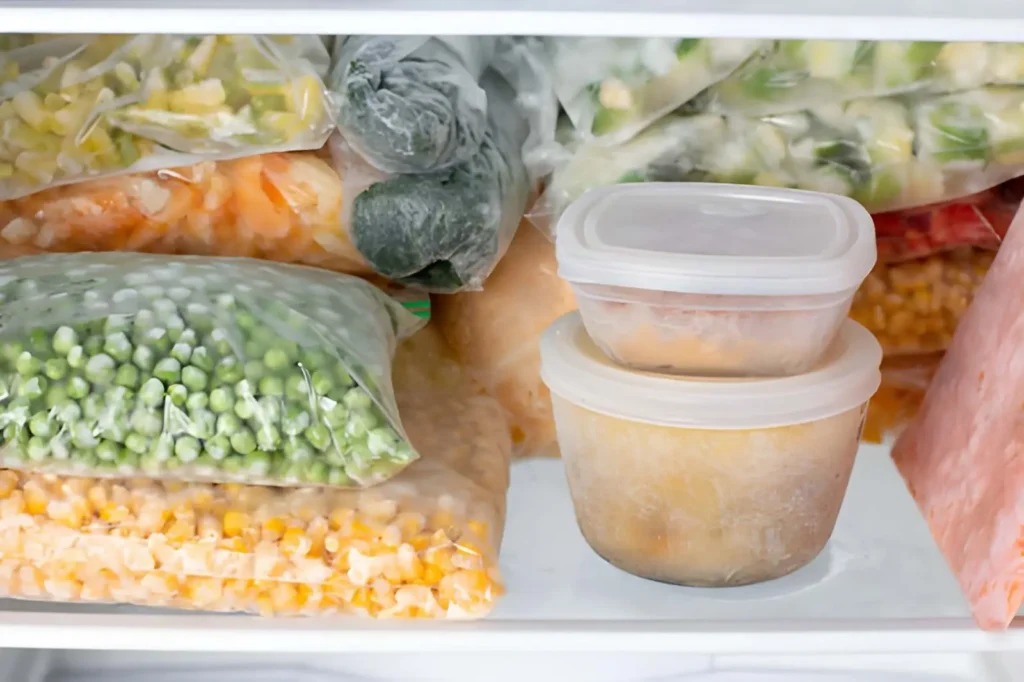
Freezing is one of the easiest ways to preserve fruits, vegetables, prepared meals, meat, poultry, bread, and baked goods. It usually requires less specialized knowledge than canning, although each food still needs correct preparation.
Many vegetables should be blanched before freezing. Blanching briefly heats the food to slow enzyme activity that can otherwise damage flavor, color, and texture during frozen storage. The correct blanching time depends on the vegetable and its size.
Package food in amounts your household can use at one time. Remove excess air, leave any required expansion space, label each package, and freeze promptly. Maintain the freezer at 0°F (-18°C) or below.
A freezer-safe vacuum-sealing system with a moisture mode and replaceable sealing components can reduce air exposure and freezer burn. Vacuum sealing does not make perishable food shelf-stable, eliminate pathogens, or replace refrigeration, freezing, drying, or heat processing.
Freezing preserves food only while the required temperature is maintained. A long power outage can threaten an entire freezer supply, so keep an appliance thermometer inside and maintain an outage plan.
3. Dehydrating
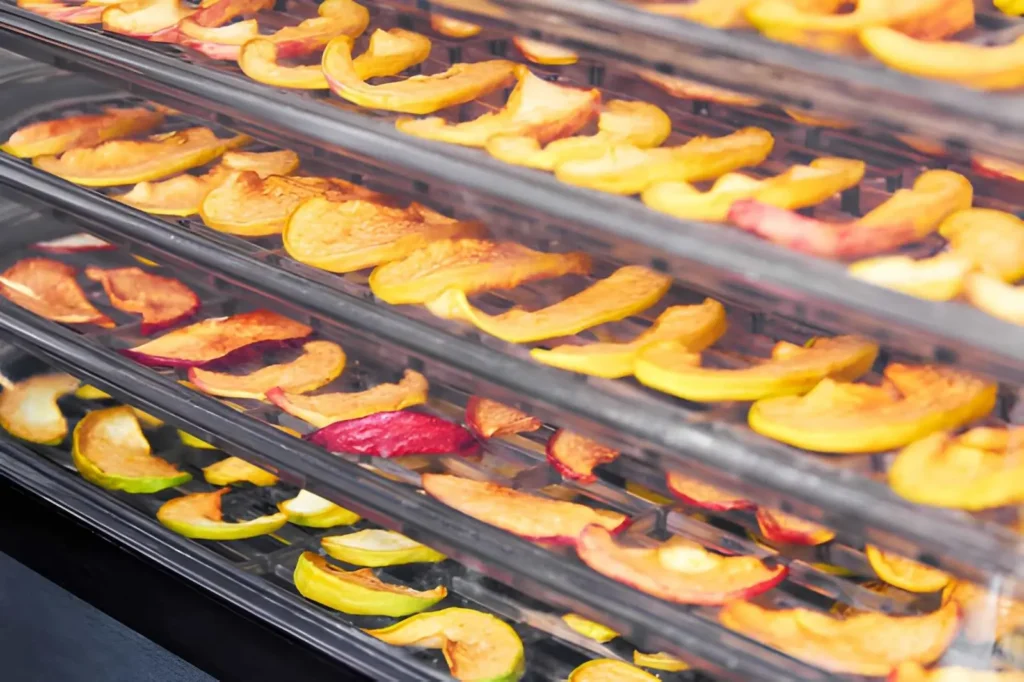
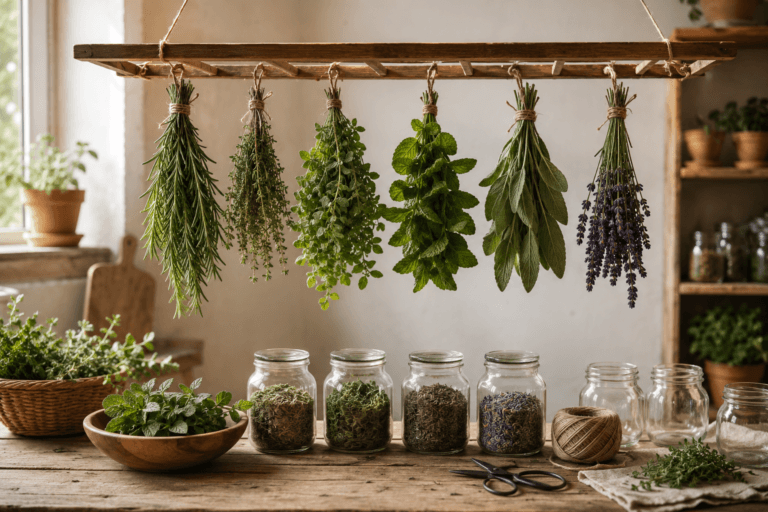
Dehydrating removes moisture from food until microorganisms can no longer grow under the intended storage conditions. Herbs, fruit slices, fruit leather, and selected vegetables are approachable starting projects.
Use sound produce, prepare evenly sized pieces, and follow a research-based pretreatment and drying method for the specific food. A proper food dehydrator provides better temperature and airflow control than improvised drying in many climates.
An electric food dehydrator with adjustable temperature, removable trays, and a rear-mounted circulation fan helps produce more even results than equipment with uncontrolled heat or poor airflow. Confirm that its temperature range covers the foods you intend to dry.
Dried food must cool before packaging. Condition dried fruit when the tested method requires it, then package the product in moisture-proof containers and store it in a cool, dry, dark location. Moisture inside a container may indicate incomplete drying or moisture reabsorption and requires immediate evaluation.
The complete beginner’s guide to dehydrating food explains preparation, temperature control, dryness checks, conditioning, packaging, and storage.
4. Water-Bath Canning
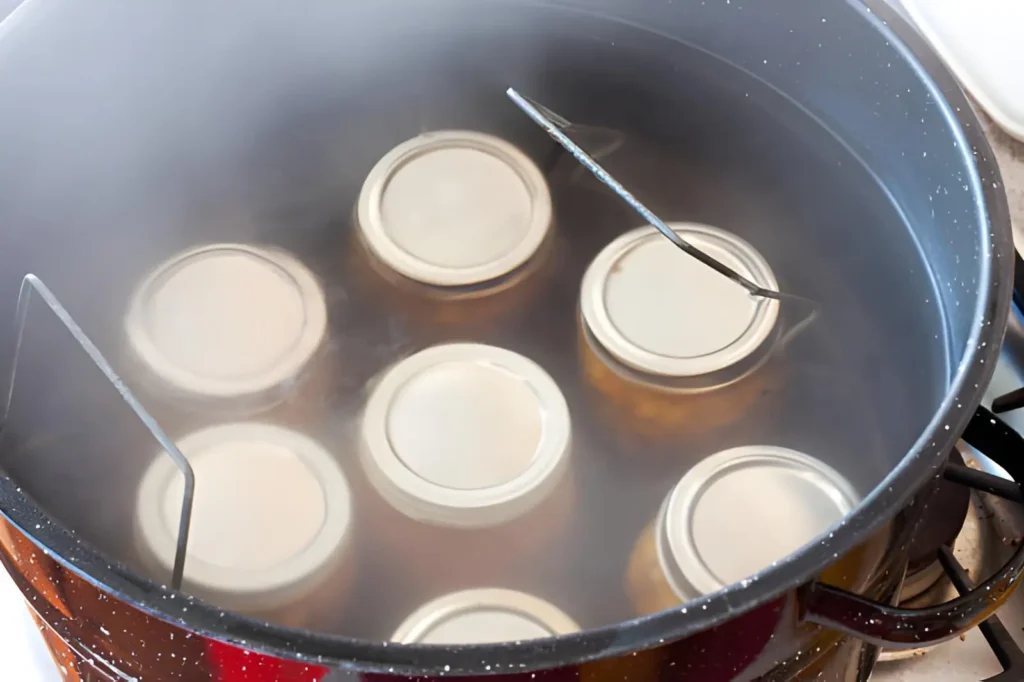
Boiling-water canning is designed for high-acid foods and foods acidified according to a tested recipe. Examples include many fruits, properly acidified tomatoes, tested pickles, jams, jellies, and fruit preserves.
The canner must hold the jars upright on a rack with the required amount of boiling water above the jar tops. Processing time depends on the food, preparation style, jar size, recipe, and elevation. Higher elevations require tested adjustments because water boils at a lower temperature.
A water-bath canning set with a fitted rack, jar lifter, canning funnel, lid tool, and bubble remover provides the basic handling equipment. The pot still needs to be deep enough for the selected jars and the required water coverage.
Water-bath canning must never be used for plain low-acid vegetables, meat, poultry, seafood, soups, or other low-acid mixtures. Boiling-water temperature is not sufficient for safely processing those foods.
5. Pressure Canning
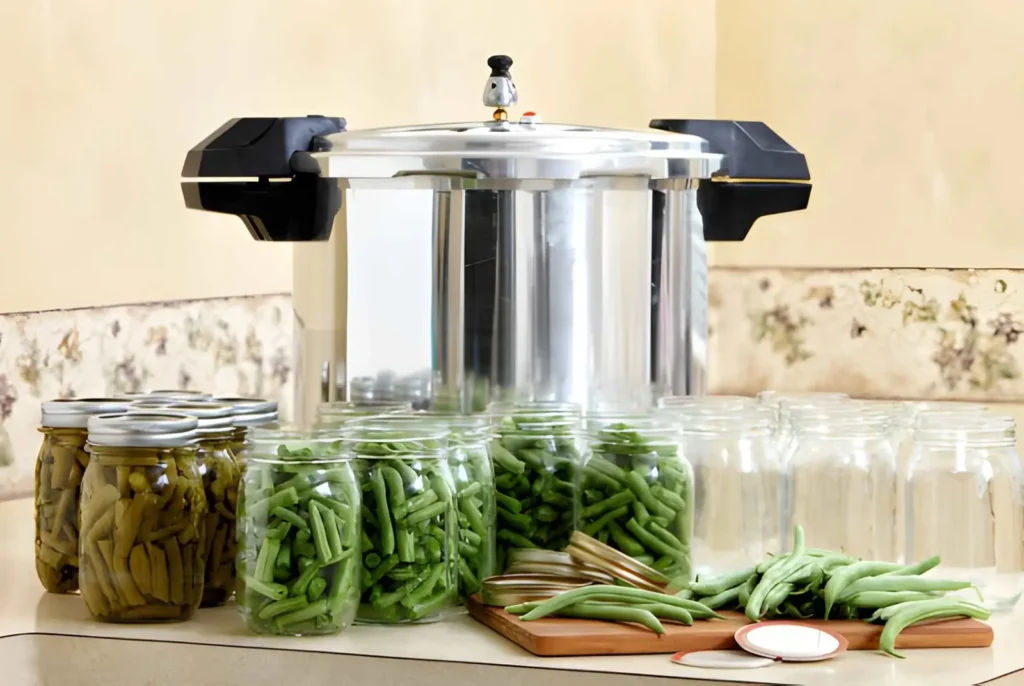
Pressure canning is the only recommended home-canning method for low-acid foods such as plain vegetables, meat, poultry, seafood, and many mixed recipes. The canner uses pressure to reach temperatures above boiling-water temperature.
A USDA-suitable stovetop pressure canner with a rack, locking lid, vent port, and serviceable pressure-control system is different from a small pressure cooker or electric multicooker. Choose a canner large enough to hold at least four upright quart jars and confirm that it is compatible with your stove.
Dial-gauge canners require gauge-accuracy checks according to current extension or manufacturer guidance. Weighted-gauge systems must have all required parts and operate correctly. Every pressure canner requires inspection, venting, timing, pressure control, and natural cooling exactly as instructed.
Never force-cool a canner, alter the pressure, shorten the processing time, change jar size, thicken a tested recipe, or add unapproved ingredients. An electric pressure cooker is not automatically safe for pressure canning simply because it has a “canning” button.
6. Pickling
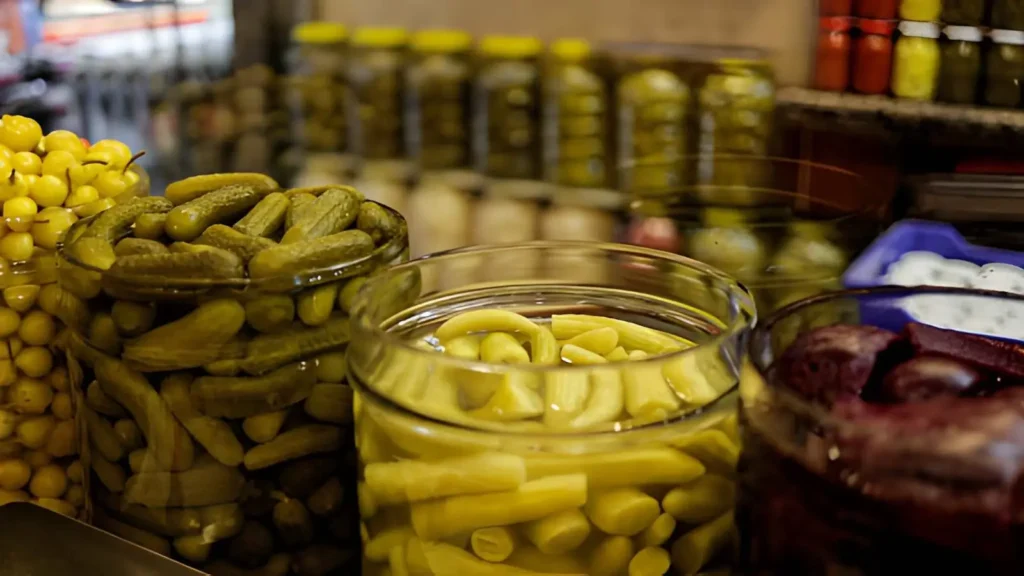
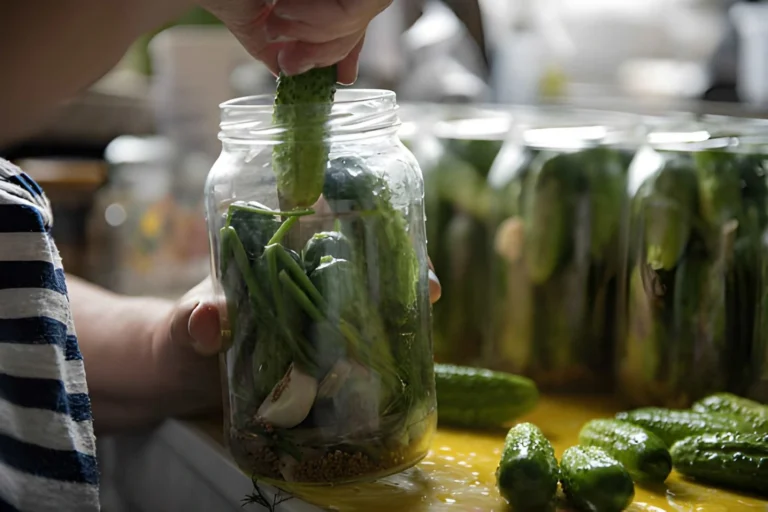
Pickling preserves food through carefully controlled acidity. Cucumbers are familiar, but tested recipes also exist for peppers, green beans, beets, carrots, relishes, and selected fruits.
There are two important categories. Refrigerator pickles remain refrigerated and are not shelf-stable. Canned pickles use a tested acidification formula followed by the specified boiling-water process.
Use vinegar with the acidity specified by the recipe. Do not reduce the vinegar, increase the water, change the food-to-brine ratio, or substitute an unverified vinegar. Salt can also have a functional role, particularly in fermented pickles, and should not be changed unless the tested recipe permits it.
The Dreamsteading guide to making pickles for beginners explains refrigerator and canned-pickle differences, ingredient selection, crispness, and storage.
7. Fermentation
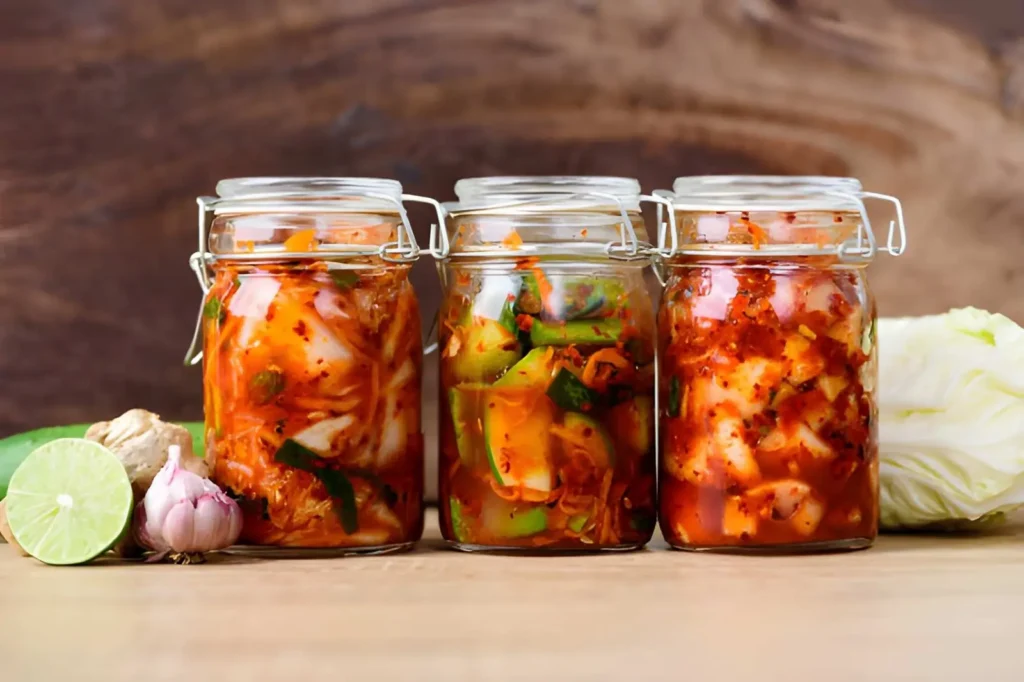
Fermentation uses selected or naturally present microorganisms to transform food under controlled conditions. Vegetable ferments such as sauerkraut and fermented pickles commonly rely on lactic acid production.
Successful fermentation depends on a research-based formula, suitable salt, clean equipment, the correct temperature range, and keeping vegetables submerged beneath brine when instructed. Do not estimate salt by taste or combine informal instructions from several recipes.
Glass fermentation weights and airlock lids sized for standard canning jars can help keep vegetables submerged and reduce exposure to airborne contamination. They do not replace correct salt concentration, sanitation, temperature control, or spoilage assessment.
Some fermented products require refrigeration after fermentation. Canning a ferment is a separate process and must follow a tested canning recipe. Do not assume that acidity developed during an improvised fermentation automatically makes a product safe for room-temperature storage.
8. Jams, Jellies, and Fruit Preserves
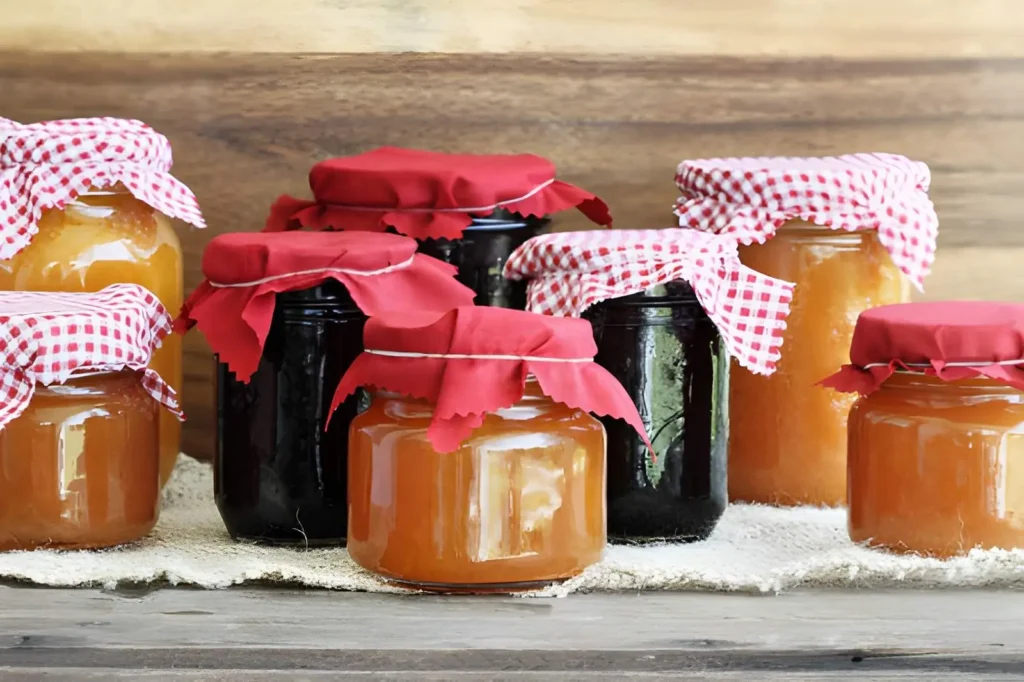
Fruit spreads preserve fruit using a combination of acidity, sugar, pectin, heat, and—in shelf-stable versions—a tested boiling-water process. Jam contains crushed or chopped fruit, jelly is made from fruit juice, and preserves usually contain larger pieces.
Traditional fruit spreads contain substantial sugar because sugar supports gel formation and contributes to preservation and quality. Reducing sugar in a standard recipe can prevent the product from setting and may change its storage safety.
Use a recipe specifically developed for reduced-sugar or no-sugar pectin if you want a lower-sugar spread. Freezer jam is another option, but it must be refrigerated or frozen according to the recipe; pouring hot jam into jars does not make it shelf-stable without an approved canning process.
9. Freeze-Drying
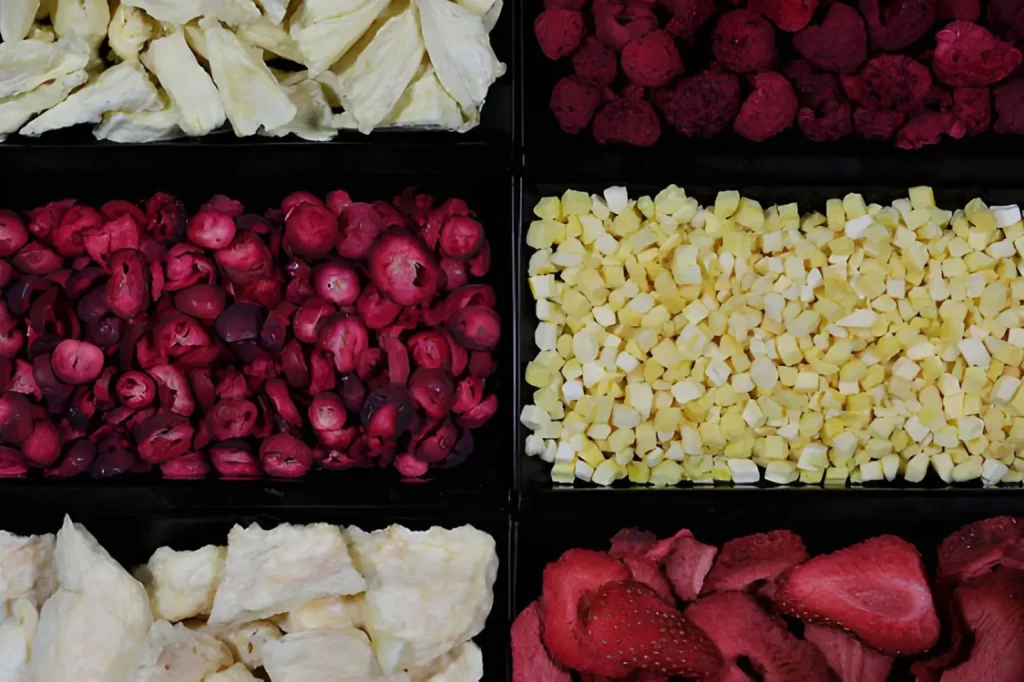
Freeze-drying freezes food and then removes ice as vapor under reduced pressure. It can preserve the structure, appearance, and flavor of many foods more effectively than conventional dehydration, but it requires specialized equipment.
Freeze-drying is not necessarily an easy first method. Equipment is expensive, cycles can take many hours, machines require suitable electrical service and maintenance, and the finished food needs prompt moisture- and oxygen-resistant packaging.
Freezing and sublimation do not guarantee that pathogens have been destroyed. Begin with safely handled food and maintain sanitation throughout preparation, drying, packaging, and rehydration. Utah State University Extension notes that freeze-drying can preserve foodborne bacteria even when the finished dry environment prevents them from multiplying.
Before purchasing a machine, evaluate batch capacity, electrical requirements, noise, heat output, pump maintenance, installation location, packaging costs, and the amount of food you realistically expect to process.
10. Cool, Moist, or Dry Crop Storage
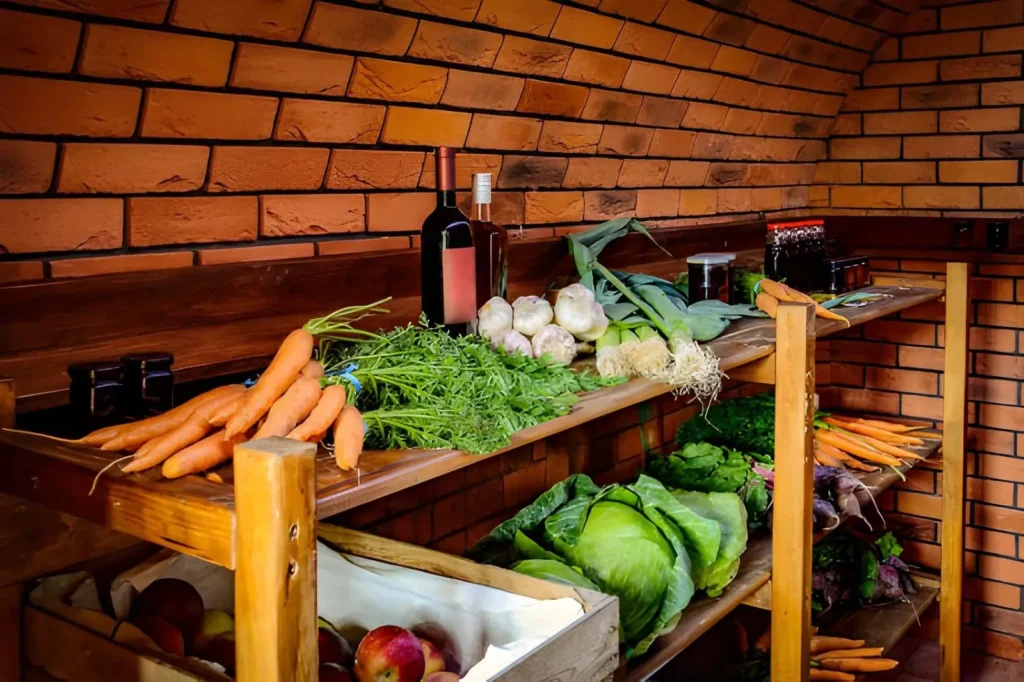
Some crops can be stored for weeks or months without canning or freezing when they are harvested, cured where required, and held under suitable temperature, humidity, darkness, and ventilation.
Onions and garlic generally need dry, ventilated storage after proper curing. Winter squash requires sound, undamaged fruit and crop-specific curing and storage conditions. Potatoes prefer dark storage with appropriate temperature and humidity, while many root crops need cooler, more humid conditions.
A basement is not automatically a root cellar. Measure temperature and humidity rather than judging by how the room feels. Store only sound produce, protect it from rodents, provide suitable airflow, and inspect it regularly. Remove spoiled items promptly so they do not affect nearby food.
Never store fresh produce near fuels, pesticides, paint, cleaning chemicals, or equipment that produces exhaust. Local climate strongly affects whether an unconditioned cellar, garage, shed, or outdoor clamp can maintain safe and useful conditions.
Benefits and Limitations of Preserving Food at Home
Benefits
- Seasonal harvests can be used beyond their fresh storage period.
- Several methods provide convenient ingredients and prepared foods.
- Preservation can reduce waste when planned around realistic household use.
- Using multiple methods provides flexibility during large harvests.
- Home preservers control ingredients within the limits of tested recipes.
Considerations
- Equipment, containers, energy, replacement seals, and storage space create ongoing costs.
- Processing large harvests requires significant time and organization.
- Unsafe recipe changes can create serious foodborne-illness risks.
- Freezers and refrigerators depend on continuous power.
- Preserved food can lose quality or spoil when packaging and storage are inadequate.
How to Choose the Best Preservation Method
Start with the food, not the equipment. Identify what you have, how much must be preserved, how your household uses it, and where the finished product will be stored.
- Choose refrigeration for food you expect to use soon.
- Choose freezing for the simplest preservation of many vegetables, fruits, meals, and animal products.
- Choose dehydration for herbs, fruit snacks, selected vegetables, and lightweight pantry ingredients.
- Choose water-bath canning only for a tested high-acid or acidified recipe.
- Choose pressure canning for tested recipes containing low-acid vegetables, meat, poultry, seafood, or compatible mixtures.
- Choose refrigerator pickling for an accessible introduction to pickled flavors without creating a shelf-stable product.
- Choose fermentation when you can control salt, temperature, submersion, sanitation, and storage.
- Choose cool storage for crops specifically suited to the conditions you can maintain.
Beginners usually benefit from mastering one method before purchasing equipment for several. Freezing berries, dehydrating herbs, and preparing a tested refrigerator pickle are approachable starting projects. Water-bath canning can follow once you understand jars, headspace, processing, elevation adjustments, cooling, and seal inspection.
If you plan to grow herbs specifically for drying or freezing, the Dreamsteading guide to growing basil for beginners covers planting, care, harvesting, and common problems.
Food-Preservation Rules That Should Not Be Compromised
- Use current recipes from the USDA, National Center for Home Food Preservation, or a university extension program.
- Use the exact food preparation, jar size, headspace, processing time, pressure, and elevation adjustment specified.
- Do not double a canning recipe unless the source explicitly provides instructions for that batch size.
- Do not thicken canned soups or sauces unless the tested recipe includes the thickener.
- Do not change vinegar strength or reduce the required acid in pickled products.
- Inspect jars and equipment before use and replace damaged components.
- Clean work surfaces, wash hands, and prevent cross-contamination.
- Label packages with the food, preparation details when useful, and date.
- Store products under the conditions required by the tested method.
- Discard suspicious food without tasting it.
Myth
If a canning jar seals, the food inside must be safe
Reality
A vacuum seal only shows that the lid has been pulled down. It does not prove that the correct temperature, pressure, acidity, or processing time was achieved. An improperly processed jar may seal and still contain hazardous food.
Common Food Preservation Mistakes
- Using an unverified online or inherited recipe: Traditional appearance does not confirm that a process controls modern food-safety hazards.
- Confusing a pressure cooker with a pressure canner: The appliances differ in capacity, heating behavior, venting, and validated processing use.
- Changing jar size: A larger jar may heat more slowly than the size specified in the tested process.
- Ignoring elevation: Boiling-water processing time and pressure-canning requirements must be adjusted where instructed.
- Assuming vacuum sealing preserves food: Removing air is a packaging method, not a complete preservation process.
- Packaging food while still warm: Warm dried food can create condensation inside a sealed container.
- Storing food without labels: Unidentified packages are difficult to rotate and evaluate.
- Preserving more than the household uses: Large batches waste time, energy, containers, and storage space when the food remains uneaten.
Frequently Asked Questions
What is the easiest food preservation method for a beginner?
Freezing is usually the easiest starting method because it requires relatively little specialized equipment. Many vegetables still need correct blanching, and all food must be packaged, labeled, frozen promptly, and maintained at 0°F (-18°C) or below.
Which food preservation methods make food shelf-stable?
Properly processed canned food, sufficiently dried or freeze-dried food in appropriate packaging, and selected crops maintained under suitable storage conditions may be shelf-stable. Refrigerator pickles, many ferments, frozen foods, and ordinary refrigerated foods require continued temperature control.
Can I use an electric pressure cooker for pressure canning?
Do not use an electric pressure cooker or multicooker unless a current research-tested process explicitly authorizes that exact equipment and use. A pressure-cooking function or canning button does not make the appliance equivalent to a stovetop pressure canner.
Does vacuum sealing make food safe at room temperature?
No. Vacuum sealing removes air but does not destroy pathogens or make moist, perishable food shelf-stable. Vacuum-sealed meat, prepared meals, cheese, and similar foods still require refrigeration or freezing unless they have undergone another validated preservation process.
Can I reduce the sugar in a jam recipe?
Do not reduce sugar in a traditional recipe unless the tested instructions permit it. Use a recipe and pectin product specifically developed for reduced-sugar or no-sugar jam. Changing sugar can affect gel formation, quality, and storage requirements.
Is mold on a preserved food safe to remove from the surface?
Do not simply remove visible mold and eat the remaining home-preserved product unless an authoritative source specifically identifies that food and action as safe. Mold growth may extend beyond what is visible and can alter the product’s safety.
Which preservation method is best during power outages?
Correctly canned, dried, freeze-dried, and properly stored shelf-stable foods do not require continuous refrigeration. However, each must be processed and packaged correctly. Freezers can also retain food safely for a limited period when kept closed, but temperature must be monitored.
Build Your Preservation Skills Gradually
Food preservation becomes easier when you begin with one method and a small amount of food. Freeze a manageable batch of seasonal produce, dry one tray of herbs, or prepare a tested refrigerator pickle before investing in more specialized equipment.
As your skills grow, add water-bath canning for tested high-acid recipes and pressure canning if you need to preserve low-acid foods. Keep current authoritative instructions accessible, label every batch, and record which methods your household actually uses.
The best preservation plan is not the one with the most jars or equipment. It is the one that safely matches your harvest, storage space, available time, and eating habits.
Sources and Further Reading
- National Center for Home Food Preservation — current research-based guidance for canning, freezing, drying, pickling, fermentation, jams, jellies, and food storage.
- USDA Complete Guide to Home Canning — USDA home-canning principles, equipment, tested processes, and food-specific recommendations.
- USDA Food Safety and Inspection Service: Botulism — information about botulism prevention and pressure-canning low-acid food.
- University of Minnesota Extension: Preserve Your Own Food — research-based freezing, canning, pickling, drying, fermenting, and freeze-drying resources.
- University of Minnesota Extension: Freezing Food — freezer temperature, preparation, pretreatment, packaging, and quality guidance.
- University of Minnesota Extension: Drying Food — drying methods, preparation, temperature control, and packaging information.
- National Center for Home Food Preservation: Fermenting — vegetable fermentation principles and tested resources.
- Utah State University Extension: Safe and Effective Freeze-Drying — sanitation, equipment, suitable foods, and pathogen-survival considerations.