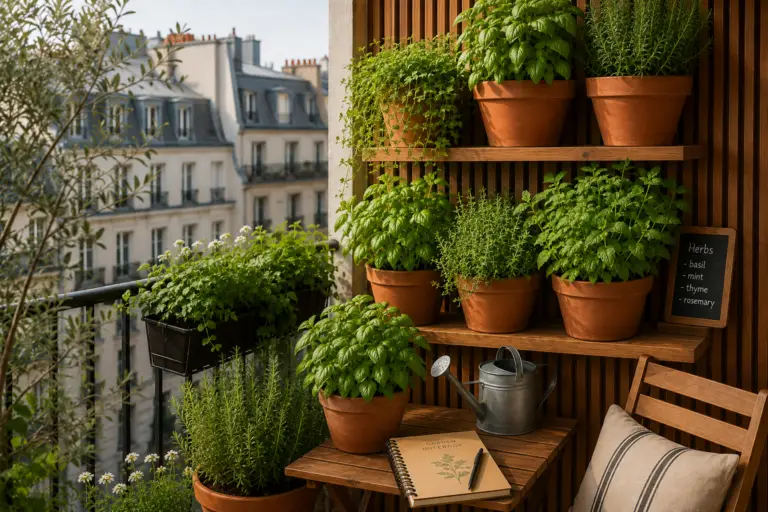
5 Beautiful Summer Raised Garden Beds for Thriving Summer Crops
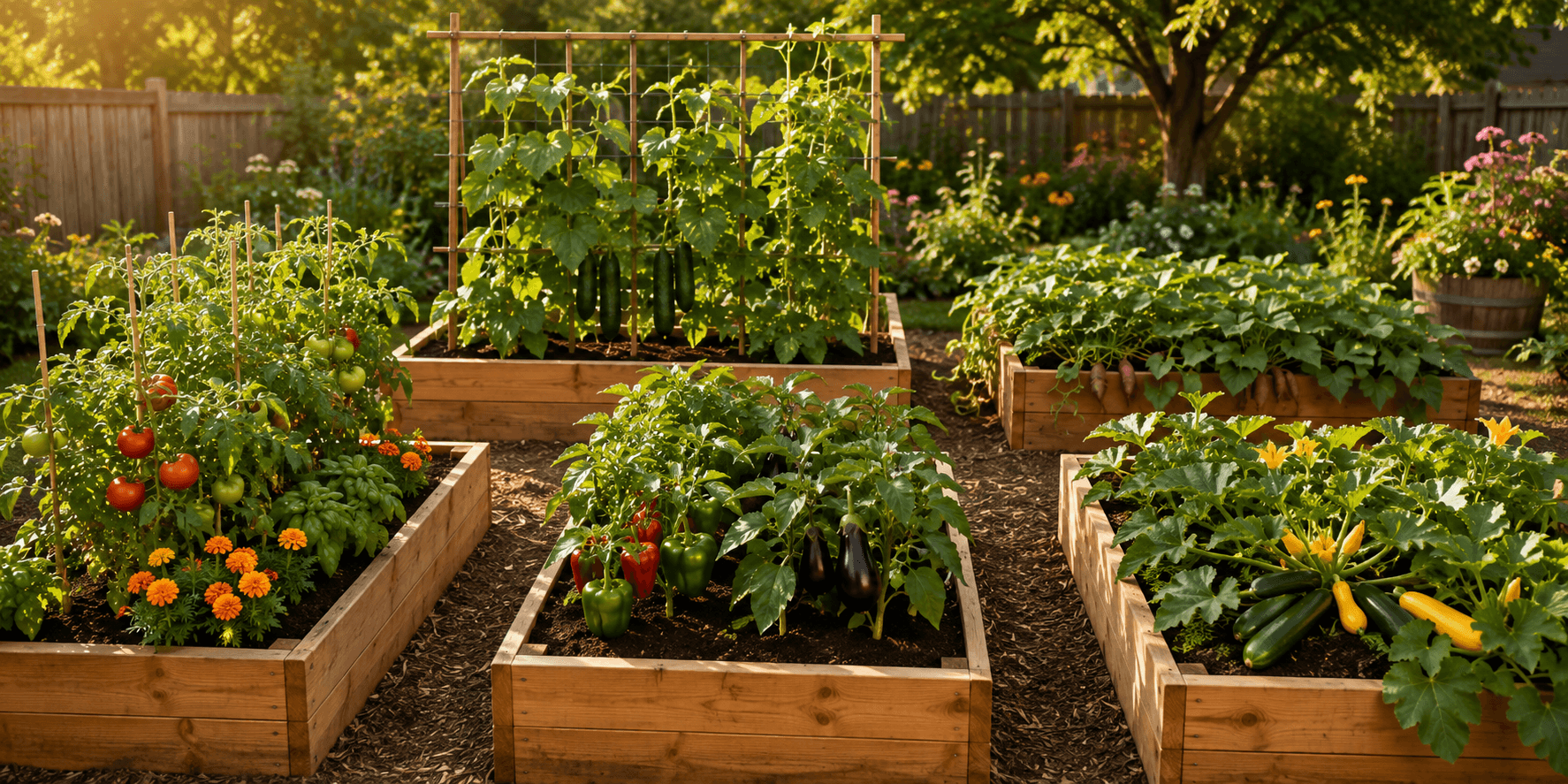
Summer raised garden beds for summer planting are one of the best ways to grow a productive warm-season vegetable garden at home. Once the soil is warm and the risk of frost has passed, raised beds can be filled with heat-loving crops like tomatoes, peppers, cucumbers, beans, zucchini, eggplants, sweet potatoes, squash, herbs, and flowers.
A five-bed summer garden will not make most families fully self-sufficient all year, and it is better not to promise that. But it can grow a strong home harvest and reduce how much you buy from the grocery store during the warm season. With the right layout, five raised beds can provide fresh vegetables for salads, grilling, sauces, freezing, preserving, and everyday meals.
The key is to avoid mixing the wrong seasons together. Summer raised beds should focus on warm-season crops, not cool-season vegetables like lettuce, spinach, peas, broccoli, cabbage, or kale. Those crops usually grow better in spring or fall.
In this guide, you will learn how to plan five raised garden beds for summer planting, what to grow in each bed, how to group crops correctly, and how to avoid common spacing and watering mistakes.
Why Use Raised Beds for Summer Planting?
Raised beds make summer gardening easier because they keep the garden organized, improve drainage, and allow you to control the soil more easily. Instead of planting randomly across the yard, each bed can have a clear purpose.
One bed can focus on tomatoes and basil. Another can hold peppers and eggplants. A trellis bed can support cucumbers and pole beans. A larger bed can grow zucchini and summer squash. A final bed can be used for sweet potatoes, melons, or winter squash.
Raised beds are also helpful because warm-season crops often need steady watering and rich soil. Tomatoes, cucumbers, peppers, zucchini, and squash can all produce heavily when they have the right conditions.
If you are still planning your garden structure, learning how to build raised garden beds can help you create a more organized and productive summer garden.
A summer raised bed garden can help you:
- Grow more food in a smaller space
- Keep crops organized by type
- Improve soil quality
- Reduce weeds
- Make watering easier
- Use trellises for vertical crops
- Create a practical home harvest garden
- Grow vegetables for fresh eating and preserving
The goal is not perfection. The goal is to create a summer garden layout that is realistic, productive, and easy to maintain.
What Counts as a Warm-Season Crop?
Warm-season crops are vegetables that grow best when the weather is warm and the soil has heated up. These crops usually do not tolerate frost and should not be planted outdoors too early.
Common warm-season crops include:
- Tomatoes
- Peppers
- Eggplants
- Cucumbers
- Beans
- Zucchini
- Summer squash
- Sweet potatoes
- Melons
- Winter squash
- Okra
- Basil
These crops need sunshine, warmth, consistent watering, and enough space. Many of them grow quickly once the weather is right.
Cool-season crops are different. Lettuce, spinach, peas, broccoli, cabbage, kale, and radishes usually prefer cooler weather. They can be part of a spring or fall raised bed plan, but they are not the main focus of a summer planting layout.
Before You Plant: Set Up Your Summer Beds Correctly
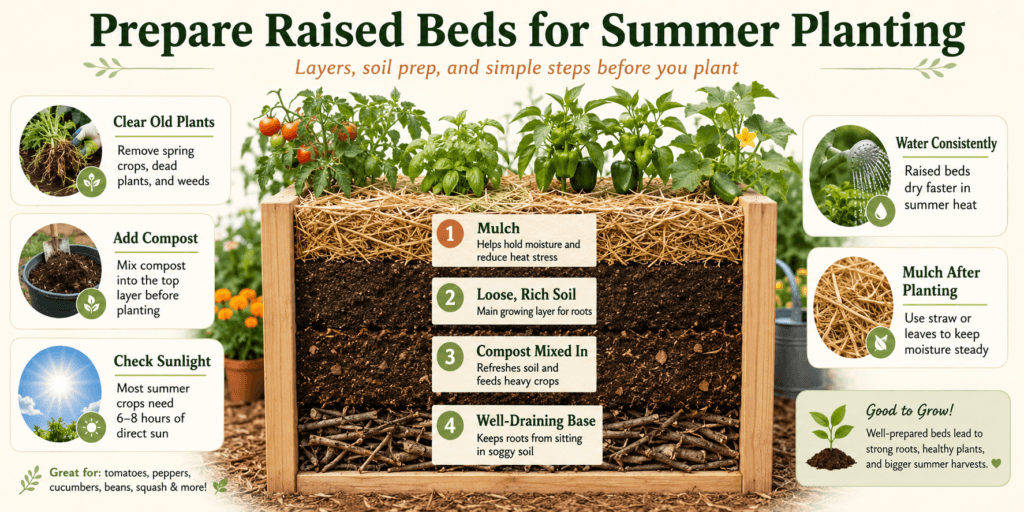
Before planting, make sure your raised beds are ready for summer growth. Warm-season vegetables can be heavy feeders, especially tomatoes, squash, cucumbers, and peppers.
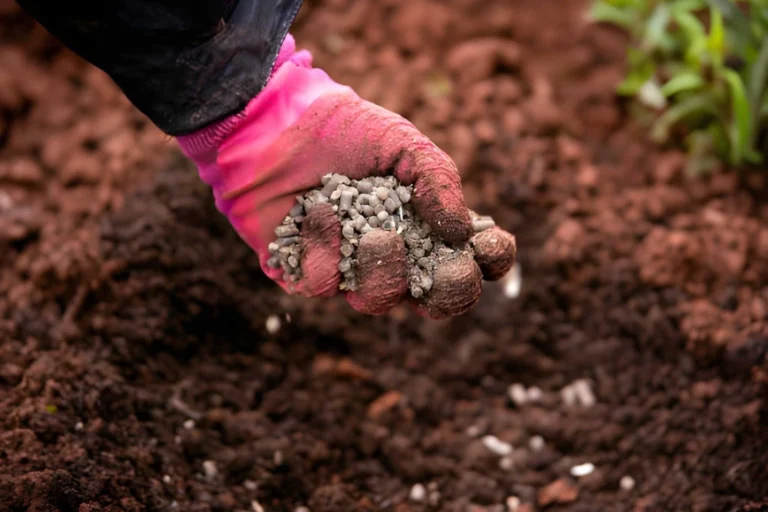
Start by checking the soil. It should be loose, rich, and well-draining. If your beds were used in spring, remove old plants, pull weeds, and refresh the soil with compost.
Adding compost before planting is one of the easiest ways to improve raised bed soil, and this guide to composting for beginners can help you make your own.
You should also think about sunlight. Most warm-season vegetables need at least 6 to 8 hours of direct sun per day. Tomatoes, peppers, eggplants, cucumbers, beans, and squash all grow best with strong sunlight.
Watering also matters. Raised beds can dry out faster than in-ground beds during summer. Mulch can help keep soil moisture steady and reduce heat stress.
Before choosing lumber for your beds or trellises, it helps to understand the best wood for garden projects so your setup lasts longer outdoors.
Overview: The 5 Raised Bed Summer Planting Plan
Here is the simple structure for this summer garden layout:
| Raised Bed | Main Crops | Best For |
|---|---|---|
| Bed 1 | Tomatoes, basil, marigolds | Fresh eating, sauces, preserving |
| Bed 2 | Peppers, eggplants, herbs | Grilling, roasting, cooking |
| Bed 3 | Cucumbers, pole beans, dill | Vertical growing, fresh harvests |
| Bed 4 | Zucchini, summer squash, bush beans | Big harvests, easy meals |
| Bed 5 | Sweet potatoes, melons, or winter squash | Filling crops, storage, larger harvests |
This plan is flexible. You do not need to grow everything listed. In fact, it is better to grow fewer crops well than to overcrowd every bed.
If your beds are small, choose the crops your family actually eats most often. If your beds are larger, you can add more herbs, flowers, and companion plants around the edges.
Bed 1: Tomato, Basil, and Marigold Bed
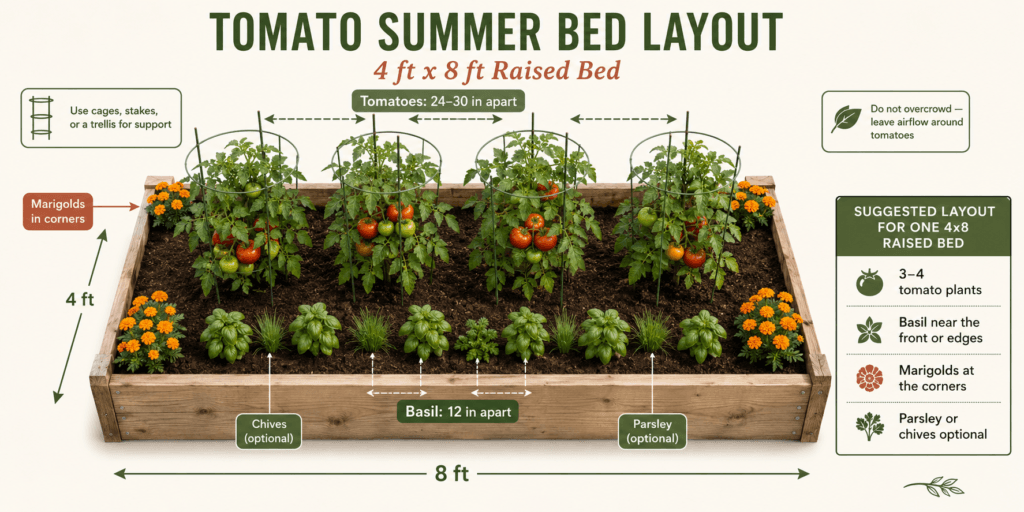
The first summer raised bed should focus on tomatoes because they are one of the most valuable crops for home consumption. Tomatoes can be used fresh, cooked, frozen, canned, roasted, or turned into sauces and salsa.
A good tomato bed can include:
- Tomatoes
- Basil
- Marigolds
- Parsley, optional
- Chives, optional
Tomatoes and basil are one of the most useful summer garden combinations because they both belong in a warm-season kitchen garden. You can start with quality tomato seeds, add basil seeds around the edges for fresh cooking, and tuck in marigold seeds for extra color and pollinator-friendly flowers. If the bed has enough space, this simple mix gives you fresh tomatoes for salads and sauces, basil for homemade meals, and marigolds to make the raised bed look fuller and more inviting.
For a family garden, choose a mix of tomato types. Cherry tomatoes are great for fresh snacking and salads. Roma or paste tomatoes are better for sauces and preserving. Slicing tomatoes are useful for sandwiches and fresh meals.
Do not overcrowd this bed. Tomatoes need airflow, strong support, and consistent watering. Crowded tomatoes are more likely to develop disease problems and can be harder to harvest.
A simple layout for a 4×8 raised bed could be:
- 3 to 4 tomato plants
- Basil near the front or edges
- Marigolds at the corners
- A strong trellis, stakes, or cages for support
If your bed is smaller, plant fewer tomatoes. One healthy tomato plant can often produce more than several overcrowded, weak plants.
Bed 2: Pepper and Eggplant Bed
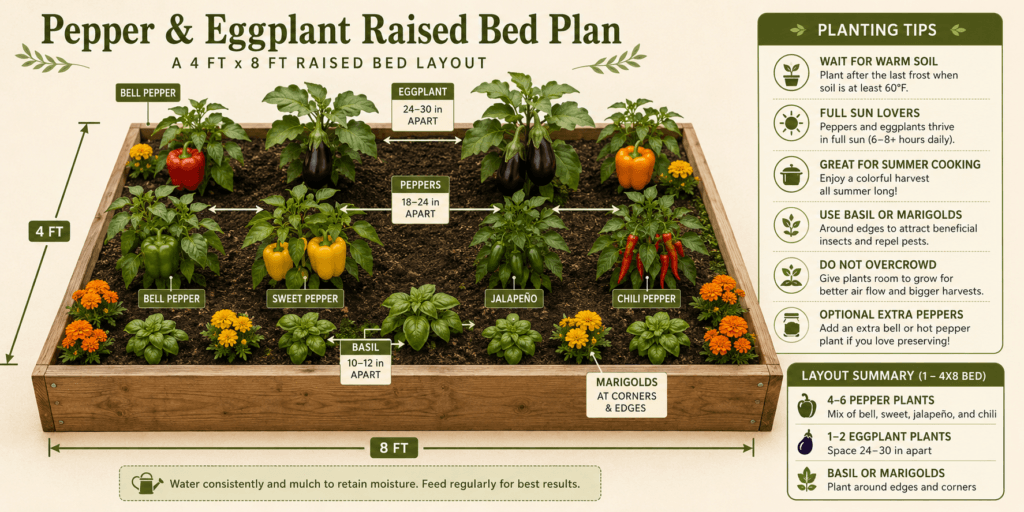
The second raised bed can focus on peppers and eggplants, two warm-season crops that grow well together because they enjoy similar conditions. Start with quality pepper seeds if you want a mix of bell peppers, sweet peppers, jalapeños, or chili peppers, then add eggplant seeds for a productive summer cooking bed. Once the weather is reliably warm, these crops can become a useful part of your raised bed garden for grilling, roasting, sauces, stir-fries, pasta dishes, rice bowls, and Mediterranean-style meals.
A simple layout for this bed could include 4 to 6 pepper plants, 1 to 2 eggplants, and a few basil or marigold plants around the edges if space allows. Peppers and eggplants grow more slowly than beans, cucumbers, or zucchini, so they need patience, warmth, steady watering, and rich soil. Avoid planting them outside while the soil is still cold.
If you want more preserving options, grow extra bell peppers and hot peppers. Peppers are easy to chop and freeze for later meals, while hot peppers can be dried for homemade seasoning. Eggplants are best used fresh in grilled dishes, roasted vegetable mixes, stews, and summer meals.
Bed 3: Cucumber and Pole Bean Trellis Bed
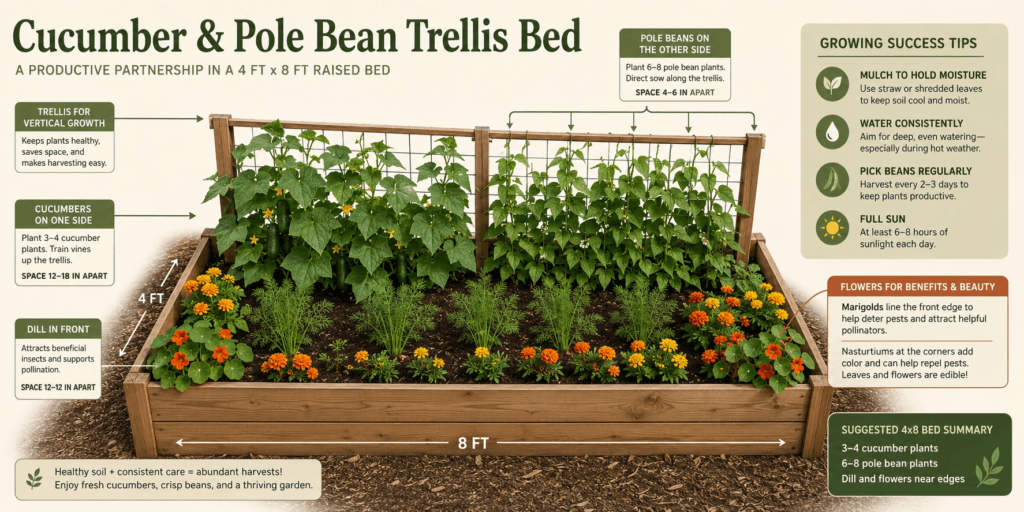
The third raised bed should focus on vertical summer crops. Cucumbers and pole beans are excellent choices because they grow upward on a trellis instead of spreading across the whole garden bed. You can start with quality cucumber seeds for fresh salads, pickling, and summer meals, then add pole bean seeds for a productive climbing crop that is useful for fresh eating, freezing, and simple home harvests.
This bed can include:
- Cucumbers
- Pole beans
- Dill
- Marigolds
- Nasturtiums, optional
A trellis is very important for this bed. Cucumbers can sprawl across the ground if they are not trained upward, and pole beans need strong support as they climb. Growing vertically helps save space, improves airflow, keeps cucumbers cleaner, and makes harvesting much easier.
A simple layout for this bed could be:
- Trellis along the back or center
- Cucumbers on one side
- Pole beans on the other side
- Dill or flowers near the edges
Cucumbers need consistent watering. If they dry out too often, the fruit can become bitter or misshapen. Mulch around the base of the plants to help hold moisture. Pole beans are also productive when picked regularly, so harvest often to encourage more pods.
If you are new to gardening, start with a few easy vegetables to grow for beginners like bush beans, zucchini, cucumbers, and cherry tomatoes.
Bed 4: Zucchini, Summer Squash, and Bush Bean Bed
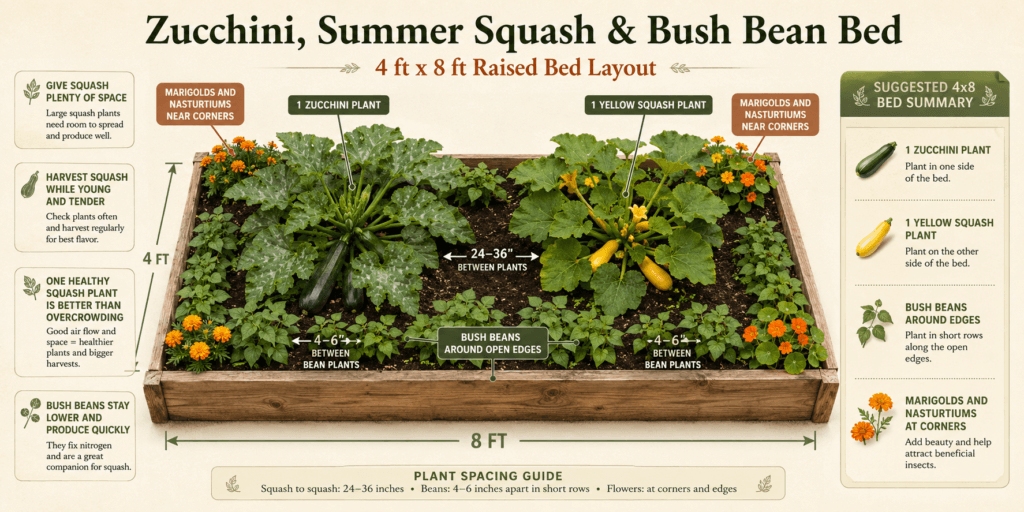
The fourth raised bed can focus on heavy summer producers. Zucchini, summer squash, and bush beans are useful warm-season crops because they can give you a lot of food from a small number of plants. You can start with quality zucchini seeds, add summer squash seeds for yellow squash or other summer varieties, and plant bush bean seeds around the open edges for a quick, productive crop that works well for fresh meals and freezing.
This bed can include:
- Zucchini
- Yellow squash
- Bush beans
- Nasturtiums
- Marigolds
Zucchini and summer squash need more space than many beginners expect. One healthy zucchini plant can become large quickly and may shade smaller crops nearby. For a 4×8 raised bed, a simple layout could be:
- 1 zucchini plant
- 1 yellow squash plant
- Bush beans around the open edges
- A few flowers near the corners
If your bed is smaller, grow only one squash plant. It is better to have one strong, productive plant than several crowded plants competing for light, water, and nutrients. Bush beans are a good companion crop for this bed because they stay lower, grow quickly, and are easy to harvest.
Zucchini and summer squash are useful in many home meals. You can grill them, sauté them, bake zucchini into bread, add squash to soups, freeze shredded zucchini, or use them in quick summer dinners. Harvest squash while it is still young and tender. Oversized zucchini may look impressive, but smaller ones usually taste better. better.
Bed 5: Sweet Potato, Melon, or Winter Squash Bed
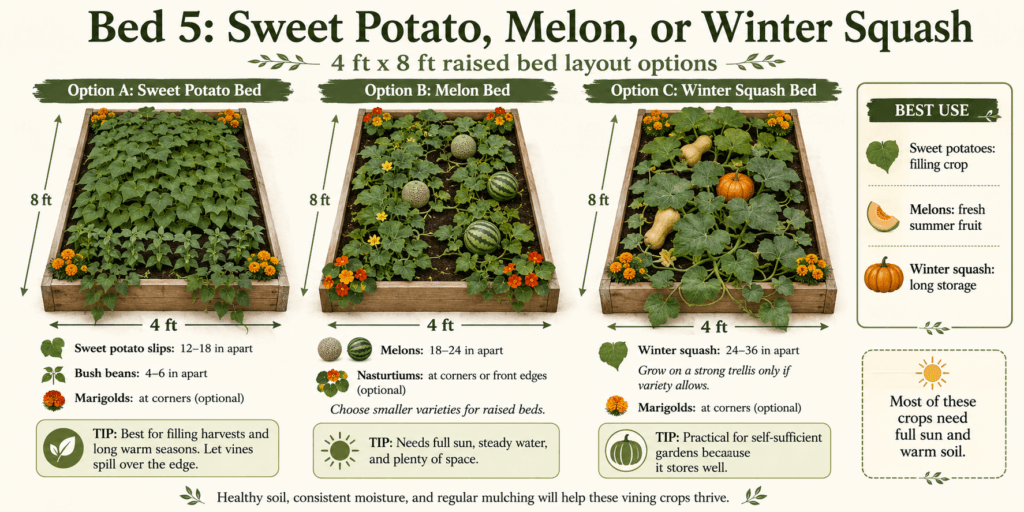
The fifth bed should be used for a larger warm-season crop. This is the bed that can give you more filling harvests, but it also needs the most space.
Choose one main direction for this bed.
Option A: Sweet Potato Bed
Sweet potatoes are a great choice if you want a more filling crop for home consumption. They grow as vines and can produce a useful harvest if your summer is long and warm enough.
Plant:
- Sweet potatoes
- Bush beans around the edges, optional
- Marigolds, optional
Sweet potatoes need warm soil and a long growing season. Let the vines spread over the edge of the bed if needed.
Option B: Melon Bed
Melons are a fun summer crop, especially if your family enjoys fresh fruit from the garden.
Plant:
- Cantaloupe
- Small watermelon varieties
- Nasturtiums
Melons need plenty of sun, water, and space. Smaller varieties are better for raised beds.
Option C: Winter Squash Bed
Winter squash is useful because it can store longer than many summer vegetables.
Plant:
- Butternut squash
- Small pumpkins
- Marigolds
Winter squash vines need a lot of room. Let them spill over the side of the bed or grow them on a strong trellis if the variety allows it.
For a more self-sufficient garden, sweet potatoes or winter squash are usually more practical than melons because they are more filling and store better.
Herbs and Flowers to Add Around the Beds
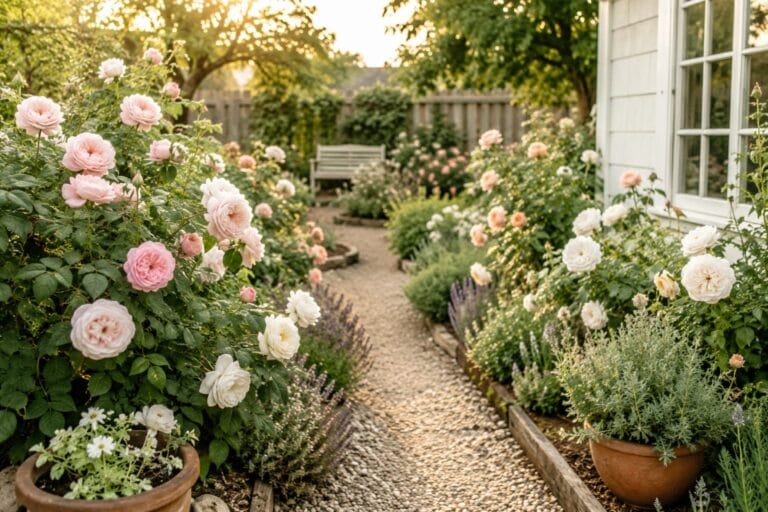
Herbs and flowers make a summer raised bed garden more useful and beautiful. They can also attract pollinators and beneficial insects.
Good herbs and flowers for summer raised beds include:
- Basil
- Dill
- Parsley
- Chives
- Marigolds
- Nasturtiums
- Calendula
- Oregano
- Thyme
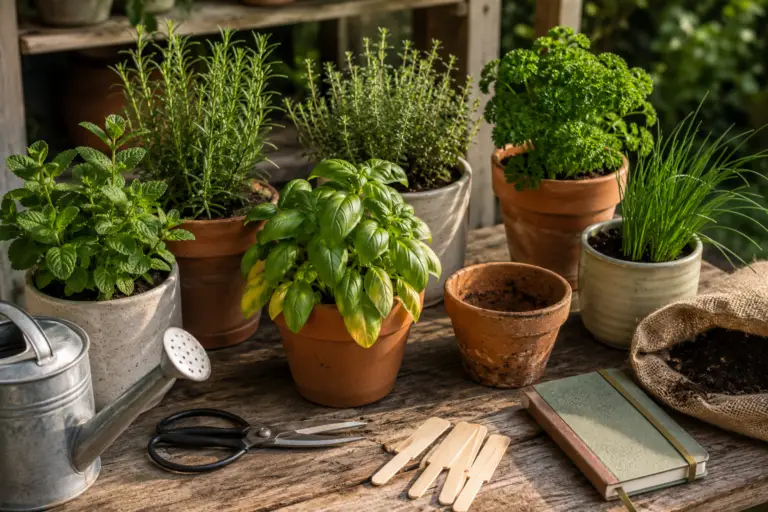
Basil works especially well near tomatoes and peppers. Dill pairs well with cucumbers. Marigolds and nasturtiums are easy flowers to tuck into corners and bed edges.
You can add more flavor and pollinator support by using simple herb garden ideas around your summer vegetable beds.
Do not let herbs and flowers overcrowd the vegetables. Use them as supporting plants, not as the main crop in every bed.
Simple Planting Schedule for Summer Raised Beds
The best planting time depends on your local climate, but the general rule is simple: plant warm-season crops after the danger of frost has passed and the soil has warmed.
A basic summer planting schedule looks like this:
- Start tomatoes, peppers, and eggplants indoors before the season, or buy transplants.
- Direct sow beans, cucumbers, zucchini, and squash once the soil is warm.
- Plant basil after the weather is warm.
- Plant sweet potato slips after the soil is warm and nights are mild.
- Add marigolds and nasturtiums when planting the beds.
Do not rush warm-season crops into cold soil. Tomatoes, peppers, eggplants, cucumbers, melons, and squash can all struggle if planted too early.
Watering and Mulching Tips
Summer raised beds need consistent watering. Many warm-season vegetables produce watery fruits, such as tomatoes, cucumbers, zucchini, peppers, and melons. If the plants dry out repeatedly, production and quality can suffer.
Water deeply rather than lightly sprinkling every day. Deep watering encourages stronger roots.
Mulch is very helpful in summer. Straw, shredded leaves, grass clippings, or compost mulch can help hold moisture, reduce weeds, and keep soil temperatures steadier.
Try to water at the base of plants instead of spraying leaves. This is especially helpful for tomatoes, squash, cucumbers, and beans.
Containers and shallow beds dry out faster, so check them often during hot weather.
How to Harvest from a 5-Bed Summer Garden
Harvesting often keeps many summer crops productive.
Pick tomatoes when they are ripe and fully colored. Pick cherry tomatoes often because they can split if left too long.
Harvest cucumbers when they are still firm and before they get oversized. Large cucumbers can become seedy and bitter.
Pick beans regularly to encourage the plants to produce more pods.
Harvest zucchini and summer squash when they are young and tender. Smaller squash usually taste better and are easier to cook.
Pick peppers at the stage you prefer. Green peppers are harvested earlier, while red, yellow, or orange peppers need more time to mature.
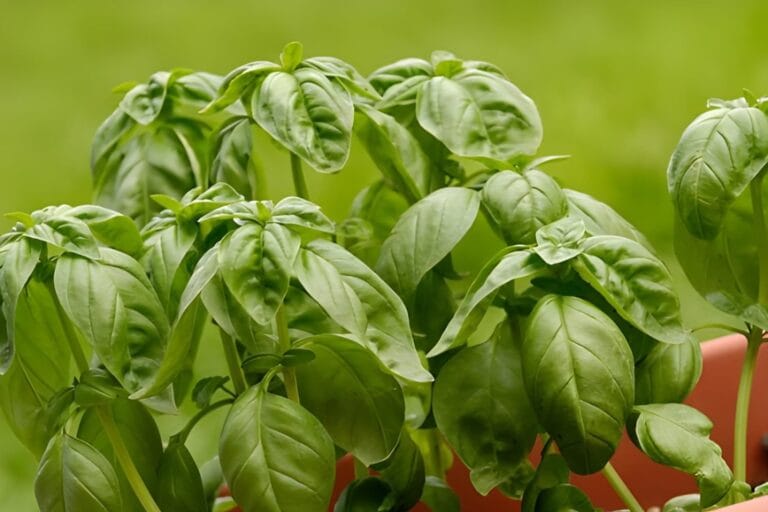
Harvest basil by pinching stems above a set of leaves. This helps the plant grow bushier.
How This Garden Supports Home Consumption
A five raised bed summer garden can give you a strong mix of fresh eating crops, cooking vegetables, and preserving options.
Fresh eating crops include:
- Cherry tomatoes
- Cucumbers
- Bell peppers
- Basil
- Melons
- Zucchini
Cooking crops include:
- Eggplants
- Summer squash
- Beans
- Hot peppers
- Sweet potatoes
- Winter squash
Preserving crops include:
- Roma tomatoes
- Peppers
- Beans
- Zucchini
- Basil
- Winter squash
This kind of garden will not replace every grocery trip, but it can make your kitchen feel more connected to your backyard. It can give you fresh produce during peak summer and extra harvests to freeze, dry, cook, or preserve.
Common Summer Raised Bed Mistakes to Avoid
The biggest mistake is overcrowding. Tomatoes, cucumbers, zucchini, squash, melons, and winter squash all need more space than many beginners expect.
Another mistake is planting warm-season crops too early. Cold soil can slow growth and stress the plants.
Do not skip supports. Tomatoes need cages, stakes, or trellises. Cucumbers and pole beans need climbing support.
Do not forget to water consistently. Raised beds can dry quickly in summer heat.
Avoid planting too many large crops in one bed. One zucchini plant, one cucumber trellis, or one winter squash vine can take up more space than expected.
Also avoid growing crops your family does not eat. A productive garden should match your kitchen habits.
FAQ About Raised Garden Beds for Summer Planting
What vegetables grow best in raised beds during summer?
The best summer vegetables for raised beds include tomatoes, peppers, eggplants, cucumbers, beans, zucchini, summer squash, sweet potatoes, melons, winter squash, okra, and basil.
Can 5 raised beds feed a family?
Five raised beds can provide a strong home harvest, but they usually will not fully feed a family all year. They can reduce grocery costs and provide many fresh summer vegetables.
What should I plant in a summer raised bed garden?
A good summer raised bed garden can include tomatoes, peppers, eggplants, cucumbers, pole beans, zucchini, summer squash, herbs, flowers, and one larger crop like sweet potatoes or winter squash.
What should not be planted in a summer raised bed?
Cool-season crops like lettuce, spinach, peas, broccoli, cabbage, kale, and radishes usually grow better in spring or fall. They are not ideal main crops for hot summer planting.
How many tomato plants fit in a 4×8 raised bed?
A 4×8 raised bed can usually fit about 3 to 4 tomato plants if they are properly spaced and supported. The exact number depends on the tomato variety and pruning method.
Can I grow cucumbers and beans together?
Yes, cucumbers and pole beans can share a trellis bed if there is enough space and support. Keep the layout organized so the vines do not become tangled.
Are zucchini and squash good for raised beds?
Yes, but they need space. One or two plants can fill a raised bed quickly, so avoid planting too many.
What is the best crop for self-sufficiency in summer raised beds?
For a more filling harvest, sweet potatoes and winter squash are useful choices because they provide more calories and can store better than many fresh summer vegetables.
Conclusion
Raised garden beds for summer planting can help you grow a productive warm-season vegetable garden with a clear and practical layout. Instead of mixing crops from different seasons, focus on vegetables that love warmth, sun, and rich soil.
A strong five-bed summer plan can include tomatoes and basil, peppers and eggplants, cucumbers and pole beans, zucchini and summer squash, and one larger crop like sweet potatoes, melons, or winter squash.
This setup will not make most families fully self-sufficient all year, but it can provide a meaningful home harvest. You can grow fresh vegetables for salads, sauces, grilling, cooking, freezing, and preserving.
Start simple. Choose the crops your family actually eats, give each plant enough space, water consistently, and use trellises where needed. With the right plan, five raised beds can become one of the most useful parts of your summer garden.
Want more beginner-friendly gardening plans, raised bed ideas, and simple homesteading tips? Subscribe to the Dreamsteading newsletter and get practical guides sent straight to your inbox.