Crop Rotation for Beginners: Simple Garden Planning Guide
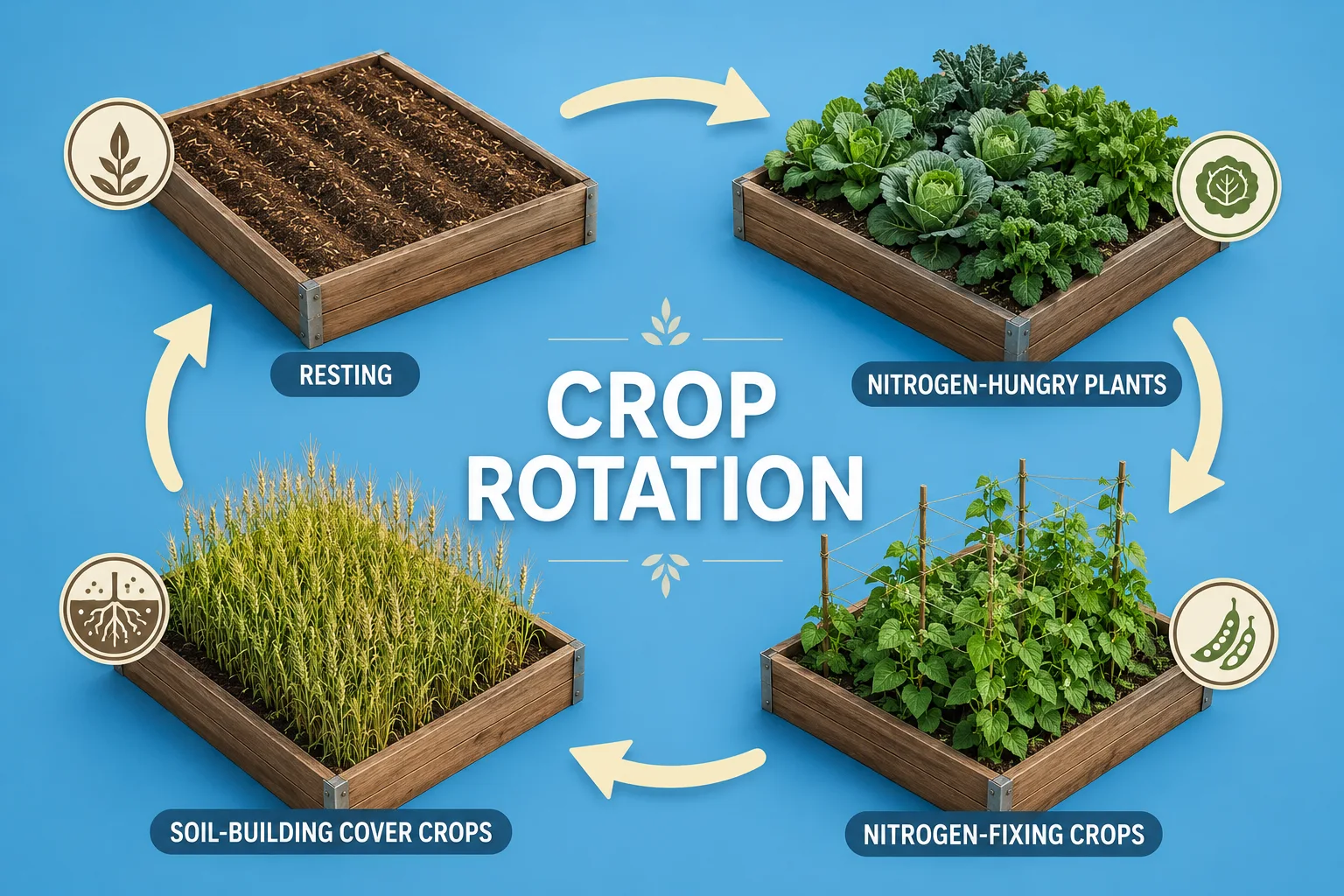
Crop rotation for beginners is a simple garden-planning method that helps you avoid planting the same vegetable family in the same spot year after year. Instead of growing tomatoes, peppers, squash, or cabbage in the same bed every season, you move crop families around the garden so the soil has a better chance to stay balanced and pest pressure is easier to manage.
When I first learned about crop rotation, it sounded complicated.
There were charts, arrows, plant families, soil nutrients, and long multi-year plans. It felt like something only large farms needed.
But crop rotation can be very simple in a home garden.
You do not need a perfect farm-style system. You just need to understand which crops are related, keep basic notes, and avoid planting the same heavy-feeding or disease-prone family in the same bed every year.
This guide will walk you through crop rotation in a beginner-friendly way so you can use it in raised beds, small gardens, backyard homesteads, and simple vegetable plots.
Affiliate Disclosure
This article may contain affiliate product recommendations. If you choose to purchase through those recommendations, I may earn a small commission at no extra cost to you. I only recommend practical garden tools and supplies that fit a beginner-friendly homestead garden.
Table of Contents
What Is Crop Rotation?
Crop rotation means changing where you plant vegetables from one season or year to the next.
Instead of planting tomatoes in the same raised bed every year, you plant them in a different bed next season. The old tomato bed can then grow a different crop family, such as beans, lettuce, carrots, or onions.
The main idea is simple: plants in the same family often have similar needs and similar pest or disease problems.
For example, tomatoes, peppers, potatoes, and eggplants are all in the nightshade family. If you plant tomatoes in one bed this year and peppers in the same bed next year, you are still planting the same family in that spot.
Crop rotation helps you avoid that pattern.
It is not a perfect solution for every garden problem, but it is one of the easiest habits you can build into Beginner Garden Planning.
Why Crop Rotation Matters
Crop rotation is helpful because it supports long-term garden health.
When the same crop family grows in the same place repeatedly, certain pests and diseases can build up in the soil or nearby garden area. Moving crops around helps break that pattern.
Crop rotation also helps with soil balance. Some crops are heavy feeders. Others are lighter feeders. Some, like beans and peas, belong to the legume family and fit well into many garden rotation plans.
A good rotation plan can help you:
Reduce repeated pest pressure
Lower disease buildup
Use soil nutrients more wisely
Improve garden organization
Plan beds more clearly
Track what grew where
Build better soil over time
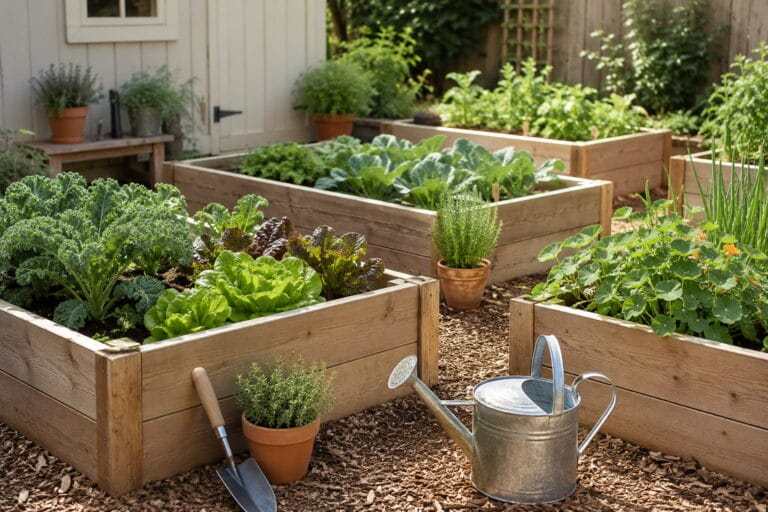
If you are growing in raised beds, crop rotation works beautifully with a simple Raised Bed Gardening Guide because defined beds make it easier to track where each crop family was planted.
Crop Rotation Chart for Beginners
Use this simple crop rotation chart for beginners as a starting point.
| Crop Group | Common Vegetables | Rotate With |
|---|---|---|
| Nightshades | Tomatoes, peppers, potatoes, eggplant | Legumes, roots, leafy greens |
| Legumes | Beans, peas | Brassicas, roots, fruiting crops |
| Brassicas | Cabbage, broccoli, kale, cauliflower, radishes | Nightshades, legumes, onions |
| Cucurbits | Cucumbers, squash, pumpkins, melons | Roots, legumes, leafy greens |
| Roots | Carrots, beets, turnips, onions | Legumes, brassicas, fruiting crops |
| Leafy Greens | Lettuce, spinach, chard, herbs | Roots, legumes, fruiting crops |
| Alliums | Onions, garlic, leeks, shallots | Brassicas, leafy greens, cucurbits |
This chart does not need to be perfect. It is simply a guide to help you avoid growing the same plant family in the same spot every year.
A simple garden planner or garden journal makes this much easier because you can draw your beds and record what you planted.
The Main Vegetable Families to Know
You do not need to memorize every botanical family to start crop rotation.
For a beginner vegetable garden, focus on the main groups you plant most often.
Nightshade Family
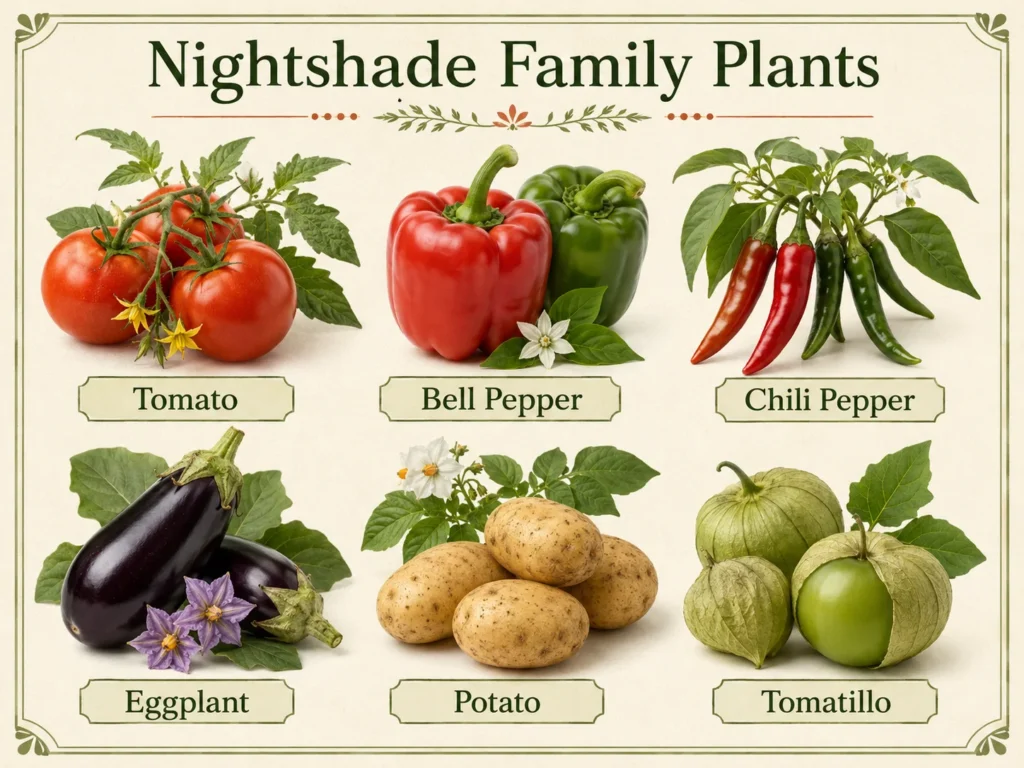
Nightshades include tomatoes, peppers, potatoes, and eggplants.
This family is important because many gardeners grow tomatoes and peppers every year. They are also crops that can struggle with repeated disease pressure when planted in the same place too often.
If possible, avoid planting tomatoes, peppers, potatoes, or eggplants in the same bed two years in a row.
If tomatoes are your favorite crop, use reusable garden labels or raised bed markers so you always know where they grew last season.
Legume Family
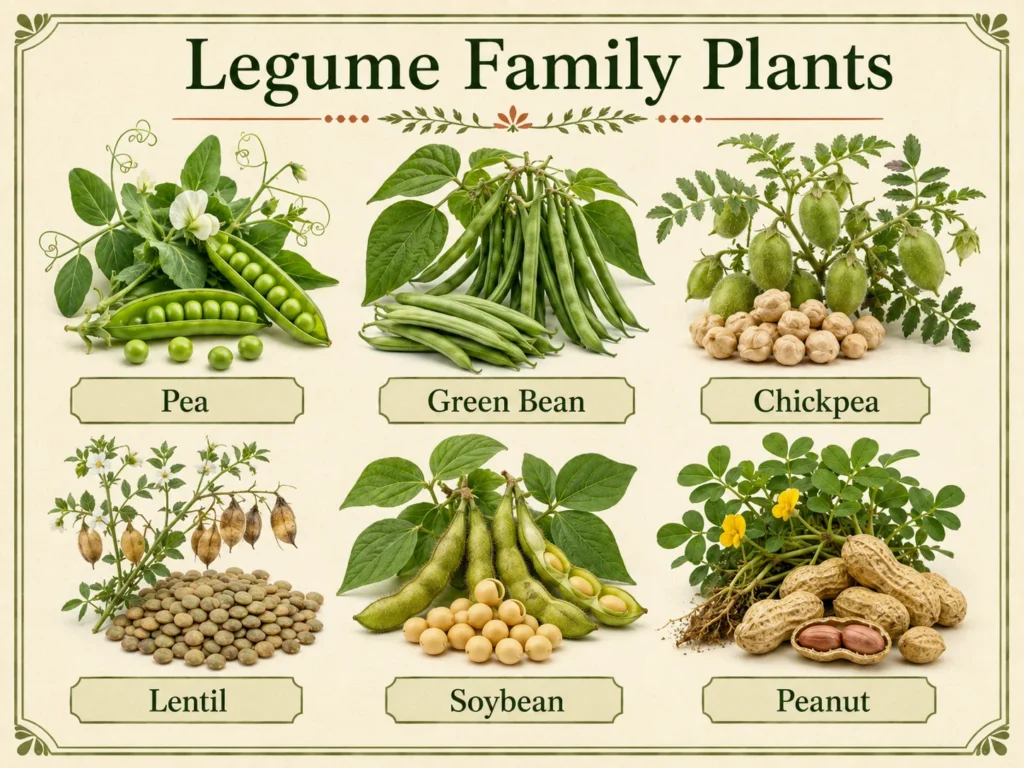
Legumes include beans and peas.
These are useful crops in a rotation plan because they are different from heavy fruiting crops like tomatoes and squash. They can fit well after or before many other groups.
Bush beans are especially easy for beginners and work well in raised beds.
If you are still choosing what to grow first, 10 Easy Vegetables to Grow for Beginners can help you pick simple crops that fit into a rotation plan.
Brassica Family
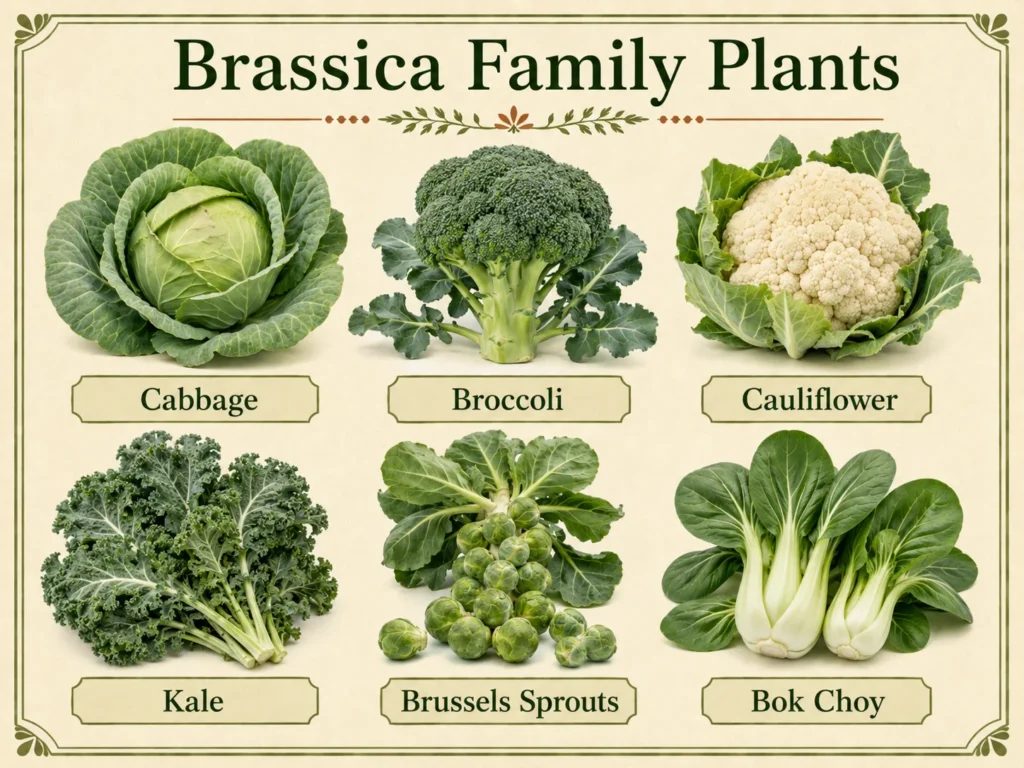
Brassicas include cabbage, broccoli, kale, cauliflower, Brussels sprouts, collards, turnips, and radishes.
This family can attract specific pests like cabbage worms and flea beetles. Rotating brassicas helps you avoid planting the same pest-prone family in the same spot repeatedly.
Because radishes are brassicas too, remember that they belong in the same family as cabbage and broccoli, even though they look very different.
Cucurbit Family
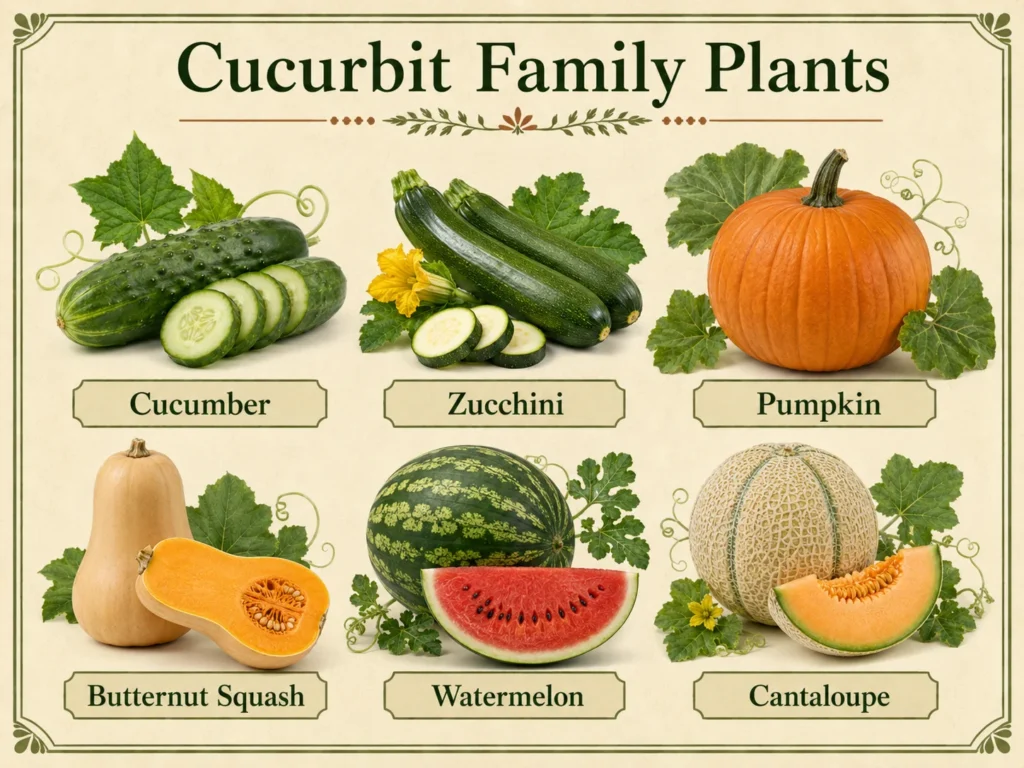
Cucurbits include cucumbers, squash, pumpkins, zucchini, melons, and gourds.
These plants often need a lot of space, warmth, and nutrients. They also benefit from good airflow and healthy soil.
If you plant zucchini or cucumbers in one bed this year, move them to a different area next year.
This works especially well when you combine rotation with Companion Planting for Beginners, such as adding flowers near cucumbers or squash to support pollinators.
Root Crops and Alliums
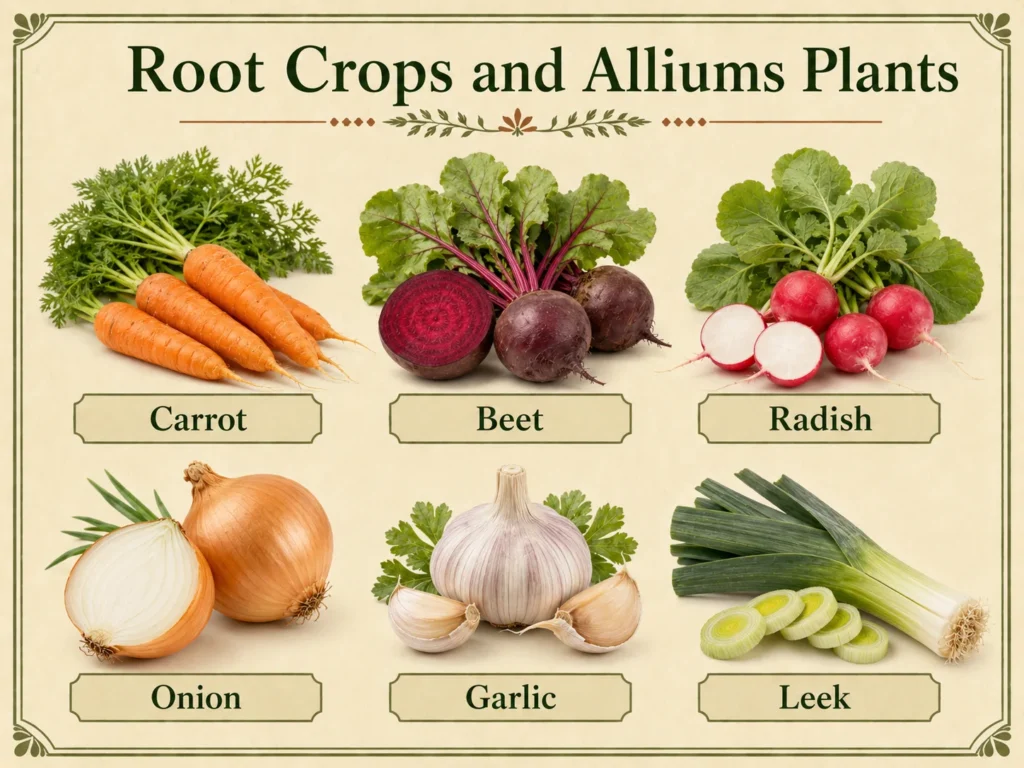
Root crops include carrots, beets, turnips, and parsnips.
Alliums include onions, garlic, leeks, shallots, and chives.
These crops are useful in rotation because they often fit into smaller spaces and can follow larger crops. They also help you avoid making every bed full of heavy fruiting vegetables.
Root crops need loose soil, so adding organic compost before planting can help improve soil texture.
Leafy Greens
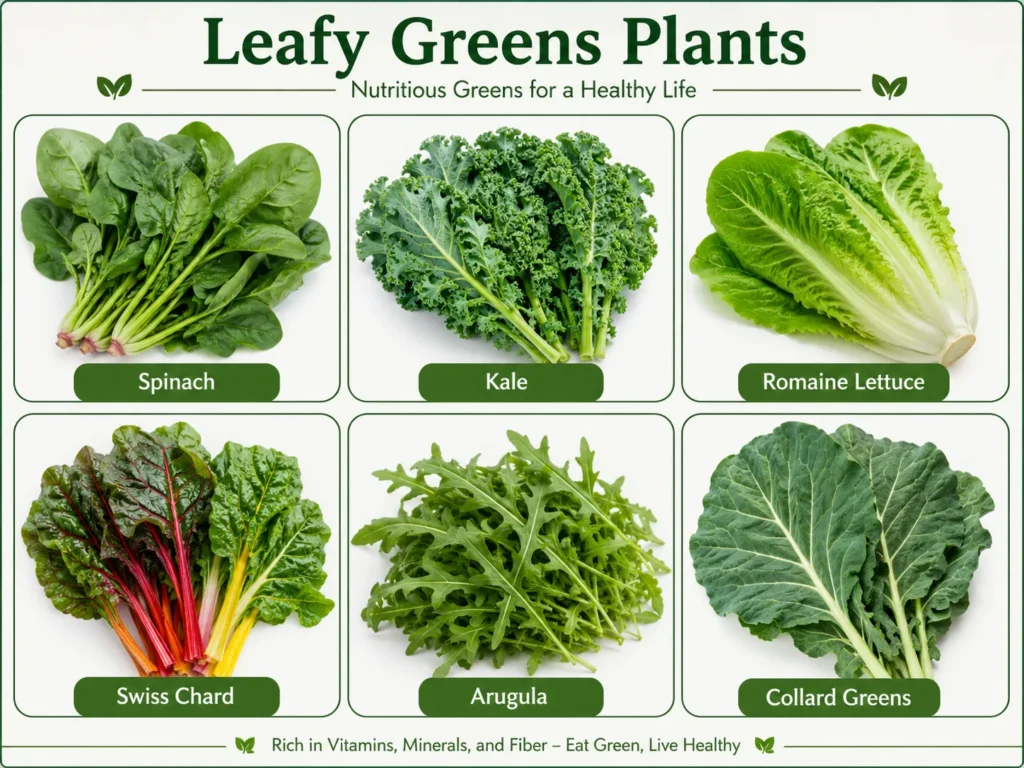
Leafy greens include lettuce, spinach, arugula, chard, and many salad crops.
These crops are useful in spring and fall gardens. They also fit nicely into rotation plans because they are usually quick-growing and easy to tuck into open spaces.
If you start greens indoors or want better timing, Seed Starting Indoors for Beginners can help you plan the season more smoothly.
Simple 4-Year Crop Rotation Plan
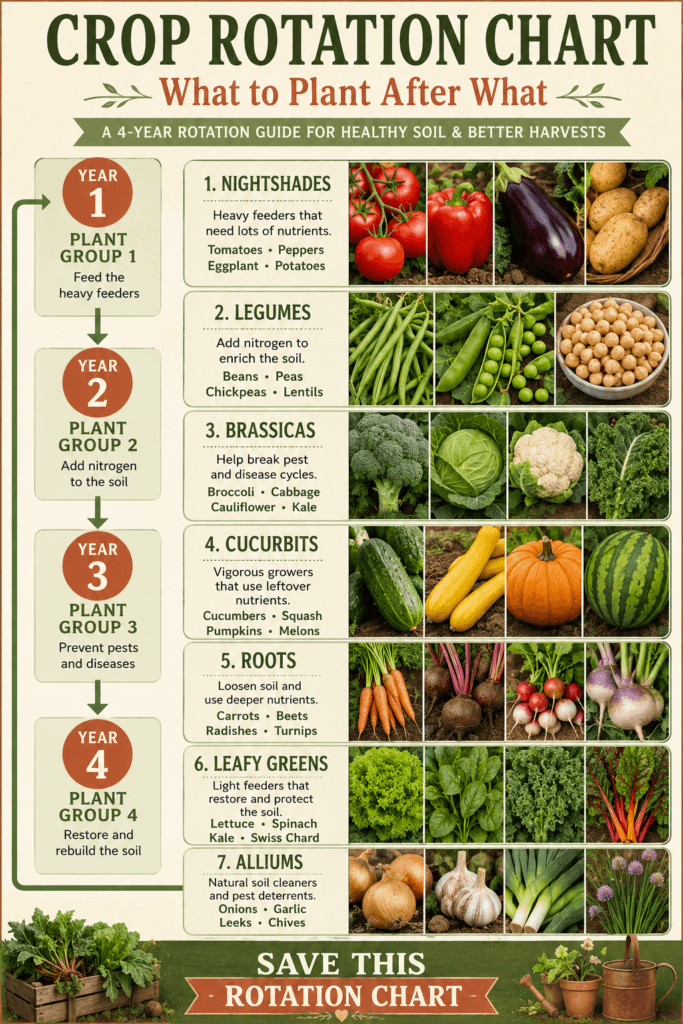
A 4-year crop rotation plan is one of the easiest systems for beginners.
You divide your garden into four sections or raised beds. Each year, the crop groups move to the next bed.
Here is a simple example.
Year 1
Bed 1: Nightshades
Bed 2: Legumes
Bed 3: Brassicas
Bed 4: Roots and leafy greens
Year 2
Bed 1: Legumes
Bed 2: Brassicas
Bed 3: Roots and leafy greens
Bed 4: Nightshades
Year 3
Bed 1: Brassicas
Bed 2: Roots and leafy greens
Bed 3: Nightshades
Bed 4: Legumes
Year 4
Bed 1: Roots and leafy greens
Bed 2: Nightshades
Bed 3: Legumes
Bed 4: Brassicas
Then the cycle repeats.
This plan is simple enough for a beginner, but flexible enough for a real garden.
You can adjust it based on what you actually grow. If you do not grow many brassicas, use that bed for leafy greens, herbs, or cover crops instead.
A seed storage box can help keep seed packets organized by crop family so planning is easier each season.
Crop Rotation in Raised Beds
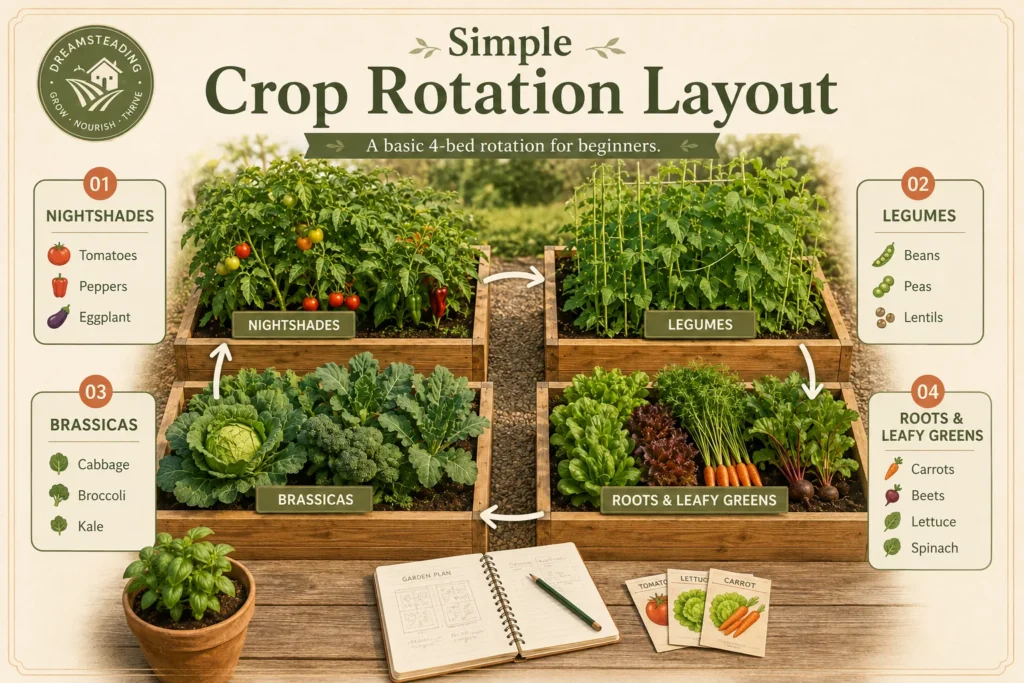
Raised beds make crop rotation easier because the garden is already divided into clear sections.
Each bed can become one rotation area.
For example, if you have four raised beds, you can rotate nightshades, legumes, brassicas, and roots or greens through the beds each year.
If you only have two raised beds, do not worry. Rotate as best as you can.
A two-bed rotation might look like this:
Year 1: Tomatoes and peppers in Bed 1, beans and greens in Bed 2
Year 2: Beans and greens in Bed 1, tomatoes and peppers in Bed 2
It is not perfect, but it is better than planting tomatoes in the same bed forever.
If your space is tight, you can also rotate within sections of a larger raised bed. Divide the bed mentally into halves or quarters and track what grew where.
Good spacing, mulch, compost, and a simple drip irrigation kit will also help keep raised beds healthier.
Crop Rotation for Small Gardens
Small gardens make crop rotation harder, but not impossible.
If you only have one or two beds, you may not be able to move every crop as far as recommended. That is normal.
In a small garden, focus on the biggest priorities:
Do not plant tomatoes in the exact same spot every year
Move squash and cucumbers when possible
Rotate brassicas if you had pest or disease problems
Use compost to rebuild soil
Remove diseased plant material quickly
Keep good notes
Use containers when helpful
Containers can be part of your rotation plan too. If you grow tomatoes in large pots one year, you can use the raised bed for beans, greens, or carrots.
If space is your biggest challenge, Small Garden Design Tips can help you organize crops without overcrowding.
The goal is progress, not perfection.
Even small changes can reduce repeated stress on the same patch of soil.
What About Cover Crops?
Cover crops are plants grown to protect and improve the soil rather than for a main food harvest.
Examples include clover, peas, oats, rye, buckwheat, and radish, depending on your climate and season.
For beginners, cover crops can feel advanced, but they are useful once you understand the basics.
They can help:
Cover bare soil
Add organic matter
Reduce erosion
Support soil life
Improve structure
Hold nutrients
If you have an empty bed in fall or between crops, cover crop seeds can be a simple way to keep the soil protected.
Start small. Try one cover crop in one bed instead of planting the whole garden at once.
Common Crop Rotation Mistakes
Crop rotation is simple, but beginners often make a few common mistakes.
Mistake 1: Rotating by Vegetable Name Instead of Family
This is the biggest mistake.
Tomatoes and peppers look different, but they are in the same family. Cabbage and radishes look different, but they are also related.
Rotate by plant family, not just by crop name.
Mistake 2: Forgetting What Grew Where
It is easy to forget last year’s garden layout by spring.
Take photos, sketch your beds, or keep notes in a garden journal.
You do not need a perfect record. A simple map is enough.
Mistake 3: Making the Plan Too Complicated
A beginner garden does not need a perfect multi-year spreadsheet.
Start with four groups:
Nightshades
Legumes
Brassicas
Roots and greens
That is enough to begin.
Mistake 4: Ignoring Soil Health
Crop rotation helps, but it does not replace healthy soil.
Add compost, mulch beds, water consistently, and avoid leaving soil bare for long periods.
A simple soil test kit can help you understand your soil better before adding too many amendments.
Mistake 5: Expecting Rotation to Solve Everything
Crop rotation is helpful, but it is not a miracle fix.
If plants are crowded, stressed, underwatered, or growing in poor soil, rotating them will not solve every problem.
Use crop rotation together with good spacing, compost, watering, pest observation, and smart planting dates.
How to Start Crop Rotation This Season
If you have never rotated crops before, start with this simple method.
First, draw your garden beds on paper.
Next, write what grew in each bed last season. If you do not remember, start tracking from this season forward.
Then group your crops by family.
After that, choose a new location for each group.
Do not overthink it. Move tomatoes away from last year’s tomato or pepper bed. Move cucumbers away from last year’s squash bed. Move cabbage and kale away from last year’s brassica spot.
Finally, write down this year’s layout before you plant.
That one habit will make next year much easier.
You can also keep seed packets, labels, and notes together in a garden planner so your rotation plan stays organized.
Best Supplies for Crop Rotation
You do not need many tools to start crop rotation, but a few supplies make it easier.
A garden planner helps you map beds, track plant families, and remember what grew where.
A garden journal is useful for recording pest problems, disease issues, harvest notes, and changes you want to make next season.
Reusable garden labels and raised bed markers help you identify crops while they are growing.
A soil test kit helps you understand your soil before adding amendments.
Organic compost supports soil health between rotations.
Cover crop seeds help protect beds during empty seasons.
A seed storage box keeps seed packets organized by crop family.
A drip irrigation kit supports consistent watering, which is just as important as rotation for healthy plants.
Start with simple notes and labels. You can build a more detailed system over time.
Final Thoughts
Crop rotation for beginners does not need to feel complicated.
At its heart, it is simply the habit of not planting the same crop family in the same place every year.
Start with the basics.
Know your main plant families. Track where tomatoes, peppers, beans, peas, cabbage, cucumbers, squash, carrots, onions, and greens grow. Move them around as best as your space allows.
If you garden in raised beds, use each bed as a rotation section. If you garden in a small space, rotate what you can and support the soil with compost, mulch, and good cleanup.
A good garden is built through simple habits repeated season after season.
Crop rotation is one of those habits.
It helps you plan better, notice patterns, care for the soil, and grow with more confidence.
Start with one garden map this season.
Next year, you will be glad you did.
FAQ: Crop Rotation for Beginners
What is crop rotation in a vegetable garden?
Crop rotation is the practice of planting vegetable families in different garden spots from year to year instead of growing the same family in the same place repeatedly.
Why is crop rotation important?
Crop rotation can help reduce repeated pest and disease pressure, support soil balance, improve garden organization, and make long-term vegetable gardening easier.
What is the easiest crop rotation plan for beginners?
The easiest plan is a simple 4-group rotation: nightshades, legumes, brassicas, and roots or leafy greens. Move each group to a different bed each year.
Do I need crop rotation in raised beds?
Yes, crop rotation can still be useful in raised beds. Even if you add compost each year, rotating plant families can help reduce repeated pest and disease buildup.
What crops should not be planted in the same place every year?
Avoid planting tomatoes, peppers, potatoes, eggplants, cabbage, broccoli, kale, cucumbers, squash, and pumpkins in the same spot year after year when possible.
Can I rotate crops in a small garden?
Yes. Small gardens may not rotate perfectly, but you can still move major crop families around, use containers, add compost, remove diseased plants, and keep good records.
Are tomatoes and peppers in the same rotation group?
Yes. Tomatoes and peppers are both nightshades, along with potatoes and eggplants. Try not to plant them in the same spot year after year.
What can I plant after tomatoes?
After tomatoes, try planting beans, peas, carrots, onions, lettuce, or leafy greens. Avoid planting peppers, potatoes, or eggplants in the same spot the next year if possible.