Backyard Homesteading for Beginners: 15 Easy Ideas
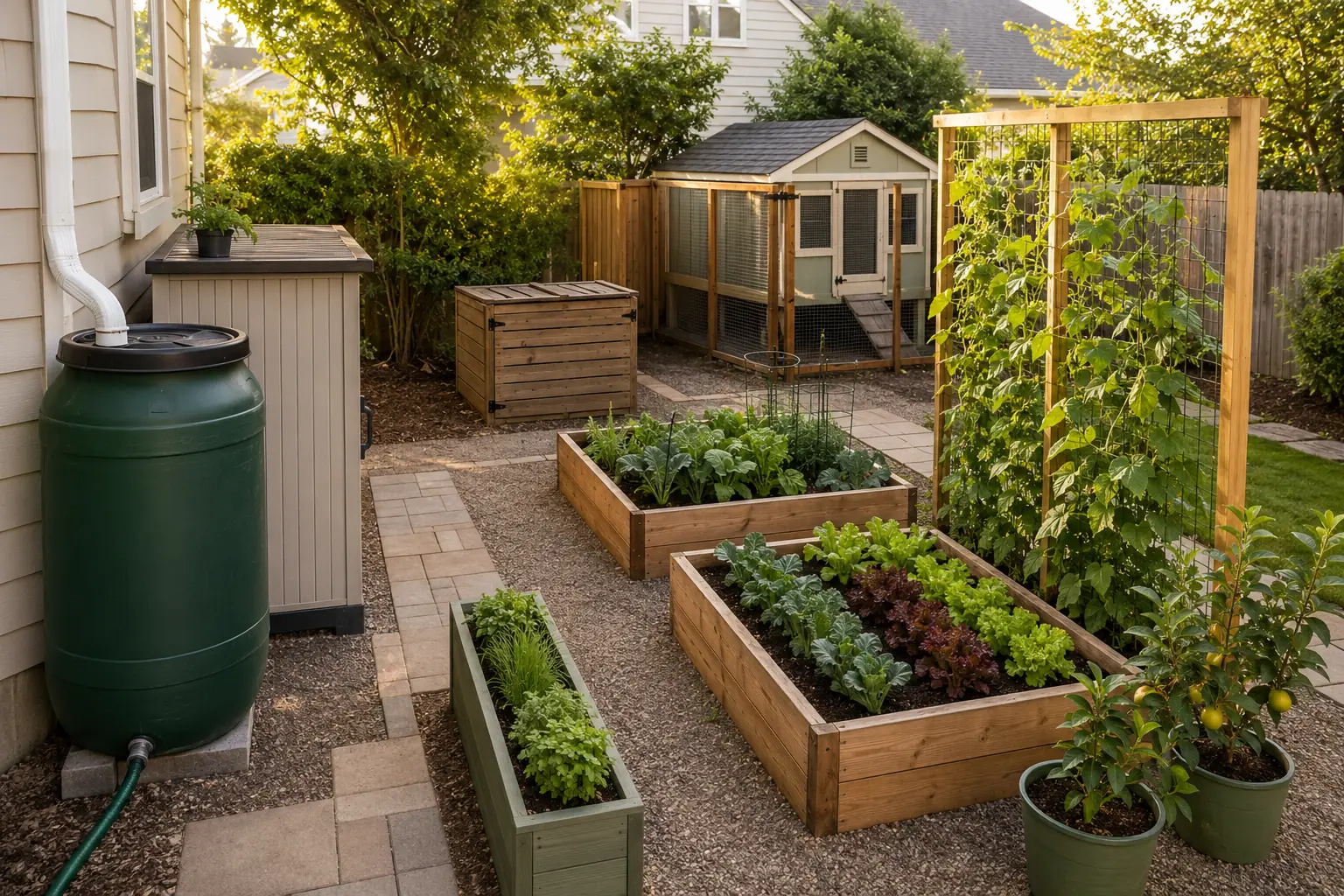
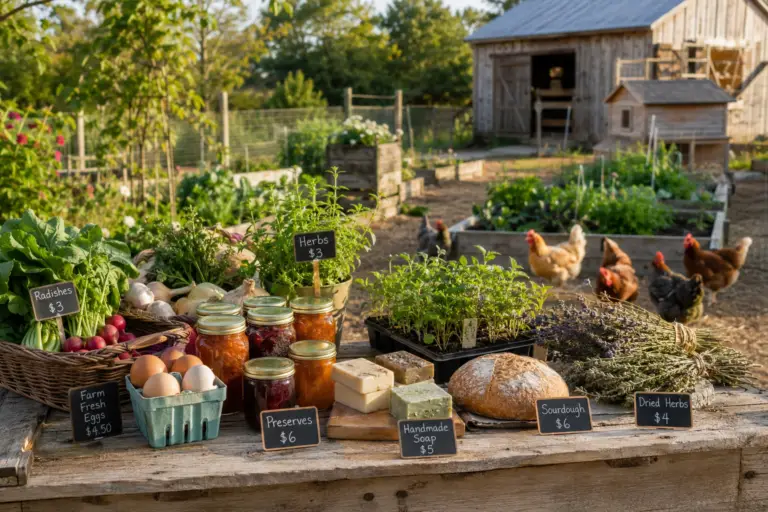
Backyard homesteading for beginners is a practical way to produce some of your own food, reduce household waste, develop useful skills, and depend less on purchased resources—without owning a large farm. A backyard homestead may include vegetables, herbs, container fruit, composting, food preservation, rainwater collection, simple building projects, or a small permitted flock.
You do not need to introduce every system at once. The most productive backyard homesteads begin with a clear household goal and expand only after the first projects become manageable. This guide presents 15 realistic ways to become more self-sufficient while protecting your yard’s sunlight, water, access, safety, and everyday usefulness.
In Short
Backyard homesteading for beginners should start with one useful goal, such as growing herbs, producing vegetables, composting food scraps, or preserving a seasonal harvest. Map your yard before building, begin with one or two manageable systems, and record what they cost, produce, and require. Add rainwater collection, larger projects, or permitted poultry only when your property, schedule, budget, and local rules can support them.
Key Takeaways
- Backyard homesteading is partial self-reliance rather than complete household independence.
- Productive systems should reflect your household needs, available space, and local growing conditions.
- Growing, composting, water management, preservation, and storage work best as connected systems.
- Animals and major construction should follow established household routines rather than becoming the starting point.
- A small, well-maintained homestead is more useful than an overcrowded yard filled with unfinished projects.
What Backyard Homesteading for Beginners Really Means
Backyard homesteading for beginners does not require supplying every meal, living without utilities, or raising livestock. It means using the space and skills available to produce something useful and reduce dependence in carefully selected areas.
For one household, success may mean growing fresh herbs throughout the warm season. Another may produce salad vegetables, make compost, freeze beans, and repair basic garden structures. Both are legitimate forms of homesteading because they replace a portion of consumption with practical production and skill.
The strongest systems connect with one another. Vegetable scraps become compost, finished compost supports the garden, herbs and vegetables feed the household, and surplus harvests are preserved. When each project supports another, your backyard becomes more productive without accumulating unrelated activities.
If you are still deciding which parts of the lifestyle fit your circumstances, begin with the broader homesteading guide for beginners. It explains how food production, practical household skills, preparedness, and gradual self-reliance work together.
Plan Your Backyard Homestead Before Starting Projects
Measure the usable yard and draw a simple plan. Record the house, doors, gates, paths, steps, faucets, drains, downspouts, utility meters, electrical equipment, septic components, existing trees, property boundaries, and changes in level.
Observe direct sunlight at several times during the day. Repeat the observation in more than one season if possible. Deciduous trees, neighboring buildings, fences, and the changing sun angle can alter where productive crops will grow successfully.
Note how water enters and leaves the property. A low area that remains wet after rain may be unsuitable for a raised bed, storage cabinet, or chicken coop. A downspout may provide a possible rain-barrel location, but the overflow must still travel safely away from the foundation and neighboring property.
Preserve a clear route connecting the house, growing areas, compost, storage, and any animal housing. Frequently maintained systems should be easy to reach with a hose, tools, feed, or harvest basket.
Contact the applicable utility-location service before digging. Private irrigation, septic, lighting, and water lines may require separate locating. Do not install beds, trellises, fences, or posts where they will obstruct meters, drainage, emergency access, or necessary maintenance.
15 Practical Ideas for Backyard Homesteading for Beginners
The best projects for backyard homesteading for beginners are useful, manageable, and connected to real household needs. Choose from the following ideas according to your space, climate, available time, budget, and local regulations.
1. Grow the Foods Your Household Uses Most
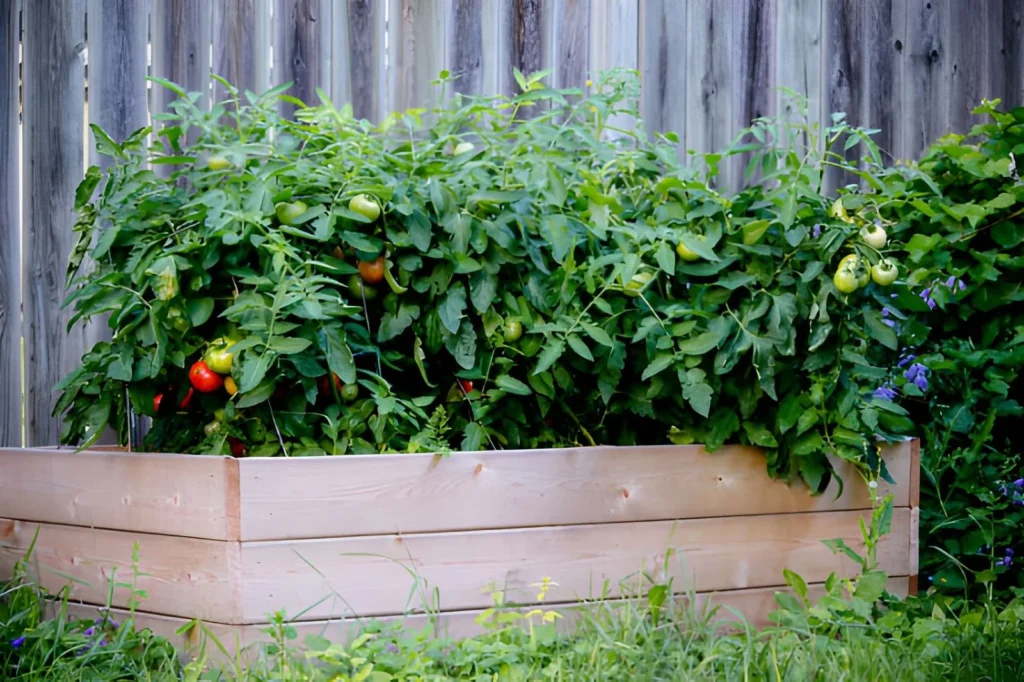
Begin with food that already appears in your meals. A large harvest of an unfamiliar vegetable will not increase self-sufficiency if nobody eats it. List the herbs and vegetables your household buys repeatedly, then identify which ones suit your climate, sunlight, and growing space.
Choose only a few crops for the first season. Record what you planted, harvested, ate, preserved, or wasted. That information will guide the next planting more accurately than a generic list of high-yield vegetables.
2. Start With One or Two Raised Beds
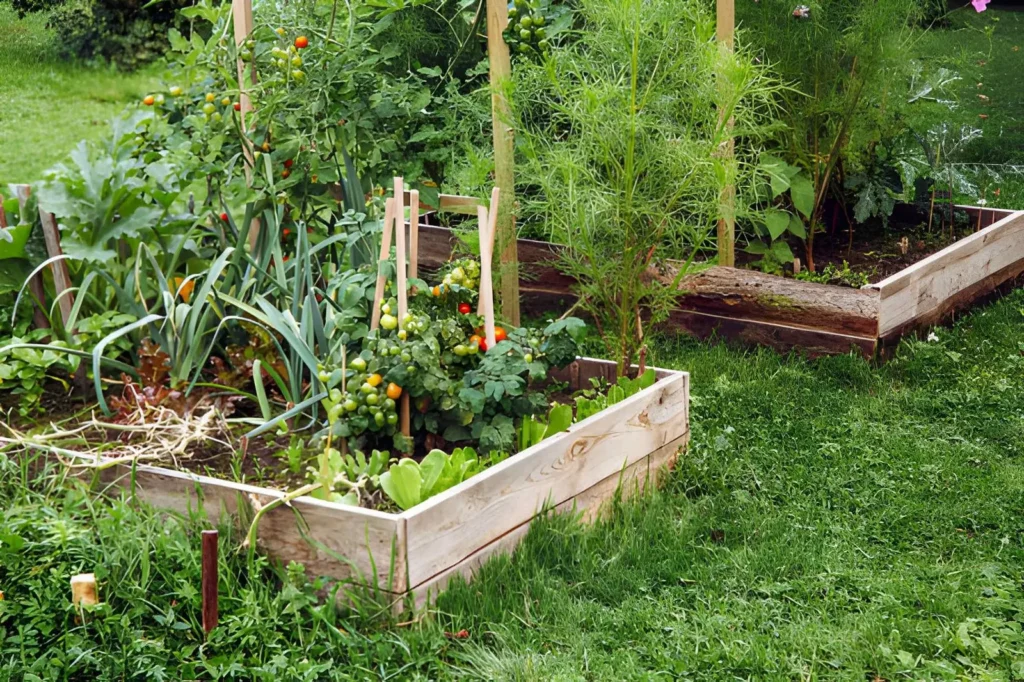
Raised beds can define a manageable productive zone and provide control over the growing medium when native soil is compacted, poorly drained, contaminated, or otherwise unsuitable. They also create clear boundaries between crops and paths.
A raised bed still needs suitable soil, effective drainage, regular watering, and maintenance. Keep its width within comfortable reach from every accessible side so you do not need to step into the growing area.
Position beds away from buried utilities, septic components, major tree roots, downspout discharge, and necessary access. The complete raised-bed gardening guide explains soil, planting, irrigation, and seasonal care.
3. Choose Productive Beginner Vegetables
Beginner-friendly crops reduce the number of problems you need to solve during the first season. Possible choices include bush beans, radishes, leafy greens, chard, peppers, compact tomatoes, zucchini, or cucumbers, depending on your climate and planting season.
Look beyond total yield. A valuable crop should fit the available bed, mature within your growing season, tolerate local conditions, and be useful in the kitchen. Use these easy vegetables for beginning gardeners to create a realistic shortlist.
4. Keep a Culinary Herb Garden Near the House
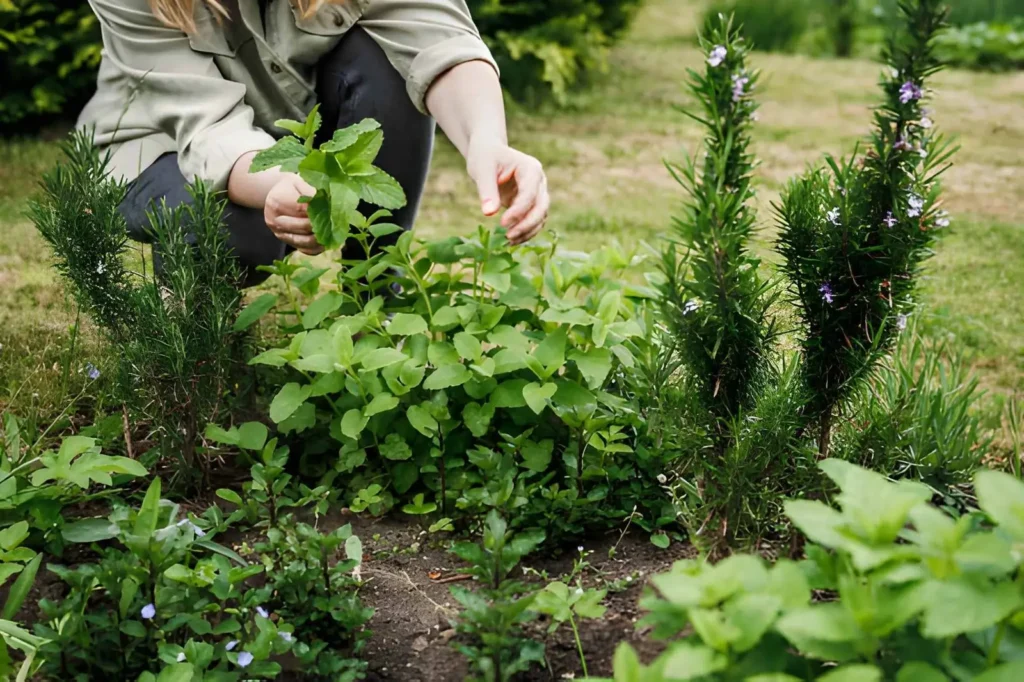
Herbs can provide frequent harvests from a relatively small area. Place commonly used culinary herbs near the kitchen or another convenient entrance so harvesting becomes part of everyday cooking rather than a separate garden task.
Use a narrow bed, containers, railing boxes, or a tiered planter when appropriate. Group herbs according to compatible sunlight, drainage, and water requirements. Keep vigorous spreaders contained where they cannot overwhelm slower-growing plants.
5. Add Fruit Without Planting Full-Size Trees
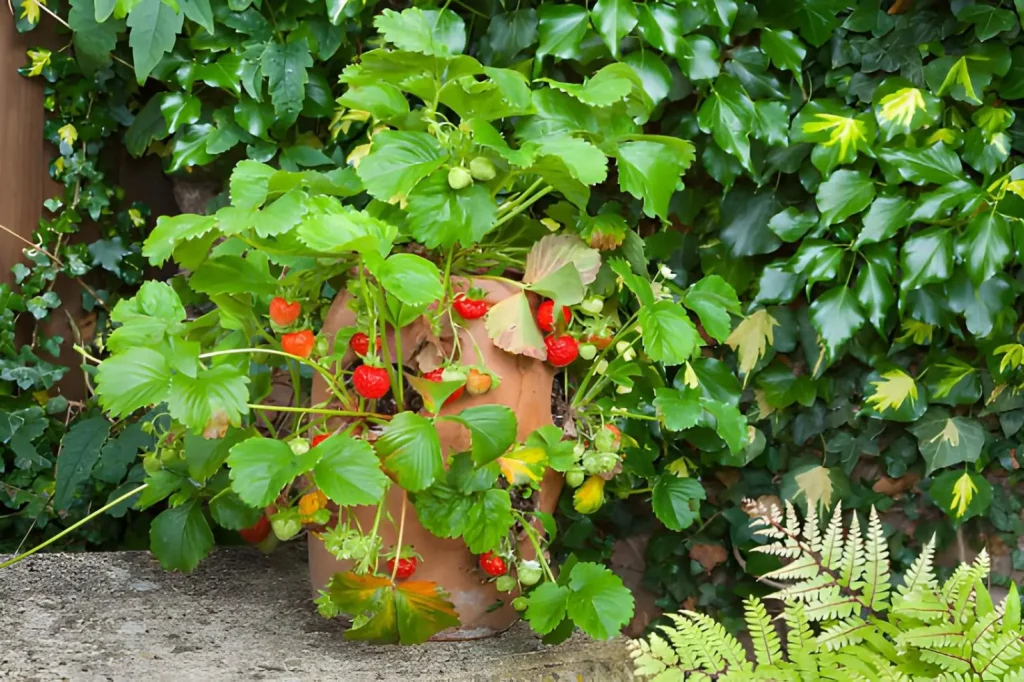
Container strawberries, suitable blueberries, figs, citrus, or dwarf fruit cultivars can add perennial production without dedicating the entire backyard to full-size trees. The correct choice depends on climate, winter chilling requirements, rootstock, pollination, and mature dimensions.
Use a stable weather-resistant fruit planter with enough volume and drainage for the selected plant. Position the container before filling because saturated growing medium makes large pots difficult to move. Confirm whether the cultivar needs a compatible pollination partner.
6. Use Trellises to Grow Vertically
Beans, peas, cucumbers, and suitable vining crops can use vertical space instead of spreading through paths. A trellis may also improve harvest access, increase airflow, and keep produce away from wet soil.
Select a support according to the crop’s mature weight and climbing habit. Anchor it for local wind and soil conditions, and position it where it will not cast unwanted shade on other crops. A sturdy garden trellis system should be inspected during the season as wet foliage and fruit increase the load.
7. Use Succession Planting for Steadier Harvests
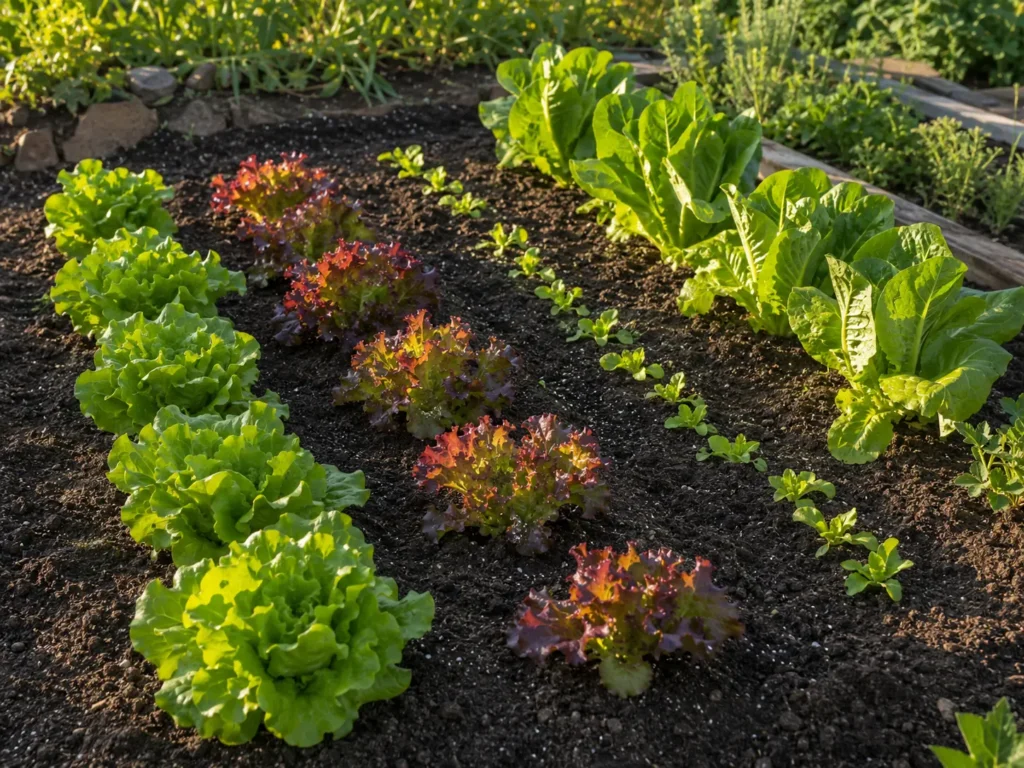
Succession planting uses the same area for more than one sowing or crop during a season. You might sow a short row of radishes at intervals instead of planting every seed at once, or follow an early crop with another locally suitable planting after harvest.
This approach requires attention to planting windows, days to maturity, heat, frost, soil fertility, and water. Avoid scheduling more food than your household can use. The purpose is a steadier harvest, not several overlapping gluts.
8. Turn Suitable Household Scraps Into Compost
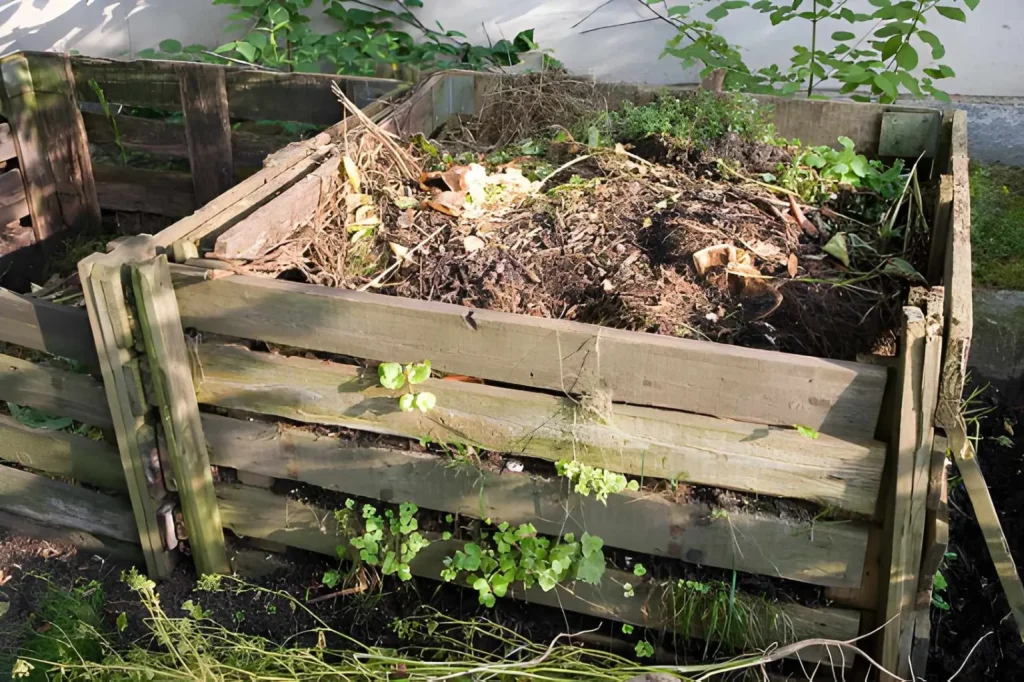
An enclosed compost bin connects household waste with backyard production. Suitable fruit and vegetable scraps, coffee grounds, dry leaves, untreated woody material, and other approved inputs can become a useful soil amendment when carbon, nitrogen, moisture, and air remain balanced.
EPA guidance recommends adding two to three parts browns by volume for every part greens. Cover food scraps with four to eight inches of dry leaves or another brown material and maintain moisture similar to a wrung-out sponge.
Avoid meat, fish, bones, dairy, fats, pet waste, treated wood, diseased plants, and weeds containing viable seeds in an ordinary backyard pile. Use the beginner composting guide to choose a system and troubleshoot odors, pests, excess moisture, and slow decomposition.
9. Collect Roof Runoff With a Safe Rain Barrel
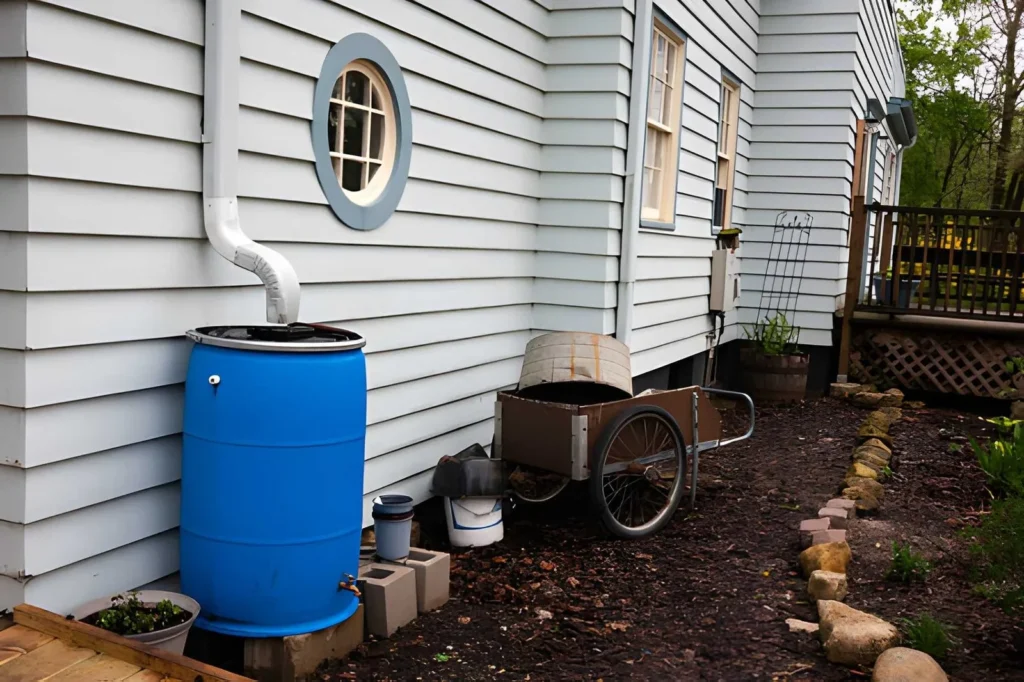
A rain barrel can retain some roof runoff for later landscape irrigation. Before installing one, confirm that collection is allowed and determine whether local rules address barrel design, placement, mosquito control, overflow, or permitted uses.
Use a covered, opaque rain barrel with a screened inlet, stable level base, child-resistant access, and controlled overflow directed away from foundations and neighboring property. Roof runoff can pick up bacteria, animal waste, metals, and chemicals from roofing materials.
Roof runoff is not automatically safe water
Do not drink collected roof runoff or use it for food preparation without treatment and testing appropriate to the source and local health requirements. Before using it around around edible crops, evaluate roofing materials, local guidance, application method, and the possibility of water contacting edible plant parts.
10. Preserve One Dependable Harvest
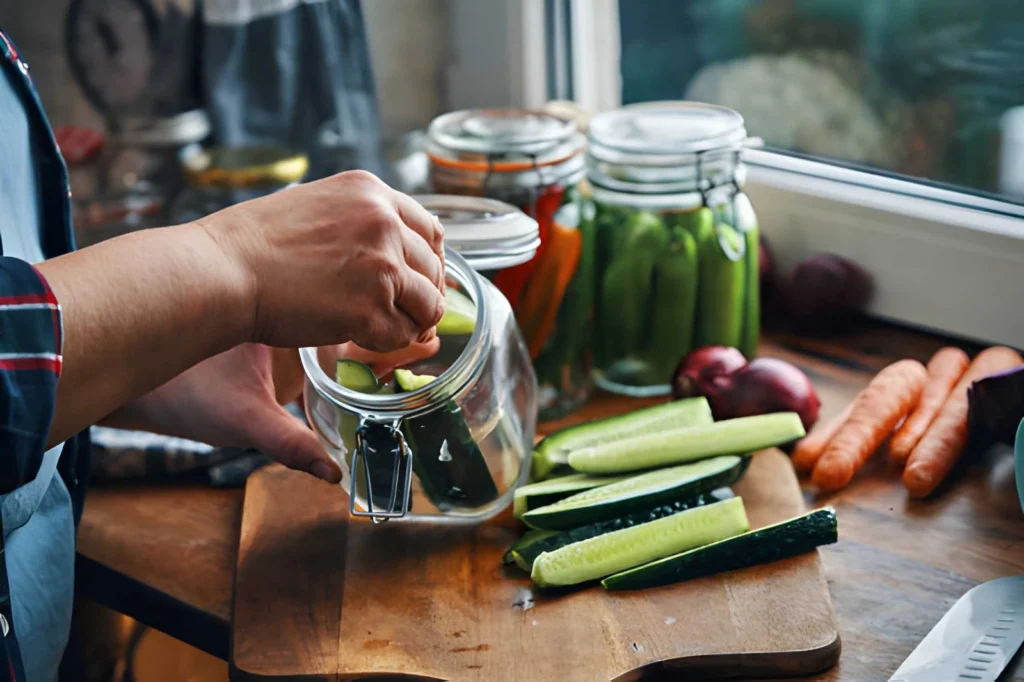
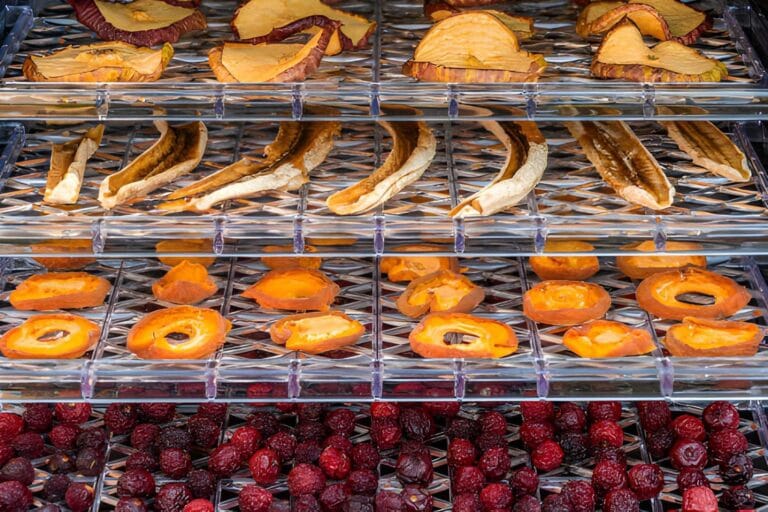
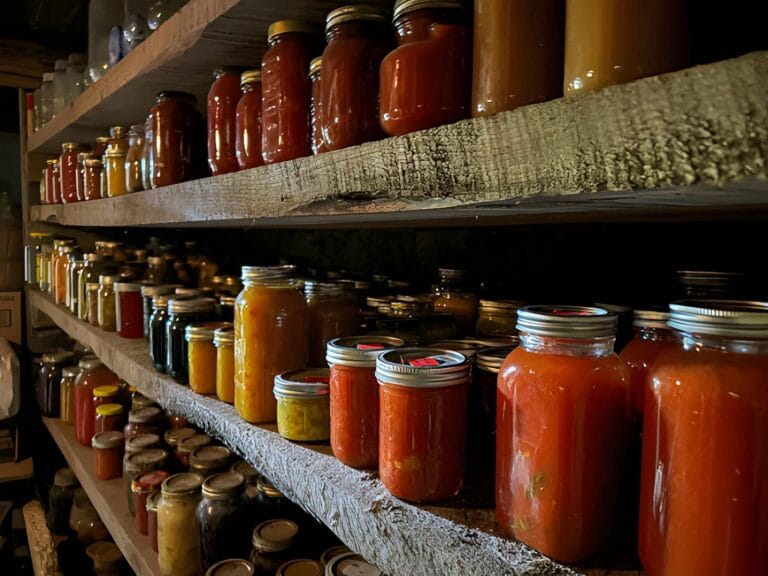
Preserving one reliable crop teaches more than growing a large surplus that spoils. Choose a crop you can grow consistently and match it with an appropriate method. Herbs may be dried, suitable vegetables frozen, and certain foods pickled or canned using current tested procedures.
Preservation requires time, equipment, clean working space, storage, and careful labeling. Plan the method before planting a large quantity. This guide to beginner food-preservation methods explains how drying, freezing, fermenting, pickling, and canning differ.
11. Save Seeds From Suitable Plants

Seed saving can reduce selected purchases and preserve a variety you value, but not every garden plant is equally suitable. Open-pollinated varieties generally provide more predictable seed than hybrids, although cross-pollination can still affect the next generation.
Begin with a self-pollinating annual crop and follow crop-specific isolation, harvesting, drying, and storage guidance. Do not save seed from diseased plants. Keep finished seed cool, dry, dark, clearly labeled, and protected from pests.
12. Learn Basic Repairs and Outdoor Building Skills

Repairing a loose gate, replacing damaged trellis mesh, maintaining suitable hand tools, or building a basic planter can reduce repeated replacement and service costs. These skills also make the backyard homestead easier to maintain.
Start with projects that match your tools and ability. Wear task-appropriate protective equipment, secure workpieces, follow manufacturer instructions, and locate utilities before digging. The guide to DIY and building tools for beginners can help you assemble a practical starter kit without purchasing every available tool.
13. Organize Tools, Feed, and Preservation Supplies
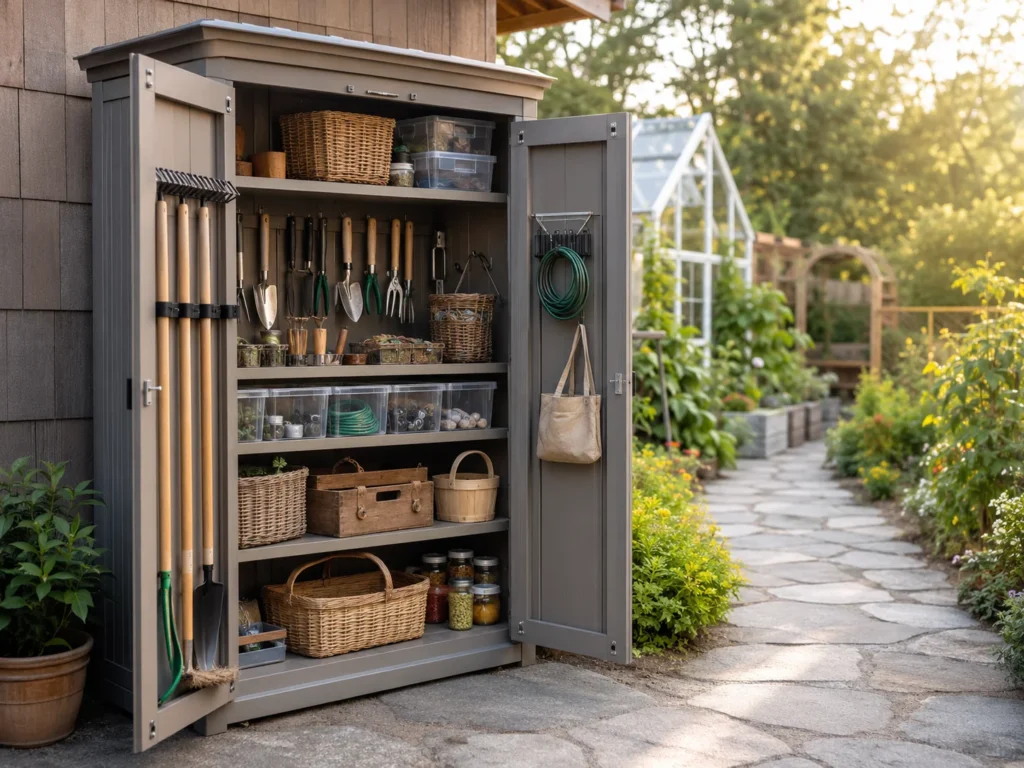
Self-sufficiency becomes harder when tools are damaged, supplies expire unnoticed, or paths turn into storage areas. Assign separate locations for garden tools, irrigation parts, clean harvest containers, seed supplies, preservation equipment, and animal feed.
A narrow weather-resistant garden cabinet, wall hooks, and labeled bins can use vertical storage efficiently. Keep animal feed in pest-resistant containers. Store fuel, pesticides, fertilizers, propane, and other hazardous materials separately in their original labeled packaging and according to product requirements.
14. Consider Chickens Only After Careful Planning
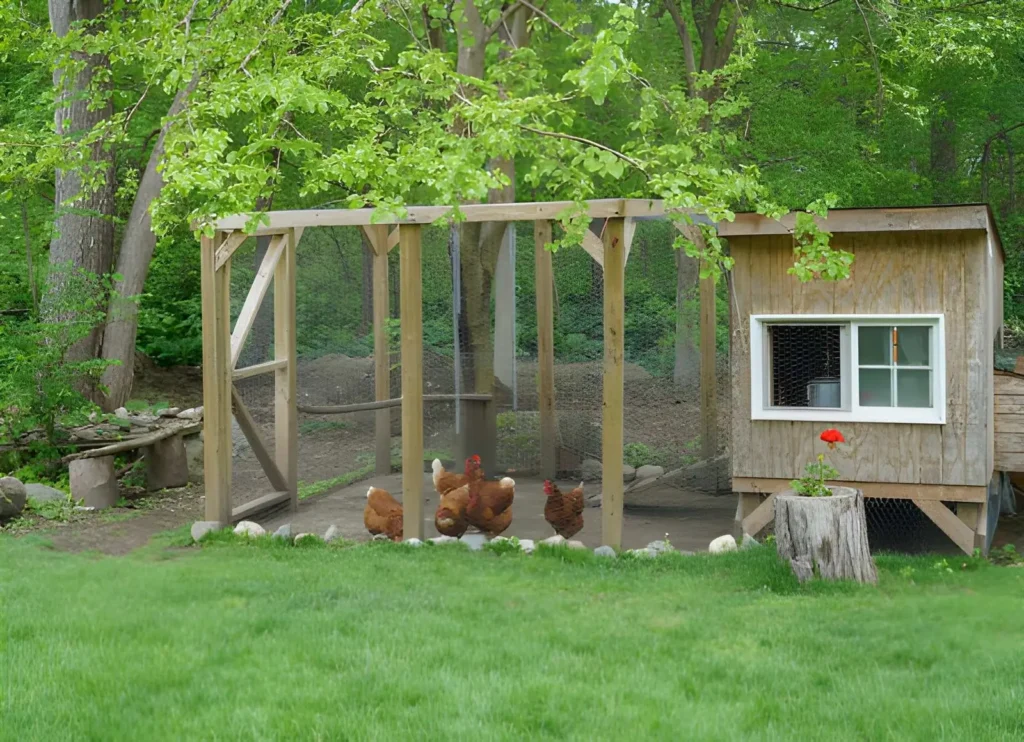
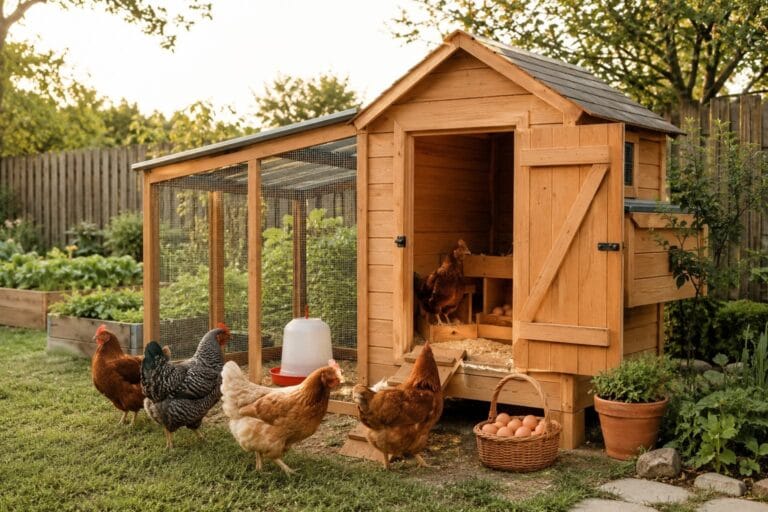
Chickens may provide eggs, manure, and useful livestock experience, but they require daily care throughout the year. Housing, feed, clean water, ventilation, predator protection, weather protection, hygiene, veterinary planning, and responsible end-of-life decisions must be arranged before birds arrive.
Check zoning, permits, flock limits, rooster restrictions, property agreements, coop setbacks, manure rules, and egg-sale requirements. A flock that is technically permitted may still be unsuitable for your space or schedule.
Poultry can carry Salmonella while appearing healthy. CDC recommends washing your hands with soap and water for 20 seconds after touching poultry, eggs, equipment, or the flock environment. Keep birds, supplies, and dedicated coop footwear outside the home. Children younger than five should not handle poultry or items from their environment.
Review the complete backyard chicken-keeping guide before deciding whether a flock belongs in your homesteading plan.
Backyard poultry can spread harmful germs
Wash hands immediately after poultry contact, keep birds and their equipment outside, and do not eat or drink in poultry areas. Follow current public-health guidance for children, older adults, people with weakened immune systems, and anyone responsible for cleaning the coop or handling eggs.
15. Develop Skills That Remain Useful Everywhere
The most valuable homesteading resource is not a structure or animal. It is the ability to plan meals, cook basic food, preserve safely, maintain tools, identify plant problems, organize supplies, conserve water, and adjust when a project fails.
Choose one skill to practice repeatedly rather than completing it once. Baking a staple food, repairing irrigation, starting seedlings, maintaining compost, or preserving a seasonal crop becomes useful when you can perform it safely and consistently. These essential homesteading skills provide several practical learning paths.
Choose Homesteading Projects by Time, Space, and Return
Every project has more than a purchase cost. It also requires recurring time, storage, maintenance, water, replacement parts, and sometimes professional or veterinary support. Compare those demands with the benefit your household will actually receive.
| Project | Space needed | Routine commitment | Useful beginner outcome |
|---|---|---|---|
| Herb containers | Low | Frequent watering and harvesting | Fresh culinary herbs |
| One raised bed | Moderate | Planting, watering, weeding, and harvesting | Seasonal vegetables |
| Enclosed compost bin | Low to moderate | Balancing, covering, turning, and monitoring | Reduced waste and soil amendment |
| Food preservation | Indoor workspace and storage | Seasonal preparation and safe processing | Extended use of a harvest |
| Backyard chickens | Moderate plus required setbacks | Daily, year-round animal care | Eggs and livestock skills |
A low-space project is not necessarily low-maintenance. Containers may require frequent watering, while preservation can create several hours of concentrated work during harvest season. Chickens require care every day whether or not your household needs more eggs.
Benefits
- Backyard systems can produce food and useful skills without acreage.
- Projects can begin small and expand according to demonstrated need.
- Composting and preservation connect household resources with food production.
- A clear layout can keep a productive yard attractive and accessible.
Considerations
- Every new system creates recurring work and storage requirements.
- Containers, raised beds, and animals may require substantial water during hot weather.
- Rainwater collection, poultry, structures, and food sales may be regulated.
- Small yards can lose function when projects occupy every open area.
A First-Year Backyard Homesteading Plan for Beginners
A first-year backyard homesteading plan for beginners should leave enough time to observe, correct mistakes, and establish dependable routines. The goal is not to finish the homestead within one season. It is to learn which systems fit your property and household.
Phase 1: Observe and Plan
Choose your primary household goal, map the yard, observe sunlight, evaluate water access, review applicable rules, and test the soil when the planned use makes testing appropriate. Establish a budget that includes soil, irrigation, storage, and maintenance rather than only visible materials.
Phase 2: Build One Productive System
Install herb containers, one raised bed, or another manageable growing system. Plant only several familiar crops and keep records. Solve watering, pest, and access problems before expanding the growing area.
Phase 3: Add Resource Cycling
Introduce enclosed composting when you can maintain a reliable supply of browns and greens. Organize tools and harvest supplies so working areas remain clear. Add rainwater collection only after confirming local requirements and a suitable overflow route.
Phase 4: Preserve and Evaluate
Preserve one successful crop with a tested method. At the end of the season, compare the harvest, household use, waste, costs, water, and labor. Expand the systems that served your household and change or remove the ones that did not.
Poultry and major construction are better considered after garden, storage, compost, and daily-maintenance routines are stable. Delaying an advanced addition is a sensible planning decision rather than a failure to progress.
Common Backyard Homesteading Mistakes
- Starting too many systems: overlapping learning curves make routine maintenance difficult.
- Copying another property: household goals, climate, regulations, sunlight, and available time differ.
- Ignoring mature dimensions: plants and structures may eventually block paths, sunlight, or neighboring property.
- Underestimating water: containers, beds, and animals may require daily attention during hot weather.
- Building before locating utilities: beds and posts can obstruct access or create a digging hazard.
- Producing food without a use plan: unwanted harvests create waste instead of self-sufficiency.
- Improvising preservation: untested processes may create serious food-safety risks.
- Assuming rainwater is clean: roof runoff may contain biological and chemical contaminants.
- Adding animals too soon: livestock requires daily care, legal compliance, hygiene, and emergency planning.
- Filling every open area: overcrowding reduces access, maintenance quality, and residential usefulness.
Myth
A successful backyard homestead must provide most of the household’s food
Reality
A backyard homestead can be successful when it provides a smaller, dependable benefit. Regular herbs, seasonal vegetables, useful compost, preserved produce, eggs from a responsibly managed flock, or reliable repair skills can all increase practical self-sufficiency.
Frequently Asked Questions
How much space is needed for backyard homesteading?
There is no universal minimum. Containers, herbs, composting, and preservation skills can work with very little outdoor space. Raised beds, fruit plants, rainwater systems, and poultry require progressively more suitable space, access, sunlight, and regulatory clearance.
What is the easiest backyard homesteading project for a beginner?
A small culinary herb garden or several productive containers are often approachable because they require limited construction and provide frequent harvests. The best first project supports a real household need and can be maintained consistently.
Can you start a backyard homestead without keeping animals?
Yes. Gardening, composting, seed saving, food preservation, water conservation, cooking, tool maintenance, and household organization are all meaningful homesteading activities. Livestock is optional and unsuitable or prohibited in many residential settings.
How can a backyard homestead remain attractive?
Use defined beds, clear paths, contained compost, coordinated materials, vertical storage, and structures proportionate to the yard. Store tools and feed properly, remove unused equipment, and leave enough open space for the backyard to remain comfortable.
Does backyard homesteading save money?
Some established systems may reduce selected purchases, but savings are not guaranteed. Soil, lumber, irrigation, containers, preservation equipment, feed, housing, veterinary care, repairs, and the value of household time should all be considered.
How do you know when to expand a backyard homestead?
Expand after the current system has operated successfully through its relevant season, remains manageable during busy periods, and produces something your household uses. Confirm that the next addition has adequate space, time, water, storage, and budget.
Build Self-Sufficiency One Useful System at a Time
Backyard homesteading for beginners works best as a connected household system. Food grows in appropriately placed beds and containers, suitable scraps become compost, water is managed carefully, successful harvests are preserved, and practical skills keep the equipment working.
Begin with one goal that improves everyday life. Maintain it through a complete season, record what it produces and requires, and expand only when the next step adds more value than work. That measured approach creates a backyard homestead that can become more productive without becoming unmanageable.
Sources and Further Reading
- U.S. Environmental Protection Agency: Composting at Home — supports compost ingredients, brown-to-green proportions, moisture, food-scrap covering, excluded materials, pest control, and pile maintenance.
- U.S. Environmental Protection Agency: Soak Up the Rain—Rain Barrels — supports roof-runoff collection benefits and cautions involving bacteria and roofing contaminants.
- Centers for Disease Control and Prevention: Backyard Poultry — supports handwashing, dedicated footwear, outdoor equipment, child-safety, housing, and egg-handling precautions.
- CDC: 2026 Salmonella Outbreaks Linked to Backyard Poultry — provides current public-health context and recommended protective actions for flock owners.